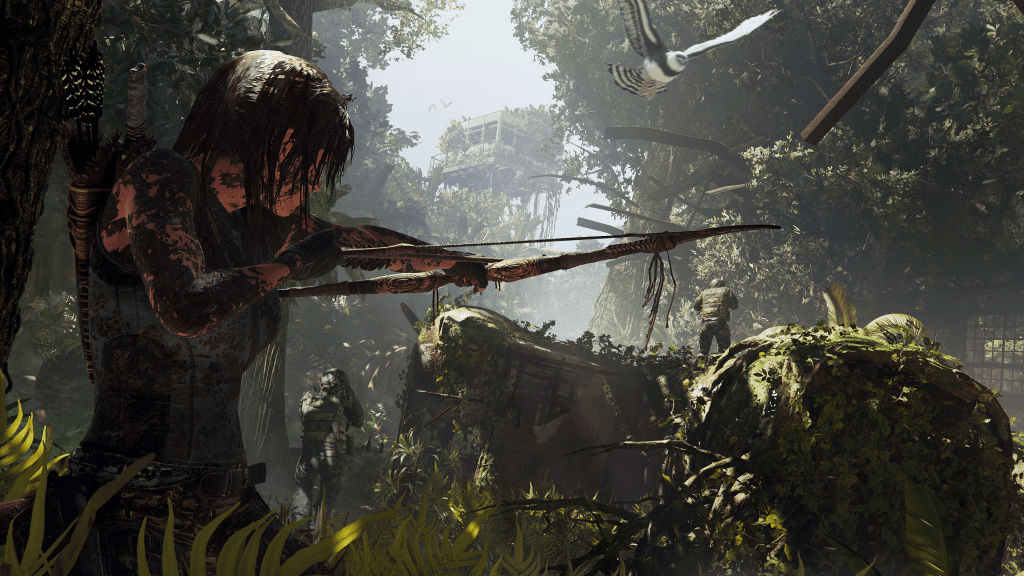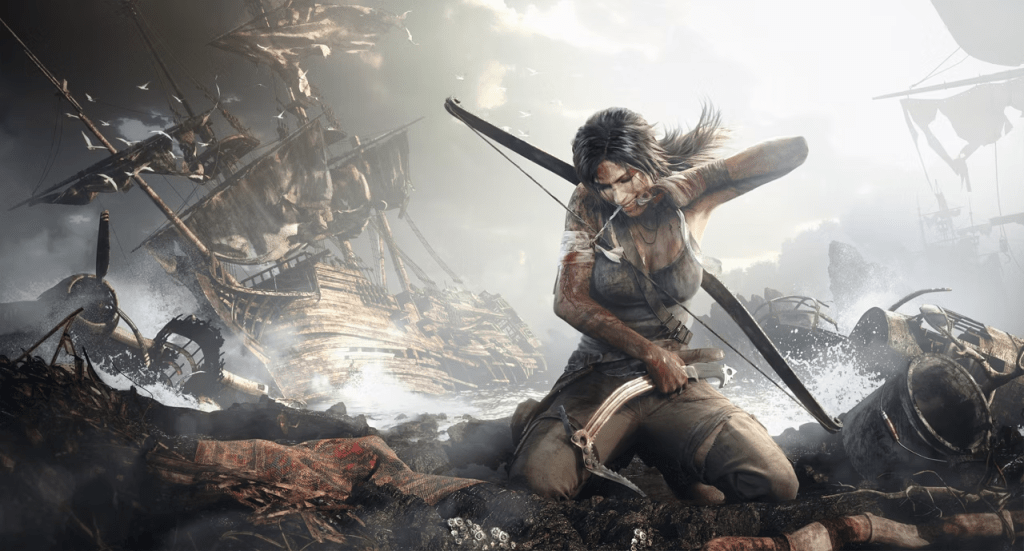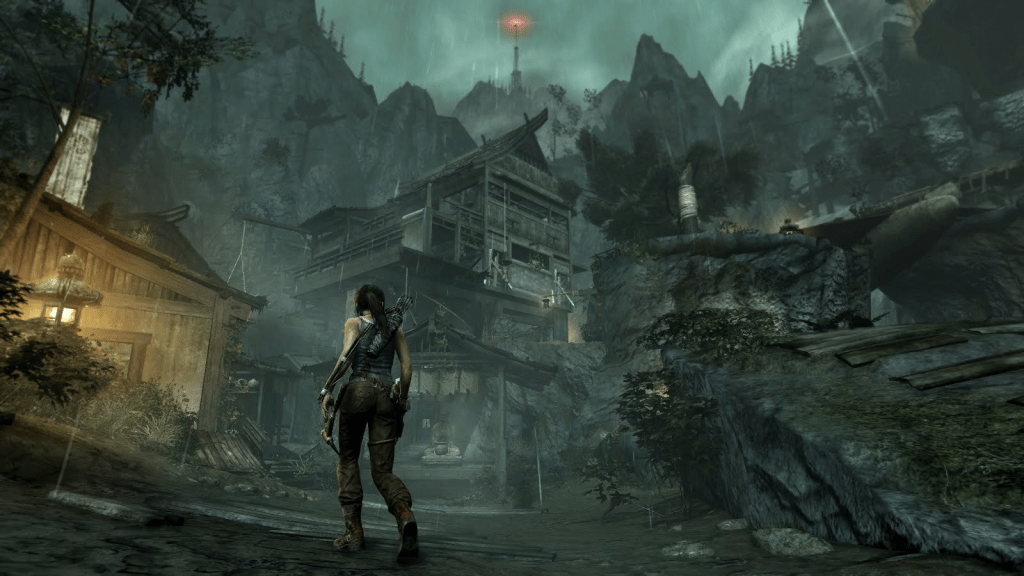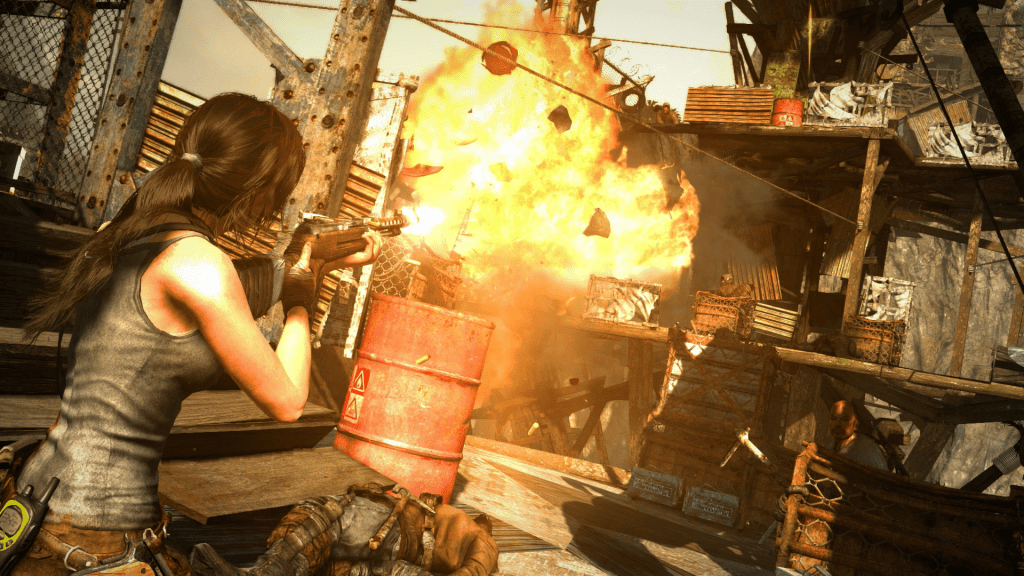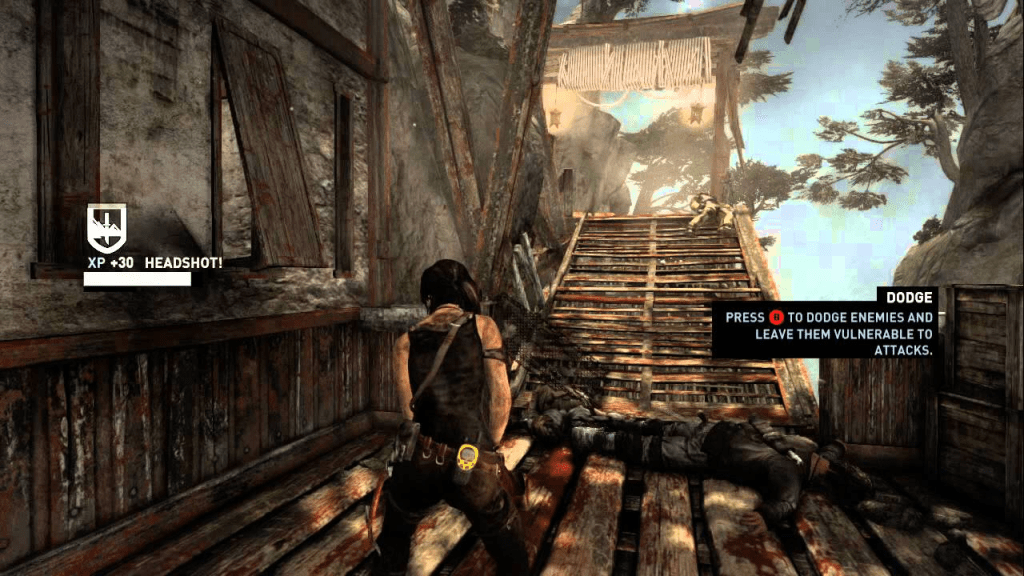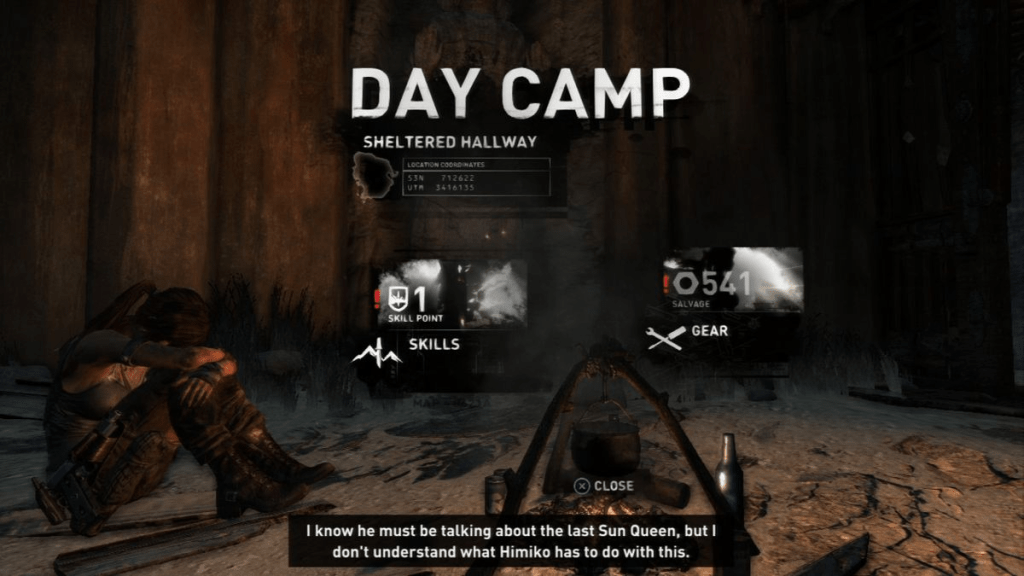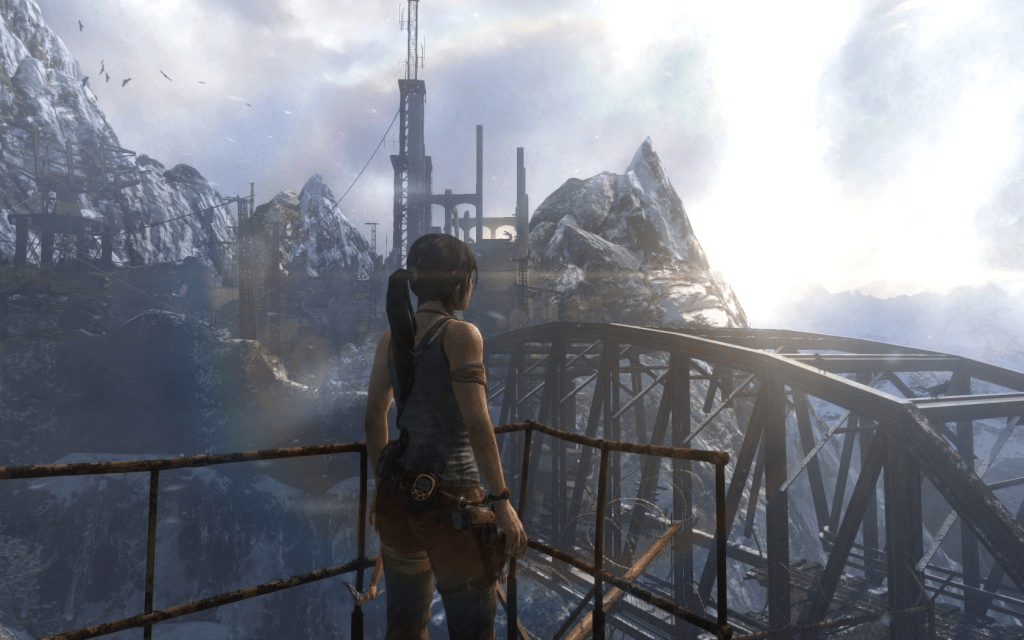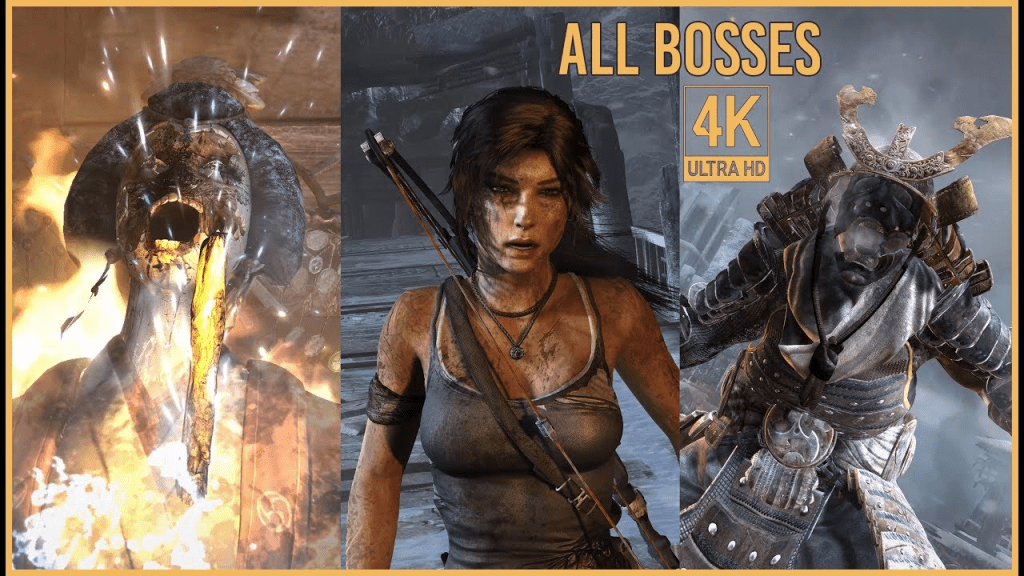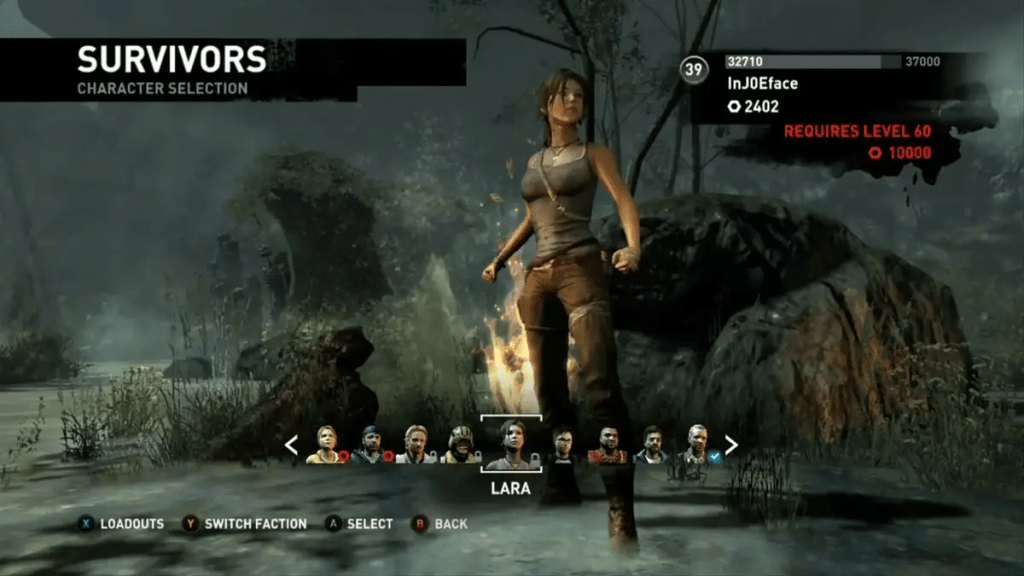
Shadow of the Tomb Raider (2018)- Game Perspective/Review

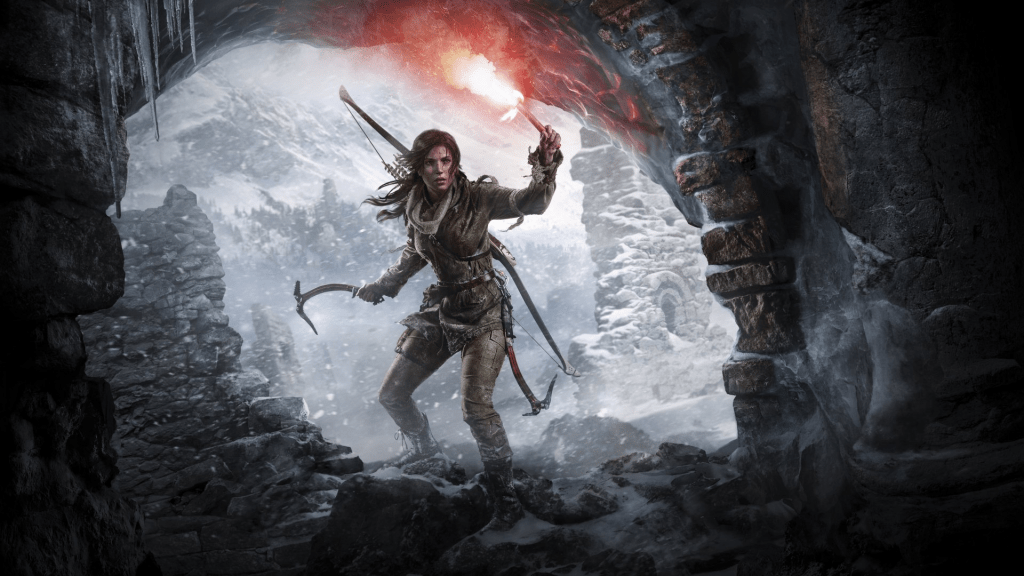
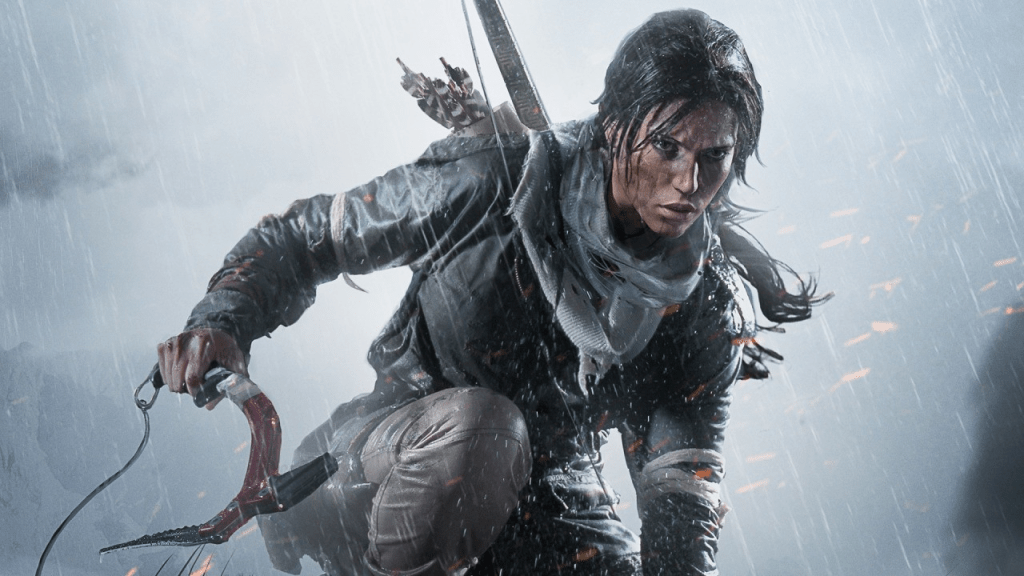
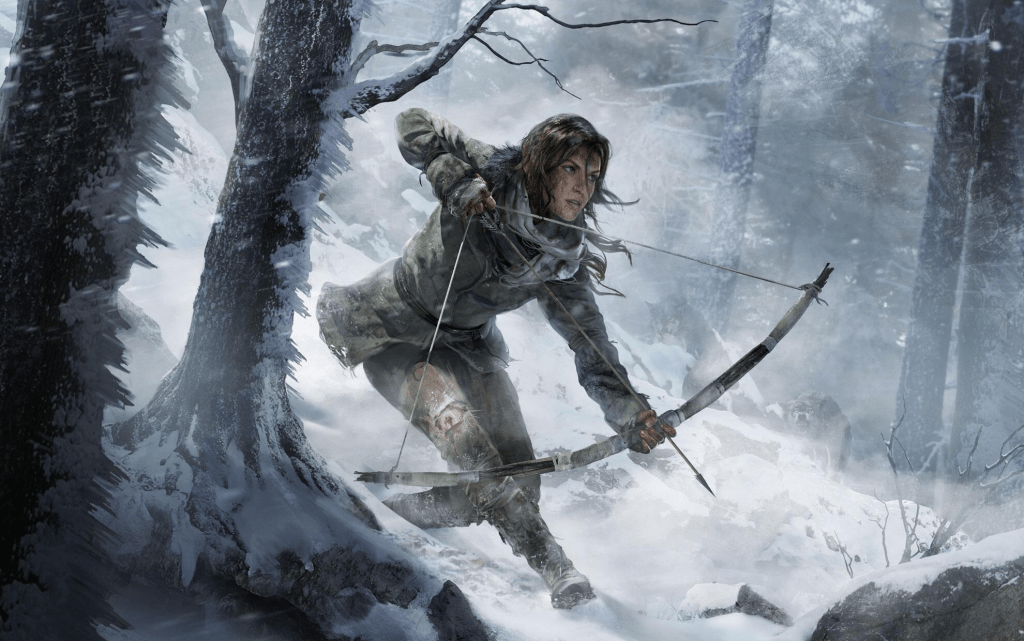
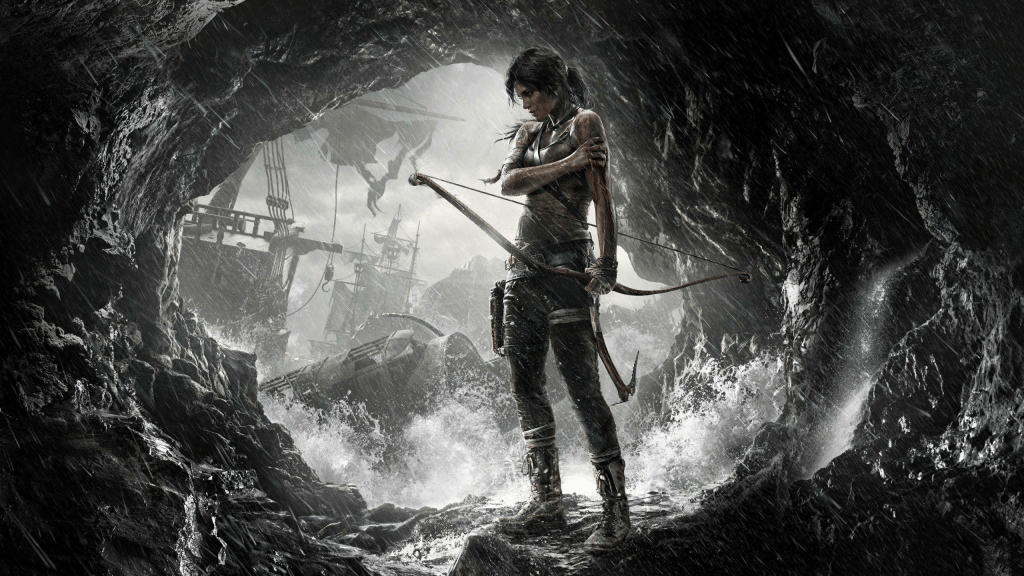
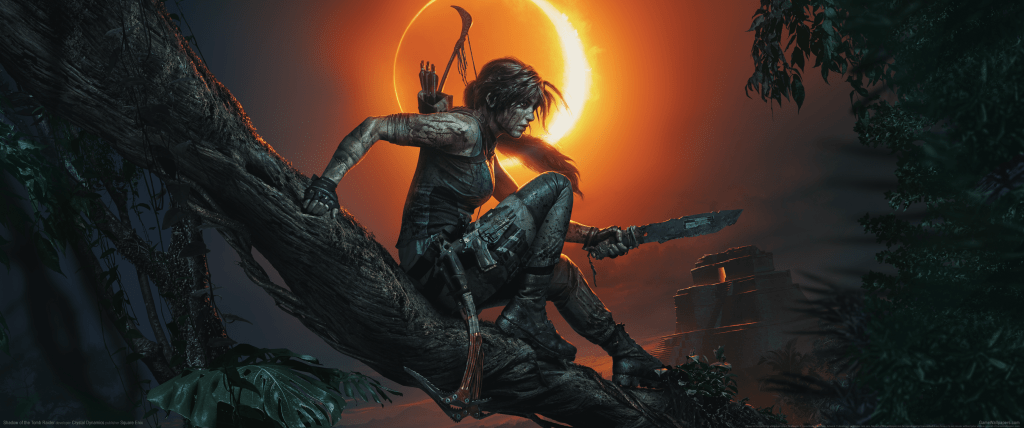
Lara Croft was given her next entry in 2018 with the release of Shadow of the Tomb Raider. This acted as a sequel to 2015’s Rise of the Tomb Raider and the 12th main installment in the Tomb Raider franchise, as well as the third and final entry of the Survivor trilogy. However, this time around, the game would NOT be made by Crystal Dynamics, in large part due to their commitment to Marvel’s Avengers. It would be Eidos-Montreal taking over developing duties with Square Enix Europe publishing the game. Crystal Dynamics did offer full support during the making of the game.

Development for Shadow of the Tomb Raider began shortly after the completion of Rise of the Tomb Raider, lasting until July 2018. It was designed to be the conclusion to Lara’s journey that started with the 2013 reboot, with a key theme being descent both through the jungle environment and into her personality. The setting and narrative was based on Mayan and Aztec mythologies, with the team consulting historians to create the architecture and accurately portray the people of Paititi. The gameplay was adjusted based on both fan feedback from the previous two games and the additions that Eidos-Montreal wanted to incorporate, most notably swimming and grappling while increasing difficulty tailoring. The game cost an estimated of 110 to 135 million dollars to make, making it one of the most expensive games ever made.

Shadow of the Tomb Raider released on the PlayStation 4, Xbox One, and Windows on September 14th, 2018, later releasing on the Linux, macOs, and Stadia in November 2018. The game did receive generally positive reviews but not nearly on the same level as the previous two games. While it was praised for putting more emphasis on the challenge tombs and puzzles, others have felt that the gameplay for this rebooted set of games had gotten stale and no longer have any innovation to boot. Despite the initial slow sales, the game would eventually sell nearly nine million copies worldwide, a total of 8.9 million to be exact.

When it comes to the three games of the Survivor trilogy, Shadow is probably the one that I remember the least. At the time it came out, I was still on cloud nine with Marvel’s Spider-Man and didn’t pay much attention to this game, despite being a big fan of the first two games. I did Redbox the game back when they still had games you could rent and never went back to it after that. I was able to get the game for free when it came out for the PlayStation Plus. For what I recall, I was rather lukewarm against the game. I enjoyed it well enough but felt it didn’t hold a candle to it’s predecessors.

Now that plenty of time has passed and I’ve gone back to the game since, how does Shadow of the Tomb Raider hold up now? Let’s find out!

Story:
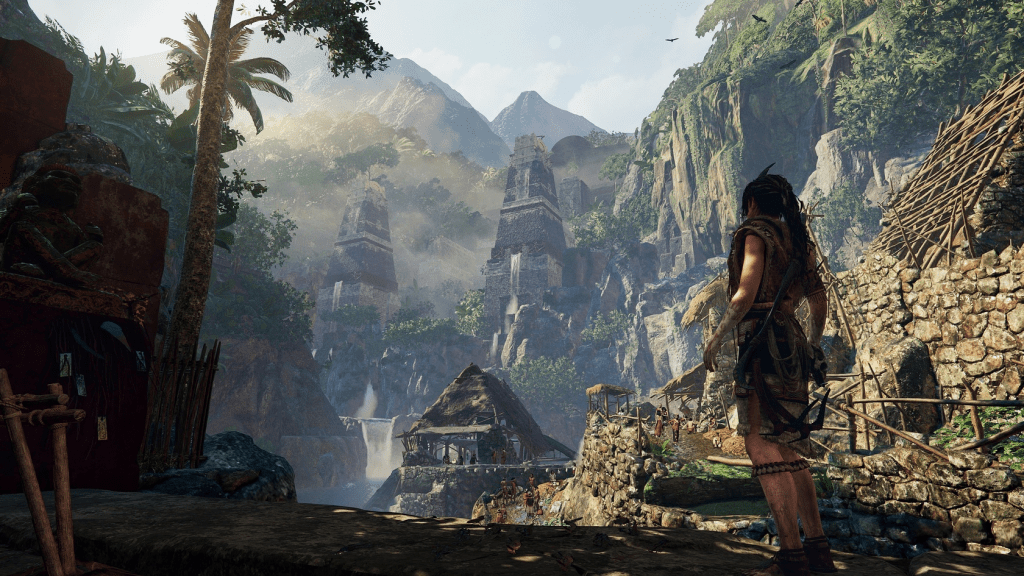
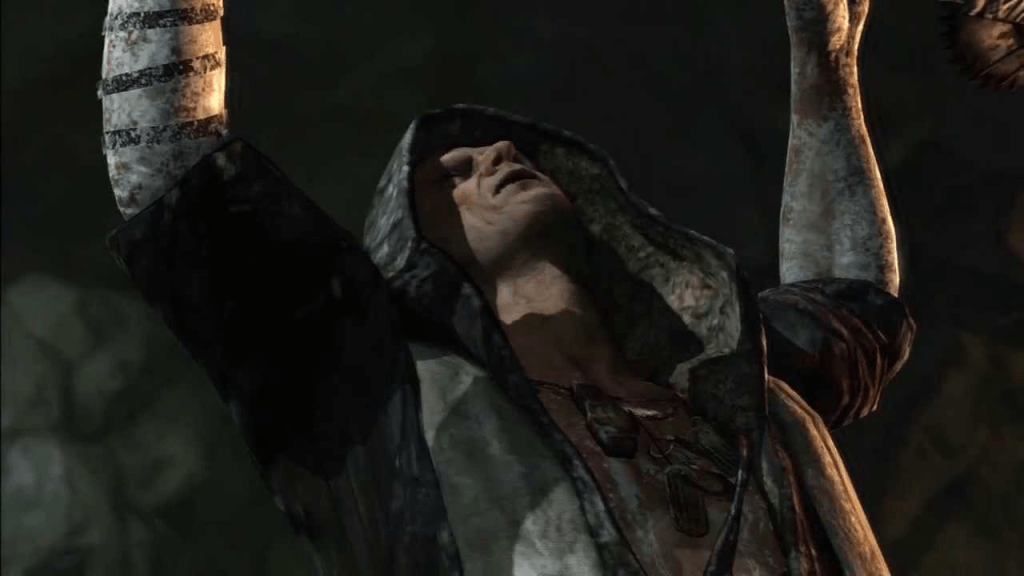
Taking places months after the events of Rise of the Tomb Raider, Lara Croft and her friend Jonah have dedicated themselves to stop the Trinity from doing any possible damage to the world. The two track trinity to the city of Cozumel, Mexico, uncovering an operation that was led by the head of Trinity’s High Council, Pedro Dominguez. Upon investigating the city’s tombs, Lara uncovers a dagger, which references a hidden city and a “silver box”. Despite the dagger being accompanied by murals portraying a Mayan apocalypse, Lara ignores the warnings and takes the dagger. However, she is captured by Dominguez and takes the dagger, informing Lara that her actions have triggered a series of events that will to the Mayan apocalypse that is referred to as “The Cleansing”. An apocalypse that Trinity believes would bring an end to the Sun. Dominguez states that he will bring a stop to The Cleansing and remake the world in his image with the power of the dagger and silver box.

The first strike with this upcoming apocalypse starts with a tsunami that destroys Cozumel. Lara and Jonah are able to survive but their actions cost the homes and lives of the townspeople. Tensions rises between the pair which Lara insists on going after Trinity and the box on her own. Jonah, however, refuses, and demands that they stay to help the townspeople. The first cataclysm of the apocalypse begins with a tsunami destroying Cozumel. Lara and Jonah are able to escape, but tensions between the pair rise as Lara insists on going after Trinity and the box, versus Jonah’s desire to help the townspeople. Despite the pair on the verge of breaking, the two track down Dominguez to the Amazon.

It’s then that the mission with Lara and Jonah is clear: stop Dominguez and Trinity from trying to rebuild the world or all of their missions against the trinity will be for nothing. As the journey goes on, Lara becomes more unhinged as she discovers more about the Trinity and the ties to her past. If her mission is successful, Lara Croft will at long last become known as the definite Tomb Raider.
When looking at the story for Shadow of the Tomb Raider as a whole, it’s a frustratingly mixed bag. It contains both the very best and very worst plot aspects of the rebooted Tomb Raider franchise. Shadow is confirmed to have different writers compared to the previous two games and it’s clear as daylight, much like how it was noticeable that Arkham Knight had different writers compared to Arkham Asylum and Arkham City. While this story might have worked strongly as it’s own thing, it’s biggest downfall is trying to tie it in to previous two games, making the entire foundation of the Survivor trilogy collapses within itself.
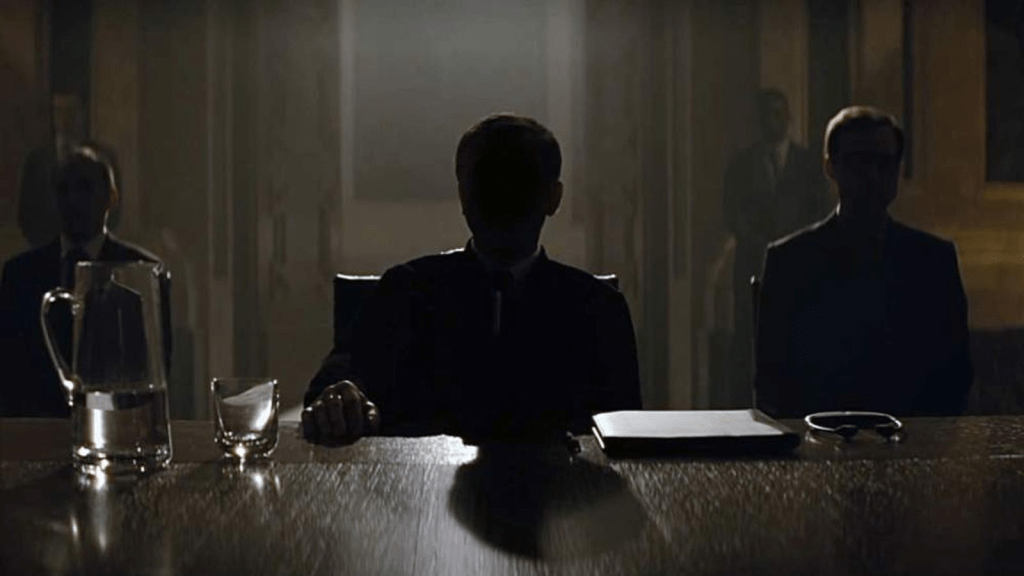
Remember that James Bond film that came out a number of years ago called Spectre? Much like Shadow, that was an entry into the franchise that tried to tie everything together from the previous Daniel Craig films, to have the film acted as some sort of culmination of the rebooted 007 films thus year. However, because it was obvious this was not planned out from day one, it didn’t work in the slightest because of how little the connections made any sense in the grand scheme of things. Instead of expanding upon the world of James Bond, it just made that world feel much smaller and carry less weight than before.

That’s something that the story of Shadow of the Tomb Raider unfortunately falls victim too. In it’s attempt to tie the villain clan of The Trinity to the previous two games, making it feel like they were the ones behind the troubles that Lara has gone through during this entire trilogy, it makes everything the game attempts to expand upon feel very contrived and unnatural in every way. Not only introducing a number of retcons to the previous games in an attempt to connect what was previously interconnective plotlines, but it makes The Trinity as a whole comes across as rather stupid and not as threatening as before.

The only real moments that work with The Trinity is when they try to guilt trip Lara into the troubles she caused up to this point. The fact that she has killed and slaughtered so many people and found herself chasing her own footsteps basically makes her no different to her enemy counterpart. That in of itself plays a role in Lara’s arc where she is much more unhinged than rather before, making her feel a bit like a villain in some cases. While that might put off die hard fans that always see Lara as a hero who rarely does much evil, Shadow of the Tomb Raider is actually able to make that story aspect work more than it should.
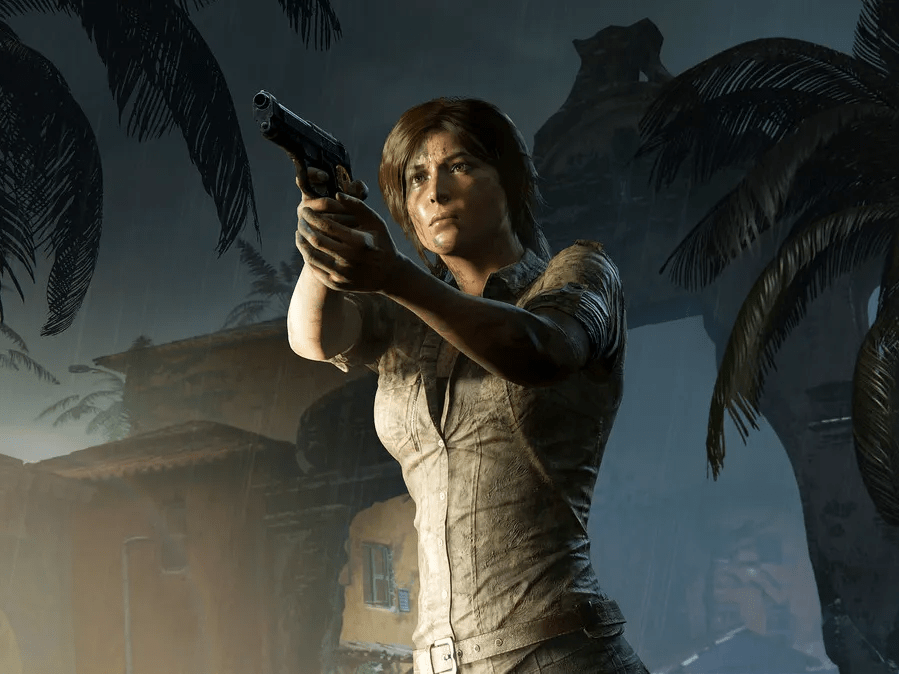
Speaking of which, if there is one thing that the story of Shadow does rather well, it’s wrapping up the story arc of Lara Croft respectively. If you take away the rather forced connections with the previous two games regarding The Trinity, the main development for how main character feels rather whole by the end of the game, making it really feel like Lara at long last has become the true Tomb Raider. It’s a similar fashion as to how satisfying it felt for Peter Parker to finally become the true Spider-Man by the end of Spider-Man: No Way Home. Even if the overall arc was a slow burn and occasionally rather muddled, it all feels worth it by the end with the way we see our main protagonist develop and changed throughout the course of three installments.

It’s especially interesting to see Lara be more expressive and unhinged this time around, sometimes letting her emotions get the better of here. You really get the sense that Lara has all the pressure in the world on her shoulders here and can not afford any more screw ups. There is no effort to paint Lara Croft as a flawless goddess who can do no wrong. Even if she is given as much plot armor as a video game could provide, she does still have her faults and obstacles that she must overcome. If there is one saving grace to the overall story, it is exactly what is done with Lara Croft herself here.
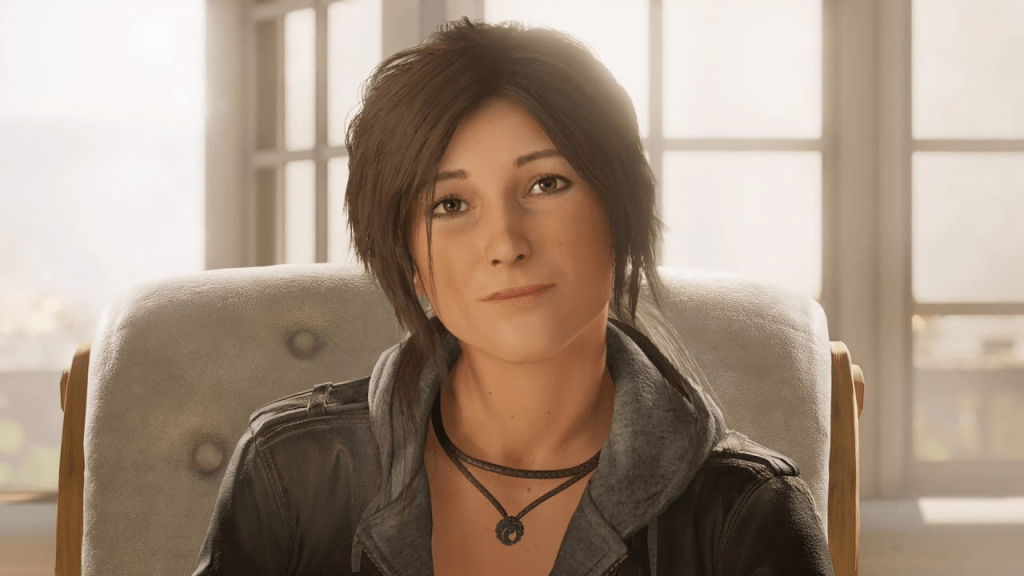
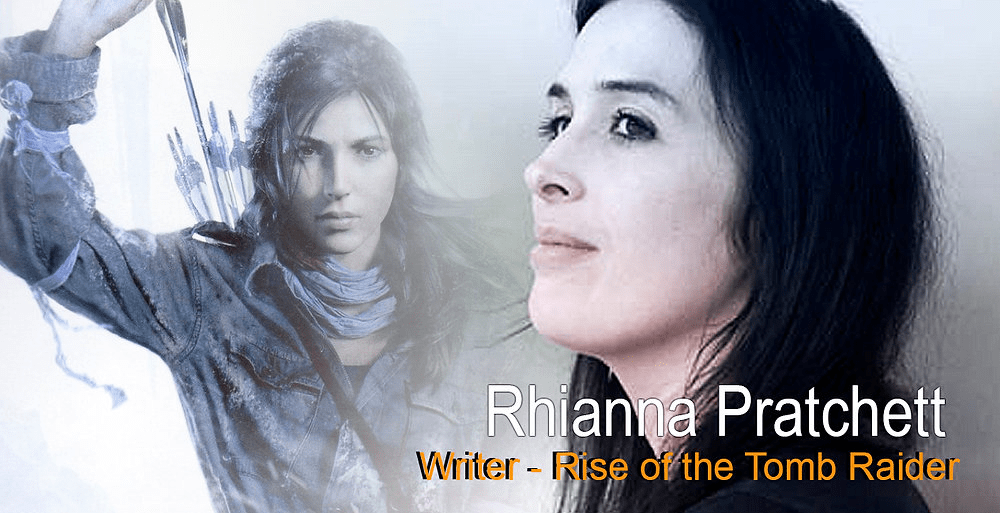
I still can’t help but wish they just brought back Rhianna Pratchett to write the story as she did with previous games. At least then, the story would have felt more cohesive and you likely wouldn’t have these forced tie-ins and unneeded retcons to make the story work. If this was it’s own thing or even the first chapter of the trilogy, it would have fared much better. But to have a climax which feels the needed to introduce several things, disregarded several things from the previous installments, and then tries to tie all of those things at once, it makes the storytelling feel rather clunky and just messy all around. While Shadow deserves credit for bringing it’s main iconic gaming heroine to the finish line by the end, there are PLENTY of trips and falls along the way that make the whole ride feel more bumpy than it should have been.

Gameplay:
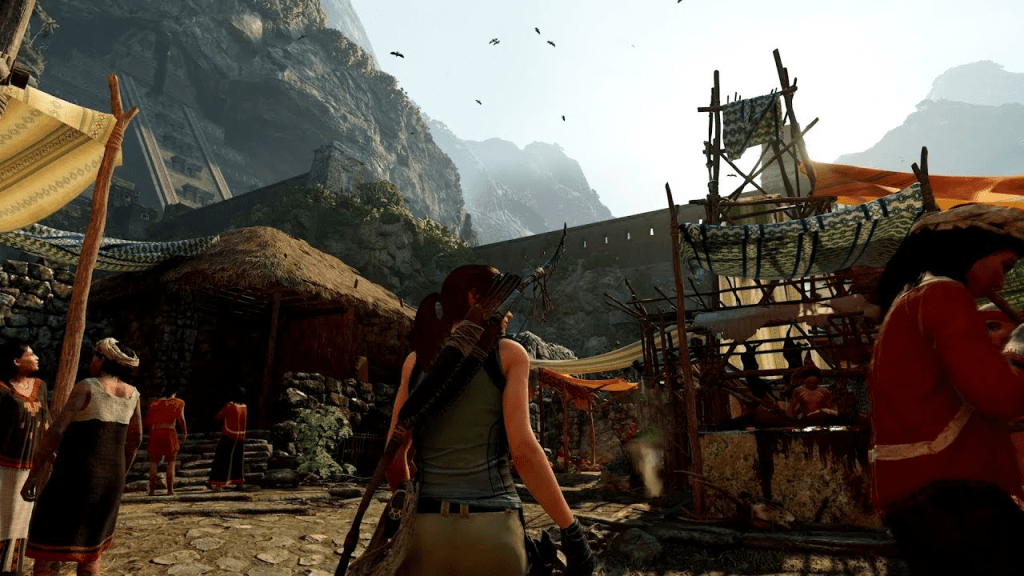
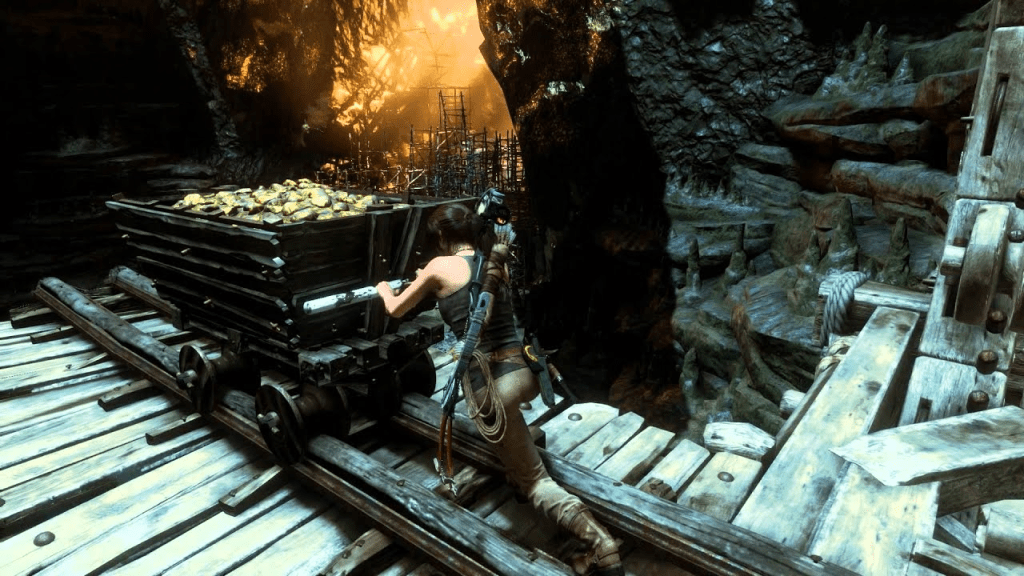
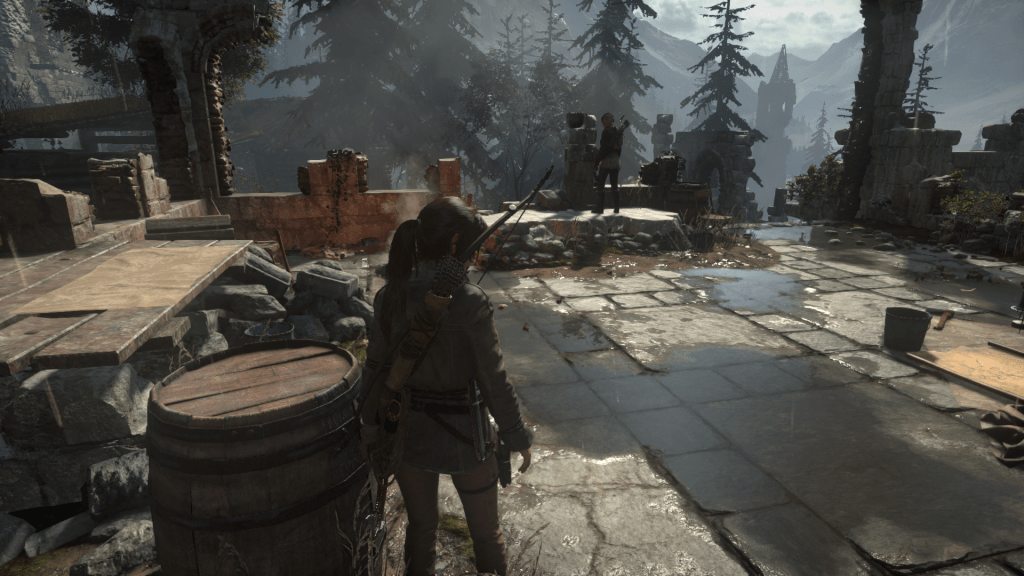
As with the previous two games, Shadow of the Tomb Raider is a third person action-adventure game where you take control of Lara Croft as she explore environments across Mexico and Peru. There is also a large hub in the hidden city of Paititi,  In these hubs, Lara can raid challenge tombs to unlock new rewards, complete side missions, and scavenge for resources which can be used to craft useful materials.

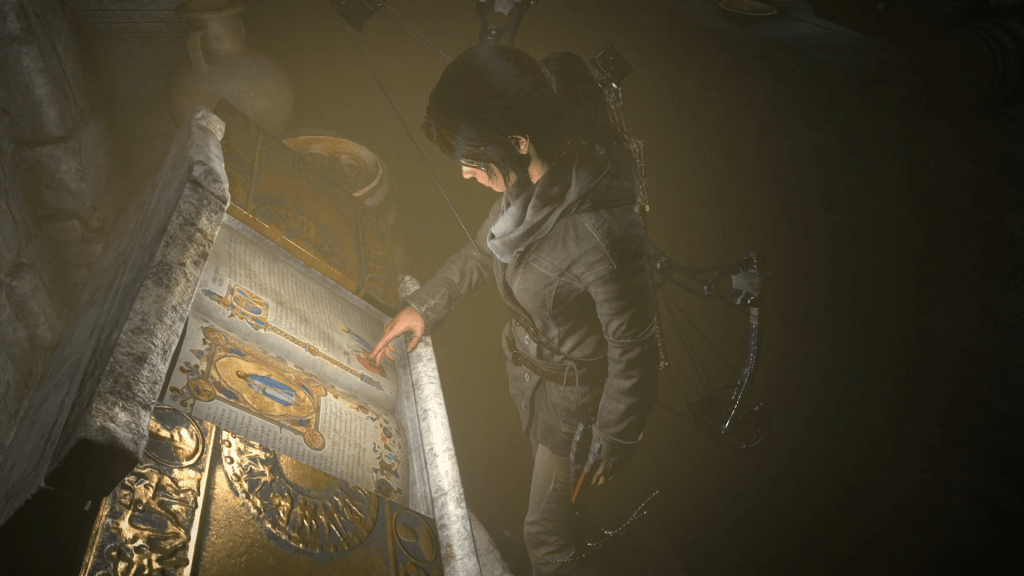
The gameplay have been giving numerous adjustments along with a few new features. Like it’s predecessors, the game allows players to hunts wild animals, craft materials using resources collected, solves puzzles, and seek out optional tombs and side guests. Shadow in particular features large tombs and more complex puzzles than before in this reboot series. The kind of tombs and puzzles you will have to think for yourself in order to solve it or just cop out and watch a YouTube video on it. That in of itself should make Shadow of the Tomb Raider the most faithful of the new rebooted Tomb Raider games by design. However, there is definitely more to it.
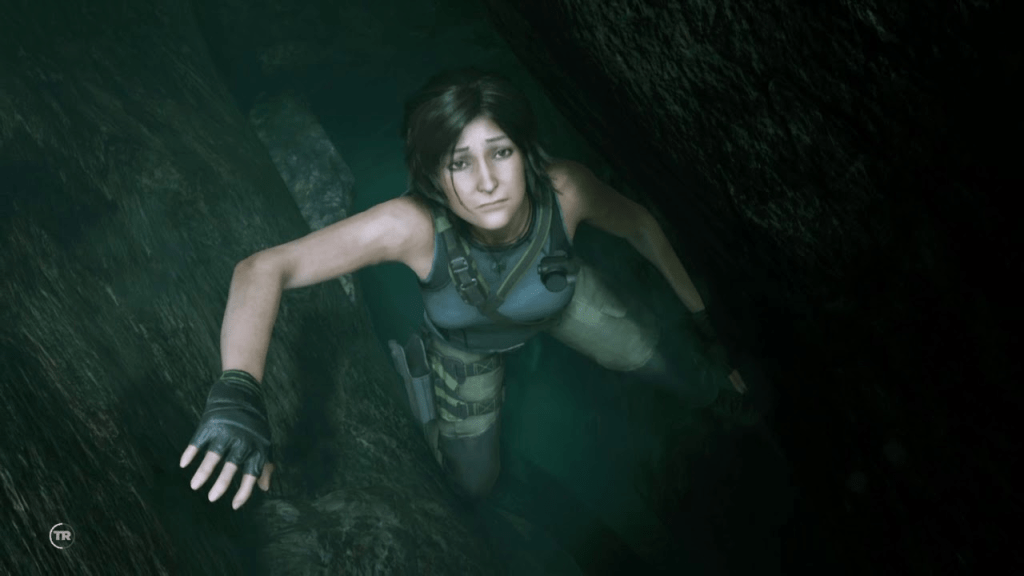
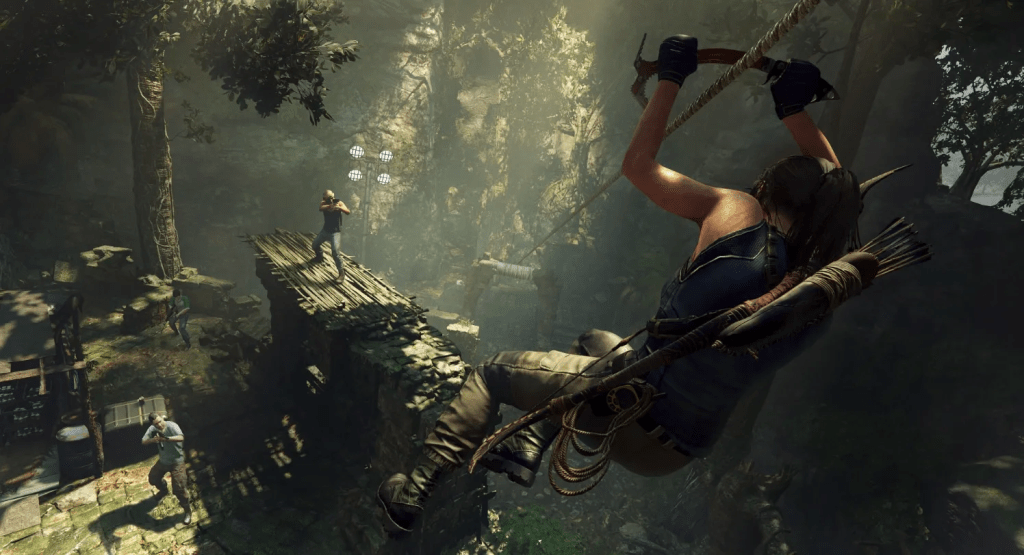
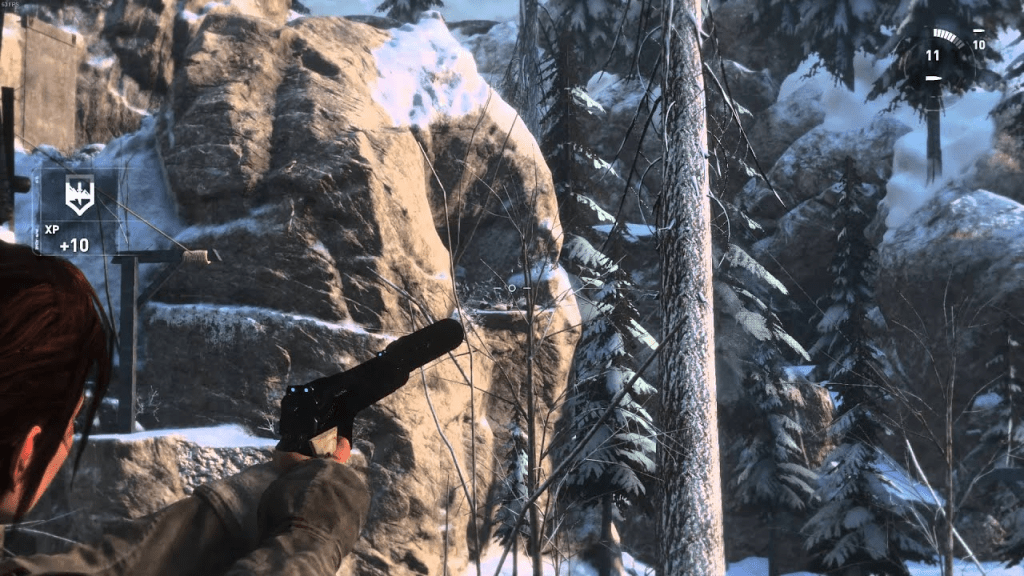
The controls for swimming have been revised, as Lara is able to hold her breath underwater for a longer period of time thanks to the inclusion of air pockets. She has the ability to rappel down a cliff using her climbing axe and rope. Stealth is more important here than before, as Lara is able to disengage from combat when she escapes from enemies’ line of sight by camouflaging herself in mud, hiding in bushes, or blending into densely vegetated surfaces. There’s also a new barter system that allows players to trade and sell various resources gathered from the areas surrounding Paititi. It’s these kind of adjustments and additions that make Shadow of the Tomb Raider stand out in the best and worst ways possible.
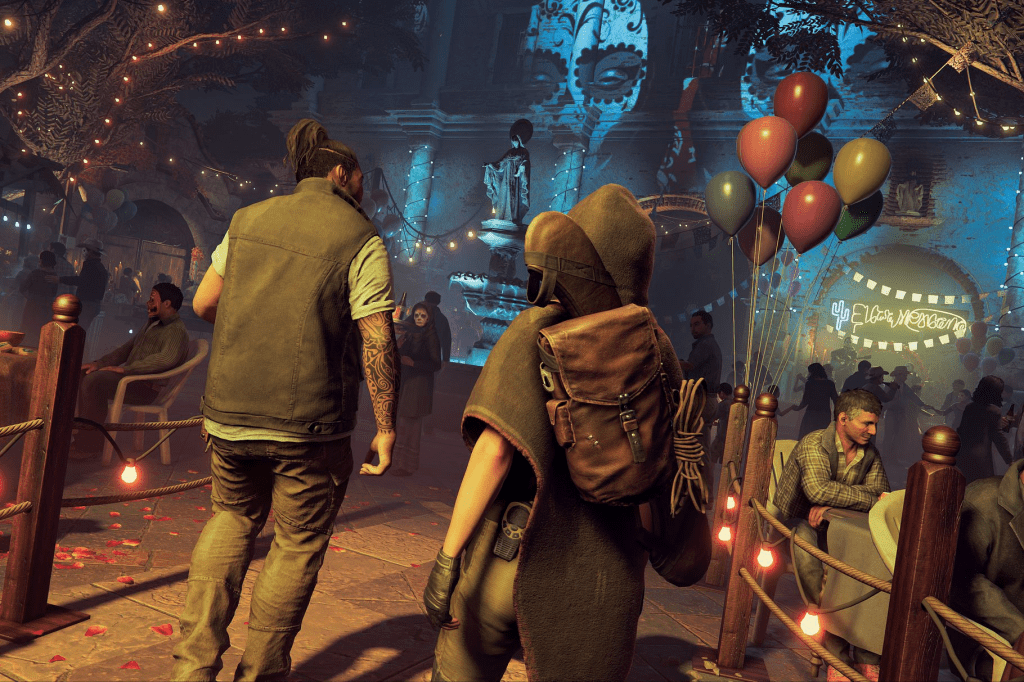
Players have the option to tailor their gameplay experience in combat, puzzles, and exploration with their own difficulty settings. An Immersion Mode enables players to hear the background conversations of the locals in their native languages, when turned off the conversations are heard in the players’ chosen voice over language.
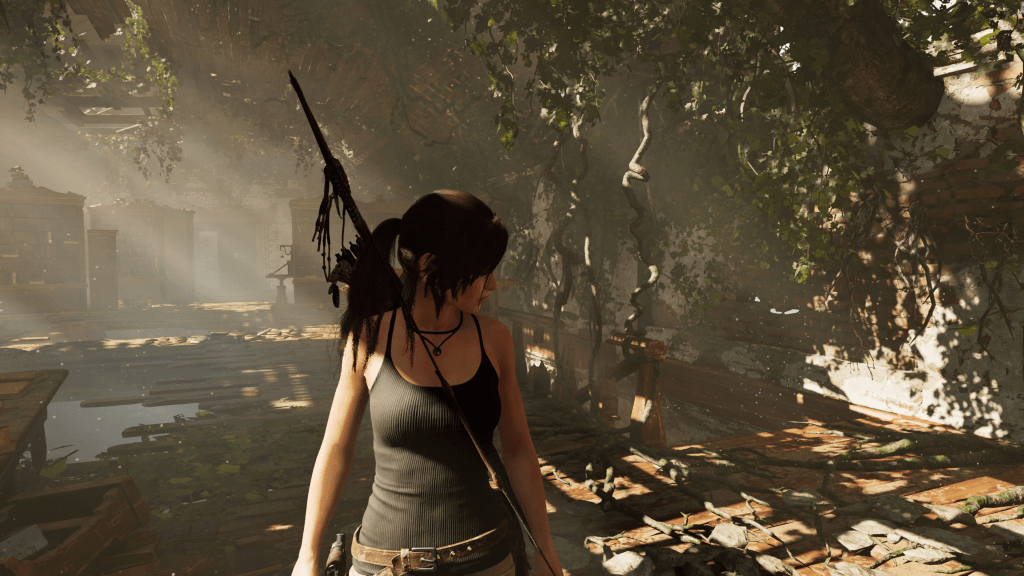
Concept wise, the gameplay should stand out as the very best of the rebooted trilogy. The combat is much more toned down compared to the previous two games, there has been much extra time giving to the puzzle solving and exploration, and there are more challenge tombs to raid then ever before. Yet, there is something that feels a bit off about it.

There is certainly nothing here that is inherently broken or even bad. The controls work exactly the way they are suppose to, the combat is fun during the moments you are encountering enemies, it’s nice to see Lara exploring these multiple different cults and regions, and solving puzzle and tomb certainly require strategy which you would have to think the tactics instead of just mindlessly running and jumping your way through. Oddly enough, it’s the new adjustments that Eidos-Montreal makes here that kinda hinders the game rather than expanding upon it.

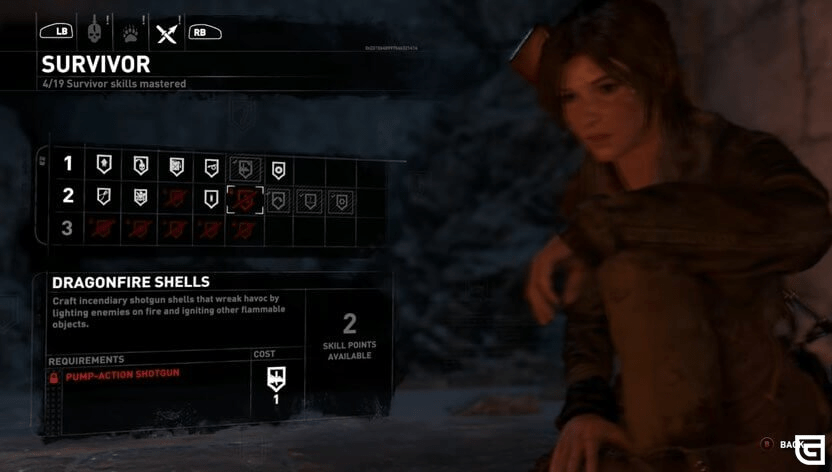
You have the upgrade system that is more convoluted than before, taking forever for certain systems to upgrade and feeling way too scattershot. You have a combat and stealth system that are way too tweaked to the point of it feeling rather dumbed down instead of feeling like a legit progression from the previous two games. You have platforming segments and set pieces that are competently put together but lack the cinematic and shock factor of the previous two games. You are given more challenge tombs but they can really muddled with the pacing of beating the main campaign, to the point where going after them feels like a slog and will just slow you down entirely. And you have action sequences that feel too restricted for the first two thirds of the game and only really deliver fully until the last third of the game. For every step forward that the gameplay of Shadow of the Tomb Raider takes, it then takes an immediate step backward.
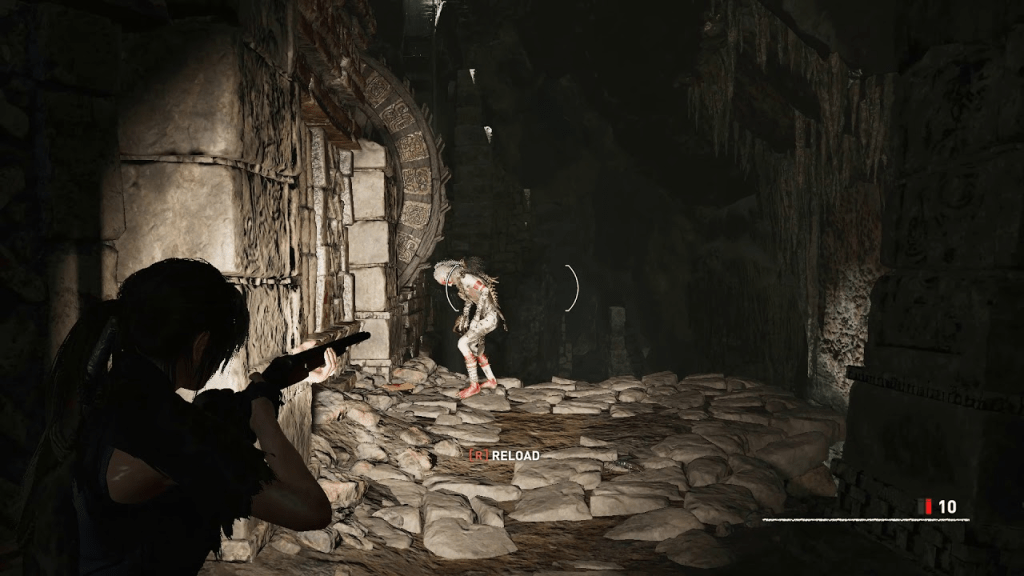
You really do get a sense that the Crystal Dynamics that made the previous two games were not fully in charge with Shadow of the Tomb Raider. It’s clear that Eidos-Montreal wanted to put their own stamp on the series while embracing many aspects of the first two games. However, just like the story, it feels more like they have to disregarded certain aspects to make that happen, making the experience feel much more muddled than what obviously was attended. If this had been the first game in the reboot series, these flaws might be more acceptable. But after two fantastic games where the gameplay was as smooth and polished as it were, the standards have been held so high that Shadow just can’t reach it.

That’s not to say the gameplay of Shadow of the Tomb Raider is bad in general. It’s definitely competent, playable, and even fun in most areas. However, after the previous two games were able to deliver all of that and more, there is something that leaves much more to be desired here. While certain above average for a main triple A modern game, Shadow of the Tomb Raider definitely feels much more average to below average compared to Tomb Raider (2013) to Rise of the Tomb Raider.

Graphics:

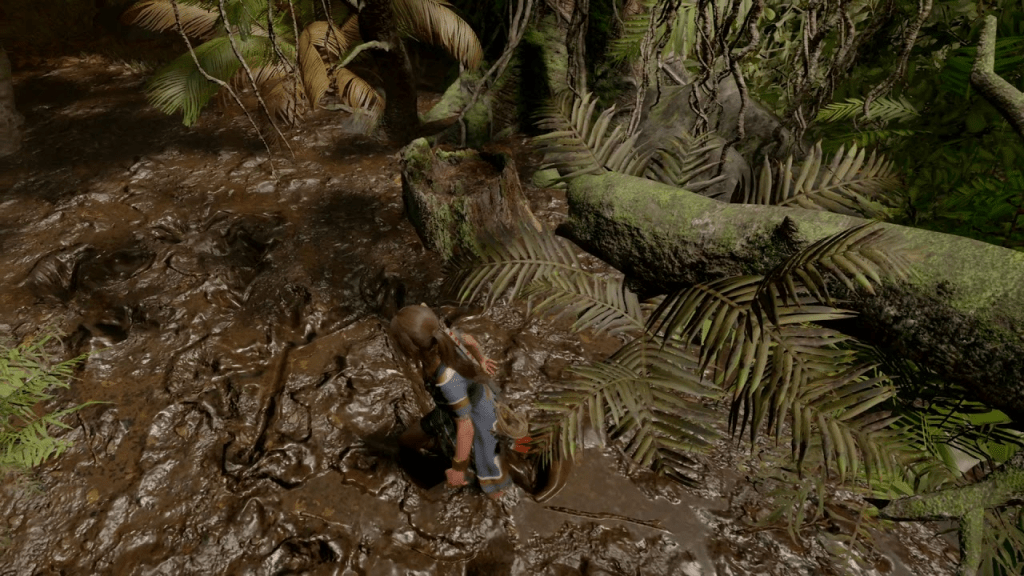
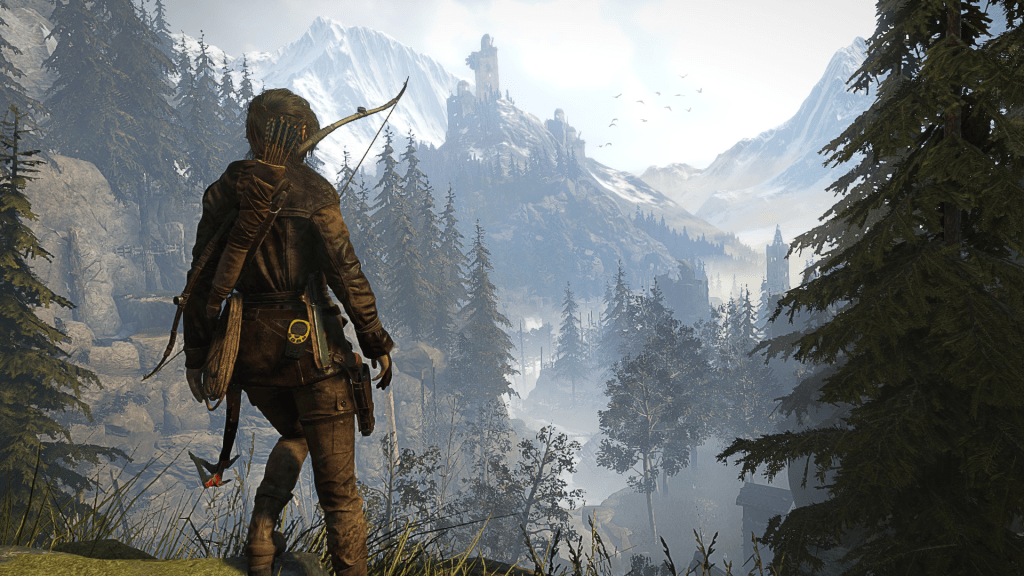
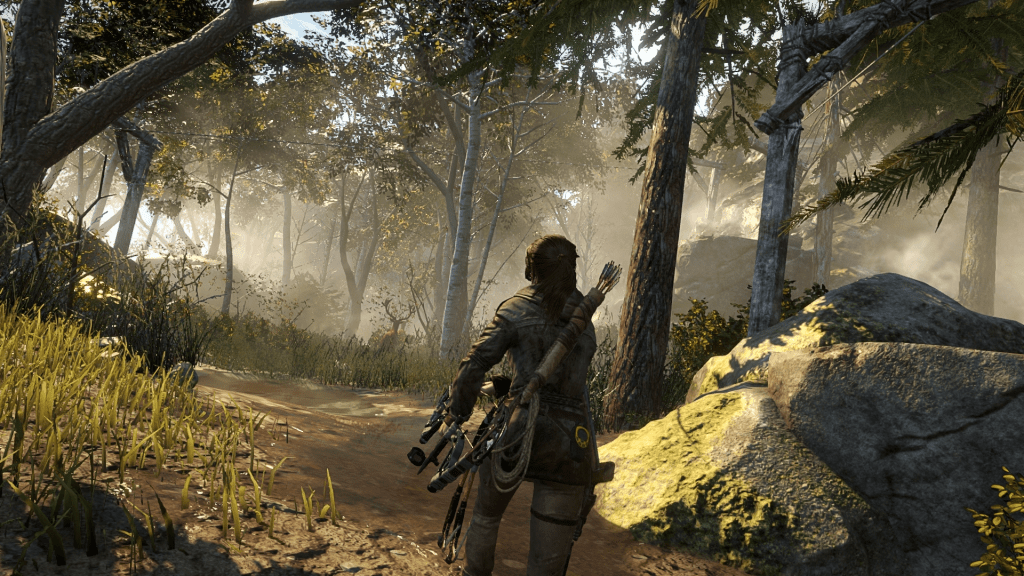
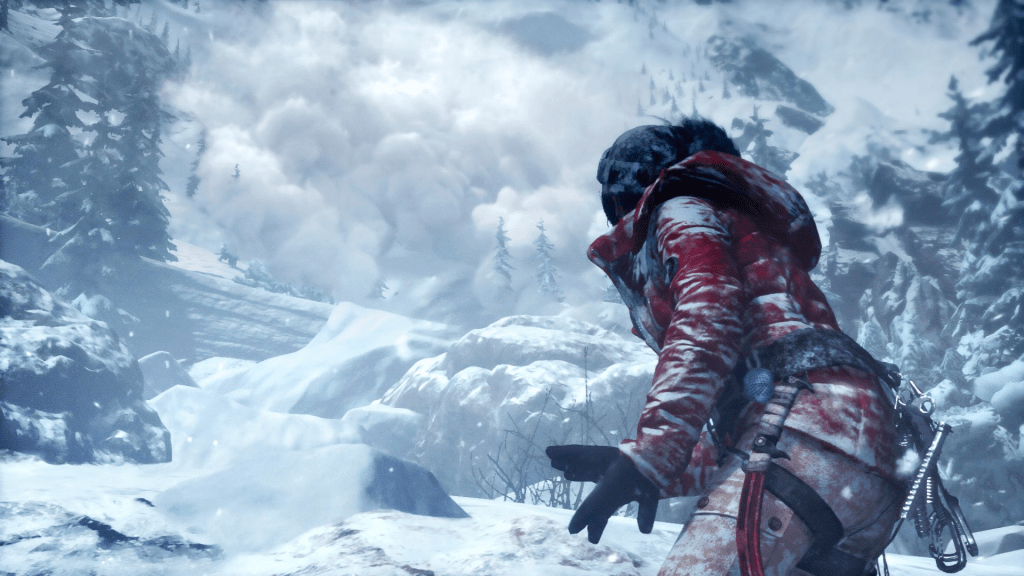
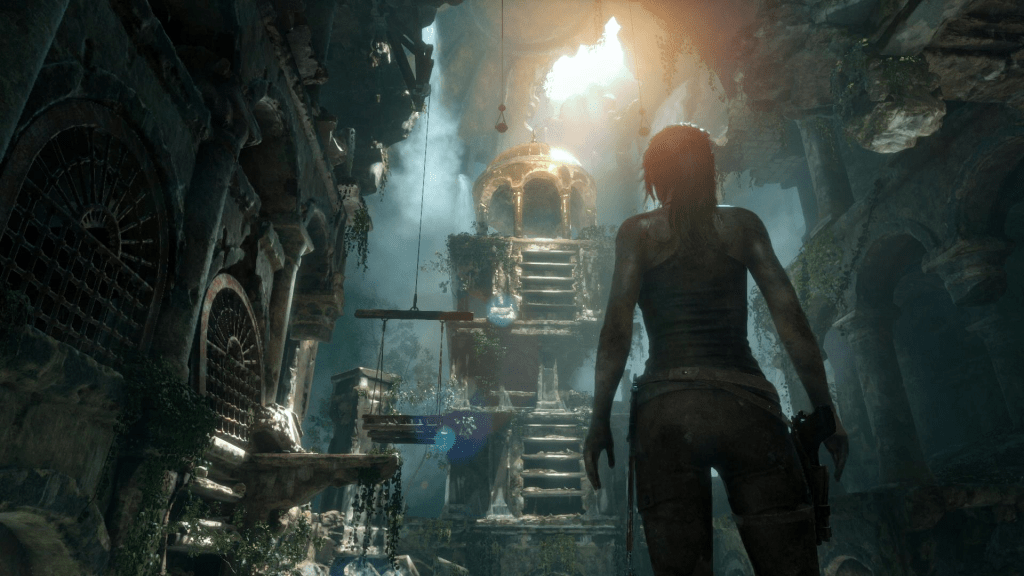
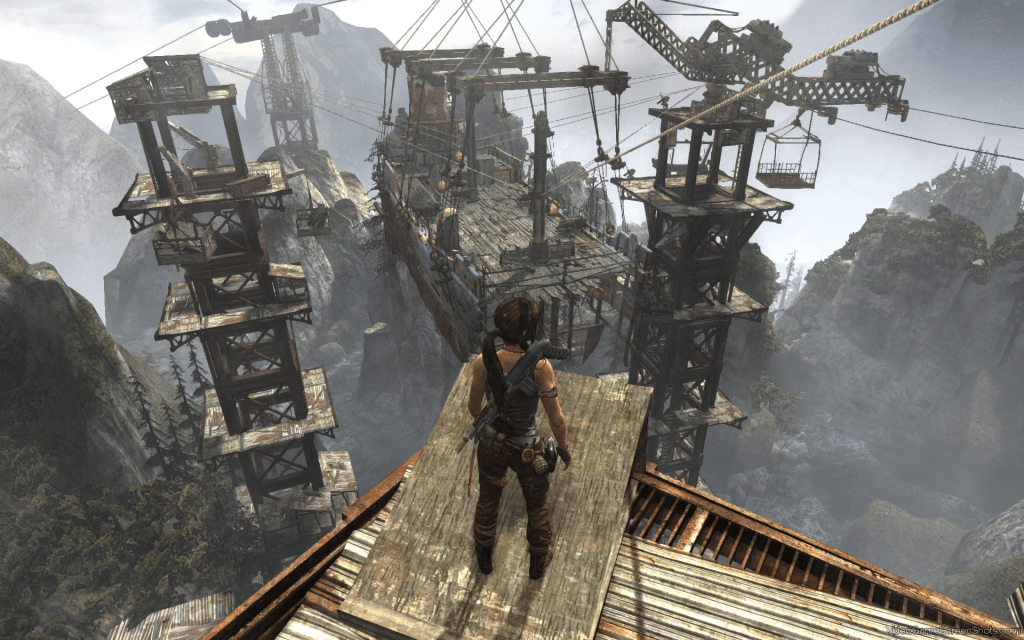
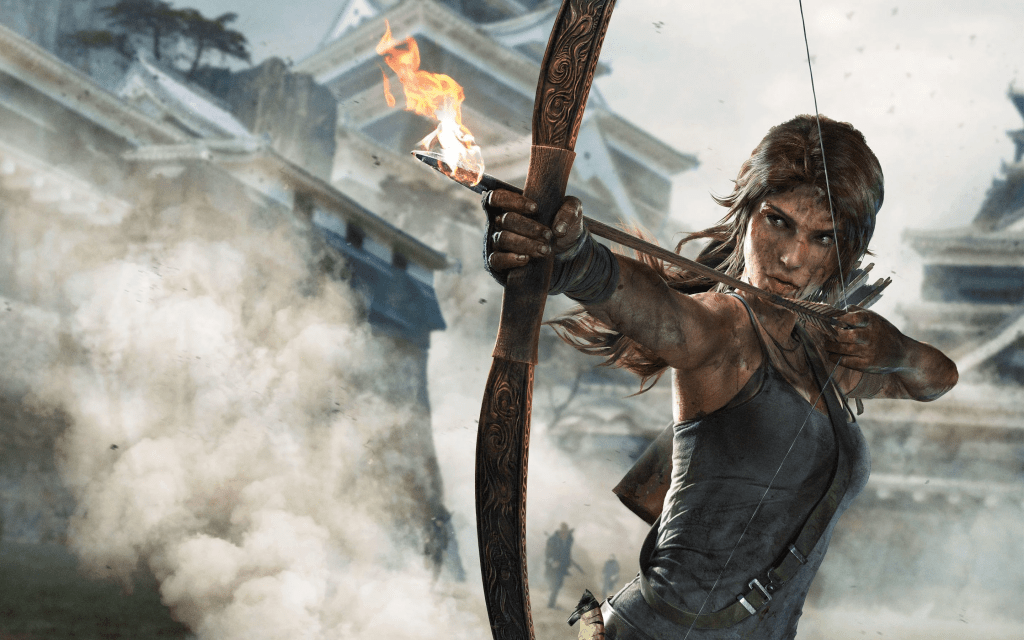
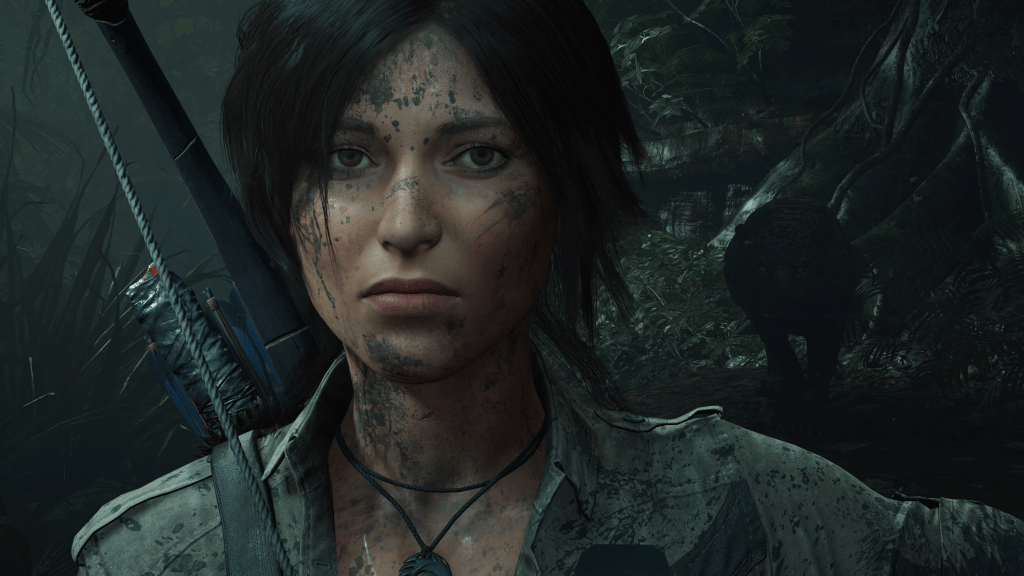
Graphically, the game is just as impressive as it’s predecessors, if not more so in a number of areas. This is probably one of the best looking games of the generation. The attention to texture is on full display, especially with how realistic the mud looks on Lara. The way that the mud moves and leaves trails whenever Lara looks is as convincing as a mud trail has ever looked in a video game. I didn’t think anything could top the snow and water looks of Rise of the Tomb Raider but I was dead wrong.
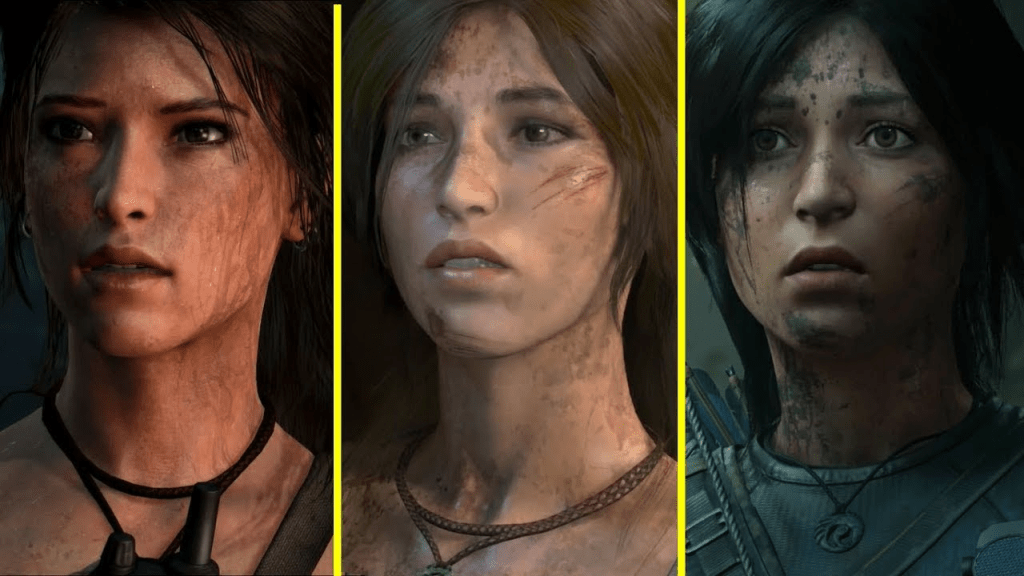
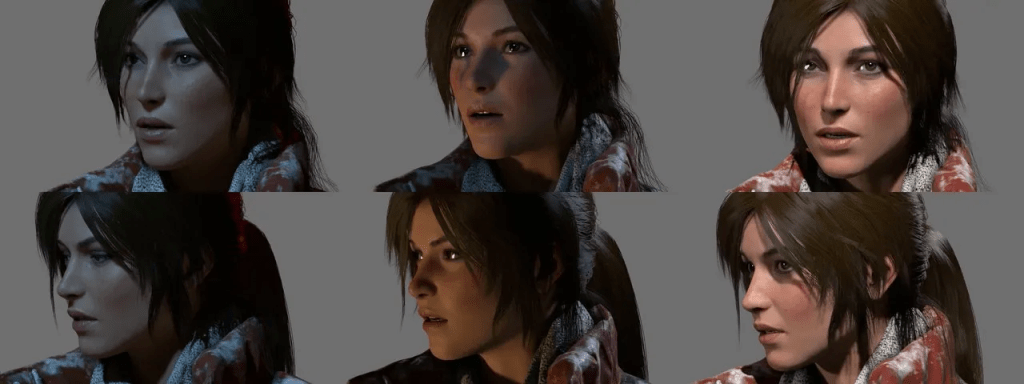
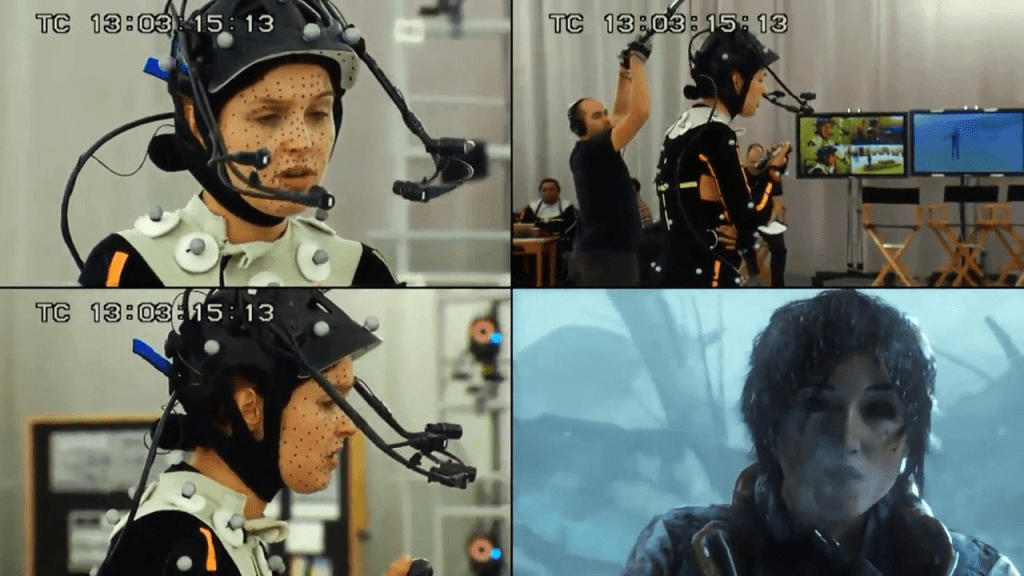
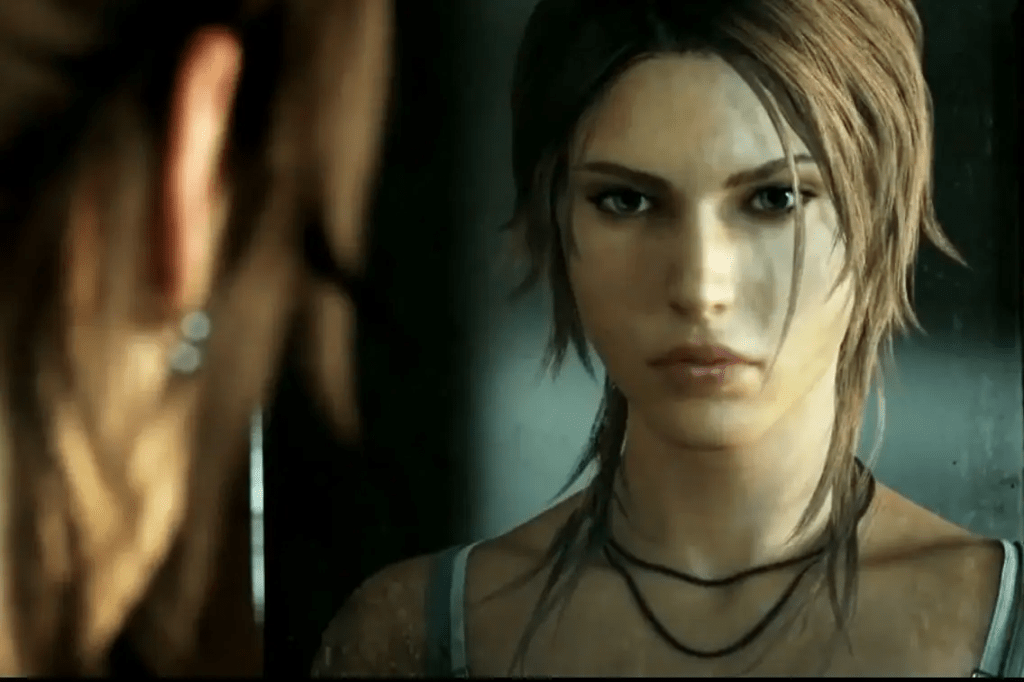
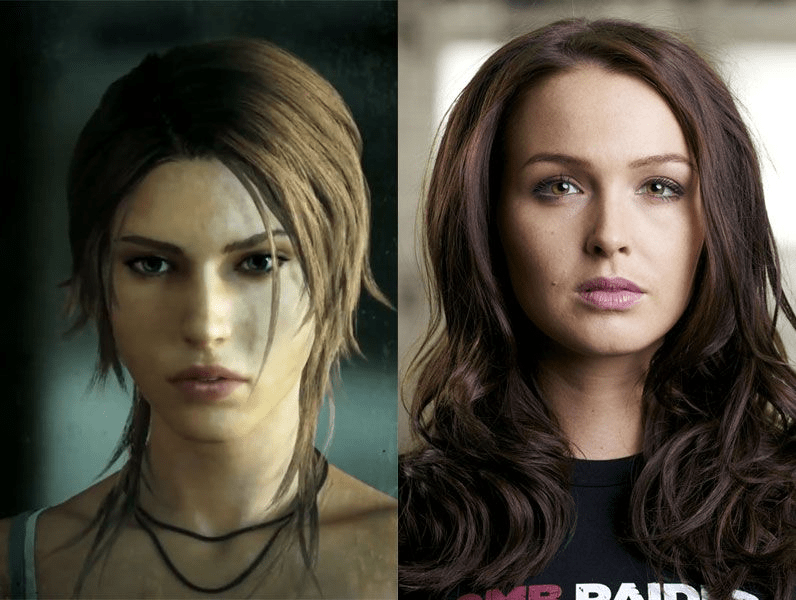
The motion capture work is very strong as well, clearly being as up to date with technology as you could imagine, helping making the characters movements and animations look as realistic as possible. Although, I kinda wish they didn’t change Lara’s facial expressions and models that much. She looks good but feel more pale and average looking compared to the first two games, almost what you would expect her to look back in 2013 but NOT in 2018. I still think that Lara’s model in Rise of the Tomb Raider was the way to go.

Sound:
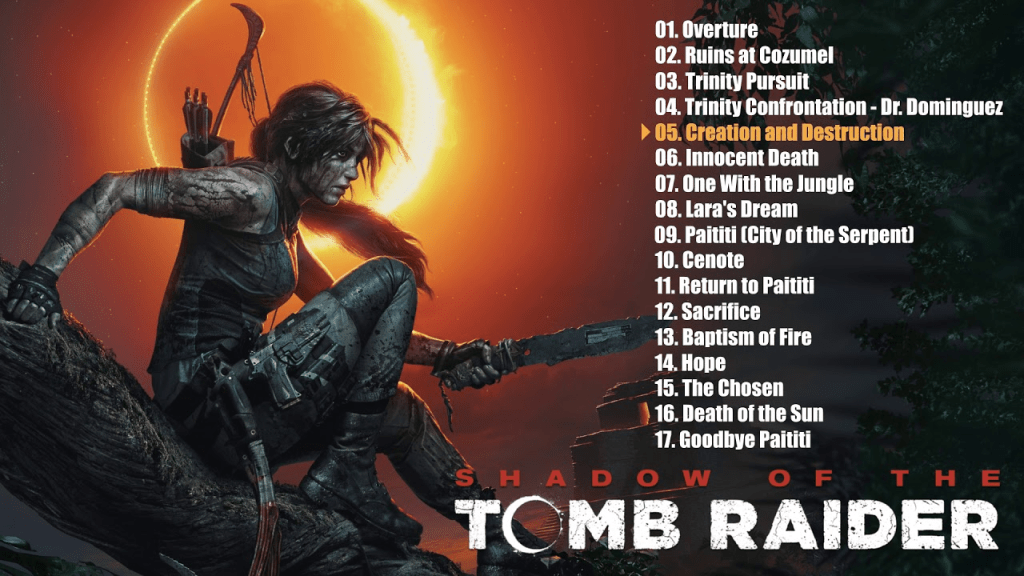
Similar to the first two games, Shadow of the Tomb Raider had a different composer at the helm in Brian D’Oliveria. I guess the approach for the Survivor trilogy was to bring in multiple composers that could bring their own voice to the score with each individual installment. Sadly, Shadow has probably the weakest soundtrack of the three games. There was hardly any track that stood out in the ways that they did with the first two games. Not even familiar tracks from the previous two games make a presence here. Instead of the music pumping me way and giving me a much needed energy boost along the way, it does nothing more than just create sound during sequences that need it.
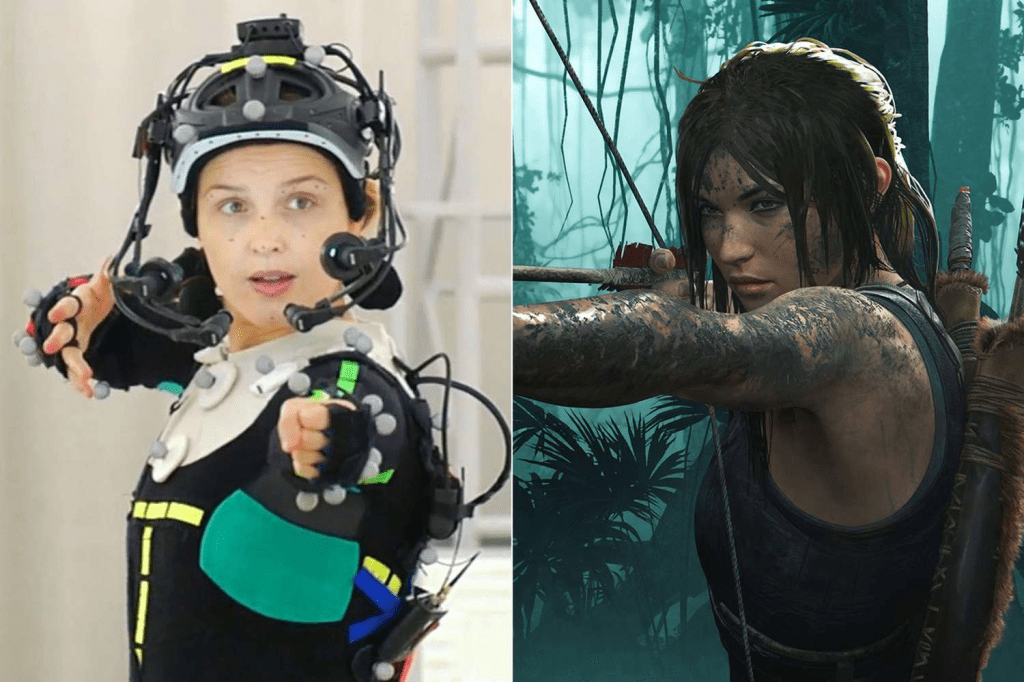
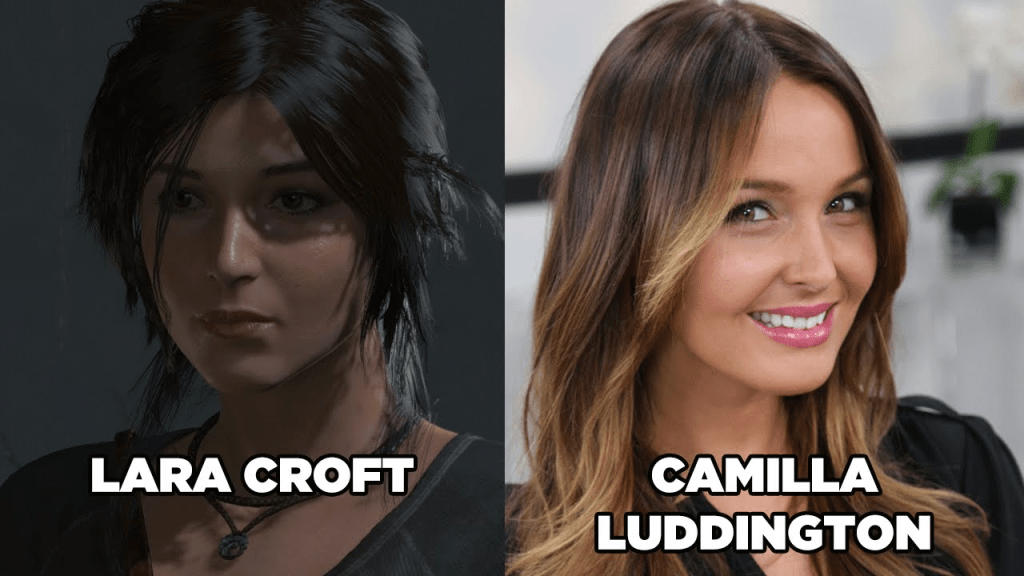
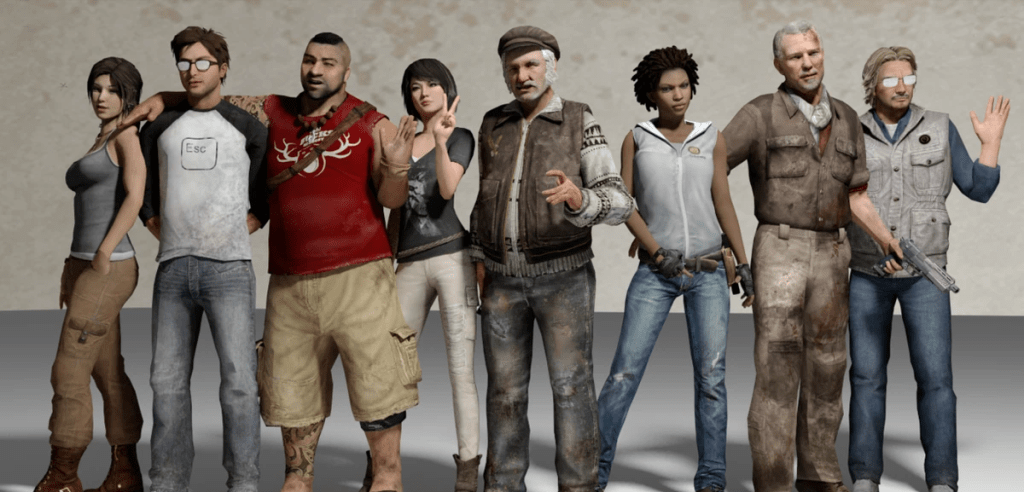
The voice acting and motion capture performances, on the other hand, is terrific. Camilla Luddington gives perhaps her best performance to date as Lara Croft. Thanks to the script giving her more emotional and dramatic moments to act out and the motion capture being as good as they ever been, you can feel Camilla’s facial expressions, emotions, and presence throughout every scene that she is in. Earl Babylon as Jonah also stands out much better here than in the previous game, especially how his character is given more depth and moments where he has to snap Lara out of putting the entire world on her shoulders. The final installment of a trilogy should give plenty of opportunities for the actors to deliver their best and most vulnerable performances to date and everyone did just that.

Downloadable Content:
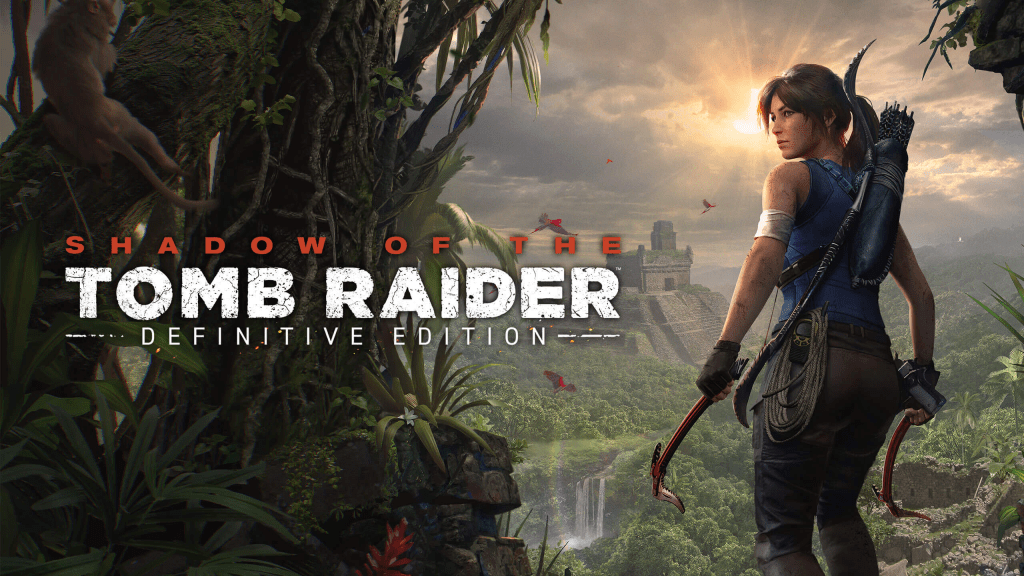
Shadow of the Tomb Raider released several chapters of DLC that expanded upon the game’s narrative. Each one of these chapters run parallel to the main storyline and the focus on an additional tomb. This is where Lara discovers the source of Mayan influence in Peru, solving the mystery of a missing oil worker, locates an artefact to bolster Unuratu’s rebellion, and then finds a secret that could threaten it. Lara then confronts her own fears as searches for a weapon, leading her to learn of the tragedy that shaped Amaru’s decision to join Trinity. She aids a group of rebels taken by the Cult of Kukulkan, investiage a disturbance at a local temple that turns into a trap laid by Trinity, and learns the fate of the Yaaxil that survived the battle with Trinity.

A season pass was available that gave players access to seven paths of DLC, which included new narratives, missions, tombs, weapons, outfits, and skills. A version bundling together the main game and DLC, Shadow of the Tomb Raider: Definitive Edition, releasing on November 4th, 2019.

Personally, I found the DLC for Rise of the Tomb Raider to be much more satisfying than this one. Whereas those put more focus on providing extra characterization to Lara Croft, Shadow puts more emphasis on the main villains which I never really cared for in the main series and just adds more convoluted lore to the franchise. If you picked up the Definitive Edition at a reasonable price, then it’s worth a go. However, if you missed out on it back when the game first came out, you didn’t miss out on much.

Conclusion:
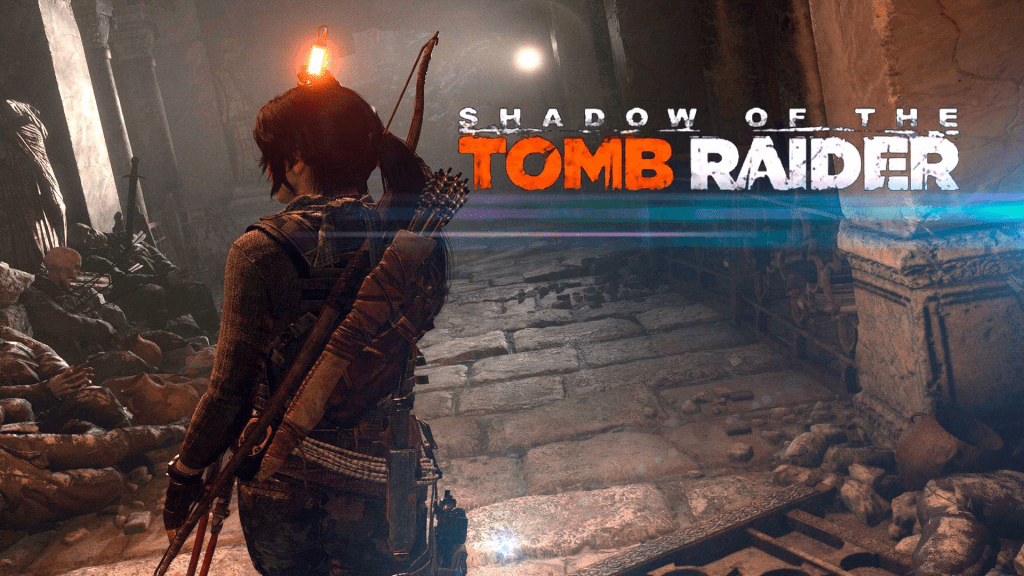
Despite the majority of the review being constructive criticism, Shadow of the Tomb Raider is NOT a bad game. It still does have enough what you would want for a quality Tomb Raider experience. It provides the right mix of combat, platforming and puzzle solving, there are more challenge tombs than ever before, it looks stunning, the voice action is top notch, and it does bring a nice logical end to Lara’s arc of her early days as a Tomb Raider. However, it just can’t seem to quite escape those it’s own “going through the motions” feel to it and the story basically gives hindered by trying to tie itself to the previous two games instead of feeling enhanced.

The combat, platforming, and puzzle solving are fine but they don’t feel evaluated to the next level like the previous two games. There are more challenge tombs than ever but you don’t feel as eager to go out of your own way and find them yourself. It concludes Lara’s own arc in a meaningful way but everything around here, from the villains to retcons of the lore, are rather half assed and certainly doesn’t add to the foundation of the first two games. I don’t know if this is because Crystal Dynamics didn’t return this time nor did Rhianna Pratchett return to write the script this time around but Shadow of the Tomb Raider just lacks that overall “WOW!” factor that Tomb Raider (2013) and Rise of the Tomb Raider had.

I would still recommend the game to fans of the series and gamers alike for the right price, especially for those that just want to see how Lara’s overall story wraps up for the Survivor trilogy. However, I just can’t help that the game didn’t live up to it’s fullest potential. There are definitely glimmers here and there for this to be the absolute best and most faithful Tomb Raider game ever made but it can just never quite reach the heights of it’s ambition, instead feeling like it’s get bogged down by them.

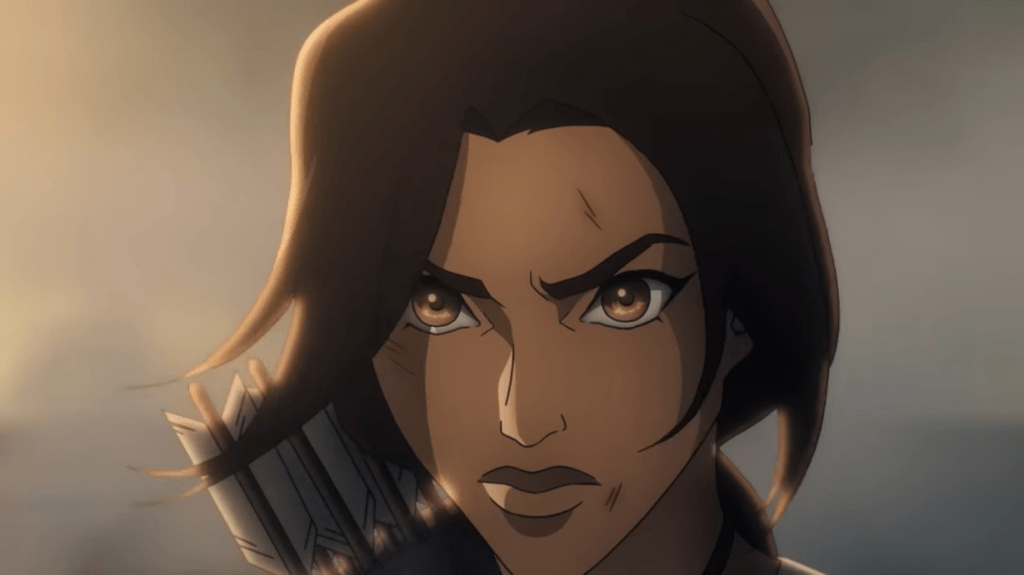
Still, I did have fun going back to these games and taking a little trip down memory lane. The newest Tomb Raider Netflix series, Tomb Raider: The Legend of Lara Croft, is set to premiere on October 10th! Let us all wish nothing for the best for the Tomb Raider we all know and love!

Thank you so much to all of those that tuned in for this marathon! Please follow and keep up to date on future content on his blog!
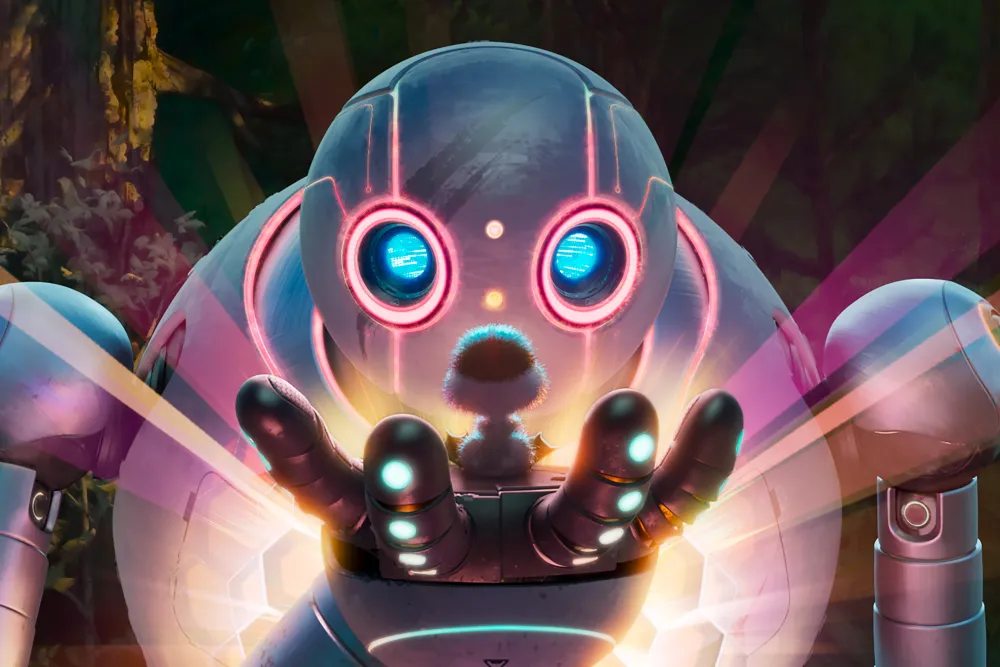
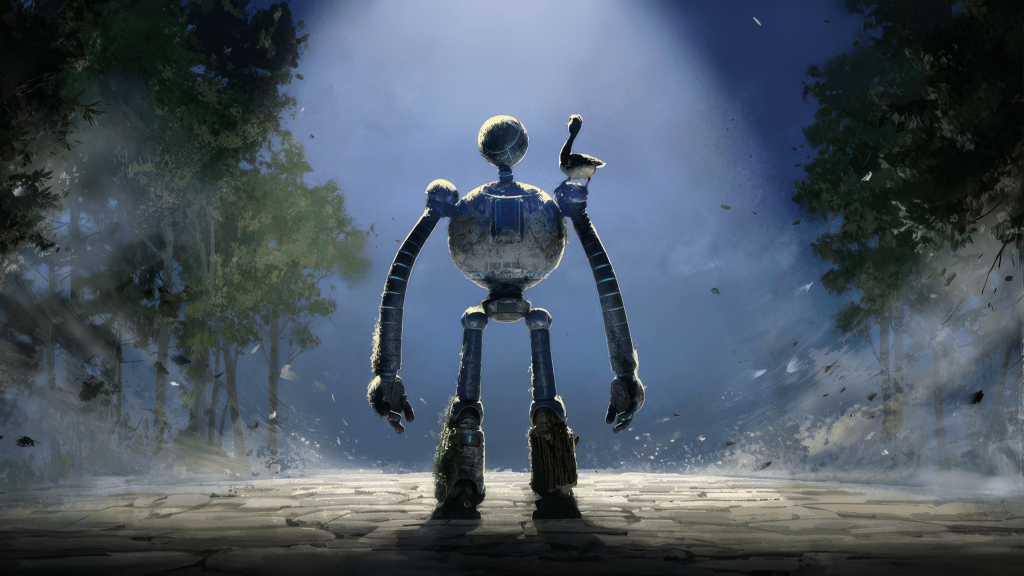
The Wild Robot (2024) Movie Review- DreamWorks’s Odyssey

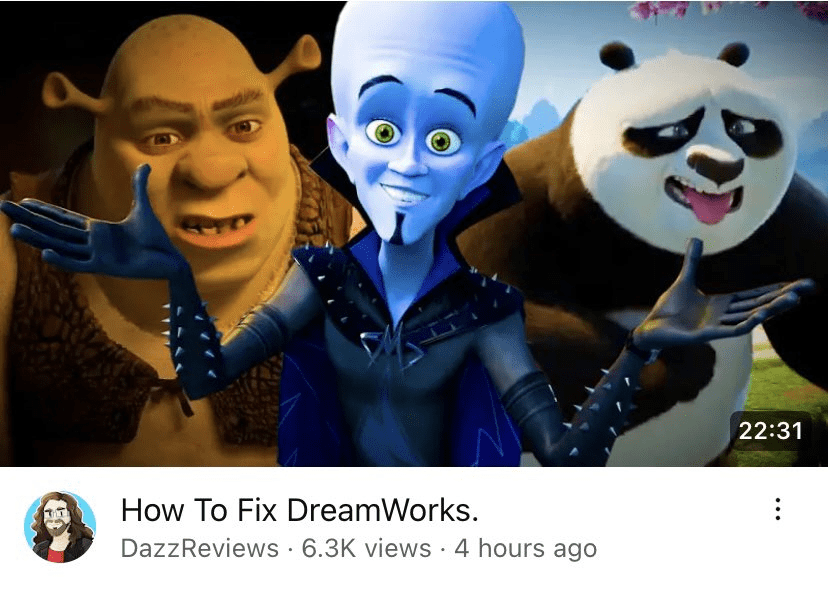
DreamWorks Animation has had quite a history and reputation throughout it’s existence. They are probably the most hit-and-miss major animation studio out there. Whenever they have a hit, it’s up there with among the best animated features out there, rivaling the very best of other big animation studios out there such as Disney, Pixar, and Studio Ghibli. Whenever they have a miss, it’s down there with some of the very worst animated features out there, rivaling the very worst of infamous animation studios such as Sony Animation (the Spider-Verse movies and the original Cloudy with a Chance of Meatballs aside) and Illumination (the Super Mario Bros Movie and the original Despicable Me aside). Regardless of what you think of DreamWorks personally, they are certainly…..an interesting company to say the least.

However, things are changing MASSIVELY for the company with the release of The Wild Robot. It’s set to be the final film to be animated entirely in-house by DreamWorks, with every future animated release moving forward being operated heavily with outside animation studios. They also got an animation legend in Chris Sanders to helm this picture, the man who directed animated classics such as Lilo & Stitch and How To Train Your Dragon and has writing credits for many beloved Disney classics from the 90s such as The Lion King, Beauty and the Beast, Aladdin, and Mulan. Putting those two important, distinct factors side-by-side, you would think that DreamWorks and everyone involved with The Wild Robot will want to end this wild, uneven in-house run of theirs with an absolute bang! Well, I’m proud to claim that they did all of that and more!
The Wild Robot is my favorite film of the year and is easily one of the best DreamWorks films ever made. It represents the pinnacle of DreamWorks Animation, delivering one last final triumph before they have to rely on other tools and resources for the immediate future. The animation is jaw droppingly gorgeous, the characters are all engaging, endearing, and wonderful to follow, the voice cast is all terrific with everyone being 100% committed to their role, the musical score is mesmerizing and carries the film on it’s own on several occasions, and the way it tackles the themes surrounding survival, parenthood, kindness, purpose, and coexistence is nothing short of marvelous. If you are looking for an animated film that is manages to cross that fine line between being fun and entertaining for kids and smart and engaging for adults, look no further than with DreamWorks’s latest masterwork, The Wild Robot.

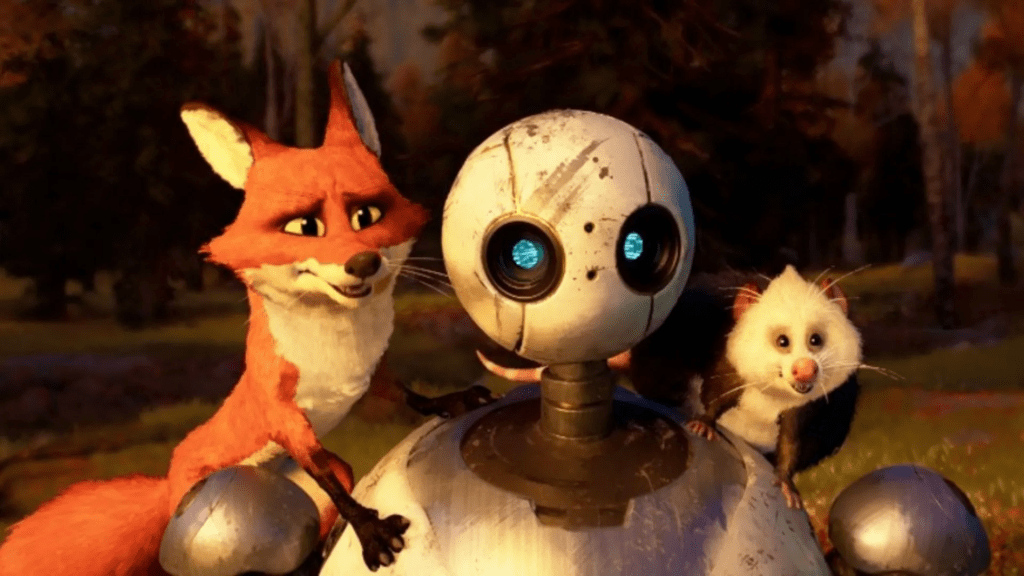
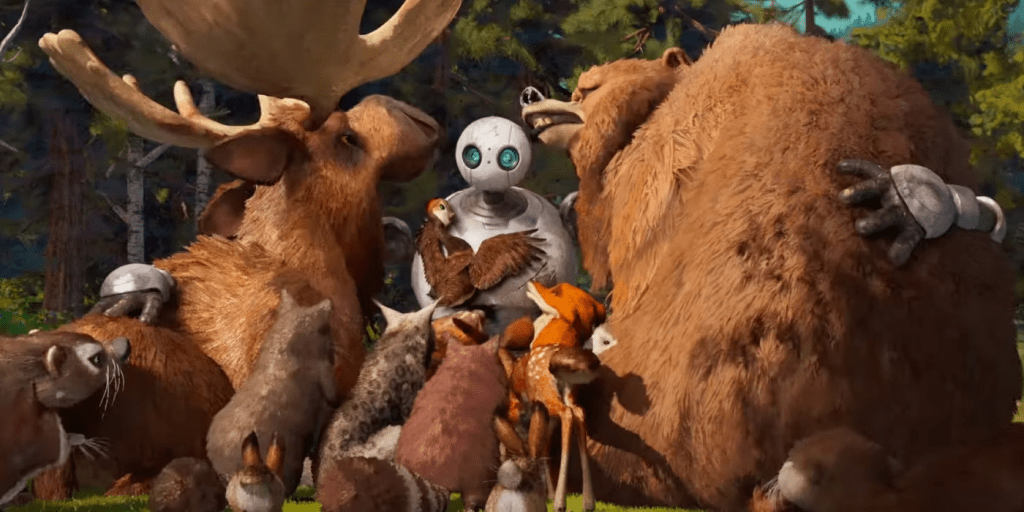
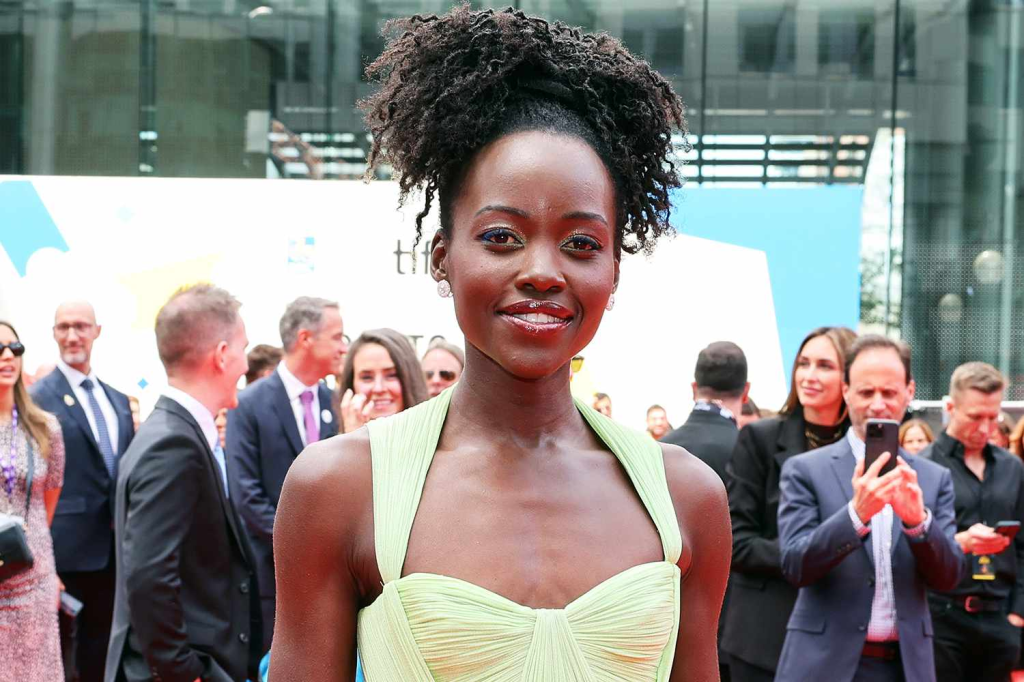
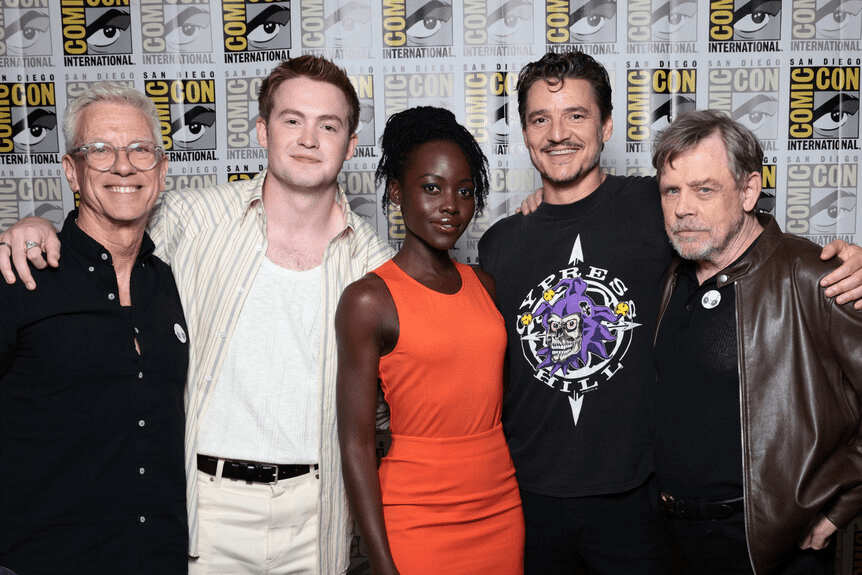
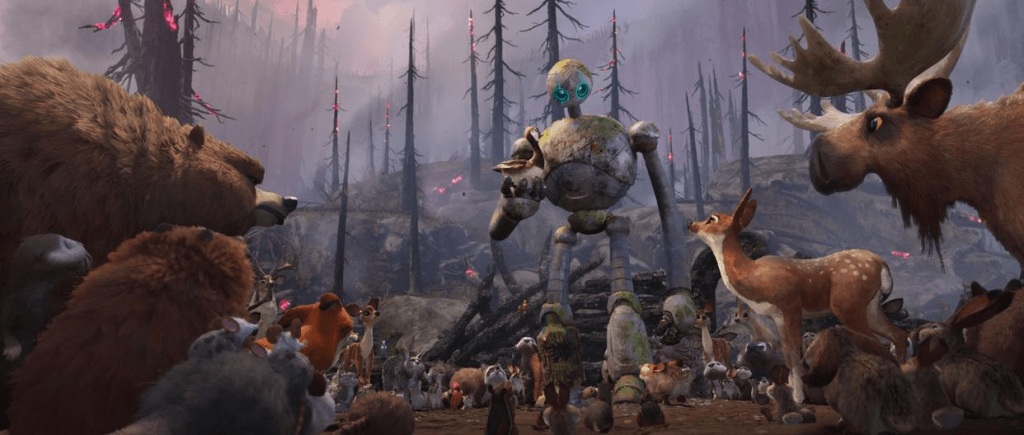
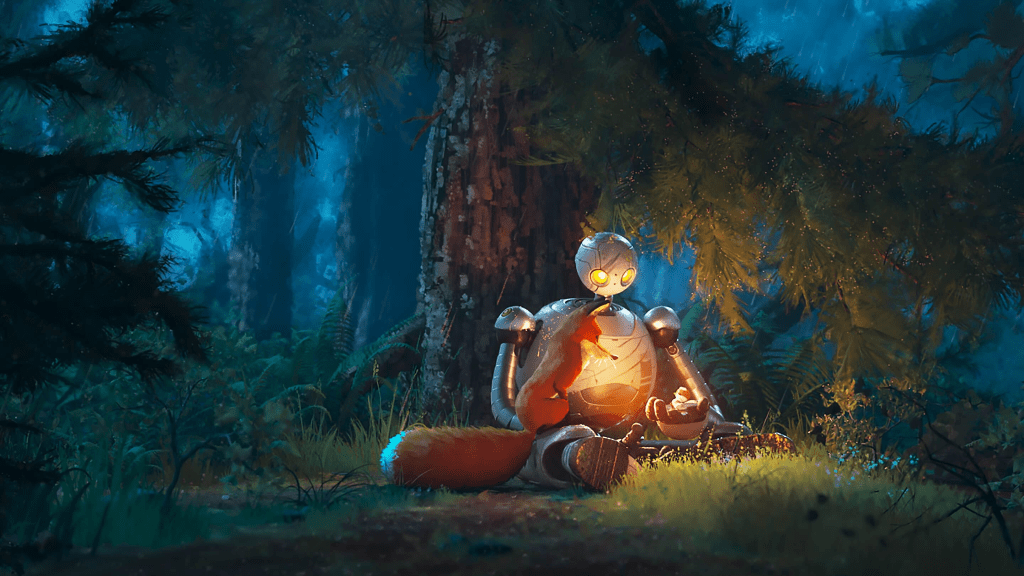
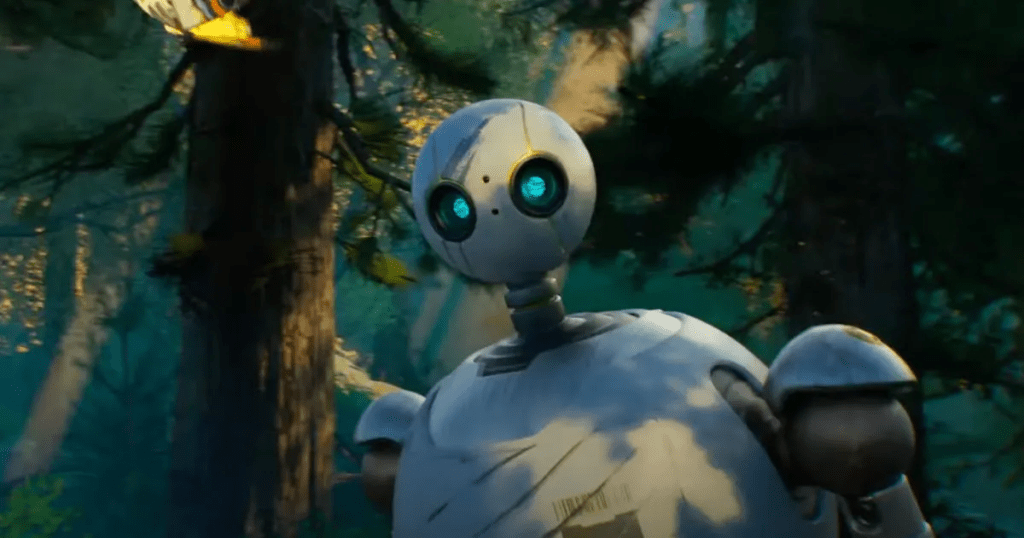
Plot Synopsis: We find a robot known as ROZZUM Unit 7134 (Lupita Nyong’o), A.K.A. Roz, that has been abandoned on a deserted island full of wild animals, with no memory of who she is or where she came from. These wild animals don’t take too kindly to Roz’s arrival, believing her to be some sort of monster that was sent to exterminate them. As she learns to adapt to the wilderness with these other estranged animals that don’t seem to like her or even each other, Roz finds herself having to take care for a little gosling (Boone Storme), due to the death of his parents, which Roz may or may not have been responsible for. All the while she casually meets a mischievous red fox named Fink (Pedro Pascal), who, despite his sneaky and snarky attitude, helps the two of them with their battle of nature vs nurture among the other animal presence on the island.

Roz makes it her mission and purpose to be the mother of this goose, which is named Brightbill (Kit Connor), and raise him to be one with the other birds before she can return to where she originated from. However, the more that Roz spends time on the island with her batch of furry friends, family, and foes, the more she begins to realize she might just be more than just a soulless mindless A.I. robot that she was initially programmed to be. It’s then Roz must decide where her true home lies! In the wild forest with the animals or back with Universal Dynamics, the production company where she was created from?!
On the surface, you can probably guess all the impressive achievement that The Wild Robot is able to accomplish! Yes, the animation is BEYOND gorgeous with perfect artwork, character models, and texture to boost! Yes, there is plenty of funny gags and emotional beats that both kids and adults will react the way they are intended to! Yes, the voice cast and score is incredibly strong and should get numerous nominations for every award show out there! And yes, they manage to make another film about A.I. but never EVER feeling like it was written by one! But the most impressive achievement of The Wild Robot for me is how complex, multilayered and thematically packed it is for a story that, if we are being honest, has been told many times before!

There definitely are story elements throughout The Wild Robot that contains DNA of earlier animated pictures such as The Iron Giant, Fly Away Home, Ice Age, Wall-E, and even Chris Sanders’s own How To Train Your Dragon. However, it’s these themes and layers that The Wild Robot presents that helps make this story stand out as it’s own unique thing. So much so that it feels like we are seeing this story being told for the first time ever despite it being told several times before. Instead of borrowing plot elements from other beloved animated films and doing nothing else with it, it’s CONSTNATLY throwing curveballs at you with the way it goes about these traditional tropes and story beats. This is makes certain predictable story beats actually feel unpredictable in the way that it’s actually done and told throughout the film. This is something that Sanders himself did greatly in How To Train Your Dragon and he perhaps has done it even better here with The Wild Robot.

The Wild Robot is a story of many things! This is a story about the means of natural survival in an estranged, nurtured wilderness. This is a story about discovering our own purpose while helping others discover theirs along the way. This is a story about technology and animals co-existing with one another in a more futuristic Earth. This is a story about how the pros of A.I. can outweighs the cons of A.I. if we allow it. This is a story about unexpected parenthood and how your child grows up fast right before your eyes. This is a story about the needs to come together in a time of crisis or else all will be lost. And at it’s heart, this is a story about the odyssey that DreamWorks Animation has created throughout it’s history and how it will never be the same after this movie.

There’s not a single theme here that feels half baked or put together, there’s not a single setup that doesn’t have a proper payoff, there’s not a single plot thread that doesn’t have a connective tissue, and there’s not a single character arc that gets lost in the shuffle. It’s able to juggle so much while somehow not managing to feel disjointed or loose. Regardless of what overall story arc you like the most, you should no doubt be satisfied with the way that specific arc wraps up by the end. Even if at times I did question a story direction or two, it later on answered it in a satisfying and logical away that it wiped out any mild concerns. The amount of plates is able to spend in the air at once and how many hoops it dares to jump through is able to make the film stand out in ways that it had no business of doing so. This is animation and multilayered storytelling at it’s finest and The Wild Robot might just be the next prime example for that.

For as much development that Roz herself is giving throughout the film, it simply wouldn’t work without the excellent vocal performance from Lupita Nyong’o herself. She is able to evaluate every sequence of the film where she is required to. It’s that perfect sense of optimism and joy she brings on display that bring that extra two dimensions to the character, especially when Roz becomes more human and less mechanical as the film progresses. You just know the exact moments when Roz is still in her “A.I.” form as she was initially programmed and the moments where she grows beyond that while living among the wilderness with the other animals. All of that is thanks to Lupita Nyong’o, that is able to provide heart and soul to a character that by designed is not suppose to have a heart and soul, at least until she actually does. If the Academy Awards didn’t have a such a hate boner for animated films, I could definitely see her be nominated for Best Actress come next Spring.

The rest of the voice cast is genuinely terrific as well. Pedro Pascal brings plenty of energy and levity to the character of Fink, a fox that believes himself to be selfish at the start but then becomes more selfless as he evolves with Roz, Brightbill, and the others. Kit Connor as Brightbill is able to share the beating heart of the story with Nyong’o’s Roz, a young goose who, like Roz herself, is trying to adapt with the others as someone more “special”. Boone Strome also does good as the younger, more joyful version of Brightbill. Catherine O’Hara fits well in her role as Pinktail, the mother figure that Roz needs to learn to fit into in order to complete her mission. Bill Nighy as Longneck and Ving Rhames work well as the wise elder goose and falcon who helps Roz teach Brightbill how to fly high in the sky. Stephanie Hsu’s Vontra is incredibly suited as basically the closest thing that this film has to a main antagonist, even if she really only plays a major factor in the third act. And while Mark Hamill and Matt Berry’s characters of Thorn and Paddler aren’t in the film nearly as much as you would expect with big name actors, they blend together just well and even unrecognizably with the rest of the cast whenever they appear on screen.

There’s not enough great things you can say about the animation in The Wild Robot. It is purely stunning and a treat for the eyes from the beginning to the very end. There are so many beautifully done sequences that will take your breath away from both a visual and emotional standpoint, so many frame shots that you will want hung on the wall in your room, and so much imagery that adds to the pure visual and layered storytelling on display. Sanders has gone on record that he took inspiration from traditional Disney classics and the works of Hayao Miyazaki and he’s able to find that perfect balance to make the animation stand out in it’s own, unique form. Even in an age where just about every animated movie looks good, The Wild Robot shows that there is still plenty of room for animation to grow and push unexpected boundaries. This proves once again why animation is a medium that needs to be taken more seriously. You could not tell a story this good without the stellar animation to back it up every step of the way.

And of course, a special shoutout has to go to the composer Kris Bowers. The Wild Robot has one of the best scores of any film this year and perhaps any animated film in recent memory. It’s able to fit the tone and mood of every single scene, managing to find the right tune that perfectly captures the emotion that the characters and audience are suppose to feel at every given moment. In some ways, the score kinda feels like a character of it’s own, being able to fit right in with Roz, Brightbill, Fink, and the others, as they learn to grow and adapt into something of their own. That is about the best possible compliment you can give a film score and Bowers certainly earns it with his tremendous work here.

For a film where at least 99% of it’s cast is not human, The Wild Robot manages to be the most human feeling film I’ve seen in 2024. That one glimmer of joy and optimism in a world that is filled with sadness and despair. It’s one of those rare films that manages to be about everything but also is able to make room for everything at the same time. Just like with any movie I give a 4 out of 4 star rating to (Yes, that is the rating I’m giving this film!), there are definitely nits you can pick such as certain side characters being too sidelined and the pacing feeling a bit too breakneck at points, but the journey that The Wild Robot takes you will make everything feel completely whole by the end of it.

The most bittersweet part of The Wild Robot is how the overall arc of Roz can be seen as the direction DreamWorks plans to take moving forward. Even when being controlled by a mechanical and soulless corporation like Universal that is taking advantage of them for one distinct purpose (A.K.A. making money) and nothing more, there will still be a heart and soul DreamWorks will find within themselves that will make them continue to stand out in ways that go beyond what Disney, Pixar, Sony, or Illumination are capable off. The lows will still remain but the highs will make it all worth it by the end.

Thank you to all the folks at DreamWorks who worked in-house for the company and I hope the very best awaits you in the future!

Other comments:

  • I STRONGLY recommend staying through the credits. Not only because there is in fact a post credits scene but as a dedication to all the hardworking folks at DreamWorks, as they will now be outsourced by other animation studios overseas. It would mean the world to the animators and artists that worked on this masterpiece!

  • I’m relieved how we can have an animated kids film in 2024 that actually makes jokes about death and isn’t afraid to have characters say “kill” all the time.

  • This feels like the kind of animated film that I would watch with my brother and mom during the summer theater kids/family marathon that would always play at my theaters. I’m sure this film will be replaying CONSTANTLY throughout the next several summers!

  • Lupita Nyong’o has probably the most soothing voice ever!

  • We seriously need to talk more about Chris Sanders and all the amazing things he has contributed to animation. He has been responsible for several of our favorite Disney and DreamWorks movies since we were a child. The man just deserves more respect!

  • Also, one random fact, did you know that Chris Sanders also does the voice of Stitch as well? That is just……remarkable!

Rise of the Tomb Raider (2015) Game Retrospective/Perspective/Review

Not gonna lie, I can’t decide if I should call this a “retrospective” or “perspective”. That is mostly because a lot of time has passed since this game came out but not quite enough to where it can be considered “retro” or “nostalgic”. Because of that, I’m gonna have my cake and eat it too and call it both a retrospective and perspective. I guess you could call this a PER-RETRO-SPECTIVE! I don’t really know and care but hey, for those that do care, there you go!

2015 saw the arrival of the next installment with Lara Croft known as Rise of the Tomb Raider, once again developed by Crystal Dynamics and published by Square Enix. This acted as the sequel to Tomb Raider (2013), the middle chapter of the Survivor trilogy, and the 11th entry in the Tomb Raider franchise.

Development of Rise of the Tomb Raider began shortly after the development of Tomb Raider (2013) concluded. Crystal Dynamics wanted to take the next big step forward with Lara Croft while also addressing player feedback from the previous installment. This included an emphasis on more puzzle and challenge tombs while reducing the number of quick time events. The development team traveled to several locations in Turkey, including Cappadocia, Istanbul, and Ephesus, in order to faithfully design Kitezh. Powered by the Foundation engine, the game was also developed by Eidos-Montreal and Nixxes Software, certainly contributing to the stronger engine of the game, that saw much stronger graphics, presentation, and an incredibly smooth 60 FPS.

During E3 2014, Rise of the Tomb Raider was announced as an exclusive for the Xbox 360 and Xbox One. This sparked quite amount of controversy among gamers and fans alike. It was shortly after the backlash ensued that Square Enix confirmed it would only be a TIMED exclusive for the Xbox 360 and Xbox One and would later make it’s way to the PlayStation 4 several months later. Microsoft paid for the game to be a timed exclusive in the hopes that it would pushed for more Xbox One sales during the holiday season of 2015. The Xbox 360 and Xbox One versions came out on November 10th, 2015, with the Windows version releasing just three months later on January 28th, 2016, and finally released on the PlayStation 4 on October 11th, 2016.

There were big concerns about the sale numbers for Rise of the Tomb Raider from several game journalists. Not only because it would be a timed exclusive for the Xbox consoles but it would also be released on the same day as Fallout 4. Despite the concerns, both Microsoft and Square Enix were reportedly very satisfied with the games sales at it’s initial launch, with the latter likely being more satisfied with the sales as the game would be ported to other consoles. As of November 2021, it has been reported that the game has sold nearly 12 million copies worldwide, with the estimated number being around 11.8 million.

Like it’s predecessor, the game received strong reviews and critical acclaim. The majority of the praise was giving to the beautiful graphics, the polished gameplay, the characterization of Lara Croft, and offering much more variety of content than the previous game. However, some felt that the game lacked innovation and didn’t take nearly as much risks as it should. With Rise of the Tomb Raider approaching ten years old, let’s see how the middle chapter of Lara’s prequel origin story holds up!

Story:

Taking place one year after the events of Tomb Raider (2013), we follow archaeologist Lara Croft, who is suffering from PTSD from her experience with the supernatural on Yamatai, struggling to explain such experience to those around her. Desperate for answers, she turns to her late father Lord Croft’s research on the lost city of Kitezh, which promises the power of immorality. Lord Croft’s partner, Ana, arrives and warns Lara to not pursue that Lost City, as that drove her father to ruin and suicide. Now understanding the obsession her father had as an archaeologist, Lara ignores her warning and makes way to the Forgotten Cities in Syria, hoping to uncover the tomb of the Prophet of Constantinople, a key figure in the Kitezh legend.

However, once Lara arrives to claim the tomb, it’s empty. Her arrival is interrupted by a new deadly force known as Trinity, an ancient order of knights turned paramilitary organization investigating the supernatural, and their leader, Konstantin. After Lara is able to escape, she discovers a symbol etched into the tomb, which she links to a book on Russian religious history that was a part of her father’s studies at Croft Manor. She learns of an artifact called the Divine Source, said to be capable of granting that immorality that Lara is seeking from the legendary city of Kitezh.

As Lara goes on a new journey, she teams up with her old friend Jonah to retrieve the artifact while also running into a handful of allies/rivals new and old. There’s Jacob, the leader of its inhabitants, the Remnants, and part of the descendants of the Prophet’s followers. There’s Sophia, a female village warrior who has a hard time in trusting Lara, believing her to be no different than the Trinity. And there’s Ana, Lord Croft’s Partner, who happens to be caught in the middle of the search for immorality in ways that will make Lara turned here worldview on her.

Finding herself in the middle of a dangerous adventure yet again, Lara Croft must search for the legendary city of Kitezh, find the artifact that holds that key to immorality, and stop the Trinity from possessing this unspeakable power before it places herself and her friends of old and new in great danger.

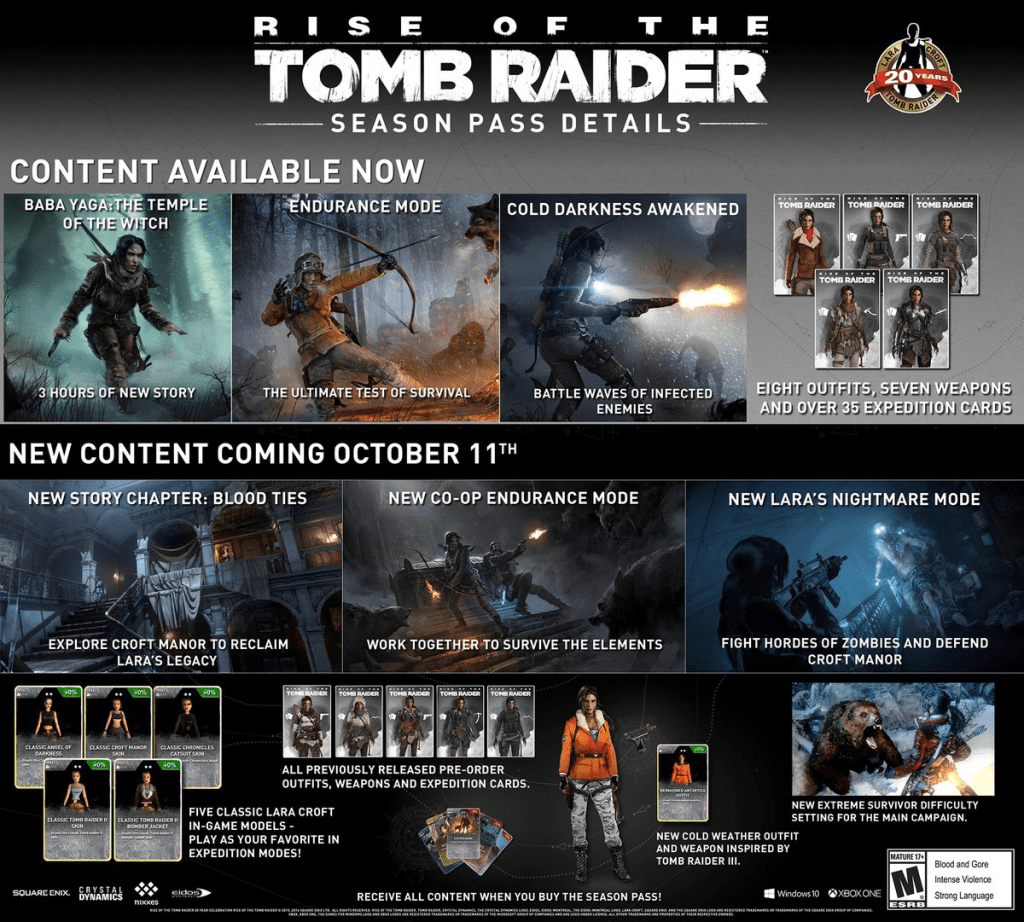
It’s also worth noting that there are actually story DLC packs this time around, adding to the campaign experience of Rise of the Tomb Raider. These story packs are titled: Baby Yaga: The Temple of the Witch, Cold Darkness Awakened, Blood Ties, and Lara’s Nightmare. I won’t go into these one-by-one here because there is not a ton here that’s important to the overall story here. However, they certainly do a solid job at expanding the origins of Lara’s bond with her father along with seeing her slowly starting to embody the Lara Croft of old. I will give a brief description of them over at the Downloadable Content section.

The overall story for Rise of the Tomb Raider plays like a classic Tomb Raider adventure with sprinkles of Indiana Jones and Uncharted 2. With Tomb Raider (2013) getting the origins of an early Lara Croft out of the way, Rise is able to jump right into the next stage of Lara’s early development by going on a massive scaled, global adventure. Her, we see Lara looking to retrieve an incredibly rare artifact that promises a certain power never before seen, with her also questioning her allegiance, her father’s legacy, and her overall commitment to archaeology along the way.

It’s really interesting to see Lara caught in the same shadow as her father once did. Just like her daddy, Lara is at her place where she has given her life to adventure and discovery, gaining such an obsession for it that it starts to affect the people she cares about him the most. The main difference though is that Lara is closer than her father ever was to achieving the unachievable, having the whole world see the Croft family for who they really are. Not just to convince the world that the Crofts were NEVER crazy but they were ALWAYS right to commit their life to archeology.

The only downside of the story compared to the previous installment is that it does provide less banter and quippy moments with the crew that Lara was with on her first adventure. It’s only Jonah this time around that makes a grand return and even then, he spends a good majority of the game separated from Lara as she spends more time with the new players added to the roster than her old allies. Also, while the Tyranny and the leader Konstantin are a definite improvement over the villains of the last game, they still come across as yet another one-note cult and are still the least interesting parts of the game.

Writer Rhianna Pratchett has gone on record in saying she wanted to create a more personal journey for Lara Croft this time around and in my mind, she definitely succeeded. This definitely felt like the next possible step in Lara’s overall arc to becoming the tomb raider. Not only with the fact that discovering tombs plays a much more important role to the overall story but also to have it tie back to her family’s legacy and her overall purpose as an adventure. It’s not just about Lara discovering a sacred power of immorality but also an immorality of her own. That immorality being that she will always be an adventure, archeologist, and tomb raider by heart. Even if it comes at the expense of her friends and loved ones, there is nothing that Lara is more romantic about than being the tomb raider.

Gameplay:

Once again, Rise of the Tomb Raider is a third-person action adventure game where you take control of Lara Croft. Lara is given a large variety of weapons at her disposal, from bows and arrows to knifes to her ice axe to pistols to shotguns to assault rifles. You use these weapons to take out enemies in order to progress through the game.

Stealth also plays a major factor to the gameplay, where you take out enemies one-by-one, create distractions to draw enemies away from Lara, and hiding in bushes to evade enemies. Lara can use the environment to fight enemies, shooting explosive barrels, tear down rope-wrapped structures with rope arrows, or ambush enemies from the high ground (Somewhere, Obi-Wan Kenobi is smiling!) This stealth and combat was a big factor in Tomb Raider (2013) and it continues to be a big factor in Rise of the Tomb Raider.

Accomplishing objectives, completing side content, and eliminating enemies give players experience points. A.K.A. XP. When players collect XP, they level up and receive a skill point, which can be spend to upgrade the game’s three skill trees: Brawler, Hunter, and Survivor. Brawler helps with Lara’s efficiency with weapons, giving her abilities and boosting her resilience against attack along with unlocking new combat skills. Hunter helps with Lara dealing with the environments and animals. Survivor covers a wide range of skills such as creating bombs and setting up booby traps. Lara can learn new languages, enabling her to discover relics, which can be traded in exchange for new equipment.

Rise of the Tomb Raider also offers semi-open hubs to explore. While far from the level of say Grand Theft Auto V or even Gotham City from Batman: Arkham Knight, these sections do offer hub worlds for those that want to relax for a moment and see what’s going on with the other villages. In the hubs are items for Lara to collect, including crafting materials and survival caches. These items and collectibles, such as relics and docs that can be revealed to players using Survival Instinct, a vision mode which once again can highlight items of interest along with enemies during combat sections. By collecting these items, players can craft items with the game’s own crafting menu. Lara can craft ammo, poisoned arrows, and Molotov cocktails and hand grenades from cans and bottles.

The open areas are also filled with wildlife, which can be hunted to collect more resources. These are also main areas where you can find new side missions and discover/explore challenge tombs for new skills, outfits, and equipment. You can do this by talking to a certain villager which can guide you on a specific side mission or finding a hidden area which reveals a secret challenge tomb. The majority of these are not required to be the main campaign but you will likely find yourself wanting to complete one on the way as the side mission might just be right in front of you for you to complete.

A main big addition that Crystal Dynamics chose to put more focus on is the puzzle solving. Throughout the game, players will find themselves solving puzzles to progress through the game, in both the main campaign and side missions. The puzzles, based on in-game physics, are often connected and lead to a larger one later on down the road. During these sections, you will find yourself solving smaller, connective puzzles in order to solve a much larger one. These sections were clearly done as a response from the fans feedback from the previous game with wanting to add more elements from the classic Tomb Raider games, such as challenge tombs and puzzle solving. If you were one of these people, then you certainly get your wish with this game.

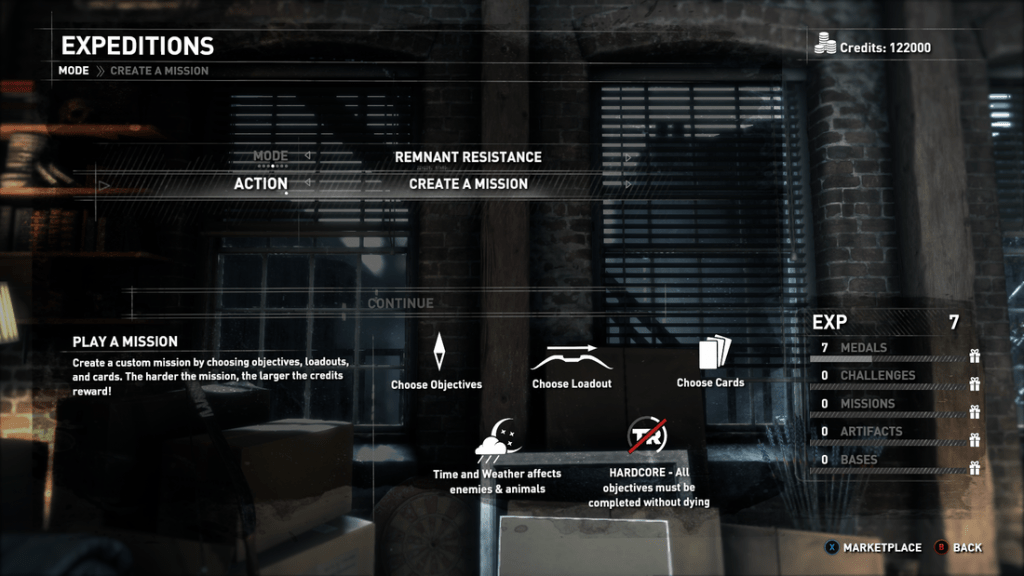
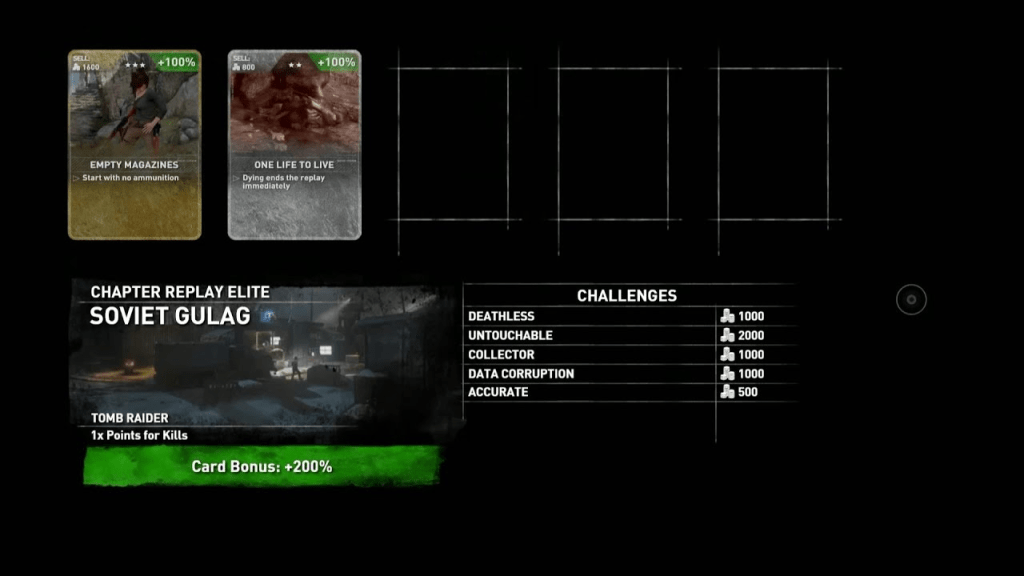
Unlike the previous game, Rise of the Tomb Raider does not have a multiplayer mode, also likely due to the lackluster response that the previous game’s multiplayer received. Instead, it introduces Expeditions, which allows players to replay the game with new constraints and requirements. This aligns with the game’s four modes: Chapter Replay, Chapter Replay Elite, Score Attack, and Remnant Resistance. Chapter Replay and Replay Elite allows players to replay any level and bring already-acquired skills and weapons to the level, Score Attack introduces score combo chains and Remnant Resistance allows to create custom scenarios, which can be shared with other players. By completing Expeditions, you earn credits which can then be used to purchase digital collectible cards to modify the gameplay. For those that are into the card collection of say MLB: The Show will certainly get a huge kick out of this.

When it comes to the overall gameplay, there is very little of me to talk negatively about. Crystal Dynamics clearly took the fan criticisms of the previous game to heart and looked to find that right balance to make Rise of the Tomb Raider a game made for both longtime and casual fans alike. In my mind, they succeed greatly at that. By improving upon the combat, stealth, and platforming of the previous game and also trimming down on QTE sections in favor of the more traditional puzzle solving and challenge tombs, there is something for any kind of Tomb Raider fan here.

I love taking control of Lara as she is going on this Nathan Drake-like adventure where she searches for the lost city of Kitezh. I love how tighter and more polished the overall gameplay felt, with making Lara control just about as well as she possibly ever could. I love being able to explore mini hub worlds this time around, which allows to interact with the other characters and villagers of the game, along with unlocking secret side missions. I love the addition of more puzzle solving missions like the original Tomb Raider games and even wanting to go more out of my way this time around to solve the challenge tombs. I love how it’s able to learn the right lessons from the likes of Uncharted while still standing strong on it’s own foundation. I just love the gameplay of Rise of the Tomb Raider overall.

Granted, if we are being totally honest, there’s isn’t too much here that wasn’t already presented in Tomb Raider (2013). Yes, there are certainly features and more expansive content this time around but the overall formula and engine remains the same. It’s clear Crystal Dynamics wasn’t looking to reinvent the wheel here and just wanted to deliver the same things that fans loved about the previous games while also incorporating elements from the classic Tomb Raider games that had become a staple of the franchise back then. While those looking for more innovation might be slight disappointed, those that just wanted more of what they got last time, mixed in with the things they got with the original games, and a couple of extras throughout should not be disappointed in the slightest.

I guess if I have a gripe, it would be that the boss fights still range from weak to practically non-existence. While there are certainly still action sequences and cinematic set pieces that will give you the impression that you are about to encounter something intense and heart bumping, the individual boss fights themselves are nothing to write home about. It still feels like you are just fighting some random enemy and beating them doesn’t feel very rewarding or satisfying.

Aside from that, the gameplay for Rise of the Tomb Raider is incredibly polished and incredibly fun. It’s able to improve on any potential shortcomings that the previous game had while also incorporating and mixing in new elements that feel organic and adds to the overall experience. You can still argue this is more of the same has before but hey, if that more of the same is done better and still fun to play, I’ll definitely take it.

Graphics:

Graphically, this game is ASTONISHING! This is easily one of the best and most impressive looking games ever released! The opening sequence in the snowy mountains alone showcases the massive power in graphics engine that Eidos-Montreal and Nixxes Software provided with the game. The textures is clear cut, the presentation is near flawless, and the 60 FPS is the pure icing on the cake. It’s one of the few examples of a “realistic” looking video game being an actual complaint. A single screenshot of this game makes it feel like the game is actually in real life and NOT from a video game.

The animation and motion capture is incredibly well done as well. This is probably the best that Lara Croft has ever looked, with face animation that even rival the king of motion capture performances in Naughty Dog. While these technical achievements were impressive in Tomb Raider (2013), there were a handful of instances of graphical errors and a cutscene or two that a character is moving like an animatronic. However, just about 99.99% of that is wiped out ENTIRELY in Rise of the Tomb Raider, making it graphically and presentation wise a visually pleasing masterpiece.

There’s not enough praise I can give to the graphics engine and production values for Rise of the Tomb Raider, probably the best and most polished aspect of the entire game. Even those that don’t like this game can’t deny how much time and effort went into making this game look as amazing and convincing as it could possibly be. Whether it’s because of a bigger budget or the involvement of Eidos-Montreal and Nixxes Software, Rise of the Tomb Raider is a technical marvel that has no business being as well made and pleasing to the eyes as it should.

Sound:

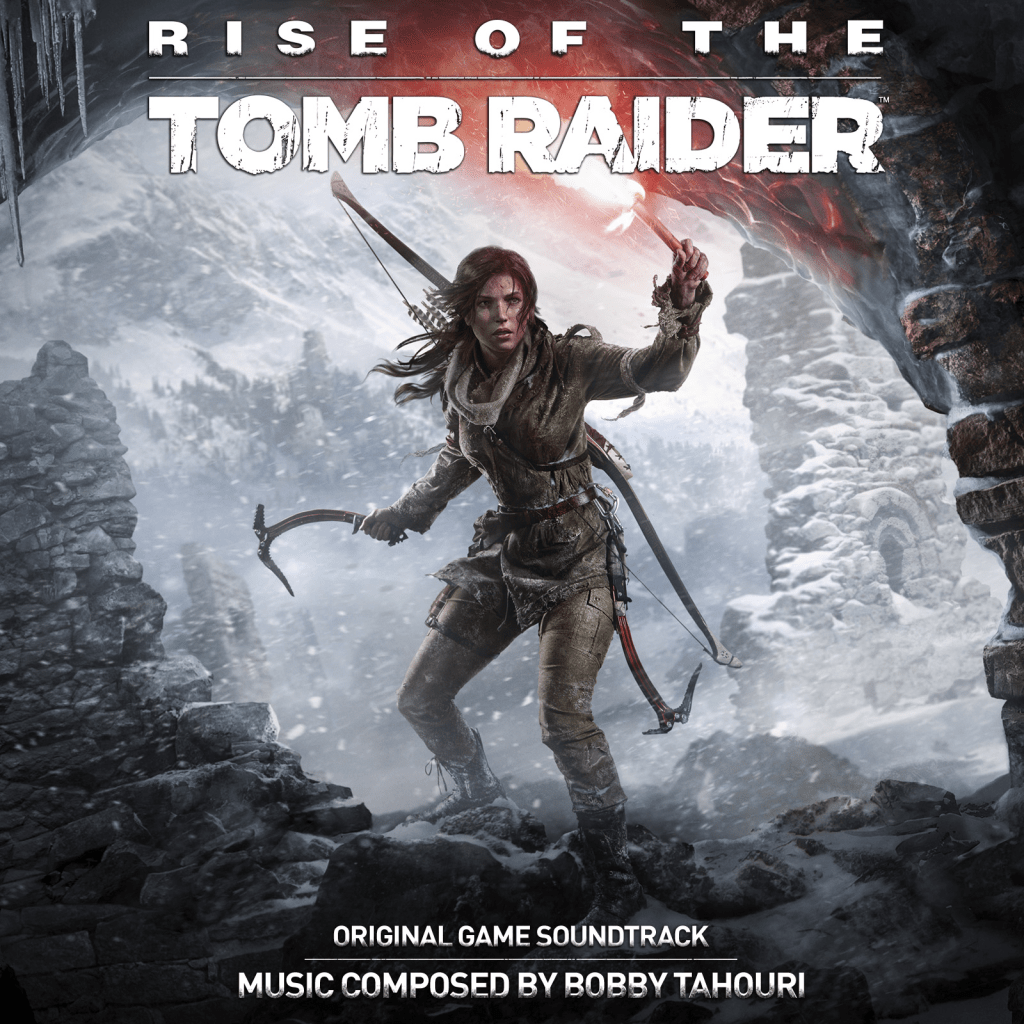
Jason Graves, the composer of Tomb Raider (2013) didn’t return this time around to the score for Rise of the Tomb Raider. The man doing that is no other than Bobby Tahouri. Thankfully, Tahouri is able to pick off exactly where Graves left off, delivering a score that works perfectly as not just an action-adventure game but a Tomb Raider game at heart. The music is once again able to fit the mood and tone of just about every single sequence in the game, from every intense action set piece to every slow breathing dramatic moment.

Once again, the voice acting is top notch all around and once again, the real main standout is Camilla Luddington as Lara Croft herself. She perfectly embodies this early years version of Lara Croft, taking baby steps into becoming the Tomb Raider we all know and love. Her tremendous line delivery and nearly flawlessly motion capture performance just feels appropriately like Lara Croft, helping greatly to match the characterization through performance with the writing.

There was clearly just as much effort put into the audio and sound design as the graphical engine and presentation. There’s not a single track or performance that feels wasted or half assed. It all looks and sounds wonderful.

Downloadable Content:

Rise of the Tomb Raider received plenty of DLC support, much more than the first game. It’s first post-launch game update released on December 4th, about a month after the game’s release. It introduced an endurance mode, as Lara hunts and crafts items while facing hidden dangers and environmental hazards. The real main standouts of the DLC came from the additional story add-ons.

Unlike the first game, Rise offered multiple story DLCs. The titles for these story DLCs being Baba Yaga: The Temple of the Witch, Cold Darkness Awakened, Blood Ties, and Lara’s Nightmare. Baby Yaga: The Temple of the Witch sees Lara investigating a disturbance in the Soviet mine, where she meets a young girl named Nadia and fights against a new foe known as Baby Yaga. Cold Darkness Awakened has Lara enter a decommissioned Soviet weapons bunker, which has been breached by a Trinity patrol, which also includes a horde mode in which Lara fights waves of infected enemies. Blood Ties has Lara explore Croft Manor, which introduces a combat-free mode while doing so. Lara’s Nightmare, which is like a mix of Cold Darkness Awakened and Blood Ties has Lara once again coming up against infected enemies that have infiltrated the Manor. This DLC was free of charge to season-pass holders and would be further expanded upon with plenty of new additions in the Rise of the Tomb Raider: 20 Year Celebration edition, which released around the same time as the PlayStation 4 version of the main game.

When looking at these DLC packs, it was clear that Crystal Dynamics wanted to provided extra content that would give the players a full money’s worth of content. Unlike Tomb Raider (2013), where most of the DLC just felt like random add-ons that were removed from the game at the last second just for the sake of squeezing extra dollars, these DLC story packs do feel like they are worth the extra few bucks for players that are curious.

I wouldn’t say you are required to play them if you don’t want to be lost in Shadow of the Tomb Raider, as they mostly feel more episodic to the main game and just random side adventures for Lara Croft. However, they certainly do help to add more expansive content to the main game and does give players more to do after completing the main campaign. These are far from the greatest DLC packs ever but it is nice to see Crystal Dynamics put extra care into the expansive content than before.

Conclusion:

The question most likely had going into if Rise of the Tomb Raider is better than Tomb Raider (2013)? Technically speaking, I would argue Yes! The production values are incredibly top notch, the gameplay is much smoother and more refined, there’s more puzzles and challenge tombs this time around, there’s much more expansive content, the story feels deeper and more personal, and of course, the graphical engine is COMPLETELY off the charts! However, Tomb Raider (2013) set the foundation, novelty and groundwork of this Survivor trilogy, the kind of foundation, novelty, and groundwork that Rise of the Tomb Raider never is able to replicate on it’s own terms. It certainly builds upon it as good and organically as it can but not to the extent that original game did. You can go back-and-forth between the two games but if I had to chose just one to play, I might be more incline to go with Rise of the Tomb Raider. However, if only one of these games had to exist, then I might go with Tomb Raider (2013), if that makes sense.

Even so, despite the unavoidable comparisons to it’s predecessor and falling a tad short of being the Uncharted 2 level masterpiece that it’s aiming for (and taking obvious inspiration from), Rise of the Tomb Raider is still a fantastic game all around and one definitely worth playing.

Would Crystal Dynamics be able to continue their momentum and save their best for last? Find out next time!

Next Up: Shadow of the Tomb Raider (2018)

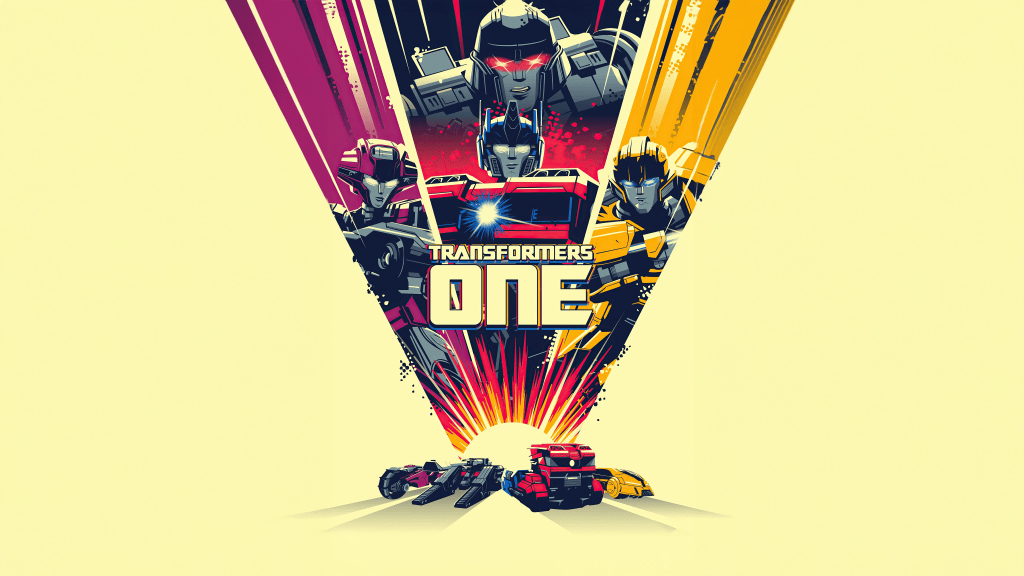
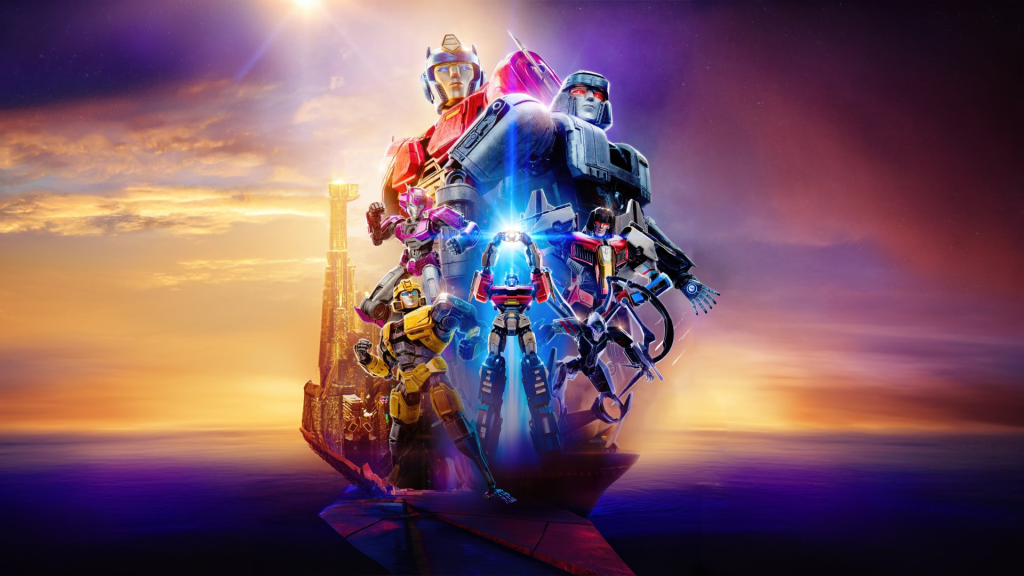
Transformers One (2024) Movie Review- Perfectly Meets The Eye

When it comes to how the Transformers themselves has fared in the world of medium, the one area where they managed to fit themselves the most admirably is with animation. Between the classic 1984 cartoon and the 1986 animated feature film, those were able to bring out the best in the Autobots themselves. By placing colorful characters in colorful environments with bright textures and imaginative cybertronic worlds, that is the area which best suits the Transformers we all know and love.

All of which is quite odd how it has taken literally 38 (!!) years before we FINALLY got a proper theatrically released animated Transformers film. We’ve gotten SEVEN live-action Transformers film, all of which (outside of the superb Bumblebee) ranged from decent to guilty pleasure to outright bad to downright abysmal. And at least 90% of those couldn’t come close to topping an animated flick from the 1980s, which basically acted as a toy commercial for the animated series. Nevertheless, director Josh Cooley (Toy Story 4) has finally stepped up and gave us all an animated Transformers film in the year 2024 with Transformers One….and it’s actually pretty darn good.

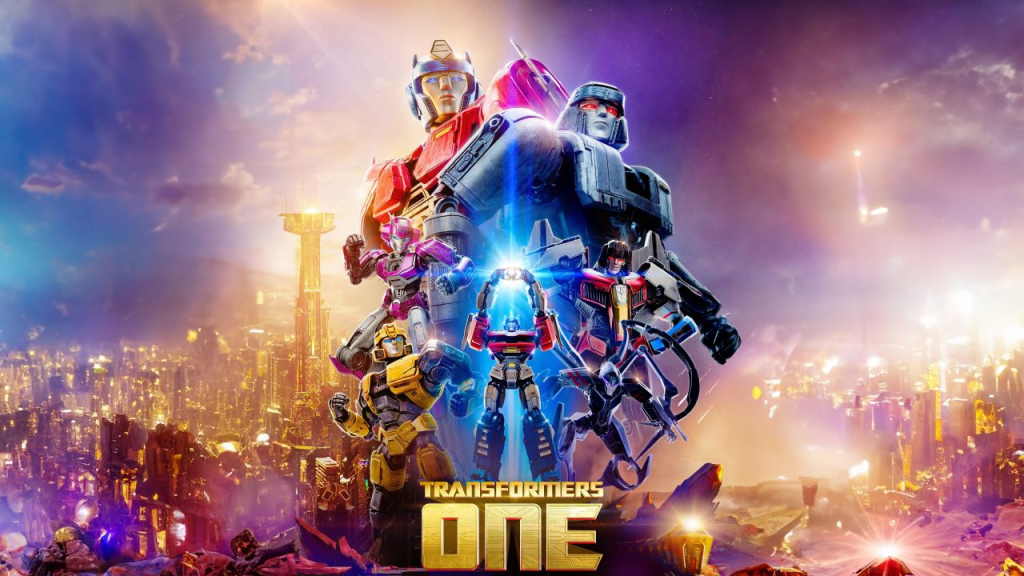
It’s certainly no masterpiece and not gonna change anyone’s viewpoint to those that have never been fond of the brand but for longtime fans of the franchise and even newcomers, Transformers One should definitely leave them with a smile on their face. It’s able to avoid most of the trappings that most prequel origin stories fall victim to, the world of Cybertron has never been more intriguing to explore, the main autobots we follow get their own unique development and moments to shine, and it’s able to stand strong as it’s own unique, enjoyable flick while leaving room for potential sequels and spin-offs. I don’t know if this is my absolute favorite of all the Transformers movies (I still have more of a soft spot for the Transformers meets E.T. and The Iron Giant riff known as Bumblebee!) but it certainly comes close and will make you realize the full potential of an animated Transformers cinematic universe.

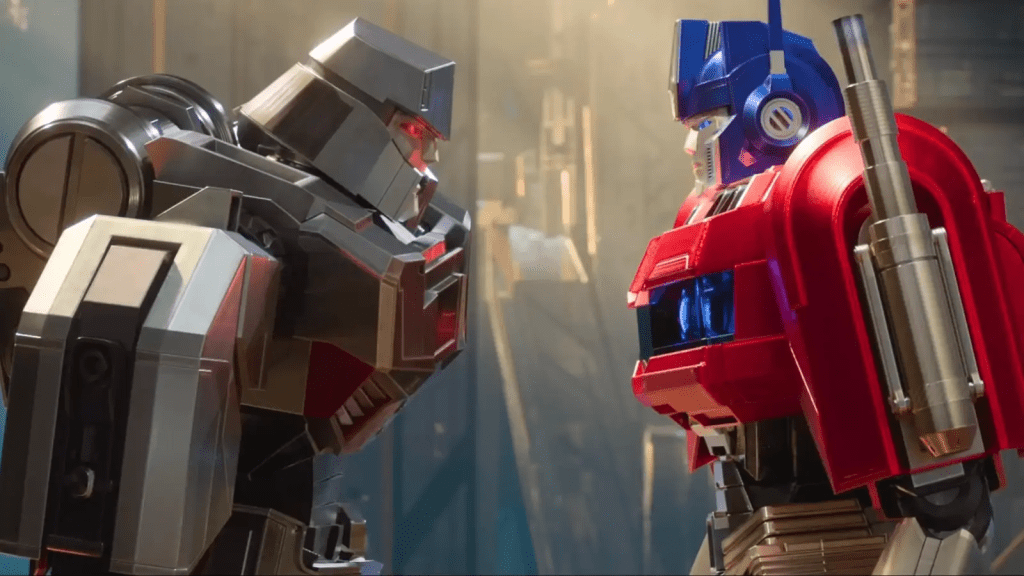
Premise: Brothers-in-arms Orion Pax (Chris Hemsworth) and D-16 (Bryan Tyree Henry) become sworn enemies Optimus Prime and Megatron.

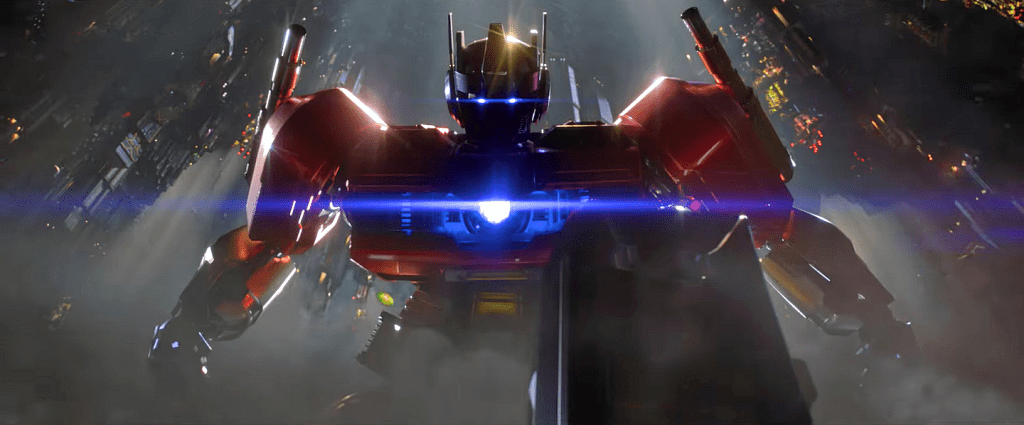
The most unique aspect of Transformers One is how it’s willing to tell it’s origin story of the early days of the Autobots without making the required plot elements feel like things that need to be checked off of a list that has to happen in a Transformers prequel. The major turning points we already know is going to happen such as Optimus Prime turning into a noble leader, Megatron turning into his villainous self, the war on Cybertron, and all the Transformers turning into their iconic selfs, is all in the service for it’s central story about betrayal, deception, and gaining optimism when both of those things occurred.

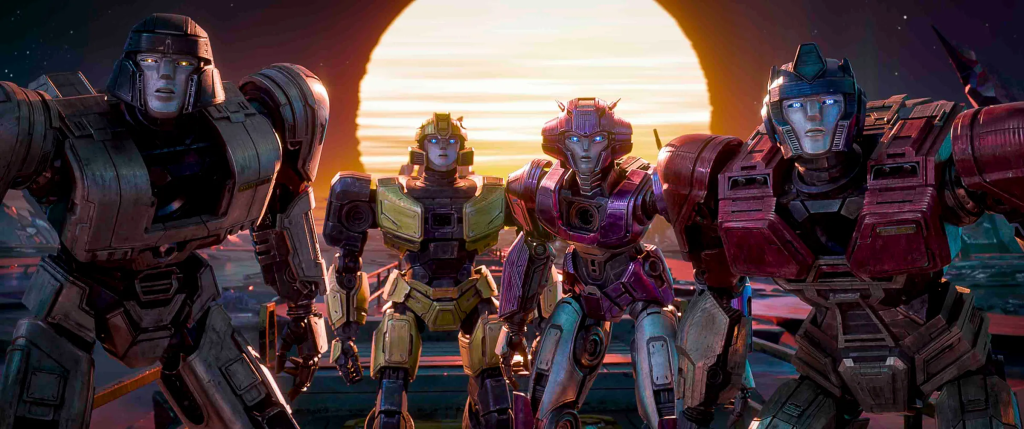
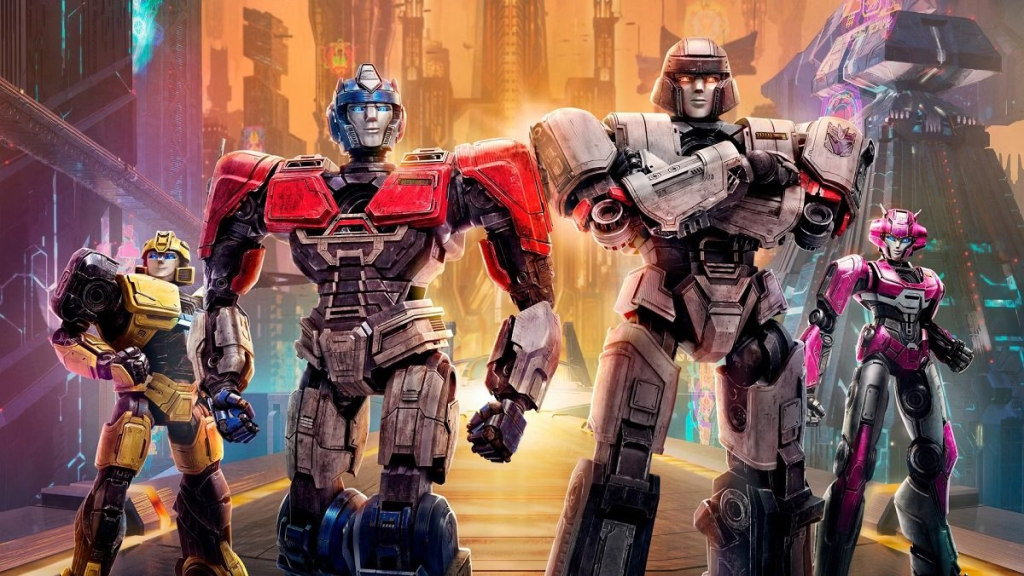
So much so that the overall premise of seeing Prime and Megatron going from allies to enemies is actually pushed to the wayside. The major of the focus is centered on Orion Pax, D-16, Elita-1, B-127, before they become Optimus Prime, Megatron, and Bumblebee (Elita is still the same!), looking to retake Cybertron having it’s been corrupted by Sentinel Prime, a leader that they once looked up to and respected from down below. The actual evolution of Optimus Prime and Megatron respectively, seeing the former growing into the ultimate hero and the latter growing into the ultimate villain, is more of a psychological conflict as the events of the war of Cybertron are happening around them and the ways they respond to it. It’s done so well that I was shocked how invested I was when that relationship does take an inevitable dark turn during a key turning point moment. That in of itself allows the majority of the runtime being spend on fleshing out the main Autobots and fleshing out the world of Cybertron in ways that hasn’t been done before in a Transformers movie.

It does start off a bit rough though, mostly leaning into the water-down comedy and slapstick that the trailers and marketing put a major focus on. There’s only so much one can take of seeing Optimus Prime in his more kid friendly self and being unable to actually transform before it gets tiring. It’s elements like that that let many people question, including myself, of whether or not an animated Transformers prequel could actually work. Thankfully, once the ball starts rolling, and the grand mission gets revealed of what needs to be done, the film committees to it’s drama to a surprising degree without letting it’s more family friendly tone and humor weigh it down.

The animation is beautifully done, being able to portray Cybertron as a very colorful landscape environment that makes one all the more curious to explore that world. The film’s unique animated style also helps the Transformers stand out much better with their designs, making one clearly different than another and very rarely making you feel like you forgot which Transformers is suppose to be which. The Autobots have never looked more appealing in film form. Not to mention, the action is able to stand out pretty well with plenty of fun fight sequences and spectacle battles, although you can tell the animators do clearly like them robot parts coming off. This was clearly a labor of love from Mr. Cooley and he shows once again why animation can and should be viewed as a top tier art form.

When it comes to the voice cast, it’s….adequate for the most part. It will definitely take getting used to hearing our beloved autobots and eventual deceptions before they grow into their badass vocal cords. Not to mention, the celebrity heavy cast is clearly on display, with hardly anyone sounding any different than these actors usually are in anything else. Even so, you can tell most of them are having fun, which makes it slightly more forgivable.

Chris Hemsworth is having a good time at playing a younger version of Optimus Prime and subtlety does start to sound more like the iconic Peter Cullen as the movie goes on. Brian Tyree Henry gives one of the funniest and most unique voice performances of 2024 as D-16/Megatron. Scarlett Johansson stands out in incredibly amusing ways as the girlbot Elita-1 (including one big plot beat or moment designed to trigger die hard cultural warriors). Keegan-Michael Key’s Bumblebee can get a bit tiring after awhile but he’s able to make his typical brand off humor work with the character. Jon Hamm as Sentinel Prime is exactly what you expect for any role that Jon Hamm takes with a character in complete control of power. Also, did you know that Soundwave is voiced by the Honest Trailer voice guy.

While it does fall short in being the Into the Spider-Verse/The Last Wish/Mutant Mayhem animated gamechanger it clearly wants to be, Transformers One delivers the action, laughs, and heart you could possibly want from an animated Transformers movie. The origins story of the early days of the Autobots is told remarkably well with hardly any beats feeling like they are in there just because it’s an origin story, the animation is gorgeous, all the Transformers get there own moments to shine, and the overall theme of different ideologies can get the best/worst out of us all is one that surprisingly works wonderfully for a Transformers movie. Plus, unlike Transformers One, you can jump right into the story and not feel lost.

It does take a while to get going and the celebrity filled voice cast, while fun, definitely doesn’t hold a candle to previous voice cast for Transformers but for those that want an animated flick with our favorite Autobots that has them front and center with no human presence to wear it down, Transformers One is definitely the Transformers movie for you.

Other comments:

  • Also, I think parents should beware that there is quite a bit of swearing in the movie. It’s mostly mild swear words such as “hell”, “damn”, and “ass” but they are in there.

  • Like Bumblebee spends over half of the movie referring to himself as the BADASS-ATRON!

  • I imagine parents will be as stunned of such swearing as the parents in my screening for Puss in Boots: The Last Wish were.

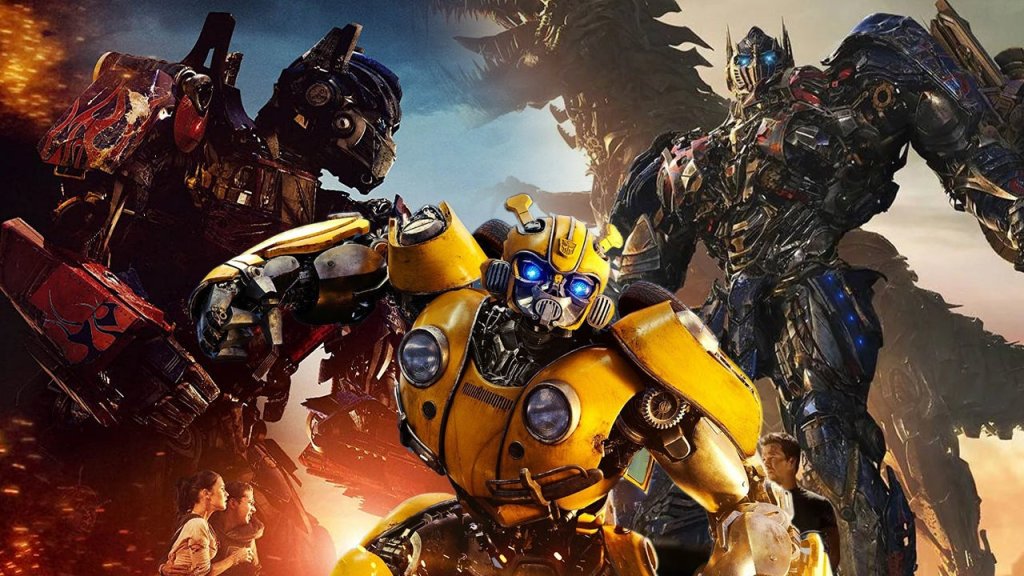
Ranking The Transformers Franchise

With Transformers One now out in theaters, its time to rank some of the biggest and most overblown blockbuster franchises of the 21st century…..along with a couple of animated motion pictures! You should need no further introduction that that! Here’s my ranking of all eight Transformers films thus far from worst to best!

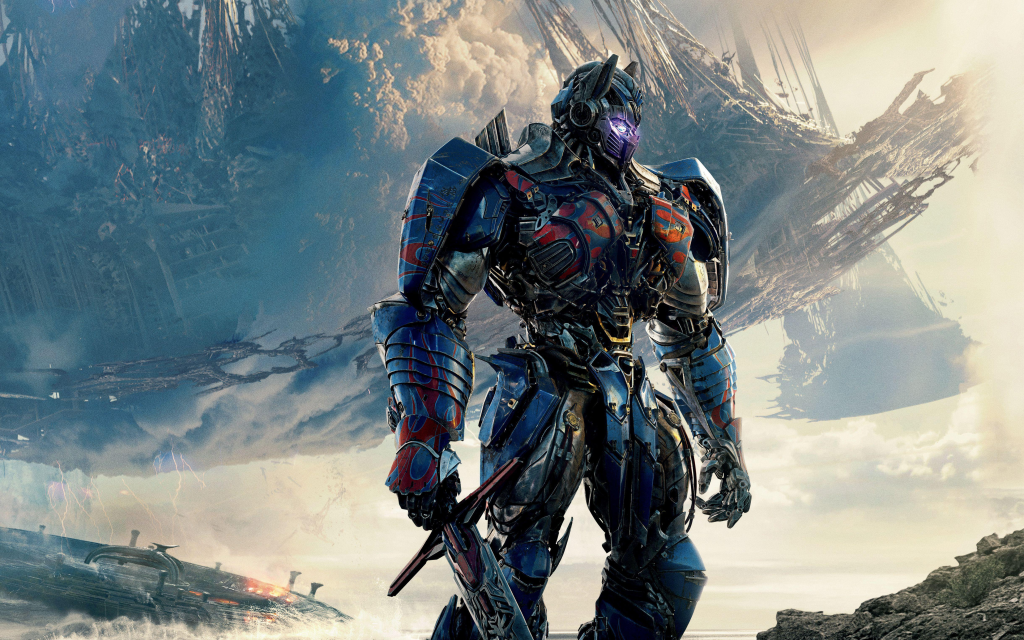
9.) Transformers: The Last Knight

If you want an example of literally everything wrong with modern cinema, look no further than the absolute monstrosity that is Transformers: The Last Knight! This is what happens when a franchise just stops caring and think releasing anything in any state is acceptable! From the godawful directing to the inconsistent frame rate to the nonexistent plot that makes the other films in the series make no sense whatsoever to the butchered characterization to the nearly unwatchable action to the bizarre virtual signaling, there is not enough words in the English language to describe this trainwreck of a feature film! This is not just the low point for the autobots, this is a low point for movies in general! You can tell Michael Bay was over this franchise even before he took the camera and as a result, ended up finishing his run with this series by saving his worst for last!

Not to mention, Unicorn being planet Earth this whole time and Bumblebee fighting the Nazi?!?! Really?!?!?! Just really?!?!?!?!

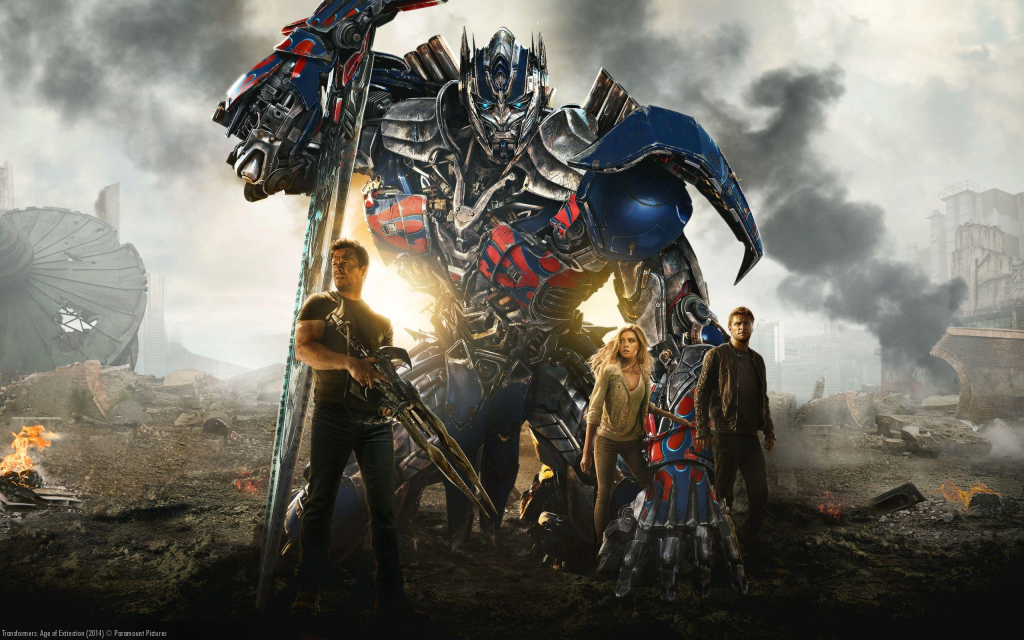
8.) Transformers: Age of Extinction

If Age of Extinction is better than The Last Knight, it’s not better by much! This bloated disaster took everything that was wrong about Bay’s first three Transformers movies and cranked them up to 11! The action is even more exhausting, the humor is even more unfunny, the characters are even more obnoxious, the product placement is even more on the nose, the effects are somehow even more blatantly unfinished and obvious, and the runtime is even more taunting than perhaps any movie that has ever existed. While this does at least feel like a complete film overall, it’s still an absolutely terrible one and easily the worst film to ever make a billion dollars at the box office.

Also, statutory rape as a plot point! I just…..what more can you say?!

7.) Transformers: Revenge of the Fallen

The fact we now live in a timeline where this piece of crap is not even the second worst Transformers film really says a lot! At the very least, this had an excuse as to why it sucked as much as it did, most notably because this movie was rushed into production due to a writer’s strike. There is also a couple of legit good action beats here, especially the forest fight with Optimus Prime. Plus, unlike the last two films mentions, this has a proper three act structure! Just unfortunate that the script is complete garbage with a story that makes no sense with multiple plot threads that go nowhere, the typical Michael Bay humor being it’s absolute worst here, has some of the most annoying and particularly racist side characters in any film, and the Fallen himself being one of the most useless villains in any movie I’ve seen. While Revenge of the Fallen may be watchable compare to the last two films mention, it’s still pretty damn bad overall and not worth your time!

At least, it gave us Megan Fox on a motorcycle though!

6.) Transformers: Rise of the Beasts

There’s not much you can say about Rise of the Beasts other than what you come to expect from a Transformers movie at this point. With the kind of material it’s adapting in Beasts Wars and what is present onscreen, it could have made for one of the better Transformers movies rather than one that is middle-of-the-pack at best. It delivers the action, visuals, and spectacle you can come to expect from these movies and does them well to make for a fine watch but it doesn’t do enough to justify adapting the Beasts Wars and it’s plot feels frighteningly similar to that of Revenge of the Fallen, only with less crude humor and no racist stereotypes. Even with the tease at the end of a potential cross-over that could make for interesting future installments, Rise of the Beasts feels too surface value and run-of-the-mill that it’s hard to get excited about this franchise on film for the near future. And if the lackluster box office numbers have been any indication, I’m certainly not alone in thinking that. Serviceable time waster but nothing more.

It gets points for the Sonic and Tails references though!

5.) Transformers: Dark of the Moon

The third installment of the Bayverse is probably the best in terms of action, scope, and effects. The entire second half of this film delivers some of the most badass action set pieces in Transformers history with every notable character, from the human characters to the Transformers, getting to play a big part in it, with Optimus Prime being at his most badass and Leonard Nimoy as Sentinel Prime being just awesome. Sam Witwicky even has an engaging arc this time around for a man who just wants to matter in the world and his new girlfriend, while no Megan Fox, is pretty cool in her own right and Rosie Huntington-Whiteley’s acting is surprisingly not terrible. It’s still held back by most of the flaws with these Bay films along with Megatron being useless for 99.99% of the runtime and containing one of the most abrupt endings in recent memory (Seriously, no end of trilogy goodbye or anything!). Even so, Dark of the Moon is the only one of the Bay sequels that I was actually able to tolerate and find a good bit of enjoyment in. This is also the one where Michael Bay most certainly should have stop at.

Also, what in the world is the title of this film suppose to mean? Dark of the Moon?! What even is that?!

4.) Transformers

If we are rating this list based off pure nostalgia, I would rank this at #1, as it’s the Transformers film I have watched the most. I’m gonna sound like a hypocrite since I spent so much of this ranking bashing Michael Bay but I gotta admit, he certainly nailed it on his first try here. I don’t think anyone could forget the experience of seeing the Transformers on the big screen for the very first time and how satisfying it felt to watch in theaters. Yes, it puts a focus on the human characters first but that felt necessary since this was the first film the autobots and deceptions were on screen so having a main human lead guiding the picture felt natural. The action is spectacularly done, with the climax of the film being an all-timer, the special effects still hold up well to this very day, the soundtrack is great, the human cast blend very well with the Transformers and even the humor is actually quite funny here (every scene with Anthony Anderson always gets me cracking). You can definitely pick apart the overly complicated plot, the overlong runtime, and the overabundance of human characters (all of which would ONLY get worse in the sequels) but for what this movie needed to get right, Transformers (2007) was able to get right pretty well on the first try that I can easily overlook any faults.

And yes, Megan Fox is hotter than the sun in this movie and I crushed on her just as hard as any teen or pre-teen did in 2007 after seeing the film for the first time!

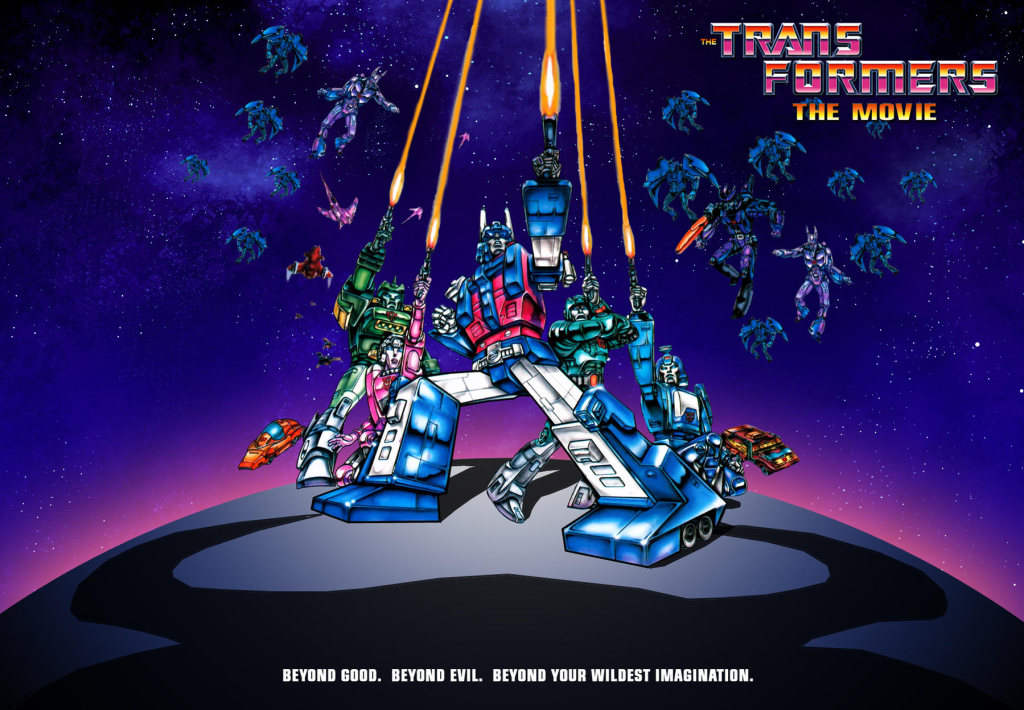
3.) Transformers: The Movie

The 1986 animated film that is based of the famous television series is certainly more than meets the eye. While on the surface it looks to be a harmless and inoffensive movie for kids that is completely design to sell toys, it’s actually a very touching and emotional tale of loss and grief with many established characters being killed off left and right, especially the ultimate fan favorite of Optimus Prime. If that doesn’t scream “balls of steel”, then I have no idea what does. The animation is also well done for it’s time with fun action, a great voice cast and a cool soundtrack throughout. It’s also nice to see human characters have a presence in a Transformers movie but does not completely steal the spotlight from the autobots themselves. It still has most of the same trappings that most of these “toy commercial” movies do and those who aren’t familiar with the animated series will likely be lost in terms of the plot but for the longest of time, Transformers: The Movie makes for one fun nostalgic movie that was as good of a Transformers movie as you could get.

And try not to cry when Optimus Prime dies! *sheds tear*

2.) Transformers One

While it does fall short in being the Into the Spider-Verse/The Last Wish/Mutant Mayhem animated gamechanger it clearly wants to be, Transformers One still delivers the action, laughs, and heart you could possibly want from an animated Transformers movie. The origins story of the early days of the Autobots is told remarkably well with hardly any beats feeling like they are in there just because it’s an origin story, the animation is gorgeous, all the Transformers get there own moments to shine, and the overall theme of different ideologies can get the best/worst out of us all is one that surprisingly works wonderfully for a Transformers movie. Plus, unlike Transformers One, you can jump right into the story and not feel lost. It does take a while to get going and the celebrity filled voice cast, while fun, definitely doesn’t hold a candle to previous voice cast for Transformers but for those that want an animated flick with our favorite autobots that has them front and center with no human presence to wear it down, Transformers One is definitely the Transformers movie for you.

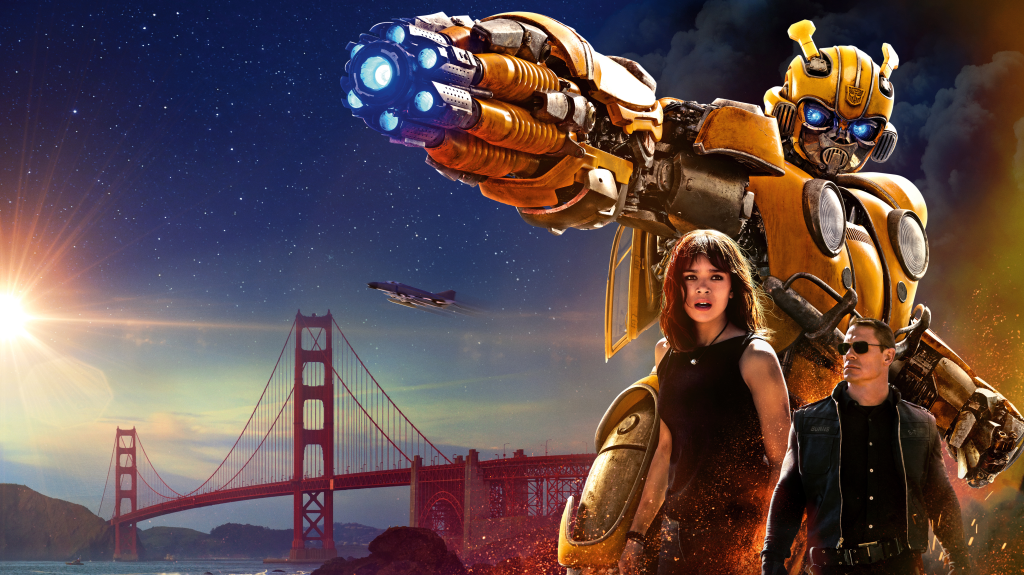
1.) Bumblebee

As much as plenty of folks have fondness for the original 1986 animated movie and will (likely) have fondness for the latest animated movie, I still believe that Bumblebee is the best Transformers film to date. After Michael Bay ended his directing run of this series with an absolute whimper, Travis Knight was able to step in and deliver a Transformers movie that puts it’s characters and emotions first and action set pieces second! The plot does hit many of the same beats as the 2007 film along with tropes seen in other “kid befriends beasts/machines” story but it’s able to work to it’s advantages by making the best use of every single one of those beats and tropes. This Transformers riff of E.T. and The Iron Giants works wonderfully because it knows what made those movies works and how the best Transformer stories with human characters work, by having the main driving force between a human being and a robot car be the beating heart in all of it. Hailee Steinfeld is perfectly casted as Charlie Watson, easily the best human character in the series, and every scene between her and Bumblebee is so wholesome and serves greatly in their development. The action in the prologue is perhaps the best bit of action in any of these movies and the rest that is presented throughout the rest of the movie is very well done. Bumblebee is full of so much heart, energy, and passion that it’s genuinely a great film no matter what way you look at it. This is one of those movies that you just wish you can give a big hug too because it’s just that sweet and charming. Because of that and more, Bumblebee is the best Transformers film to date!

Also try not to cry when Charlie says goodbye to Bumblebee at the end of the film!

Tomb Raider (2013) Game Retrospective/Review

It boggles my mind that I have to use the word “retrospective” when describing the 2013 reboot of Tomb Raider. However, considering it’s been over a decade since that game’s release, I can’t help but feel like that is a proper term to describe just how much time has flown by since this game. Because of that, yeah! Welcome to my retrospective of Tomb Raider (2013).

Tomb Raider (2013) is an action-adventure game that was developed by Crystal Dynamics and published by Square Enix. This made for the 10th entry and acted as a reboot for the Tomb Raider franchise, acting as the first installment of the so-called “Survivor” trilogy, which put a big focus on retelling the origin story of Lara Croft, exploring the character in her early adventures.

Crystal Dynamics began development soon after the release of Tomb Raider: Underworld in 2008. Rather than a sequel to that, the team chose to reboot the series yet again, re-establishing the origins of Lara Croft for the second time, which they also did with Tomb Raider: Legend, and wanted to expand upon the character even further than they have had in their prior history. Camilla Luddington was hired to voice and do motion-capture performance as Lara Croft, replacing Keeley Hawes respectively.

Tomb Raider (2013) released on the Xbox 360, PlayStation 3, and Windows on March 5th, 2013, later being ported to other consoles such as Xbox One, PlayStation 4, OS X, Linux, Shield TV, and Stadia, with extended editions of the game such as Game of the Year Edition and Definitive Edition. The game received universal acclaim from critics and gamers alike, with huge praise giving to the graphics, gameplay, and the development and characterization of Lara Croft herself. However, certain creative decisions such as making the actual tomb raiding mostly to optional side quests draw some criticism among the fanbase, with Crystal Dynamics putting more focus on action and stealth combat with the tomb raiding coming second. The game sold over 14.5 million copies by October 2021, making it the best-selling Tomb Raider game to date.

With the newest Netflix anime, Tomb Raider: The Legend of Lara Croft, set to come out next month, I went and took a look back at the recent reboot trilogy of Tomb Raider. After all, the series is confirmed to be set between the Survivor trilogy and the original series of games. Because of that, my next marathon will be to look back at Tomb Raider (2013), Rise of the Tomb Raider, and Shadow of the Tomb Raider to see how they have all held up years later.

Plot:

Set on Yamatai, a fictional lost island in the Dragon’s Triangle off the coast of Japan, we follow Lara Croft on her first ever adventure aboard the ship known as Endurance. Lara is a young woman that is looking to follow in her father’s footsteps in becoming an adventure, making discoveries and collecting hidden artifacts. Her first main objective is to find that lost kingdom hidden on Yamatai.

The Endurance is hit by a giant rain storm, causing the boat to sink completely. While Lara is able to escape from drowning to death, she is separated from her friends on the estranged island. As she searches for her friends, Lara soon discovers that the island is in fact inhabited, mostly by a violent cult named Solarii that worships Himiko, confirming the island is indeed Yamatai. Their leader is known as Mathias, who wants to everything in his power to earn the trust of Himiko.

As soon as Mathias discovers the presence of Lara and her friends, this puts them all in great danger. Lara’s best friend, Sam, is seen as great interest to the Solarii, who plans to offer her as a new host to Himiko’s spirit. As Lara meets up and reunites with other survivors, she must work with them to rescue any captured ones from the Solarii while also finding a way off the island. The crew with Lara include Whitman, Sam, Roth, Reyes, Jonah, Alex, and Grim.

As Lara Croft takes her first steps into becoming a strong adventure, she discovers that she must overcome immense adversity in order to save her friends and herself. That includes taking down enemies, using any methods of travel, using any scrap, items, or weaponry as she can, and doing everything in her power to survive against this deadly foe that is looking to wipe her out and her loved ones. It’s then that we get a first taste into Lara building a name for herself in becoming the legendary Tomb Raider.

What is most interesting about the story is that despise the game being called Tomb Raider, this is by in large an origin story of Lara Croft before getting the reputation as the Tomb Raider. Yes, the tomb raiding is in the game (which we will discuss in gameplay) but this is really a story about who Lara Croft is before that and what she is without that. While those might sound like unusual and risky ideas for a narrative on paper, Tomb Raider (2013) is able to make it work incredibly well.

The reason it all works is because of how well developed and characterized Lara Croft is as a character. This is arguably the most fleshed out version of the character throughout the character’s history. Seeing Lara go from being a fearful Curious George to a badass adventure is very exciting to see play out. The story really makes Lara Croft go through absolute hell and requires her to make the toughest choices imaginable in the means of surviving.

I especially like how, unlike most action heroes in games and movies, when Lara gets injured, she doesn’t just make a light grunt, shake it off, and get right back in the game. She clearly gets hurt and feels pain. Whenever she takes damage, she feels every bit of it. There are plenty of instances in the stories where you follow Lara while she is grunting in pain and needing to find a way to patch it up before it’s too late. It helps add to the human nature of the character and increases the stakes of the story to a near perfect degree.

Sure, there are definitely PLENTY of moments where it feels like Lara should have died and probably would have in real life but at the end of the day, it is a video game and Ms. Croft is able to make the best use of the traditional gaming plot armor. Even so, I do feel like Crystal Dynamics could have tone down the violence a little bit and not having it gain close to the violent “torture porn”.

When it comes to the supporting cast, it’s a mixed bag. Lara’s friends and crew are fun if not a bit basic. Outside of Whitman, none of them really change and grow throughout the game, really only showing up when the plot requires and to give Lara’s moments of optimism during her mission to save them and escape the island. They are likable enough where I did find myself wanting them all to survive to the end but most of their characters can be read like a book with not a single one of them being much of a page turner.

The main antagonists on the other hand, are quite weak. While having Lara going up against a violent cult is fitting for her first adventure, the bad guys she is forced to go up against could not be more bland and forgettable. There’s not much motivation or characterization behind them other than wanting to make their god/goddess happy and believing in certain morals that they think their ancestors would be proud off. I barely remember their names or any line of dialogue that stands out greater than these villainous religious cults in any games.

Aside from some minor issues with the supporting cast and villains, the narrative for Tomb Raider (2013) is very strong. You really feel the character development of Lara Croft the whole way through and seeing it all unfold is really satisfying to see. Lara is given the kind of arc that by the end, you almost can’t believe this is the same protagonist that we have been following all along. If that is not the sign of a really strong character arc, then I don’t know what is. Lara Croft’s journey along is enough to recommend at least watching all the cutscenes throughout the entire game but of course, the important part of a video game is in fact the gameplay.

Gameplay:

Tomb Raider (2013) is an action-adventure game played through a third person’s perspective. Players take control of Lara Croft herself, using an interconnected formula that combines action, adventure, exploration, stealth and survival elements. Players can traverse between the camps and across the entire island using footpaths, ziplines, and climbable tracks and walls. Many of Lara’s moves from prior games are carried over here with some minor tweaks added to it. Quick time events occur at regular intervals throughout the game, appearing at crucial points in the game’s plot where you are on the run, such as extracting a shard of metal and escaping a cave.

In terms of combat, the inspiration from Naughty Dog’s Uncharted series is clear as daylight but the game still does plenty of it’s own things to stand strong on it’s own two feet. The players have the ability to free-aim with Lara’s bow and the guns she collects. You will engage in close-quarter combat and perform stealth kills when coming up against enemies. The most helpful addition to this is Survival Instinct, an ability in which the presence of enemies, collectables, and objects to environmental puzzles will be highlighted and easy to spot. So even if you are familiar with Uncharted, Tomb Raider (2013) makes many tweaks and revisions to that combat formula which you will need to get the hang off in a way that you couldn’t with Uncharted.

The game incorporates role-playing elements that help with the progression of the game. As you go through the whole game, you earn experience points from performing certain actions and complete in-game challenges involving hunting, exploring and combat. This helps the skills and abilities to be upgrade in specific ways, such as giving Lara more storage capacity for arrows and ammo. You can also upgrade and customize weapons using scarps and materials that you collect across the island. The character progression system in the game helps with gaining better items, weapons, and equipment as you progress through the game. Even if certain items and weaponry can only be unlocked once you get to certain points of the story, there is not a single moment of this game where you should not have access to enough of them to progress through the game.

As for the actual tomb raiding itself, it’s mostly optional and only appear during side quests that don’t impact the main campaign. Player can complete multiple side quests as they explore the island and revisit certain locations. It’s only during these side mission which the challenge tombs can be searched for. There is more than enough of challenge tombs for any longtime fan of the series but these sections are NOT required to be played through in order to be the main story. It’s odd how a game called Tomb Raider, the actual tomb raiding itself plays secondary to the overall gameplay experience.

Even if the actual title of the game itself might be a bit misleading, the gameplay of Tomb Raider (2013) is absolutely top notch. I loved being in the shoes of Lara Croft in ways that I couldn’t have with any other prior Tomb Raider game. Lara has never felt more comfortable to control and more fun to play in terms of the game’s combat, platforming, and exploration. Seeing the character develop and unlocking many different skills along the way always made the gameplay stand out without feeling too repetitive or irritating. There is plenty of variety in terms of the items you use, the weapons you upgrade, and the costumes you are able to unlock. It helps enhance the replay value and motivates you to play through the whole game. I constantly found myself eager to unlock every single skill point that I possibly could because I wanted to unlock all the weapons and costumes that were available.

I loved going through every single set piece moment of the entire game, having that perfect feeling of cinematic escapism while also remembering that this is still an actual game. These sections feel right at home with an Indiana Jones adventure while still feeling proper for the adventure that we go with Lara Croft. If it wasn’t an intense stealth section that kept me on the edge of my seat, it was these jaw dropping sequences where our main female hero is pushed beyond her limits to survive.

If there is any mixed to weak aspects to the gameplay, that would mostly be the boss fights. They don’t play much differently than fighting regular enemies other than needing a few more hits to kill and another required automated section to give the impression it’s more different than it really is. It doesn’t help that the main villain is very weak and forgettable but the final showdown with him is rather anticlimactic in terms of gameplay. It misses that one last powerful punch that’s able to evaluate the game at the last possible moment.

I should also mention that there is also a multiplayer mode with this game. In each multiplayer match, there are two enemy teams: four survivors and four scavengers. And there are three different types of games for multiplayer with five different maps. These modes are Team Deathmatch, Private Rescue, and Cry for Help.

The first mode is a player vs player combat scenario, where teams are pitted against each other and whoever kills the opposing team in three separate matches is the winner. In the second mode, the “survivors” team must take medical supplies to a specific point on the map, while the scavengers must reach a certain number of kills, both within a time limit of ten minutes. The third mode, Cry for Help, involves the survivors for exploring the maps and retrieving batteries for defended radio beacons while being hunted by scavengers. Across all three modes, weapons and destroyable environments from the single-player mode are carried over.

Ngl, the multiplayer mode didn’t do anything for me. It feels like it tries to incorporate elements from other shooters out there such as Call of Duty and Battlefield along with trying to copy the multiplayer modes from Uncharted. However, there is just not as much polish put into this mode as with the single player mode and mostly comes across as a last minute addition, feeling like it was just thrown in there just for the sake of trying to give gamers more bank with their buck. I appreciate variety in video games but not when it feels like it’s something that the developers themselves really didn’t care to make. This did receive plenty of DLC which I will discuss later on in the review.

Aside from the tacked-on multiplayer mode and lackluster boss fights, I adore the gameplay of Tomb Raider (2013) to bits. It really felt nice and refreshing back in 2013 to put you in the hands of a female video game protagonist but also making her very satisfying to play as. The special abilities that Lara is giving and the maneuvers you are able to use with her makes her super convincing as a gaming action hero, constantly finding her own ways to take down enemies in ways that actually work for her character. Lara plays in a way that only she herself can stand out and not in the same ways of say…..Nathan Drake.

Yes, the challenge tombs not playing first and foremost to the gameplay might be infuriating to some but the combat, stealth, and exploration are all so well done that it’s genuinely hard to care. Power that along with a trophy/achievement system that will make you EARN every single award you get, Tomb Raider (2013) holds up greatly in terms of gameplay and delivers plenty of replay value, even after beating the main campaign.

Graphics:

Graphically, this game is FANTASTIC for a 2013 released game and still looks strong on the Definitive Edition many years later. It’s able to capture that realistic vibes that many games were starting to aim for back in the 2010s and makes you almost believe you are there with Lara on her journey. The rain and water effects looks about as convincing as it should, the characters move naturally and is certainly aided by top-notch motion capture, and it has a great, enhanced engine that helped make this game stand out not just back in 2013 but even now. While some might think the game looks too bleak, it fits for the tone that the game is going with along with the rather bleakness that Lara goes throughout the game.

It’s also refreshing to see Lara Croft herself actually look like a real woman instead of a plastic dog back in the original games. I get the developers back then were going for a more cartoon vibes with the original games but Lara’s more human and realistic design works perfectly for the rebooted games that are clearly for a much darker and realistic vibe. In that accounts, her design along with the designs for the rest of the characters are able to stand out about as well as they could.

Sound:

The voice work is absolutely outstanding overall. There’s not a single bad performance to be found here in terms of line delivery and motion capture but the real MVP is of course no other than Lara Croft herself, Camilla Luddington. Luddington really captures the younger side of Lara Croft perfectly, blending her vocal range and motion capture movements in the most convincing way imaginable. All respect to the other previous actresses for Lara respectively (ESPEICALLY by girl Angelina Jolie) but there’s something about Camilla Ludington that makes her the best Lara Croft to date imo. She’s able to capture that charm, energy, and depth of the character better than anyone ever has. I love me some Hayley Atwell but she’s got her work cut out for herself for The Legend of Lara Croft.

The soundtrack done by Jason Graves is remarkable all around. It has the exact time of music that can get your heart pumping and have you on the edge of your seat the whole way through. It feels like the type of soundtrack you would hear in any action movie, particularly Indiana Jones. My favorite track in particular is the one track that plays when you stop at a checkpoint next to the fire. It’s a nice little moving track that allows you to breathe for a split second before getting straight back into all of the intense action. With a score that is about as fist pumping and intense, having a track like that helps make it stand out greatly.

Downloadable Content:

Various amounts of small DLC were released with the game. At the game’s launch, Xbox Live users would get early access to the map pack titled “Caves and Cliffs”. The maps themselves contained the three new Tomb Raider multiplayer maps, entitled “Scavenger Caverns”, “Cliff Shantytown” and “Burning Village”. That pack would later become available for PSN and Steam users just a month later.

Other packs included, the “1939” multiplayer map pack that consists of two new multiplayer maps called “Dogfight” and “Forest Meadow”, a Japanese Language Pack on Steam, a multiplayer DLC pack called “Shipwrecked” that offered two additional maps in “Lost Fleet” and Himiko’s Cradle”, a single player outfit pack was released on Xbox Live, containing the Demolition, Sure-Shot and Mountaineer outfits.

Two versions that contained all the DLC were released in 2014. Those included the Game of the Year: Edition for Xbox 360, PlayStation 3, and PC and Definitive Edition for PlayStation 4 and Xbox One along with receiving an eventual release for Window in April 2024, exclusively on the Microsoft Store.

All of the DLC for Tomb Raider (2013) were strictly for multiplayer maps and player outfits. There was no story DLC or exclusive single player content. They were all mostly additions to add to one of the weaker aspects of the games in hopes of improving it. Considering I didn’t care for the multiplayer mode back then and now, I can’t say these DLC packs did anything for me. There’s nothing here that will enhance the gaming experience for supporters of the game nor is there anything that win any naysayers of it.

If you are curious to check the DLC out, the Game of the Year and Extended Editions should be much cheaper to buy than it was a decade ago. However, for me, it just seems like useless extras to justify pre-order/console exclusives and just random content made back when single player games felt the need to tack on a multiplayer mode, even if the game itself didn’t really acquire it.

Conclusion:

Tomb Raider (2013) is essentially a textbook example of a reboot done right! While it undoubtedly takes inspirations from the likes of Uncharted, the modern update of Lara Croft is able to embrace everything that fans have loved about Lara Croft over the years while also being able to stand by itself perfectly as it’s own unique thing. The graphics are breathtaking, the gameplay contains the perfect mix of combat, platforming, stealth, and exploration, the set pieces are terrific and genuinely cinematic in the best of ways, Camilla Luddington is perfect as the main video game heroine, and Lara herself has never a more compelling or engaging character than she has been here. While some might bark at certain aspects like the actual tomb raiding being secondary and being too overly violent just for the sake of it, the actual game itself has so much love, passion, and effort put into it that the game comes across as genuine and NOT neglect.

Opinions may vary on if the follow-ups were better than this one but this is definitely the most fresh, exciting, and action-packed that the Tomb Raider franchise has ever been. You would be hard pressed to find that freshness and novelty that 2013 has and the foundation it leaves perfectly for it’s future that you will just never find in any other adventure with Lara Croft. Whether one is a longtime fan of Tomb Raider or a newcomer to the series like I was back in 2013, I highly recommend Tomb Raider (2013) to fans and gamers alike.

Next Up: Rise of the Tomb Raider (2015)

Has Video Game Adaptions Gotten Bad Again?

Earlier this year, I did a piece arguing that video game adaptions have been mostly good recently and it’s okay to admit that. Around the time, Fallout debut on Amazon Prime to high critical and audience claim, with certain folks claiming that was the one that broke the video game adaption curse. Never mind the fact, that Arcane, The Last of Us, Mario, Sonic, Pokémon, and Cyberpunk: Edgerunners already existed before then. We can’t count those because that would go against the narrative that video game adaptions are ALWAYS bad and can never be good because…..they’re…..video game adaptions? It’s such an annoying trend to tear down or forget previous well received video game adaptions just to prop up the newest one, claiming THAT was the one that got it all right. I stated that I strongly believe that video game adaptions have been strong starting with the late 2010s to now currently in the 2020s with only a few missteps and that it was okay to admit that. Unfortunately, there has been some truly embarrassing work in the video game adaption subgenre that has made certain folks question the credibility of video game adaptions once again.

First off, there was last month’s release of Borderlands. the latest video game movie, released to an overwhelmingly negative critical reception and an absolute financial failure at the box office. It did just about everything you can possibly do with a video game adaption or even a proper film wrong. The narrative was absolutely disjointed, the action and PG-13 rated violence was absolutely subpar, none of the cast members had any chemistry with each other at all, and the editing was chopper than SpongeBob doing karate. For a movie that was trying so badly to be the Guardians of the Galaxy and/or Suicide Squad of video game movies, it tripped and constantly fell flat on it’s face every step of the way. It couldn’t even compete with a 15th year anniversary re-release of Coraline at the box office and has likely already made it’s way to digital and streaming because of how little money it has made at the box office.

Even so, despite how terrible Borderlands was, to most video games fans out there, this was simply one dud in a sea of consistently great video game adaptions for the last four to five years. The mediocrity of Uncharted wasn’t enough to overlook the awesomeness that was Sonic the Hedgehog 2 for example. Unfortunately, there is looking to be another dud of a video game adaption on the rise. While the movie itself doesn’t come out until Spring next year, the newest trailer for it was so bad that it had people already making up their minds already that another bad video game movie is coming, possibly confirming that video game adaptions are heading another dark path. Of course, I’m talking about the trailer…..for the Minecraft movie, or at the trailer titles is as…..A Minecraft Movie.

I’m not gonna discuss everything that is wrong with this trailer because 1.) I wouldn’t even know where to begin and 2.) the internet has already teared it apart a new asshole so there’s no point for me to do so. But, the fact that the main trailer has now surpassed 1 million dislikes on YouTube probably brings home the notion that folks are NOT looking forward to the new Minecraft movie. It’s easy to dismiss the majority of those as dislike bombing but I’m willing to assume the average YouTuber that was just genuinely to check out the Minecraft trailer were not impressed themselves. While there have been certain folks defending the trailer and the Minecraft movie as a whole, mostly for trivial matter such as being a movie made “for kids”, this upcoming video game adaption is about as controversial as the first Sonic the Hedgehog movie was when the first trailer debuted “Ugly Sonic” to the world (which the crew of Minecraft claimed they did NOT want that to happen). However, unlike Ugly Sonic, I don’t think there’s an easy fix to make the Minecraft movie appealing to the general public and we might just have another video game movie bomb on our hands for 2025.

These two latest additions to the video game movie canon has led people to debate the overall quality of video game adaptions at this very moment. Most notably, have they gotten bad again or if they were ever even good to begin with? Never mind the fact that we have Sonic 3 coming out on Christmas, never mind the fact that we have Arcane Season 2 coming soon, never mind the fact that we got a new Tomb Raider anime coming with the G.O.A.T. Hayley Atwell voicing Lara Croft, and ESPECIALLY never mind the fact we got the Fallout Amazon series earlier this year, which many regarded as one of the best, if not the best, video game adaption of all time. Never mind all of that…all because Borderlands was terrible and Minecraft is looking to be terrible.

This discourse over the current state of video game adaptions is similar to that of the discourse over the current state of DreamWorks animation. Yes, the tv folks made a shitty low-budget Megamind sequel and the movie folks made an iffy, short budget Kung Fu Panda sequel that was a decent box office and critical hit anyway. Even with how good The Wild Robot looks, you got folks claiming that DreamWorks has gotten “downhill” because every movie they’ve put out for the past couple of years has NOT been a Puss in Boots: The Last Wish level masterpiece. Never mind the fact that this is the same company that has always been kinda inconsistent with it’s quality, such as when they released Shrek 2 and Shark Tales in the EXACT same year! We have to forget all of that because we got to make a hundred different YouTube videos about how DreamWorks sucks now because….negativity and clickbait are the only things that sells nowadays.

This is the similar reaction that I’ve been seeing regarding the state of video game adaptions after Borderlands and Minecraft. The sky is falling, nothing matters anymore, nobody exists on purpose, nobody belongs anywhere, everyone is gonna die. All because a movie that had been in development hell for years and suffered from multiple reshoots turned out to be a shitty movie and a movie that likely had a similar development history and production will likely turn out to be a shitty movie. All of that hard work from the likes of Arcane, The Last of Us, Fallout, Mario, Pokemon, and Sonic has been flushed down the drain. We are now back in the ages of shitty video game adaptions.

Keep in mind, this is not what I’M saying but what OTHERS folks are saying right now.

Personally, I don’t buy it. Every medium, no matter how successful they are or even in their peak form, will have it’s bad moments. The original runs of SpongeBob SquarePants and The Fairly Odd Parents had bad episodes. The Marvel Cinematic Universe during Phases 1 through 3 had bad installments. There’s probably even a certain someone out there that think the worst episode of Avatar: The Last Airbender wasn’t just a mere 7/10 that most people say it is but a legit bad episode in of itself. There will always be cracks in the armor in some way, shape, or form for any successful brand. Yes, you can definitely argue that Borderlands and Minecraft are way more than just cracks in the armor but you can take any good video game adaption in recent memory to replace that armor completely and you are good to go.

Borderlands and Minecraft just seem like products that were destined to fail from the get go. Whether it’s because of a crappy development cycle or not knowing what to do with the actual source material they had, it was just never meant to be. There’s still plenty of other video game adaptions in 2024 and beyond to be excited for. I can’t see into the future but I’m pretty confident that Sonic 3 will deliver a peak Shadow and expand the fanbase of the Blue Blur even further, the upcoming Tomb Raider anime could make for a nice bridge between the rebooted trilogy and the classic trilogy with Lara Croft, and Arcane: Season 2 will be able to properly stick the landing for it’s amazing storyline. If at least one or two of those things happen, then it will be easier to dismiss Borderlands and Minecraft as being individual video game adaption failures that no longer need any focus on.

To answer the question of the title of this post, unless every video game adaption is bad from here on out, I don’t think the failure of Borderlands and the potential failure of Minecraft should change the narrative of video game adaptions being bad. If folks can just push these failures to the side just like they did with Uncharted, Monster House, and Resident Evil: Welcome To Raccoon City (I actually like this one but I know MANY people did NOT!) and put the proper spotlight on the likes of Sonic 3, Mario 2, and The Last of Us Season 2, then we will all be just fine. It’s only the folks that led Borderlands and Minecraft be the end all, be all for them that they can say that video game adaptions have gotten bad again.

Fingers crossed that Control and Alan Wake don’t suffer similar fate!

Also, fyi, I do legit hope for the best for the Minecraft movie because I do think there’s unlimited potential for that as a movie. But that first trailer was just……….ROUGH!

Beetlejuice Beetlejuice (2024) Movie Review- Burton and Keaton (Mostly) Still Has The Juice

Long awaited sequels are always destined to be a no-win scenario no matter what. If you make something that is close to the spirit of the original and hit the same beats, people will complain that it’s not original and more of the same stuff. If you make something that does something drastically different from the original and hit beats you don’t expect, people will complain that it’s not the original and went too much against the grain. There are certainly exceptions to that, most recently with Top Gun: Maverick, but it’s mostly only that….exceptions. Then comes long awaited sequels like Beetlejuice Beetlejuice (I better not type his name a third time!), which not only draws a fine line between being similar and different to the original at the same time but also tries to throw every single idea that it can at you to let you know why it took as long for it did to come out. And the results usually tends to be…..all over the map.

What makes Beetlejuice Beetlejuice stand out more than other legacy sequels out there is how it’s strengths and flaws isn’t strictly due to the over amount of fan service and callbacks itself contains (which there definitely are) but more of the newer elements that it’s tries to tackle in there to make this 36-year long anticipated sequel an enjoyable if not incredibly uneven ride. While Tim Burton and Michael Keaton certainly feel right at home in their respective roles as director and Beetlejuice himself respectively, it’s the amount of new characters and subplots that make Beetlejuice Beetlejuice stick out in both the best and worst ways possible.

Premise: Three generations of the Deetz family return home to Winter River after an unexpected family tragedy. Still haunted by Beetlejuice (Michael Keaton), Lydia’s (Winona Ryder) life soon gets turned upside down when her rebellious teenage daughter (Jenna Ortega) discovers a mysterious portal to the afterlife. When someone says Beetlejuice’s name three times, the mischievous demon gleefully returns to unleash his very own brand of mayhem.

There are plenty of things that stand out throughout the course of Beetlejuice Beetlejuice. You have Tim Burton trying to go back in time to the 1980s, delivering the same dark fantasy horror comedy thrills he did back in those glory days, you have Michael Keaton slipping back into the role of the title character like he never left it, you have an entire supporting cast both old and new that bring a certain level of energy to this completely energized world that Burton himself created. However, the main thing that stands out is the number of new elements the film wants to tackle to make the sequel stand out equally or even better than the original but can never make the time to do all of them justice.

You have Lydia about to get married while still being haunted by her past involving Beetlejuice and conflicting with her mother, you have Beetlejuice himself being haunted by his own past with the emergence of his ex-wife Delores, you have Lydia’s daughter being forced to come to her senses that ghosts are real along with hanging out with a new boy in town, and you even have a ghost detective, who was once a B movie star, trying to stop all of the madness that is happening on screen. There are ton of different story elements and characters that come together and Beetlejuice Beetlejuice tries to do every single one of these elements justice….with very mixed results.

The big occurring problem is how little each one of these subplots connect one another, almost feeling like four different episodes of a Beetlejuice series crammed into one overarching movie. Because of that, every so often one of these subplots ends up getting tossed in the closet completely to focus on the other ones, only reappearing when the movie says so.

You have a grand introduction with Monica Bellucci’s Delores who then completely disappears to the sideline for the majority of the middle act to focus on other problems that Beetlejuice and other characters are facing. You have Willem Dafoe chewing up the scenery with his side villain character, only for that to not be very relevant until the last third of the movie. You have a love interest for Jenna Ortega’s Astrid that completely gets thrown out of the picture until the last moment once something interesting with that character occurs, making it seem like the character only exists as an excuse for Astrid to enter the afterlife and for one hilariously disgusting gag.

To put it simply, there is too much going on in terms of the plot and 105 minutes is just not enough time to make all of these new elements work as well as the film clearly wants to. It makes me wonder if a director’s cut is on the rise and the film we see right now in theaters is strictly studio mandate to make sure the sequel has a similar runtime as the original.

Thankfully, the film’s main saving grace can be contributed back to the main elements that made the original stand out as well as it did, one of those being Tim Burton. Burton is able to successfully translate the horror and black comedy elements that he is well known for and make it work fluently into a Beetlejuice sequel released in 2024. While there are certainly references to modern times scattered throughout, this seems like a movie that it’s own DNA could have fit very well back in the 1980s which it originated from. Whatever script issues can be found is totally made up with Burton’s commitment to crafting creative effects, zany humor, and the energy-filled juice to make this for an enjoyable time.

The other main element that works wonders here is Michael Keaton back as Beetlejuice. While roughly having the amount of screentime as he did in the original, his presence on screen is more evenly spread out this entire time, making Beetlejuice himself not wear out his welcome and still be a riot to watch every time he is on screen. Even though there will certainly be a debate as to whether or not the character should have a meaningful arc and be tweaked to fit more in the “politically correct” times (which it does NOT btw), Beetlejuice still makes for one of the most funny, scary, and purely entertaining antagonists in horror movie history.

The rest of the cast of both old and new always equipped themselves admirably into the creative and mind blowing world of Beetlejuice. Winona Ryder is still an enjoyable presence, making Lydia’s transformation from being a former Goth teen to a hostess of a live reality show feel very organic for the character. Jenna Ortega is able to provide the right amount of depth to the character that she brought in Wednesday, even if her character here is much more one-note, and prove she’s a new Gen Z star in the making. Willem Dafoe is good in just about anything he does so him playing a more over-the-top chaotic version of Two-Face is a no-brainer for him. Monica Bellucci makes every single minute of her limited screentime worth it as Beetlejuice’s bitter ex-wife. And I whole hardly enjoyed Danny DeVito role here as the best/worst janitor ever.

The production values are quite spot-on for the most part. You can definitely tell that Burton had a vision of making his sequel feel right at home visually and aesthetically as his top films in the 1980s while still making sure it properly translates to the 2020s. The designs for the after-life ghosts and monsters are top-notch that it will likely have one person dressing up as them for Halloween, the afterlife world is always super amusing and fun to explore, there’s plenty of disgusting visuals and gore that fit right into the oddball tone that the movie is going for, and Danny Elfman has not missed a beat with his marvelous score here. Even if certain visuals and attention to other animation styles don’t flow as well as they probably should, it feels appropriately out of place enough in the world of Beetlejuice that it’s easy to let those slide.

Beetlejuice Beetlejuice is most certainly an imperfect legacy sequel but that might just be part of it’s charm. Even if it’s yet another example of Hollywood scrapping down the bottom of the barrel and chasing as much nostalgia dollars as it can, there’s never a moment on screen where Tim Burton’s own voice and passion is not shown through the entire one hour and 45 minutes of film. I just only wish that vision felt more cohesive and flown better together in terms of the different plot elements and characters the film throws at you.

For those that are just looking for a decent excuse to revisit the world of Beetlejuice or looking for a proper flick to get you in the right Halloween mood, you will likely have a good time. For those that were looking for sequel that is better or on par with the original, you might be quite disappointed. For those that want to see Tim Burton going back to what he did best in the 1980s and throw as much visuals and ideas on screen as he can, it can go either way.

However, I would argue the most important question to all of this is whether or not Tim Burton and Michael Keaton still has the juice with Beetlejuice. Considering my answer is yes, that might just be good enough for me, even if I wanted something a bit more.

The SpongeBob Movie: Sponge On The Run (2020) Perspective

SpongeBob was able to pick up another movie with his third film entry, The SpongeBob Movie: Sponge on the Run. Originally slated for a worldwide theatrical release, the rise of the Covid-19 pandemic made things much more complicated. The film received a theatrical release in Canada on August 14, 2020 and digitally on Netflix in other regions on November 5th, 2020. It wasn’t until March 4, 2021 where the movie got a full release in America, releasing as a premium video-on-demand offering and airing as a launch title for Paramount Plus. It was directed by Tim Hill, who also received credited for story and screenplay.  Jonathan Aibel and Glenn Berger, the writers of the previous SpongeBob movie, Sponge Out of Water, returned as well to come up with the story with Mr. Hill. The film is dedicated to the show’s creator Stephen Hillenburg, who passed away in 2018 from Lou Gehrig’s disease, and also served as a executive producer until his unexpected death.

Similar to the first two SpongeBob films, it received generally positive reviews from critics, praising the animation and the loyalty to the franchise. However, it did not get the same love from the fans and audiences, with many taking issues of the retcons being made to the previously established continuity, mainly how SpongeBob met his friends, and feeling like the whole movie was just one giant advertisement for the Kamp Koral spin-off show, a series which had just ended this year. For it’s limited theatrical release, it managed to make just 4.8 million dollars against it’s 60 million dollar budget. Despite the mixed to negative reactions from fans, it likely would have made much more if it’s weren’t for the pandemic.

Before the release of Sponge on the Run, things felt very uncertain about what the future of SpongeBob would consist of and if it had lost all of it’s remaining staying power and will. Yes, the series did see a revival with Seasons 9-11 and a bit with Sponge Out of Water, but this all came before the biggest possible tragedy for the show occurred, that being the passing of the creator of SpongeBob SquarePants himself, Stephen Hillenburg. With him having a hand-in guidance to Seasons 10, 11, and part of 12, it felt like he was the only person that could give SpongeBob the second leash on life that Nickelodeon wanted for their brand. With Hillenburg’s unexpected death and the announcement of multiple SpongeBob spin-offs in the works shortly after, Sponge On The Run didn’t really fill a lot of people with confidence. And……they were mostly right.

Even in the wake of Saving Bikini Bottom: The Sandy Cheeks Movie being the new whipping boy in town for fans and the animation community to take their turns whipping repeatedly, Sponge On The Run just doesn’t work in any way, shape, or form. That being said, when rewatching it again, I couldn’t help but see the germs of a potentially good SpongeBob film here. It made me think how this film would have looked before Stephen Hillenburg died.

In case anyone doesn’t know, the original title and concept for the third SpongeBob movie was The SpongeBob Movie: It’s a Wonderful Sponge. It was set to be it’s own spin on the classic movie, It’s A Wonderful Life, where SpongeBob enters an alternate universe of how Bikini Bottom would operate without his presence, with Keanu Reeves being the main guide that would follow SpongeBob throughout his journey. The movie would also dive deeper into the origin story of SpongeBob and the Bikini Bottom as a whole than any previous SpongeBob movie. In many respects, this would be like the Shrek: Forever After of SpongeBob movies.

However, around the time It’s A Wonderful Sponge was in the works, the Kamp Koral spin-off series was in the works and Nickelodeon was wanting to let people know about that. During the development of the third movie, Nick demanded that the cast and crew to use that the film to advertise Kamp Koral and have the movie tie-in to that spin-off series. Stephen Hillenburg refused, claiming he wanted the movie to be it’s own thing and have nothing to do with Kamp Koral. Nick then backed off and left him alone. It was shortly after Stephen’s passing that Nick had the cast and crew of the third movie, which was already in it’s early stages of storyboarding, scrapped the whole It’s A Wonderful Sponge premise into something else. They wanted a new script started from scratch that would advertise Kamp Koral and give Keanu Reeves a lesser role to work with. Because of all of that, we got Sponge On The Run instead of It’s A Wonderful Sponge.

I don’t know how accurate all of that information is considering these were just rumors I read about what went wrong from behind the scenes but that would all make sense to me. Because when watching Sponge On The Run, you got the sense that it was meant to be something else entirely. Not just in terms of plot, character, and story, but just have it’s own beating heart to it and making for a bittersweet culmination of the past 20+ years of SpongeBob, similar to how the first SpongeBob movie acted as a culmination of the first three seasons. However, because Nickelodeon was more concerned about advertising Kamp Koral than making a good movie, this is what we got.

Before discussing the things I actually liked or thought could have worked, let’s discuss the main negatives that fans tend to bring up regarding this movie.

First off, the story is…….non-existent. It’s nothing more than the plots of several different SpongeBob mediums with practically no connective tissue to tie it all together in a cohesive way. There’s so much of this barley there plot that is basically “been there, done that”. SpongeBob searching to find Gary? Check! SpongeBob going on a grand adventure with Patrick to find something that could cost them their lives? Check! Seeing the aftermath of Bikini Bottom when SpongeBob is not there? Check! The characters driving in a burger car? Check! A change in status quo by the end that will likely not matter much in the grand scheme of things because of Nickelodeon desire to keep the show going or else they will be dead? Check-er-aoo! When the story is not being bogged down by a bunch of filler and awkwardly implemented teases for Kamp Koral, it’s just throwing in plot elements from other, better SpongeBob material without understand why those individual stories worked in the first place.

Speaking of which, the Kamp Koral segments are the most forced and poorly implemented parts of any movie that I have ever seen. There is not a single part involving Kamp Koral that feels natural, earned, or fitting in the movie in the slightest. Every time those segments appear on screen, it’s like the movie is pausing for intermission and claiming that “WE INTERUPT THIS PROGRAM TO GIVE YOU A SNEAK PEEK OF THIS SPIN-OFF SERIES THAT NO ONE ASKED FOR OR WANTS!”. I don’t care if you are making a SpongeBob spin-off, Nickelodeon! That only makes me want to watch even less when you shove it in my face. If you thought the Avengers teases in Iron Man 2 and Age of Ultron were bad or even the Justice League tie-ins in Batman v Superman: Dawn of Justice, the Kamp Koral sections in Sponge on the Run makes those look like a perfectly fitting puzzle piece in comparison.

And the biggest offender to fans is the way that the film rewrites how SpongeBob meet his friends, only for the sake of tying in Kamp Koral to the SpongeBob mythos.

Remember how the first episode established that SpongeBob met Sandy when she was an adult? Instead, they both actually met at summer camp when they were kids, which I guess Sandy already made her way underwater when she was just a little squirrel girl.

Remember how the first episode also made it seem like SpongeBob first met Mr. Krabs or was the most familiar with him when he went to apply for a job at the Krusty Krab? Instead, they both met a summer camp when SpongeBob was a kid and Mr. Krabs was a young adult, even tho Mr. Krabs has to be like 30 years older than SpongeBob and looks more like….five or ten years older here.

Remember how Truth or Square established that SpongeBob first met Squidward when he moved in right next door to him, where SpongeBob politely introduces himself to Squidward when he first sees him? Instead, they both met a summer camp when they were kids, where SpongeBob tries to cheer Squidward up after losing a contest to him by giving him his trophy, even tho Squidward didn’t earn it in any way.

Oh, and I guess Mrs. Puffs first met SpongeBob when he attended summer camp and not when he attended boating school?

And that was also where SpongeBob and Patrick first met as well. Actually, I could perfectly buy that and that’s the only supposed first meeting here that actually makes sense.

I know certain folks out there will claim that I am just exaggerating here and that SpongeBob is not a series where you should take continuity all that seriously. The problem here is that these include elements added to the SpongeBob mythos from the start or in a main episode event with no ifs or buts about it. This isn’t some trivial matter like SpongeBob’s perfect attendance in school or work, it’s part of the main foundation that the series has established. And it’s basically only being done just for Nick to justify having the Kamp Koral series play a part in SpongeBob’s history.

Now, that those things are out of way, here’s how I think Sponge On The Run COULD have worked.

First off, the animation is absolutely STUNNING. Even though it’s a completely different animation style for SpongeBob than ever before, it actually works very well here. It makes everything so bright and colorful and leaves room for crafting the kind of animation and set pieces that no SpongeBob medium has ever had before. Heck, you could have used some of the set pieces from Sponge Out of Water that I thought were kinda lackluster and it would have worked much more fondly here. I wouldn’t go as far to say that it’s my favorite animation style for SpongeBob nor one do I care to see for every new SpongeBob thing going forward but in Sponge On The Run‘s case, it works incredibly well.

Secondly, the movie would be a least slightly coherent if they at least decided to just use ONE story element/idea they had for the third movie instead of a million all at once and still set up Kamp Koral in a way that Nickelodeon would have like. You could have gone with the original idea for It’s A Wonderful Sponge but also show an alternate universe where SpongeBob first met his friends at summer camp and have that contrast with the universe that SpongeBob has always been a part of. You could have use the plot of finding Gary and also have SpongeBob run into his own summer camp, where he remembers first meeting Gary and starting an alternate timeline where that is where SpongeBob met all of his friends. Heck, you could have just made the entire movie be about SpongeBob being a camp counselor at Kamp Koral, A.K.A. his childhood summer camp. If you did any one of those plots, this movie would have made much more sense and felt much more cohesive than the finished product.

However, there is not one aspect of this movie that perfectly displays the complete wasted potential in Sponge on the Run than the scene in the climax where all of the main characters come to SpongeBob’s defense during his public execution. This is the moment that is practically design to make or break not just your movie but your entire franchise up to this point. It’s a moment where all of the main side characters of SpongeBob come together and tell SpongeBob and the audience directly what he has meant to them for the past 20+ years. If done right, this scene could have made for a perfect culmination of the past two decades of the sponge and be a proper resolution for the whole series up to this point.

While that was perhaps the intention of the filmmakers, it’s the things that Nickeldeon forced in there that makes this scene break the entire movie instead of making it. Instead of feeling like a bittersweet way for the characters to describe how important SpongeBob is to Bikini Bottom and themselves, it’s ruined by constant flashbacks to Kamp Koral, where you have the characters disregarding everything that has happened in the past and at the moment just to give a wink to the audiences that a new SpongeBob spin-off series is in the works. This happens like four to five times, feeling like a parody of those Family Guy sketches where they cut to a random gag out of nowhere. The difference though is that while those sketches from Family Guy are meant to get a laugh or two from the audiences, the Kamp Koral sections come during a moment where the audience is suppose to be taking everything seriously.

I repeat, these Kamp Koral section take place during a moment where SpongeBob is on his death trial and his friends have to talk the King and everyone there to NOT execute him. This could have been the scene that saved the entire picture or at least have it end on a strong note. This could have been the scene that justified this film’s existence. This could have been the scene that celebrated the long history of SpongeBob SquarePants while giving it a fitting stopping point. Instead, this one scene brings everything down so hard that it’s impossible to recover from.

In Conclusion

There are plenty of other things I can talk about with Sponge on the Run that has been talked about in length by hardcore fans. Like how the film acts like snails are incredibly rare now in the ocean despite the show having plenty of different snails in multiple episodes. Or that SpongeBob and Patrick can go into a casino even tho they are technically still kids. Or how SpongeBob literally now has a name for his stove at work. Or how SpongeBob literally says the word, “crappy”. But honestly, they have been talked about so much that there’s not much I can add to that.

It’s hard to know what Sponge On The Run would have been like if Stephen Hillenburg was still alive throughout the entire production. Outside of a different title and premise, I would believe the third SpongeBob film would have acted as a perfect love letter to the entire first two decades of the show’s existence. It would have been a lovely reminder as to why kids and audiences fell in love with this yellow sponge and why he’s as important to animation and pop culture as he is. While there are definitely hints at that throughout Sponge On The Run, it can never escape that sense of cynicism and studio meddling that I imagine Tim Hill and crew really wanted to break out of.

What’s most unfortunate about Sponge On The Run is the path forward that SpongeBob has taken since this film’s release. The kind of path that proves that Nickelodeon doesn’t have a clue of what to do with the yellow sponge we all know and love without Stephen Hillenberg. And I will go into EXACTLY that path next month.

Next Month: The “New Bad” Era (Season 12-Present)