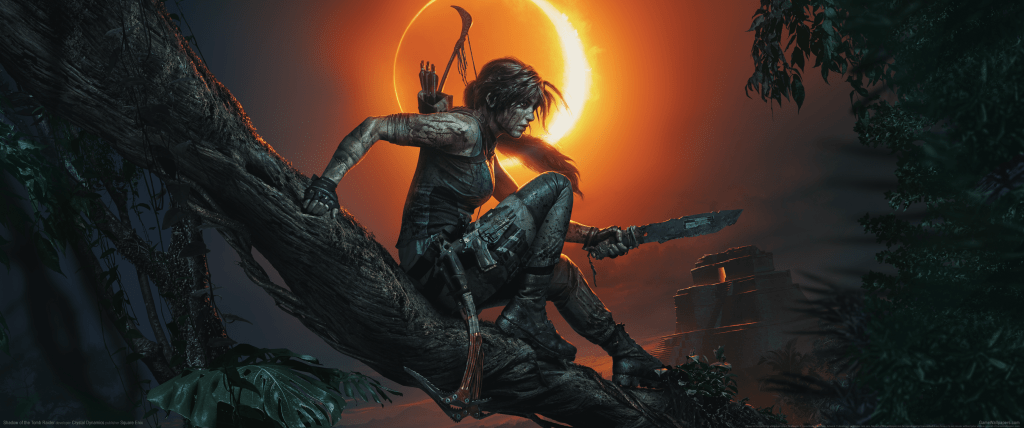
Lara Croft was given her next entry in 2018 with the release of Shadow of the Tomb Raider. This acted as a sequel to 2015’s Rise of the Tomb Raider and the 12th main installment in the Tomb Raider franchise, as well as the third and final entry of the Survivor trilogy. However, this time around, the game would NOT be made by Crystal Dynamics, in large part due to their commitment to Marvel’s Avengers. It would be Eidos-Montreal taking over developing duties with Square Enix Europe publishing the game. Crystal Dynamics did offer full support during the making of the game.
Development for Shadow of the Tomb Raider began shortly after the completion of Rise of the Tomb Raider, lasting until July 2018. It was designed to be the conclusion to Lara’s journey that started with the 2013 reboot, with a key theme being descent both through the jungle environment and into her personality. The setting and narrative was based on Mayan and Aztec mythologies, with the team consulting historians to create the architecture and accurately portray the people of Paititi. The gameplay was adjusted based on both fan feedback from the previous two games and the additions that Eidos-Montreal wanted to incorporate, most notably swimming and grappling while increasing difficulty tailoring. The game cost an estimated of 110 to 135 million dollars to make, making it one of the most expensive games ever made.
Shadow of the Tomb Raider released on the PlayStation 4, Xbox One, and Windows on September 14th, 2018, later releasing on the Linux, macOs, and Stadia in November 2018. The game did receive generally positive reviews but not nearly on the same level as the previous two games. While it was praised for putting more emphasis on the challenge tombs and puzzles, others have felt that the gameplay for this rebooted set of games had gotten stale and no longer have any innovation to boot. Despite the initial slow sales, the game would eventually sell nearly nine million copies worldwide, a total of 8.9 million to be exact.
When it comes to the three games of the Survivor trilogy, Shadow is probably the one that I remember the least. At the time it came out, I was still on cloud nine with Marvel’s Spider-Man and didn’t pay much attention to this game, despite being a big fan of the first two games. I did Redbox the game back when they still had games you could rent and never went back to it after that. I was able to get the game for free when it came out for the PlayStation Plus. For what I recall, I was rather lukewarm against the game. I enjoyed it well enough but felt it didn’t hold a candle to it’s predecessors.
Now that plenty of time has passed and I’ve gone back to the game since, how does Shadow of the Tomb Raider hold up now? Let’s find out!
Story:
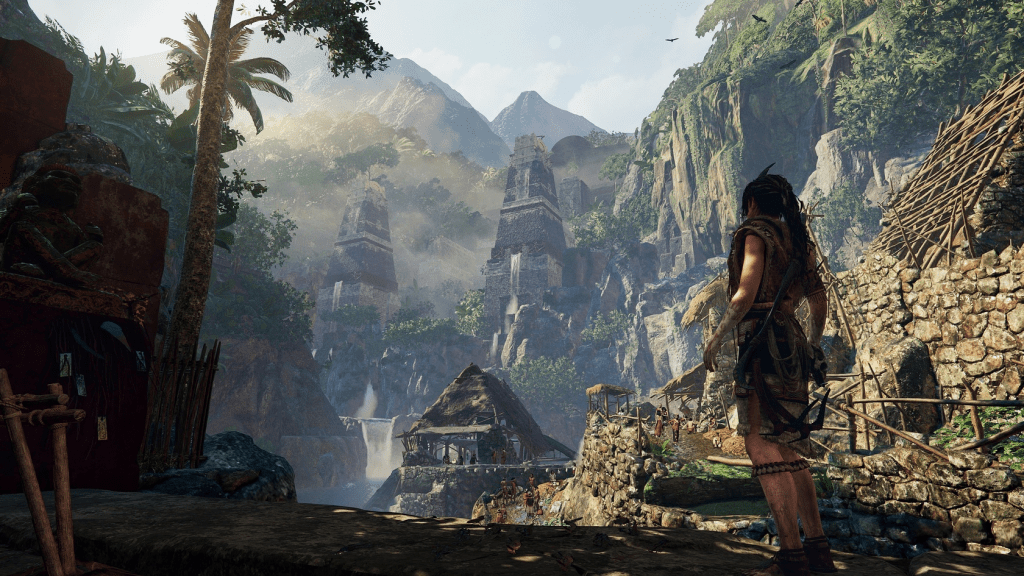
Taking places months after the events of Rise of the Tomb Raider, Lara Croft and her friend Jonah have dedicated themselves to stop the Trinity from doing any possible damage to the world. The two track trinity to the city of Cozumel, Mexico, uncovering an operation that was led by the head of Trinity’s High Council, Pedro Dominguez. Upon investigating the city’s tombs, Lara uncovers a dagger, which references a hidden city and a “silver box”. Despite the dagger being accompanied by murals portraying a Mayan apocalypse, Lara ignores the warnings and takes the dagger. However, she is captured by Dominguez and takes the dagger, informing Lara that her actions have triggered a series of events that will to the Mayan apocalypse that is referred to as “The Cleansing”. An apocalypse that Trinity believes would bring an end to the Sun. Dominguez states that he will bring a stop to The Cleansing and remake the world in his image with the power of the dagger and silver box.
The first strike with this upcoming apocalypse starts with a tsunami that destroys Cozumel. Lara and Jonah are able to survive but their actions cost the homes and lives of the townspeople. Tensions rises between the pair which Lara insists on going after Trinity and the box on her own. Jonah, however, refuses, and demands that they stay to help the townspeople. The first cataclysm of the apocalypse begins with a tsunami destroying Cozumel. Lara and Jonah are able to escape, but tensions between the pair rise as Lara insists on going after Trinity and the box, versus Jonah’s desire to help the townspeople. Despite the pair on the verge of breaking, the two track down Dominguez to the Amazon.
It’s then that the mission with Lara and Jonah is clear: stop Dominguez and Trinity from trying to rebuild the world or all of their missions against the trinity will be for nothing. As the journey goes on, Lara becomes more unhinged as she discovers more about the Trinity and the ties to her past. If her mission is successful, Lara Croft will at long last become known as the definite Tomb Raider.
When looking at the story for Shadow of the Tomb Raider as a whole, it’s a frustratingly mixed bag. It contains both the very best and very worst plot aspects of the rebooted Tomb Raider franchise. Shadow is confirmed to have different writers compared to the previous two games and it’s clear as daylight, much like how it was noticeable that Arkham Knight had different writers compared to Arkham Asylum and Arkham City. While this story might have worked strongly as it’s own thing, it’s biggest downfall is trying to tie it in to previous two games, making the entire foundation of the Survivor trilogy collapses within itself.
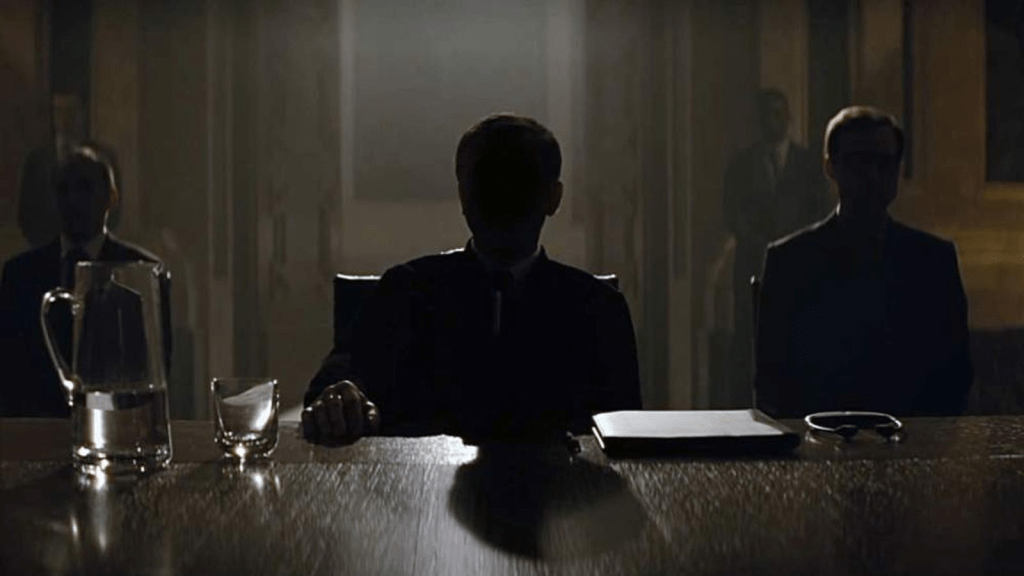
Remember that James Bond film that came out a number of years ago called Spectre? Much like Shadow, that was an entry into the franchise that tried to tie everything together from the previous Daniel Craig films, to have the film acted as some sort of culmination of the rebooted 007 films thus year. However, because it was obvious this was not planned out from day one, it didn’t work in the slightest because of how little the connections made any sense in the grand scheme of things. Instead of expanding upon the world of James Bond, it just made that world feel much smaller and carry less weight than before.

That’s something that the story of Shadow of the Tomb Raider unfortunately falls victim too. In it’s attempt to tie the villain clan of The Trinity to the previous two games, making it feel like they were the ones behind the troubles that Lara has gone through during this entire trilogy, it makes everything the game attempts to expand upon feel very contrived and unnatural in every way. Not only introducing a number of retcons to the previous games in an attempt to connect what was previously interconnective plotlines, but it makes The Trinity as a whole comes across as rather stupid and not as threatening as before.
The only real moments that work with The Trinity is when they try to guilt trip Lara into the troubles she caused up to this point. The fact that she has killed and slaughtered so many people and found herself chasing her own footsteps basically makes her no different to her enemy counterpart. That in of itself plays a role in Lara’s arc where she is much more unhinged than rather before, making her feel a bit like a villain in some cases. While that might put off die hard fans that always see Lara as a hero who rarely does much evil, Shadow of the Tomb Raider is actually able to make that story aspect work more than it should.
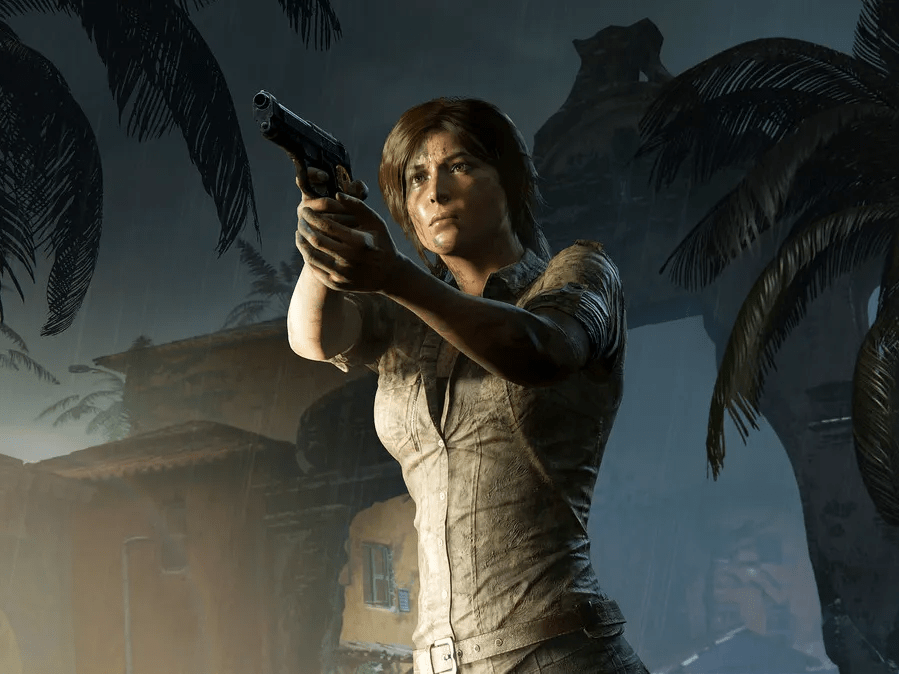
Speaking of which, if there is one thing that the story of Shadow does rather well, it’s wrapping up the story arc of Lara Croft respectively. If you take away the rather forced connections with the previous two games regarding The Trinity, the main development for how main character feels rather whole by the end of the game, making it really feel like Lara at long last has become the true Tomb Raider. It’s a similar fashion as to how satisfying it felt for Peter Parker to finally become the true Spider-Man by the end of Spider-Man: No Way Home. Even if the overall arc was a slow burn and occasionally rather muddled, it all feels worth it by the end with the way we see our main protagonist develop and changed throughout the course of three installments.
It’s especially interesting to see Lara be more expressive and unhinged this time around, sometimes letting her emotions get the better of here. You really get the sense that Lara has all the pressure in the world on her shoulders here and can not afford any more screw ups. There is no effort to paint Lara Croft as a flawless goddess who can do no wrong. Even if she is given as much plot armor as a video game could provide, she does still have her faults and obstacles that she must overcome. If there is one saving grace to the overall story, it is exactly what is done with Lara Croft herself here.
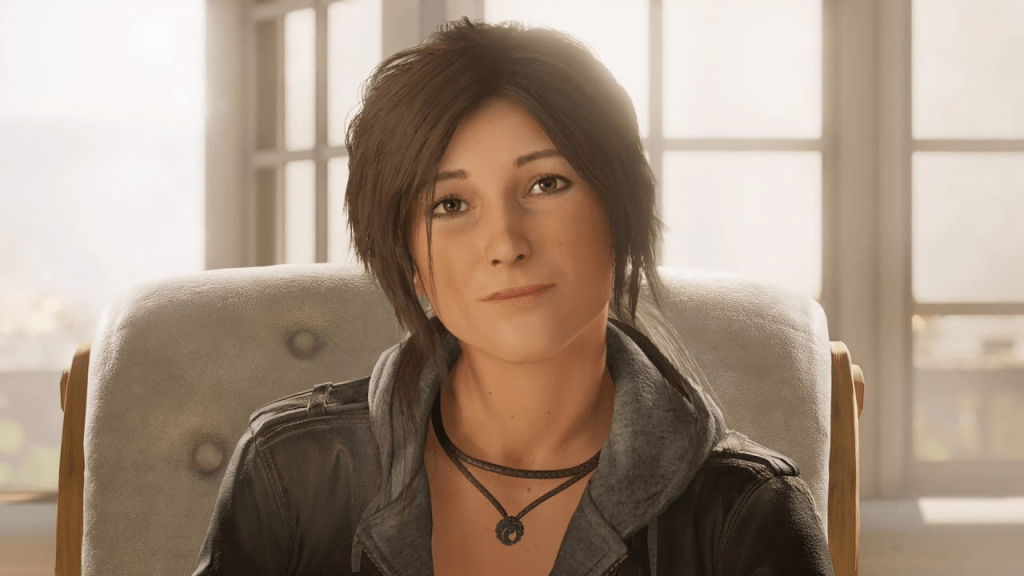
I still can’t help but wish they just brought back Rhianna Pratchett to write the story as she did with previous games. At least then, the story would have felt more cohesive and you likely wouldn’t have these forced tie-ins and unneeded retcons to make the story work. If this was it’s own thing or even the first chapter of the trilogy, it would have fared much better. But to have a climax which feels the needed to introduce several things, disregarded several things from the previous installments, and then tries to tie all of those things at once, it makes the storytelling feel rather clunky and just messy all around. While Shadow deserves credit for bringing it’s main iconic gaming heroine to the finish line by the end, there are PLENTY of trips and falls along the way that make the whole ride feel more bumpy than it should have been.
Gameplay:
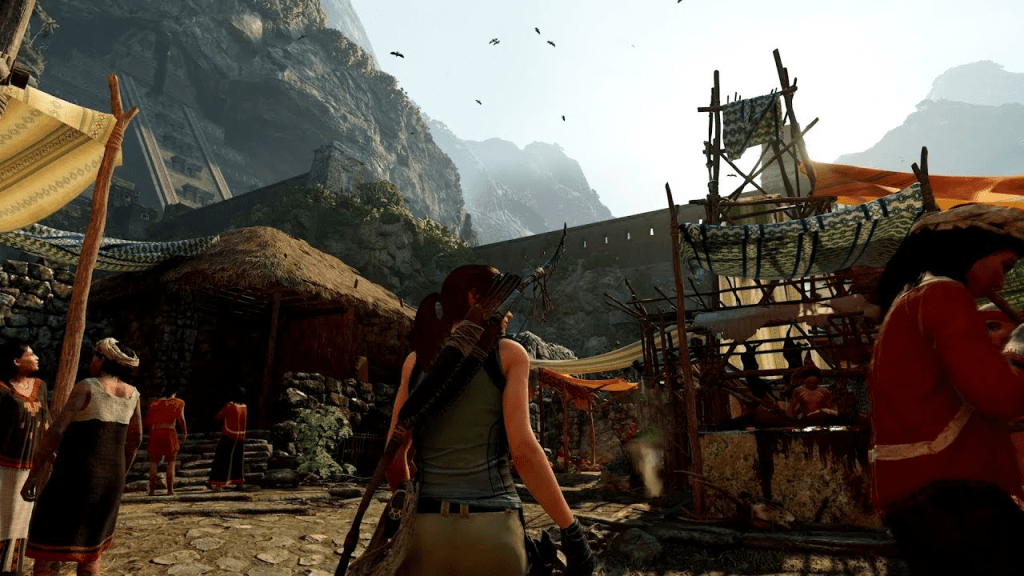
As with the previous two games, Shadow of the Tomb Raider is a third person action-adventure game where you take control of Lara Croft as she explore environments across Mexico and Peru. There is also a large hub in the hidden city of Paititi, In these hubs, Lara can raid challenge tombs to unlock new rewards, complete side missions, and scavenge for resources which can be used to craft useful materials.
The gameplay have been giving numerous adjustments along with a few new features. Like it’s predecessors, the game allows players to hunts wild animals, craft materials using resources collected, solves puzzles, and seek out optional tombs and side guests. Shadow in particular features large tombs and more complex puzzles than before in this reboot series. The kind of tombs and puzzles you will have to think for yourself in order to solve it or just cop out and watch a YouTube video on it. That in of itself should make Shadow of the Tomb Raider the most faithful of the new rebooted Tomb Raider games by design. However, there is definitely more to it.
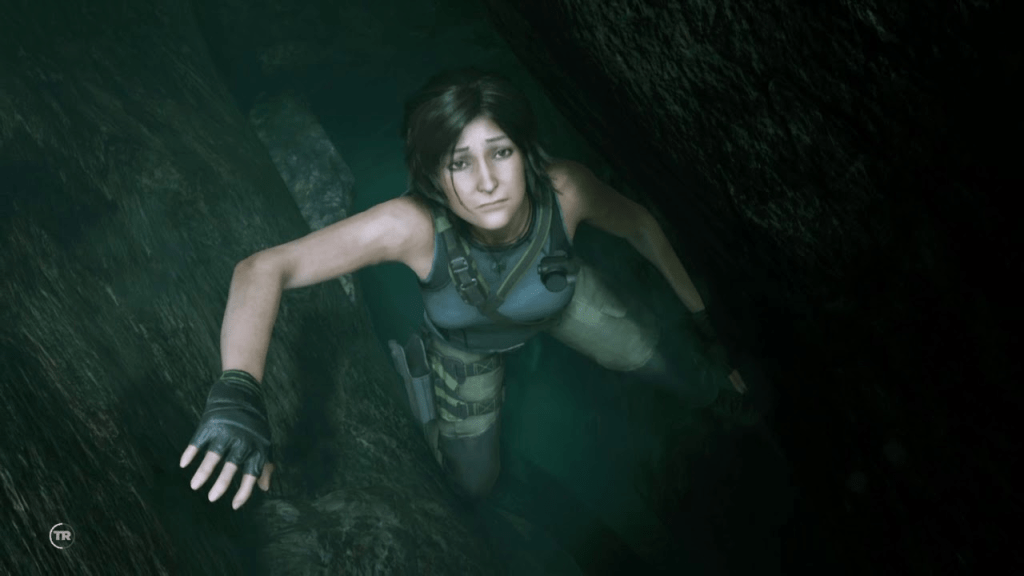
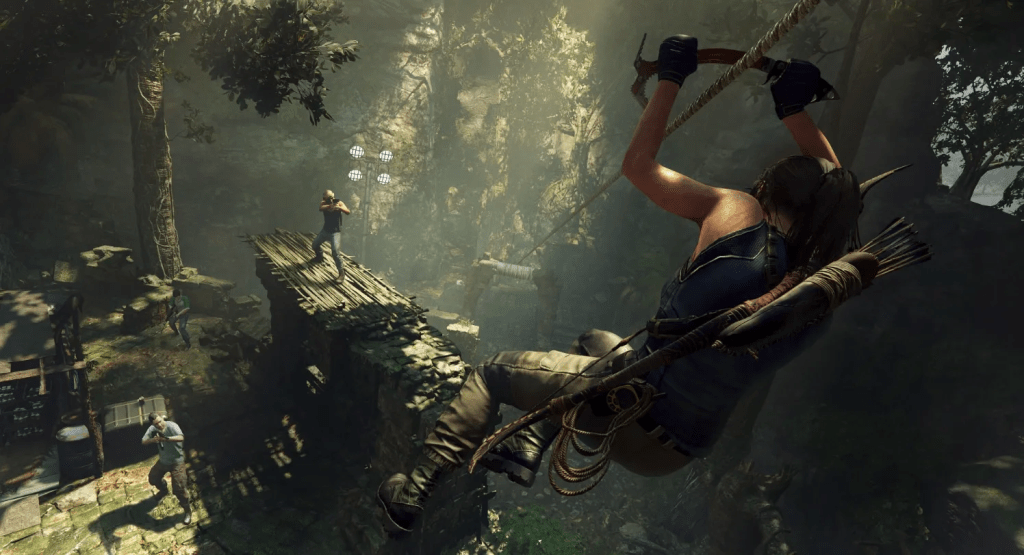
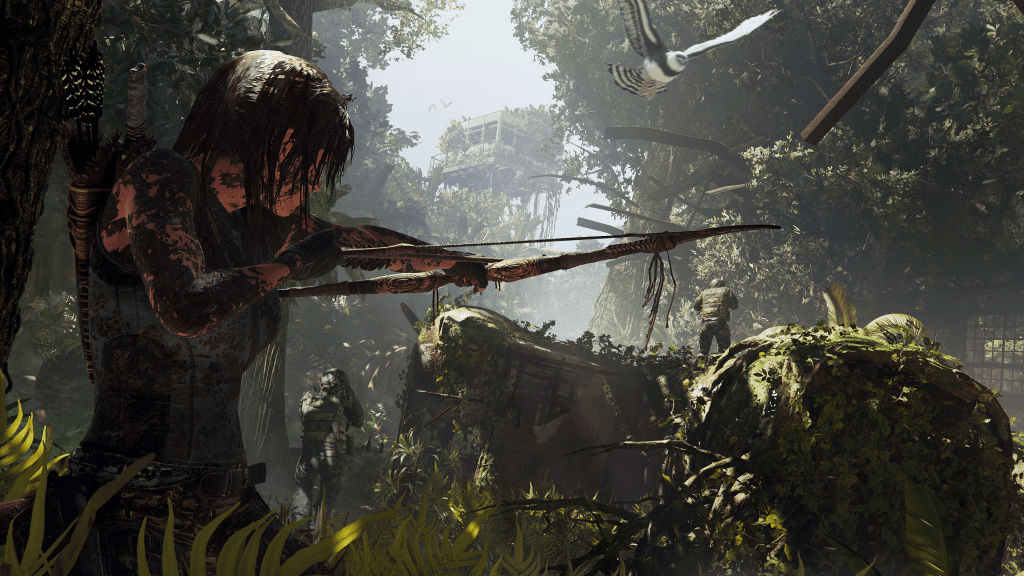
The controls for swimming have been revised, as Lara is able to hold her breath underwater for a longer period of time thanks to the inclusion of air pockets. She has the ability to rappel down a cliff using her climbing axe and rope. Stealth is more important here than before, as Lara is able to disengage from combat when she escapes from enemies’ line of sight by camouflaging herself in mud, hiding in bushes, or blending into densely vegetated surfaces. There’s also a new barter system that allows players to trade and sell various resources gathered from the areas surrounding Paititi. It’s these kind of adjustments and additions that make Shadow of the Tomb Raider stand out in the best and worst ways possible.
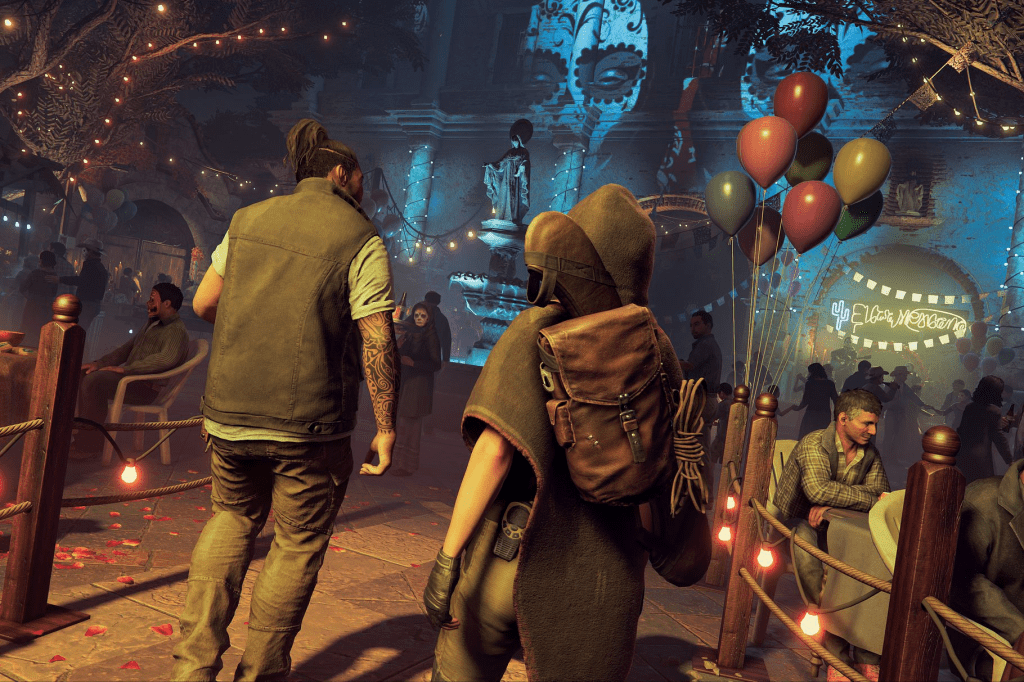
Players have the option to tailor their gameplay experience in combat, puzzles, and exploration with their own difficulty settings. An Immersion Mode enables players to hear the background conversations of the locals in their native languages, when turned off the conversations are heard in the players’ chosen voice over language.
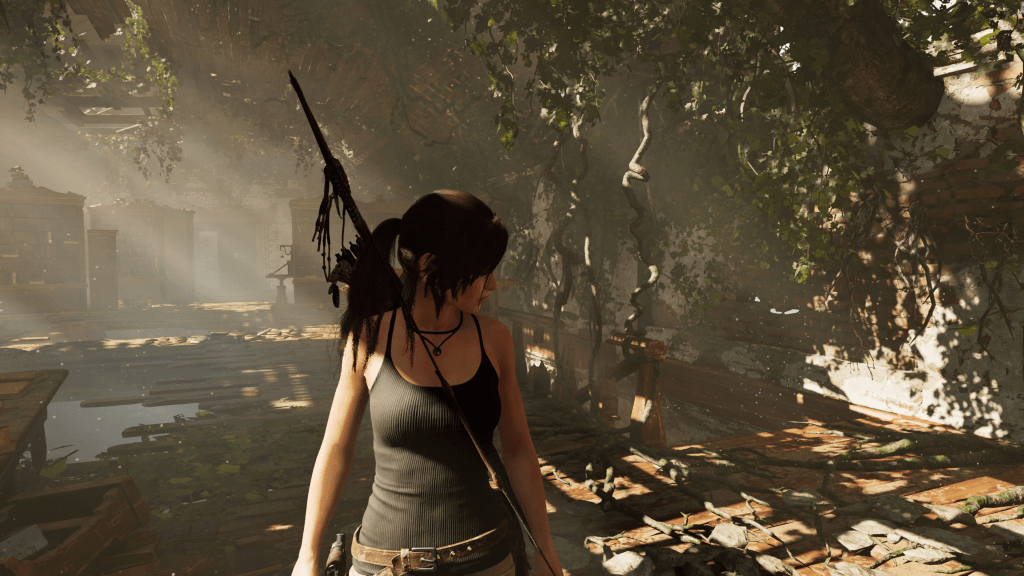
Concept wise, the gameplay should stand out as the very best of the rebooted trilogy. The combat is much more toned down compared to the previous two games, there has been much extra time giving to the puzzle solving and exploration, and there are more challenge tombs to raid then ever before. Yet, there is something that feels a bit off about it.
There is certainly nothing here that is inherently broken or even bad. The controls work exactly the way they are suppose to, the combat is fun during the moments you are encountering enemies, it’s nice to see Lara exploring these multiple different cults and regions, and solving puzzle and tomb certainly require strategy which you would have to think the tactics instead of just mindlessly running and jumping your way through. Oddly enough, it’s the new adjustments that Eidos-Montreal makes here that kinda hinders the game rather than expanding upon it.
You have the upgrade system that is more convoluted than before, taking forever for certain systems to upgrade and feeling way too scattershot. You have a combat and stealth system that are way too tweaked to the point of it feeling rather dumbed down instead of feeling like a legit progression from the previous two games. You have platforming segments and set pieces that are competently put together but lack the cinematic and shock factor of the previous two games. You are given more challenge tombs but they can really muddled with the pacing of beating the main campaign, to the point where going after them feels like a slog and will just slow you down entirely. And you have action sequences that feel too restricted for the first two thirds of the game and only really deliver fully until the last third of the game. For every step forward that the gameplay of Shadow of the Tomb Raider takes, it then takes an immediate step backward.
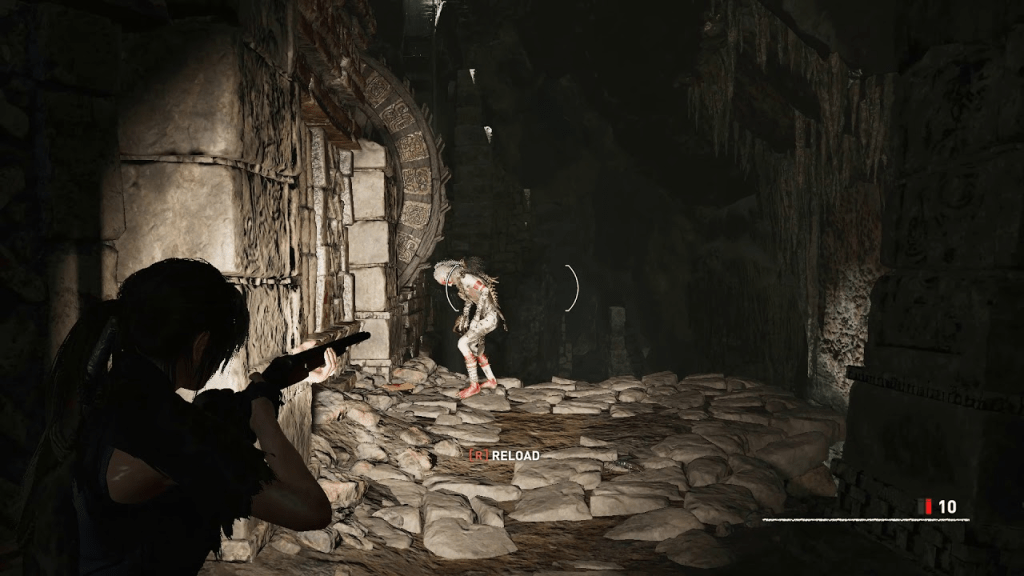
You really do get a sense that the Crystal Dynamics that made the previous two games were not fully in charge with Shadow of the Tomb Raider. It’s clear that Eidos-Montreal wanted to put their own stamp on the series while embracing many aspects of the first two games. However, just like the story, it feels more like they have to disregarded certain aspects to make that happen, making the experience feel much more muddled than what obviously was attended. If this had been the first game in the reboot series, these flaws might be more acceptable. But after two fantastic games where the gameplay was as smooth and polished as it were, the standards have been held so high that Shadow just can’t reach it.
That’s not to say the gameplay of Shadow of the Tomb Raider is bad in general. It’s definitely competent, playable, and even fun in most areas. However, after the previous two games were able to deliver all of that and more, there is something that leaves much more to be desired here. While certain above average for a main triple A modern game, Shadow of the Tomb Raider definitely feels much more average to below average compared to Tomb Raider (2013) to Rise of the Tomb Raider.
Graphics:

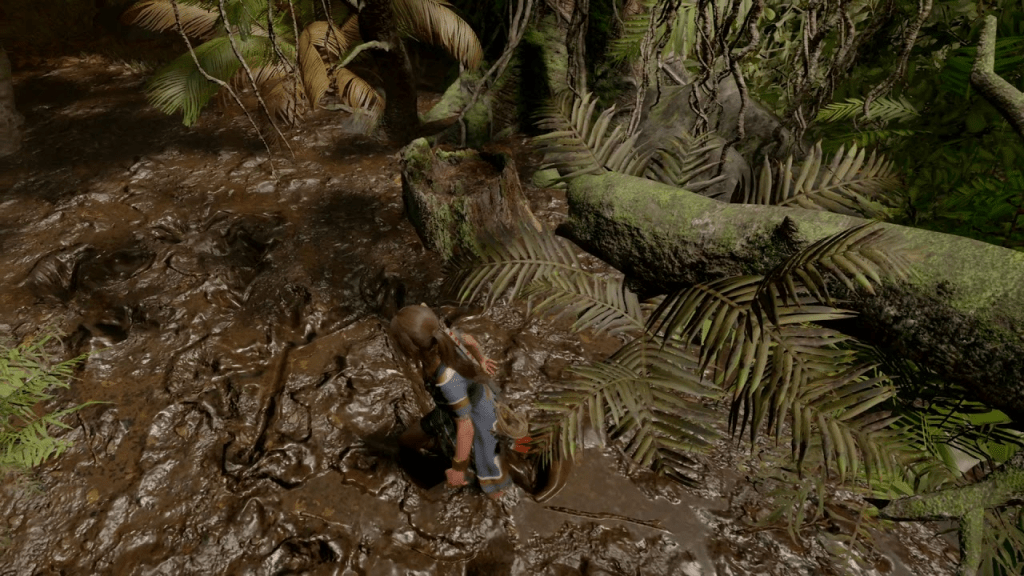
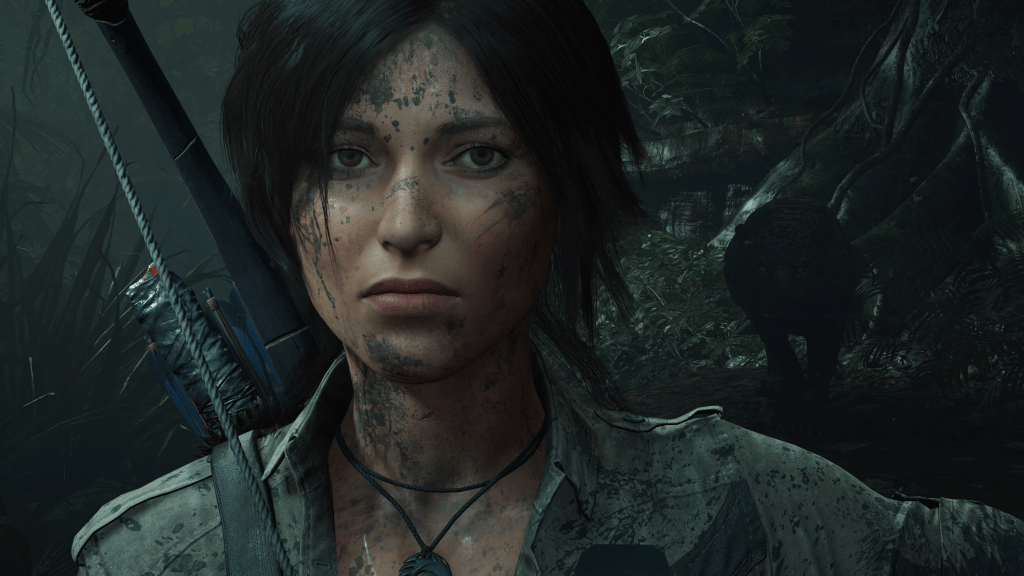
Graphically, the game is just as impressive as it’s predecessors, if not more so in a number of areas. This is probably one of the best looking games of the generation. The attention to texture is on full display, especially with how realistic the mud looks on Lara. The way that the mud moves and leaves trails whenever Lara looks is as convincing as a mud trail has ever looked in a video game. I didn’t think anything could top the snow and water looks of Rise of the Tomb Raider but I was dead wrong.
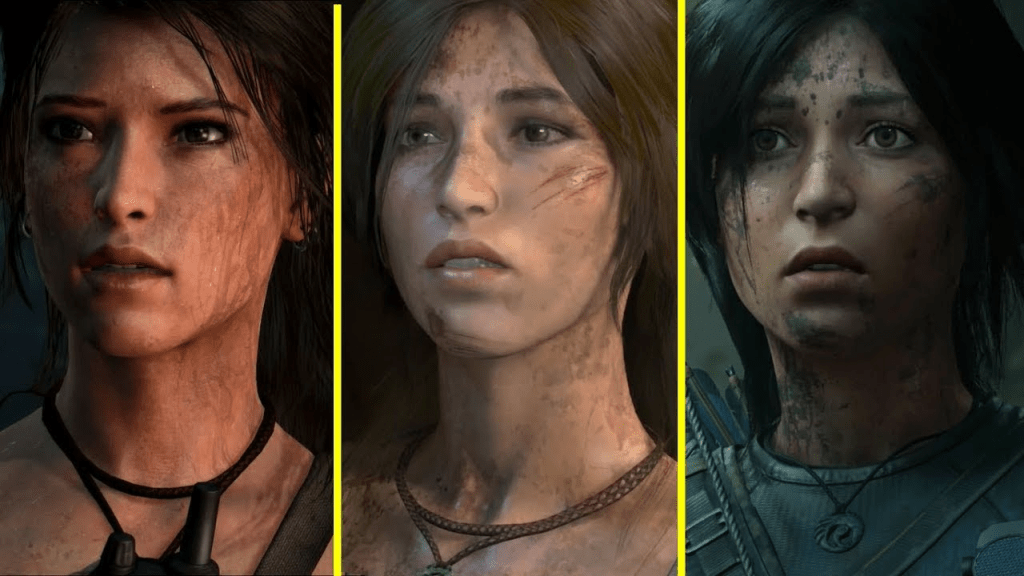
The motion capture work is very strong as well, clearly being as up to date with technology as you could imagine, helping making the characters movements and animations look as realistic as possible. Although, I kinda wish they didn’t change Lara’s facial expressions and models that much. She looks good but feel more pale and average looking compared to the first two games, almost what you would expect her to look back in 2013 but NOT in 2018. I still think that Lara’s model in Rise of the Tomb Raider was the way to go.
Sound:
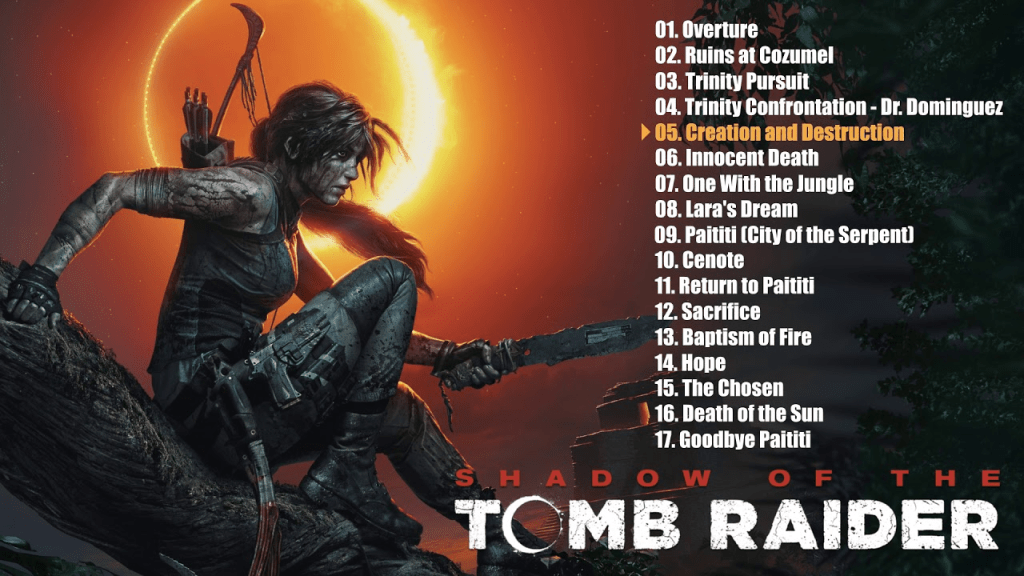
Similar to the first two games, Shadow of the Tomb Raider had a different composer at the helm in Brian D’Oliveria. I guess the approach for the Survivor trilogy was to bring in multiple composers that could bring their own voice to the score with each individual installment. Sadly, Shadow has probably the weakest soundtrack of the three games. There was hardly any track that stood out in the ways that they did with the first two games. Not even familiar tracks from the previous two games make a presence here. Instead of the music pumping me way and giving me a much needed energy boost along the way, it does nothing more than just create sound during sequences that need it.
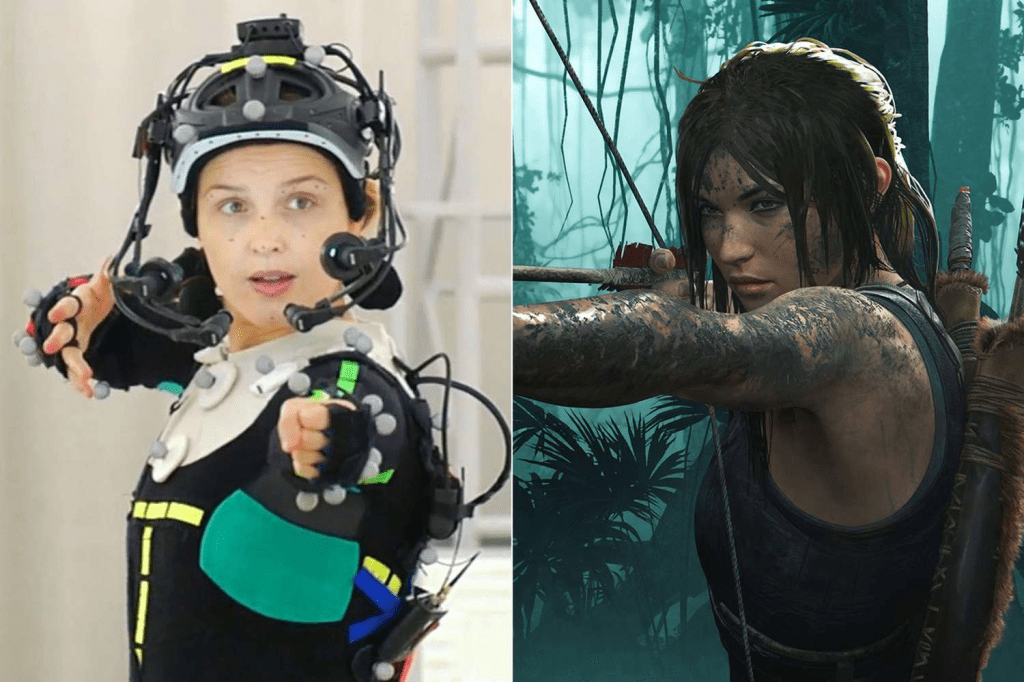

The voice acting and motion capture performances, on the other hand, is terrific. Camilla Luddington gives perhaps her best performance to date as Lara Croft. Thanks to the script giving her more emotional and dramatic moments to act out and the motion capture being as good as they ever been, you can feel Camilla’s facial expressions, emotions, and presence throughout every scene that she is in. Earl Babylon as Jonah also stands out much better here than in the previous game, especially how his character is given more depth and moments where he has to snap Lara out of putting the entire world on her shoulders. The final installment of a trilogy should give plenty of opportunities for the actors to deliver their best and most vulnerable performances to date and everyone did just that.
Downloadable Content:
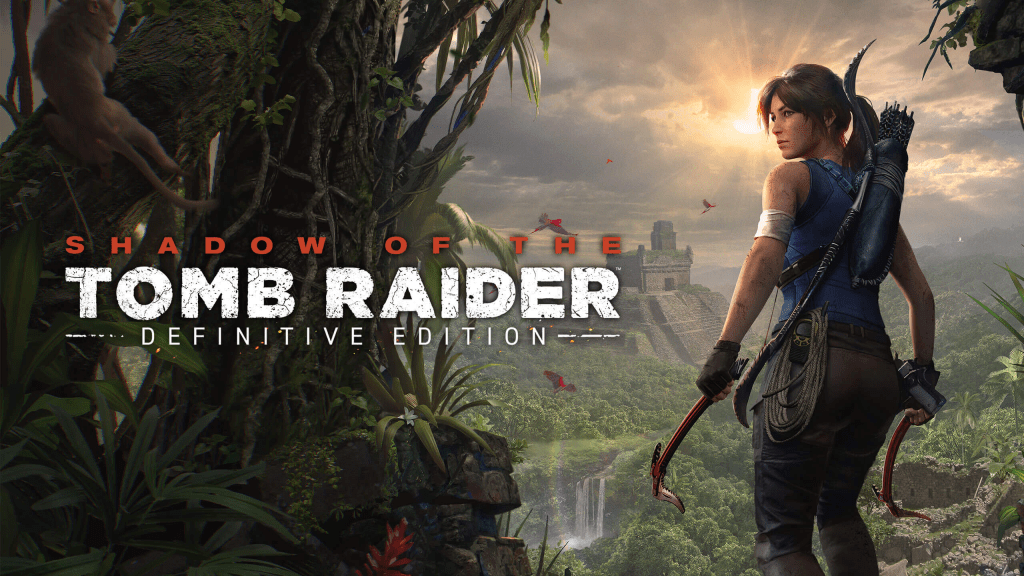
Shadow of the Tomb Raider released several chapters of DLC that expanded upon the game’s narrative. Each one of these chapters run parallel to the main storyline and the focus on an additional tomb. This is where Lara discovers the source of Mayan influence in Peru, solving the mystery of a missing oil worker, locates an artefact to bolster Unuratu’s rebellion, and then finds a secret that could threaten it. Lara then confronts her own fears as searches for a weapon, leading her to learn of the tragedy that shaped Amaru’s decision to join Trinity. She aids a group of rebels taken by the Cult of Kukulkan, investiage a disturbance at a local temple that turns into a trap laid by Trinity, and learns the fate of the Yaaxil that survived the battle with Trinity.
A season pass was available that gave players access to seven paths of DLC, which included new narratives, missions, tombs, weapons, outfits, and skills. A version bundling together the main game and DLC, Shadow of the Tomb Raider: Definitive Edition, releasing on November 4th, 2019.
Personally, I found the DLC for Rise of the Tomb Raider to be much more satisfying than this one. Whereas those put more focus on providing extra characterization to Lara Croft, Shadow puts more emphasis on the main villains which I never really cared for in the main series and just adds more convoluted lore to the franchise. If you picked up the Definitive Edition at a reasonable price, then it’s worth a go. However, if you missed out on it back when the game first came out, you didn’t miss out on much.
Conclusion:
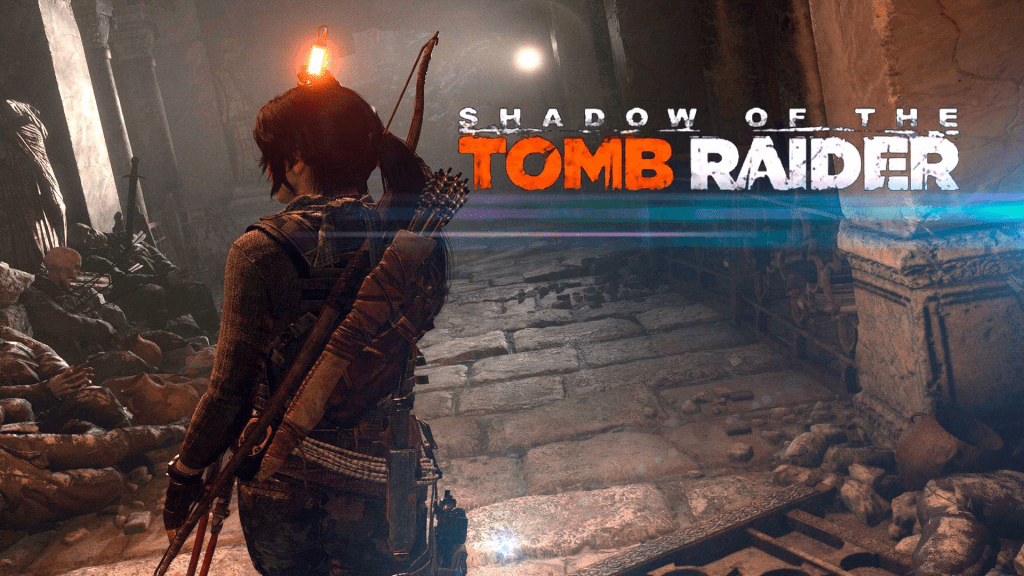
Despite the majority of the review being constructive criticism, Shadow of the Tomb Raider is NOT a bad game. It still does have enough what you would want for a quality Tomb Raider experience. It provides the right mix of combat, platforming and puzzle solving, there are more challenge tombs than ever before, it looks stunning, the voice action is top notch, and it does bring a nice logical end to Lara’s arc of her early days as a Tomb Raider. However, it just can’t seem to quite escape those it’s own “going through the motions” feel to it and the story basically gives hindered by trying to tie itself to the previous two games instead of feeling enhanced.
The combat, platforming, and puzzle solving are fine but they don’t feel evaluated to the next level like the previous two games. There are more challenge tombs than ever but you don’t feel as eager to go out of your own way and find them yourself. It concludes Lara’s own arc in a meaningful way but everything around here, from the villains to retcons of the lore, are rather half assed and certainly doesn’t add to the foundation of the first two games. I don’t know if this is because Crystal Dynamics didn’t return this time nor did Rhianna Pratchett return to write the script this time around but Shadow of the Tomb Raider just lacks that overall “WOW!” factor that Tomb Raider (2013) and Rise of the Tomb Raider had.
I would still recommend the game to fans of the series and gamers alike for the right price, especially for those that just want to see how Lara’s overall story wraps up for the Survivor trilogy. However, I just can’t help that the game didn’t live up to it’s fullest potential. There are definitely glimmers here and there for this to be the absolute best and most faithful Tomb Raider game ever made but it can just never quite reach the heights of it’s ambition, instead feeling like it’s get bogged down by them.
Still, I did have fun going back to these games and taking a little trip down memory lane. The newest Tomb Raider Netflix series, Tomb Raider: The Legend of Lara Croft, is set to premiere on October 10th! Let us all wish nothing for the best for the Tomb Raider we all know and love!

Thank you so much to all of those that tuned in for this marathon! Please follow and keep up to date on future content on his blog!
 Adam's Blog