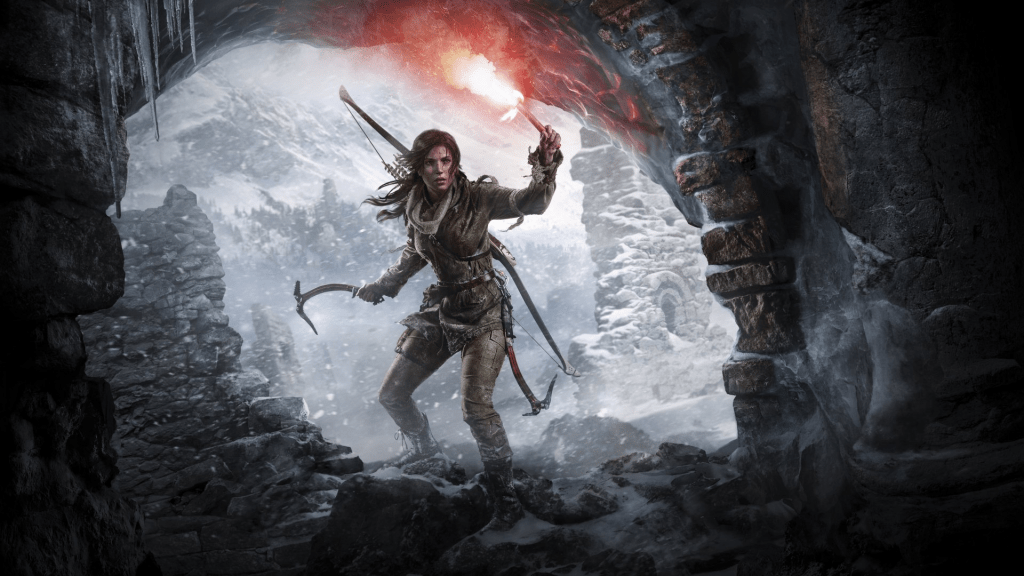
Not gonna lie, I can’t decide if I should call this a “retrospective” or “perspective”. That is mostly because a lot of time has passed since this game came out but not quite enough to where it can be considered “retro” or “nostalgic”. Because of that, I’m gonna have my cake and eat it too and call it both a retrospective and perspective. I guess you could call this a PER-RETRO-SPECTIVE! I don’t really know and care but hey, for those that do care, there you go!
2015 saw the arrival of the next installment with Lara Croft known as Rise of the Tomb Raider, once again developed by Crystal Dynamics and published by Square Enix. This acted as the sequel to Tomb Raider (2013), the middle chapter of the Survivor trilogy, and the 11th entry in the Tomb Raider franchise.
Development of Rise of the Tomb Raider began shortly after the development of Tomb Raider (2013) concluded. Crystal Dynamics wanted to take the next big step forward with Lara Croft while also addressing player feedback from the previous installment. This included an emphasis on more puzzle and challenge tombs while reducing the number of quick time events. The development team traveled to several locations in Turkey, including Cappadocia, Istanbul, and Ephesus, in order to faithfully design Kitezh. Powered by the Foundation engine, the game was also developed by Eidos-Montreal and Nixxes Software, certainly contributing to the stronger engine of the game, that saw much stronger graphics, presentation, and an incredibly smooth 60 FPS.
During E3 2014, Rise of the Tomb Raider was announced as an exclusive for the Xbox 360 and Xbox One. This sparked quite amount of controversy among gamers and fans alike. It was shortly after the backlash ensued that Square Enix confirmed it would only be a TIMED exclusive for the Xbox 360 and Xbox One and would later make it’s way to the PlayStation 4 several months later. Microsoft paid for the game to be a timed exclusive in the hopes that it would pushed for more Xbox One sales during the holiday season of 2015. The Xbox 360 and Xbox One versions came out on November 10th, 2015, with the Windows version releasing just three months later on January 28th, 2016, and finally released on the PlayStation 4 on October 11th, 2016.
There were big concerns about the sale numbers for Rise of the Tomb Raider from several game journalists. Not only because it would be a timed exclusive for the Xbox consoles but it would also be released on the same day as Fallout 4. Despite the concerns, both Microsoft and Square Enix were reportedly very satisfied with the games sales at it’s initial launch, with the latter likely being more satisfied with the sales as the game would be ported to other consoles. As of November 2021, it has been reported that the game has sold nearly 12 million copies worldwide, with the estimated number being around 11.8 million.
Like it’s predecessor, the game received strong reviews and critical acclaim. The majority of the praise was giving to the beautiful graphics, the polished gameplay, the characterization of Lara Croft, and offering much more variety of content than the previous game. However, some felt that the game lacked innovation and didn’t take nearly as much risks as it should. With Rise of the Tomb Raider approaching ten years old, let’s see how the middle chapter of Lara’s prequel origin story holds up!
Story:
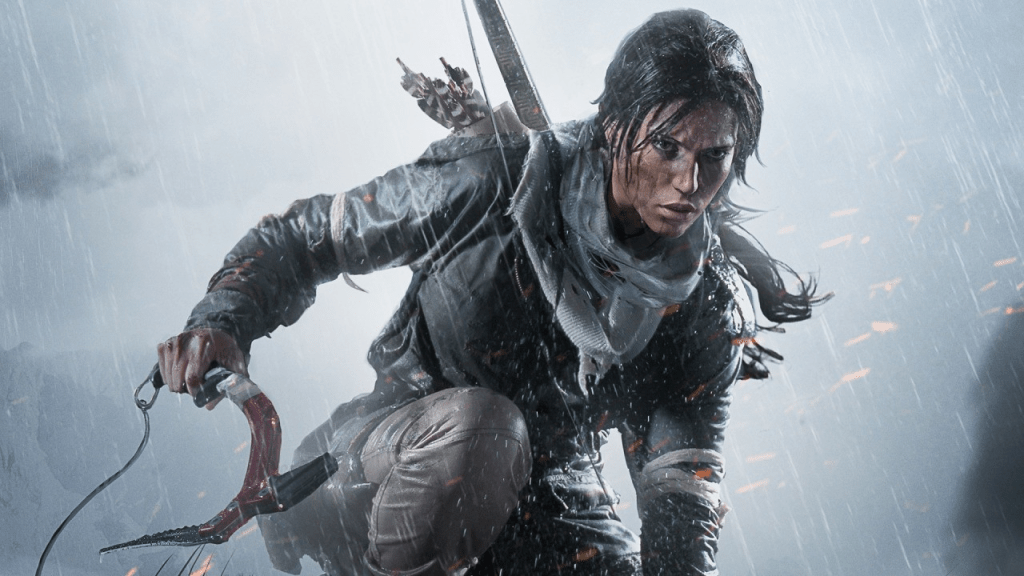
Taking place one year after the events of Tomb Raider (2013), we follow archaeologist Lara Croft, who is suffering from PTSD from her experience with the supernatural on Yamatai, struggling to explain such experience to those around her. Desperate for answers, she turns to her late father Lord Croft’s research on the lost city of Kitezh, which promises the power of immorality. Lord Croft’s partner, Ana, arrives and warns Lara to not pursue that Lost City, as that drove her father to ruin and suicide. Now understanding the obsession her father had as an archaeologist, Lara ignores her warning and makes way to the Forgotten Cities in Syria, hoping to uncover the tomb of the Prophet of Constantinople, a key figure in the Kitezh legend.
However, once Lara arrives to claim the tomb, it’s empty. Her arrival is interrupted by a new deadly force known as Trinity, an ancient order of knights turned paramilitary organization investigating the supernatural, and their leader, Konstantin. After Lara is able to escape, she discovers a symbol etched into the tomb, which she links to a book on Russian religious history that was a part of her father’s studies at Croft Manor. She learns of an artifact called the Divine Source, said to be capable of granting that immorality that Lara is seeking from the legendary city of Kitezh.
As Lara goes on a new journey, she teams up with her old friend Jonah to retrieve the artifact while also running into a handful of allies/rivals new and old. There’s Jacob, the leader of its inhabitants, the Remnants, and part of the descendants of the Prophet’s followers. There’s Sophia, a female village warrior who has a hard time in trusting Lara, believing her to be no different than the Trinity. And there’s Ana, Lord Croft’s Partner, who happens to be caught in the middle of the search for immorality in ways that will make Lara turned here worldview on her.
Finding herself in the middle of a dangerous adventure yet again, Lara Croft must search for the legendary city of Kitezh, find the artifact that holds that key to immorality, and stop the Trinity from possessing this unspeakable power before it places herself and her friends of old and new in great danger.

It’s also worth noting that there are actually story DLC packs this time around, adding to the campaign experience of Rise of the Tomb Raider. These story packs are titled: Baby Yaga: The Temple of the Witch, Cold Darkness Awakened, Blood Ties, and Lara’s Nightmare. I won’t go into these one-by-one here because there is not a ton here that’s important to the overall story here. However, they certainly do a solid job at expanding the origins of Lara’s bond with her father along with seeing her slowly starting to embody the Lara Croft of old. I will give a brief description of them over at the Downloadable Content section.
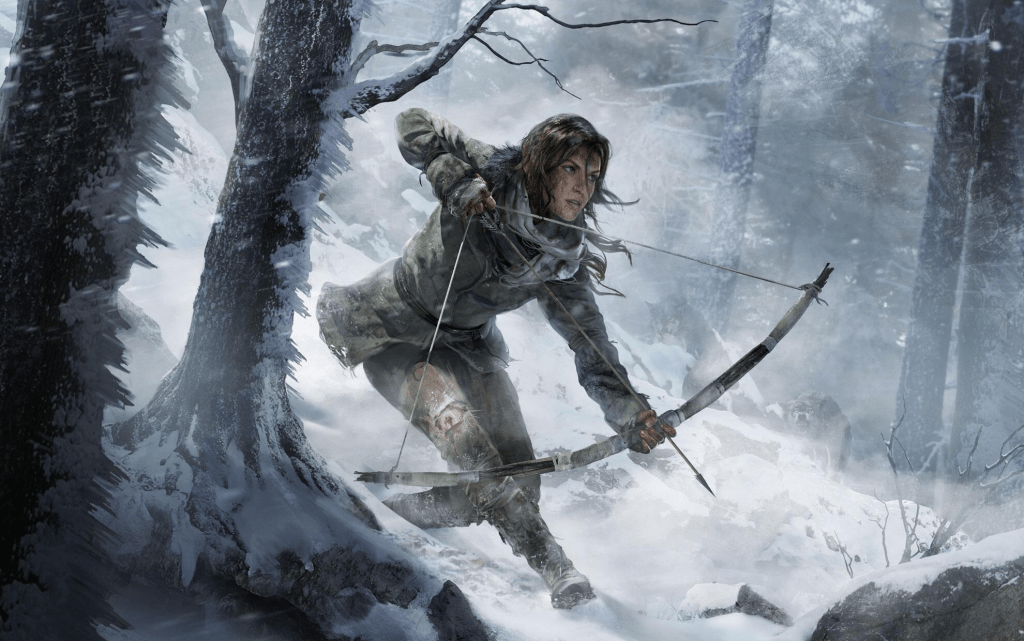
The overall story for Rise of the Tomb Raider plays like a classic Tomb Raider adventure with sprinkles of Indiana Jones and Uncharted 2. With Tomb Raider (2013) getting the origins of an early Lara Croft out of the way, Rise is able to jump right into the next stage of Lara’s early development by going on a massive scaled, global adventure. Her, we see Lara looking to retrieve an incredibly rare artifact that promises a certain power never before seen, with her also questioning her allegiance, her father’s legacy, and her overall commitment to archaeology along the way.
It’s really interesting to see Lara caught in the same shadow as her father once did. Just like her daddy, Lara is at her place where she has given her life to adventure and discovery, gaining such an obsession for it that it starts to affect the people she cares about him the most. The main difference though is that Lara is closer than her father ever was to achieving the unachievable, having the whole world see the Croft family for who they really are. Not just to convince the world that the Crofts were NEVER crazy but they were ALWAYS right to commit their life to archeology.
The only downside of the story compared to the previous installment is that it does provide less banter and quippy moments with the crew that Lara was with on her first adventure. It’s only Jonah this time around that makes a grand return and even then, he spends a good majority of the game separated from Lara as she spends more time with the new players added to the roster than her old allies. Also, while the Tyranny and the leader Konstantin are a definite improvement over the villains of the last game, they still come across as yet another one-note cult and are still the least interesting parts of the game.
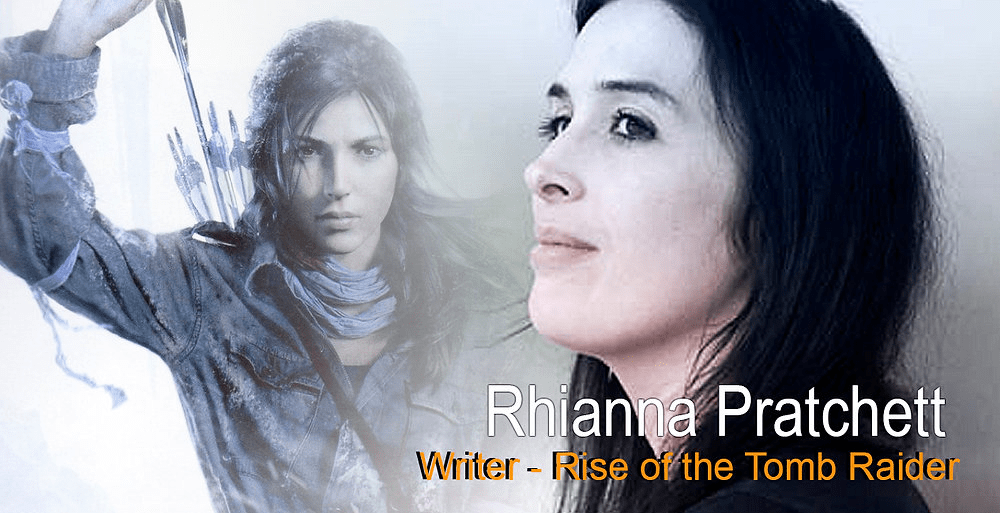
Writer Rhianna Pratchett has gone on record in saying she wanted to create a more personal journey for Lara Croft this time around and in my mind, she definitely succeeded. This definitely felt like the next possible step in Lara’s overall arc to becoming the tomb raider. Not only with the fact that discovering tombs plays a much more important role to the overall story but also to have it tie back to her family’s legacy and her overall purpose as an adventure. It’s not just about Lara discovering a sacred power of immorality but also an immorality of her own. That immorality being that she will always be an adventure, archeologist, and tomb raider by heart. Even if it comes at the expense of her friends and loved ones, there is nothing that Lara is more romantic about than being the tomb raider.
Gameplay:
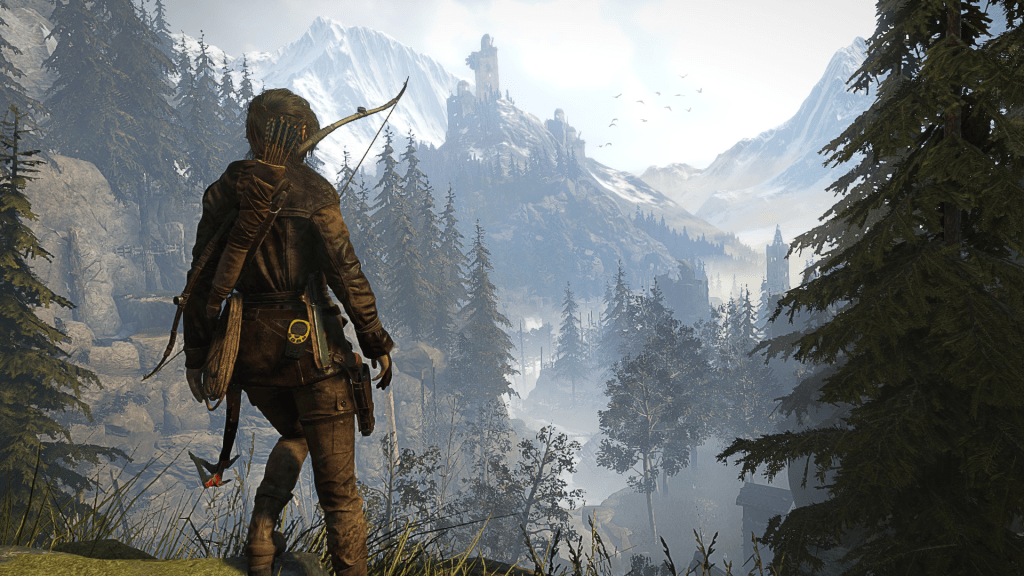
Once again, Rise of the Tomb Raider is a third-person action adventure game where you take control of Lara Croft. Lara is given a large variety of weapons at her disposal, from bows and arrows to knifes to her ice axe to pistols to shotguns to assault rifles. You use these weapons to take out enemies in order to progress through the game.
Stealth also plays a major factor to the gameplay, where you take out enemies one-by-one, create distractions to draw enemies away from Lara, and hiding in bushes to evade enemies. Lara can use the environment to fight enemies, shooting explosive barrels, tear down rope-wrapped structures with rope arrows, or ambush enemies from the high ground (Somewhere, Obi-Wan Kenobi is smiling!) This stealth and combat was a big factor in Tomb Raider (2013) and it continues to be a big factor in Rise of the Tomb Raider.
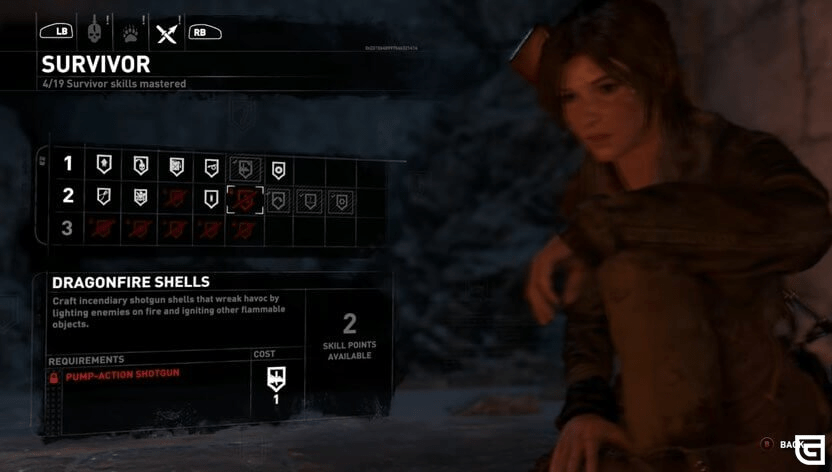
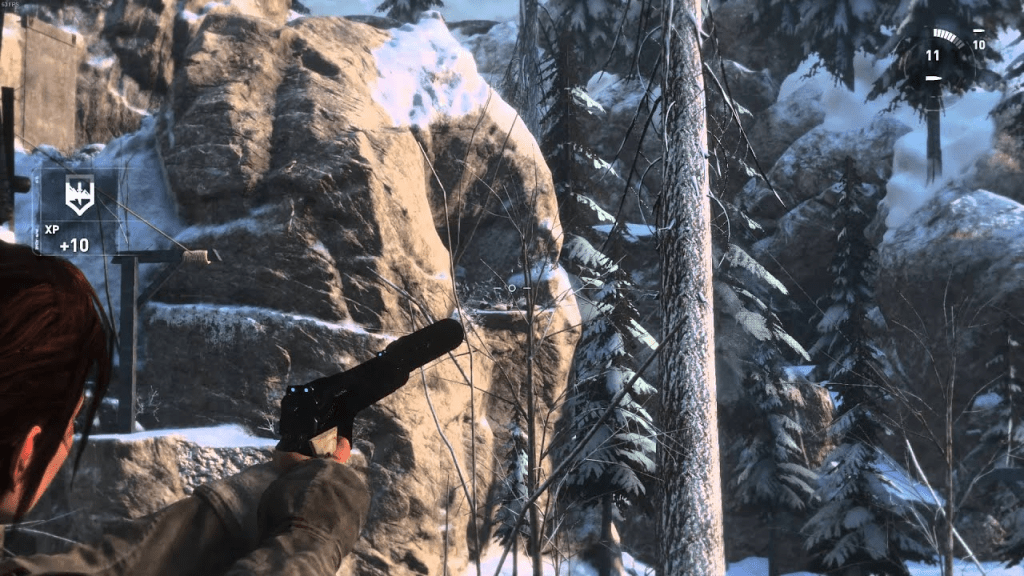
Accomplishing objectives, completing side content, and eliminating enemies give players experience points. A.K.A. XP. When players collect XP, they level up and receive a skill point, which can be spend to upgrade the game’s three skill trees: Brawler, Hunter, and Survivor. Brawler helps with Lara’s efficiency with weapons, giving her abilities and boosting her resilience against attack along with unlocking new combat skills. Hunter helps with Lara dealing with the environments and animals. Survivor covers a wide range of skills such as creating bombs and setting up booby traps. Lara can learn new languages, enabling her to discover relics, which can be traded in exchange for new equipment.
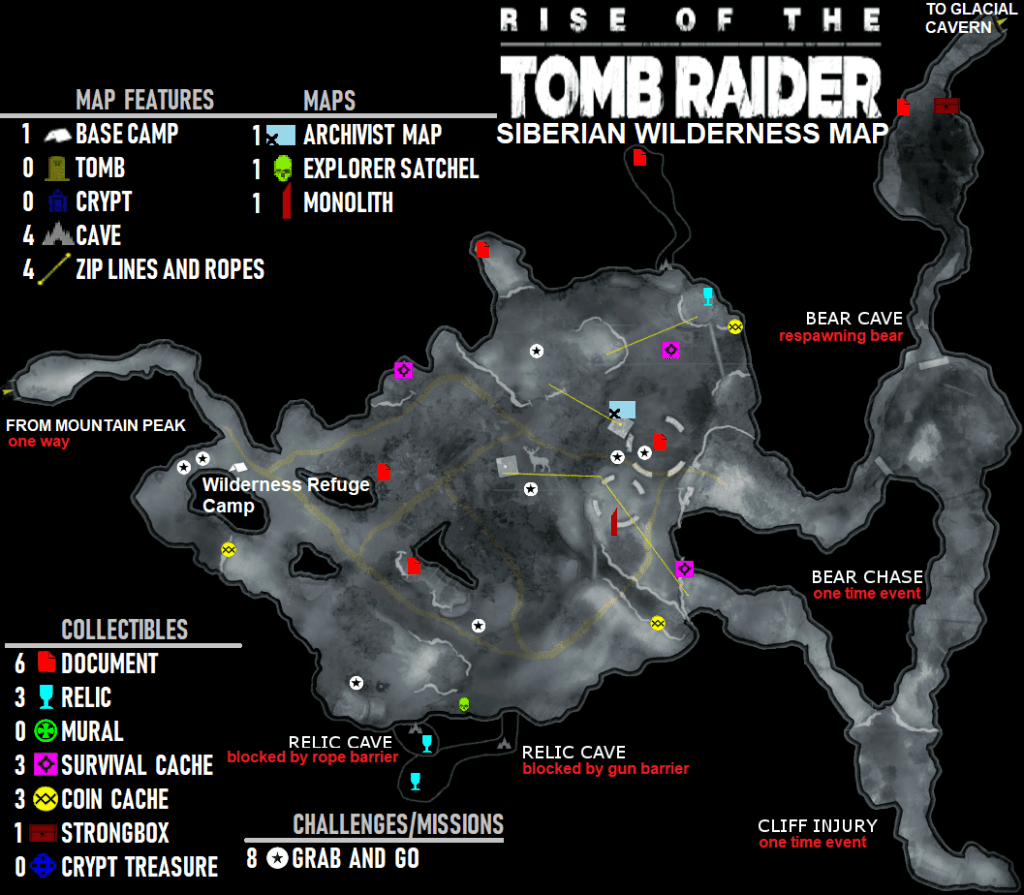
Rise of the Tomb Raider also offers semi-open hubs to explore. While far from the level of say Grand Theft Auto V or even Gotham City from Batman: Arkham Knight, these sections do offer hub worlds for those that want to relax for a moment and see what’s going on with the other villages. In the hubs are items for Lara to collect, including crafting materials and survival caches. These items and collectibles, such as relics and docs that can be revealed to players using Survival Instinct, a vision mode which once again can highlight items of interest along with enemies during combat sections. By collecting these items, players can craft items with the game’s own crafting menu. Lara can craft ammo, poisoned arrows, and Molotov cocktails and hand grenades from cans and bottles.
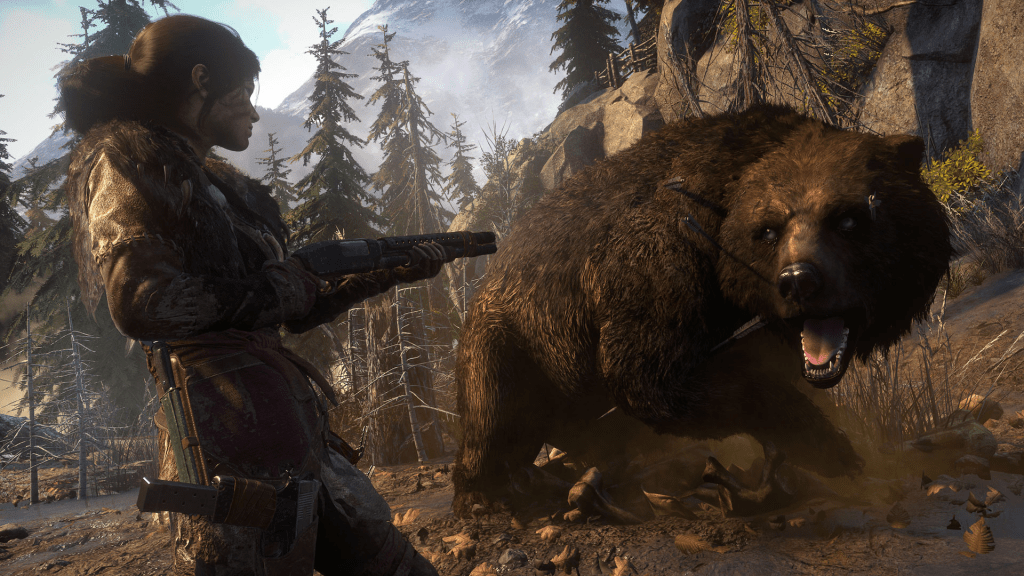
The open areas are also filled with wildlife, which can be hunted to collect more resources. These are also main areas where you can find new side missions and discover/explore challenge tombs for new skills, outfits, and equipment. You can do this by talking to a certain villager which can guide you on a specific side mission or finding a hidden area which reveals a secret challenge tomb. The majority of these are not required to be the main campaign but you will likely find yourself wanting to complete one on the way as the side mission might just be right in front of you for you to complete.
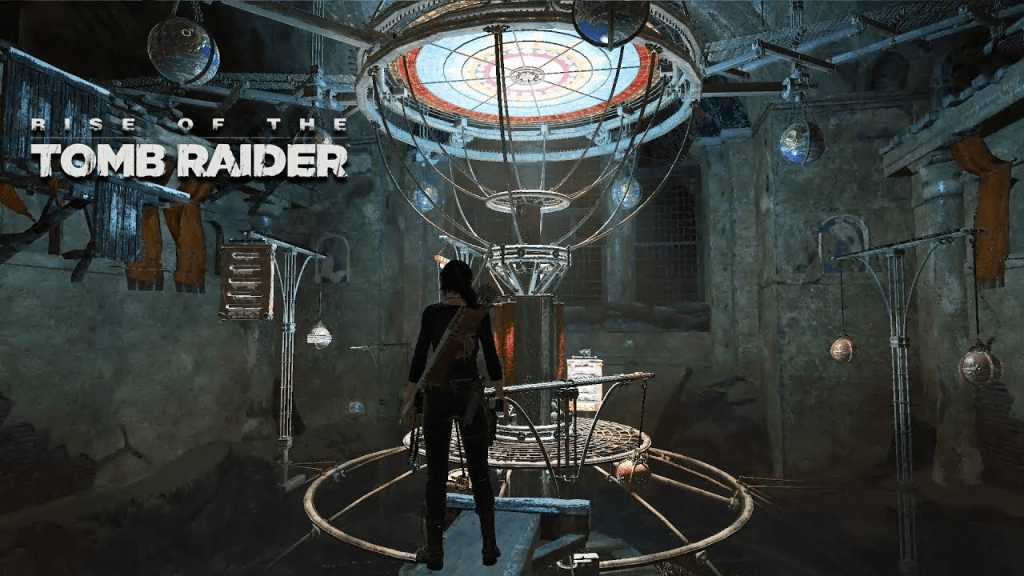
A main big addition that Crystal Dynamics chose to put more focus on is the puzzle solving. Throughout the game, players will find themselves solving puzzles to progress through the game, in both the main campaign and side missions. The puzzles, based on in-game physics, are often connected and lead to a larger one later on down the road. During these sections, you will find yourself solving smaller, connective puzzles in order to solve a much larger one. These sections were clearly done as a response from the fans feedback from the previous game with wanting to add more elements from the classic Tomb Raider games, such as challenge tombs and puzzle solving. If you were one of these people, then you certainly get your wish with this game.
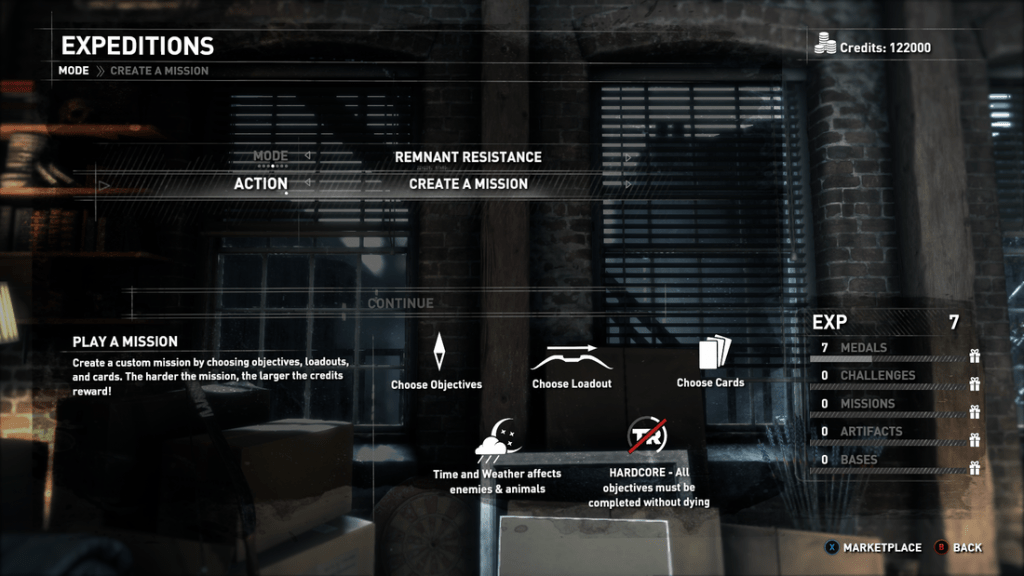
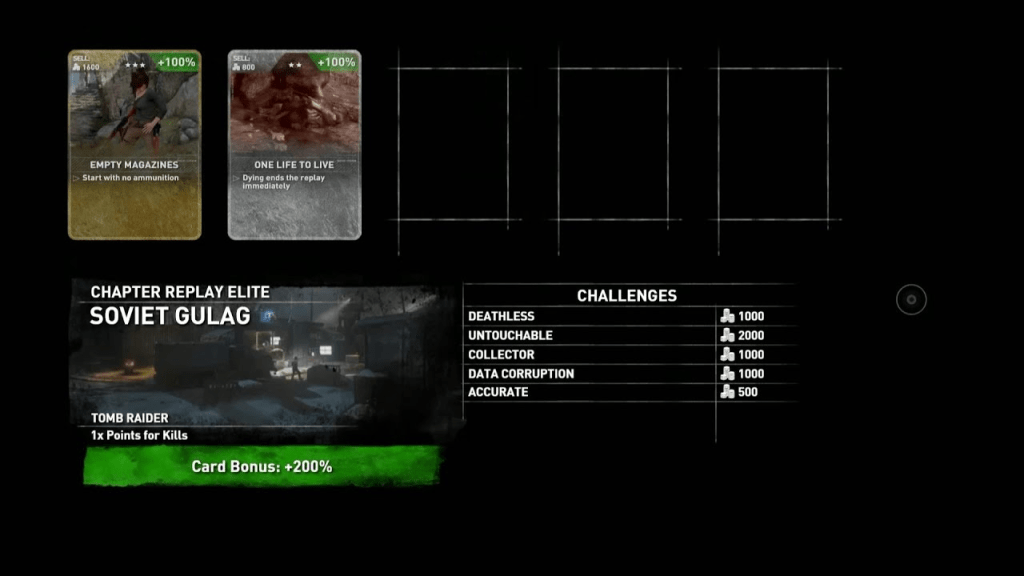
Unlike the previous game, Rise of the Tomb Raider does not have a multiplayer mode, also likely due to the lackluster response that the previous game’s multiplayer received. Instead, it introduces Expeditions, which allows players to replay the game with new constraints and requirements. This aligns with the game’s four modes: Chapter Replay, Chapter Replay Elite, Score Attack, and Remnant Resistance. Chapter Replay and Replay Elite allows players to replay any level and bring already-acquired skills and weapons to the level, Score Attack introduces score combo chains and Remnant Resistance allows to create custom scenarios, which can be shared with other players. By completing Expeditions, you earn credits which can then be used to purchase digital collectible cards to modify the gameplay. For those that are into the card collection of say MLB: The Show will certainly get a huge kick out of this.
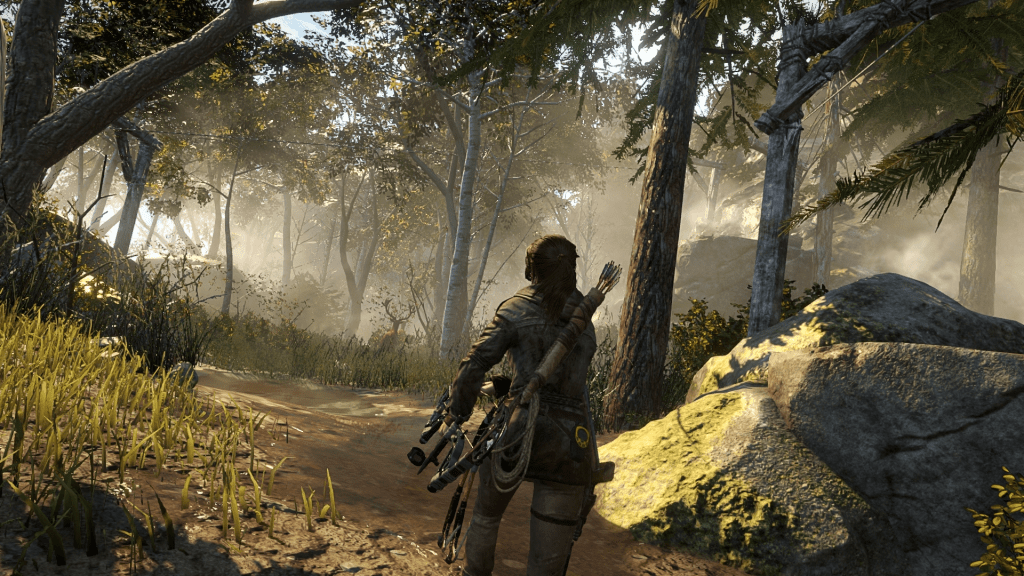
When it comes to the overall gameplay, there is very little of me to talk negatively about. Crystal Dynamics clearly took the fan criticisms of the previous game to heart and looked to find that right balance to make Rise of the Tomb Raider a game made for both longtime and casual fans alike. In my mind, they succeed greatly at that. By improving upon the combat, stealth, and platforming of the previous game and also trimming down on QTE sections in favor of the more traditional puzzle solving and challenge tombs, there is something for any kind of Tomb Raider fan here.
I love taking control of Lara as she is going on this Nathan Drake-like adventure where she searches for the lost city of Kitezh. I love how tighter and more polished the overall gameplay felt, with making Lara control just about as well as she possibly ever could. I love being able to explore mini hub worlds this time around, which allows to interact with the other characters and villagers of the game, along with unlocking secret side missions. I love the addition of more puzzle solving missions like the original Tomb Raider games and even wanting to go more out of my way this time around to solve the challenge tombs. I love how it’s able to learn the right lessons from the likes of Uncharted while still standing strong on it’s own foundation. I just love the gameplay of Rise of the Tomb Raider overall.
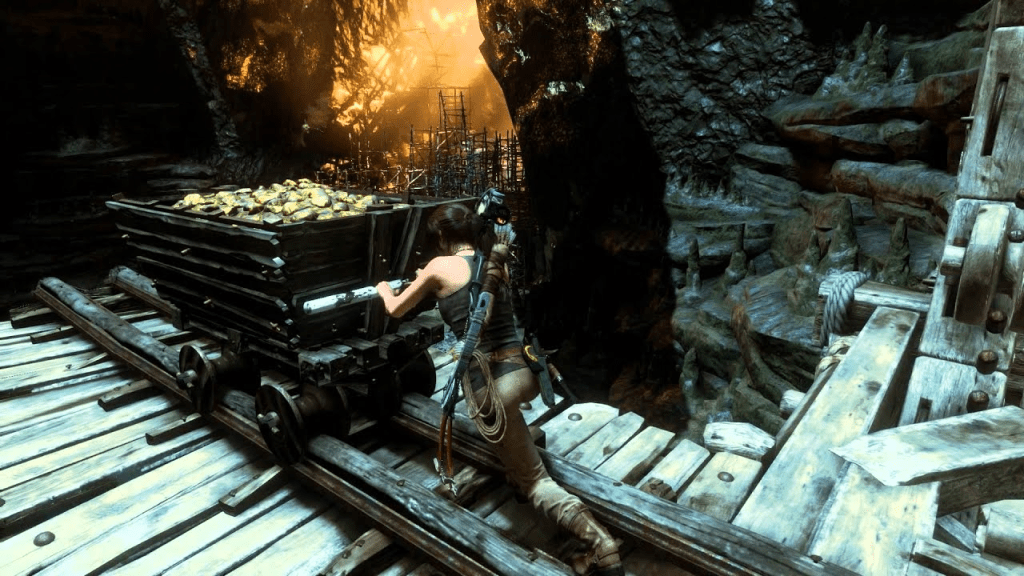
Granted, if we are being totally honest, there’s isn’t too much here that wasn’t already presented in Tomb Raider (2013). Yes, there are certainly features and more expansive content this time around but the overall formula and engine remains the same. It’s clear Crystal Dynamics wasn’t looking to reinvent the wheel here and just wanted to deliver the same things that fans loved about the previous games while also incorporating elements from the classic Tomb Raider games that had become a staple of the franchise back then. While those looking for more innovation might be slight disappointed, those that just wanted more of what they got last time, mixed in with the things they got with the original games, and a couple of extras throughout should not be disappointed in the slightest.
I guess if I have a gripe, it would be that the boss fights still range from weak to practically non-existence. While there are certainly still action sequences and cinematic set pieces that will give you the impression that you are about to encounter something intense and heart bumping, the individual boss fights themselves are nothing to write home about. It still feels like you are just fighting some random enemy and beating them doesn’t feel very rewarding or satisfying.
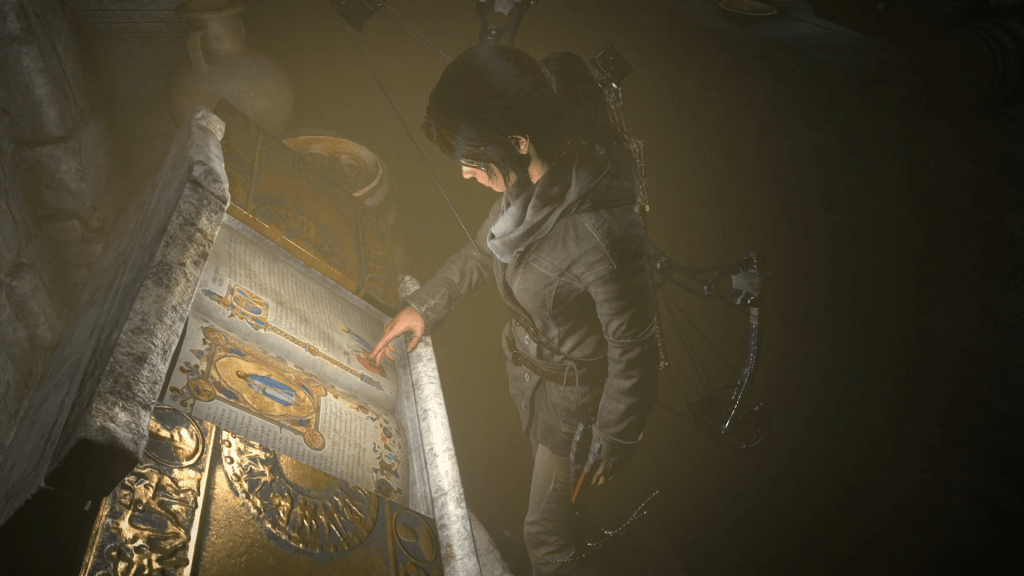
Aside from that, the gameplay for Rise of the Tomb Raider is incredibly polished and incredibly fun. It’s able to improve on any potential shortcomings that the previous game had while also incorporating and mixing in new elements that feel organic and adds to the overall experience. You can still argue this is more of the same has before but hey, if that more of the same is done better and still fun to play, I’ll definitely take it.
Graphics:
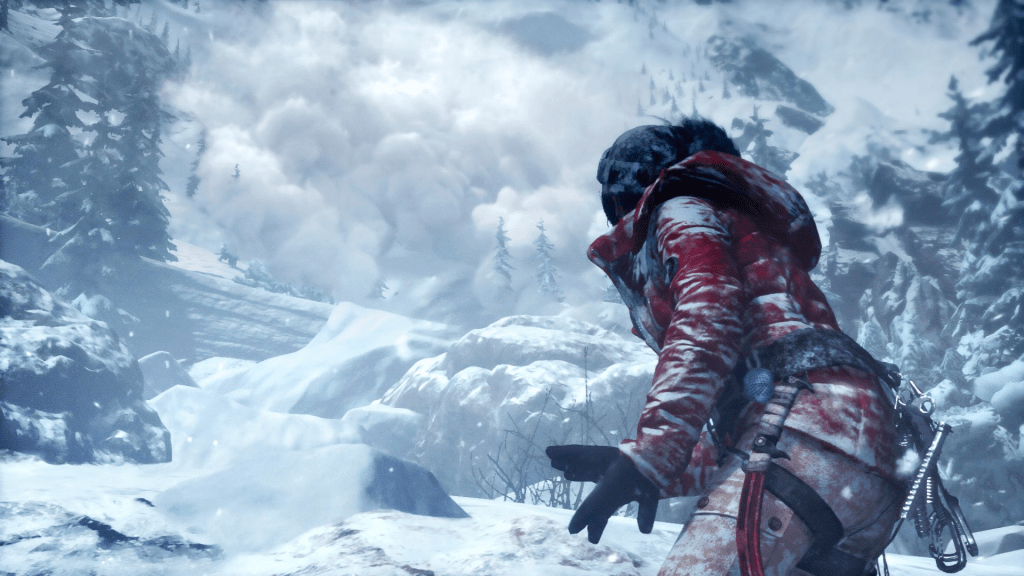
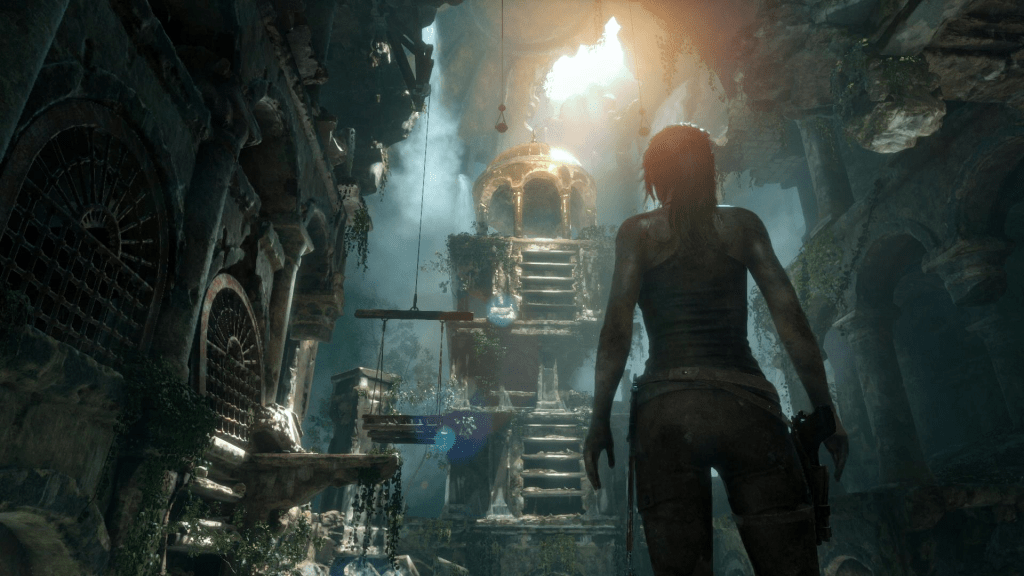
Graphically, this game is ASTONISHING! This is easily one of the best and most impressive looking games ever released! The opening sequence in the snowy mountains alone showcases the massive power in graphics engine that Eidos-Montreal and Nixxes Software provided with the game. The textures is clear cut, the presentation is near flawless, and the 60 FPS is the pure icing on the cake. It’s one of the few examples of a “realistic” looking video game being an actual complaint. A single screenshot of this game makes it feel like the game is actually in real life and NOT from a video game.
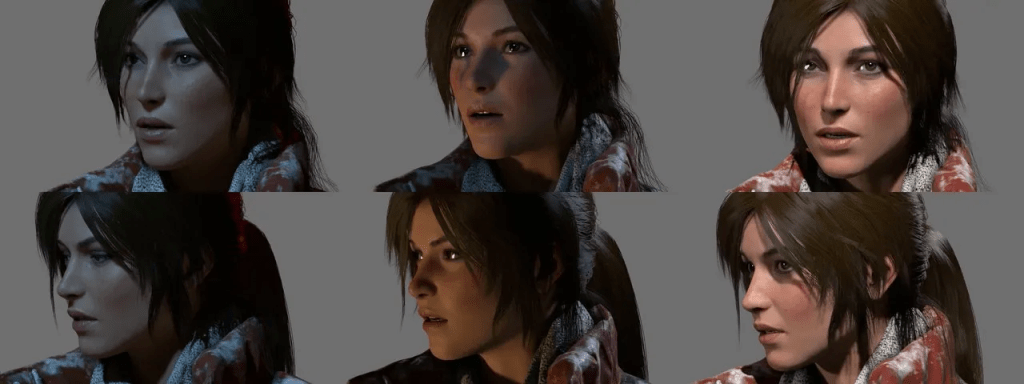
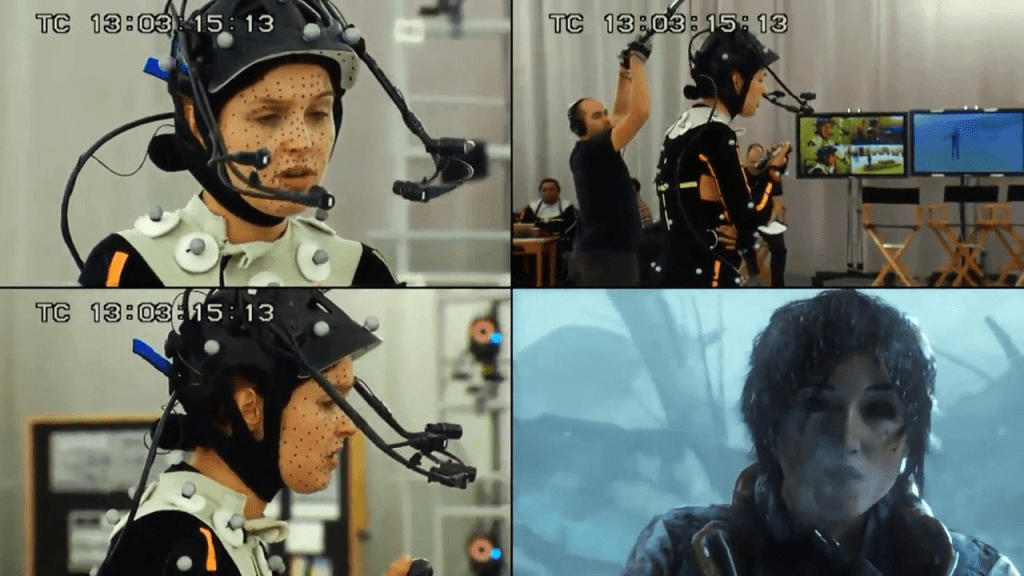
The animation and motion capture is incredibly well done as well. This is probably the best that Lara Croft has ever looked, with face animation that even rival the king of motion capture performances in Naughty Dog. While these technical achievements were impressive in Tomb Raider (2013), there were a handful of instances of graphical errors and a cutscene or two that a character is moving like an animatronic. However, just about 99.99% of that is wiped out ENTIRELY in Rise of the Tomb Raider, making it graphically and presentation wise a visually pleasing masterpiece.
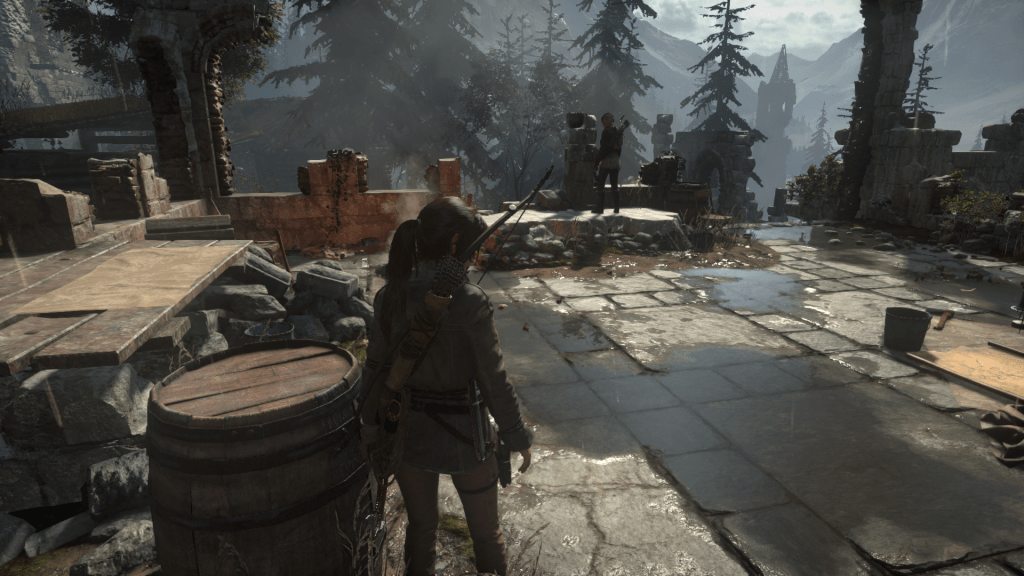
There’s not enough praise I can give to the graphics engine and production values for Rise of the Tomb Raider, probably the best and most polished aspect of the entire game. Even those that don’t like this game can’t deny how much time and effort went into making this game look as amazing and convincing as it could possibly be. Whether it’s because of a bigger budget or the involvement of Eidos-Montreal and Nixxes Software, Rise of the Tomb Raider is a technical marvel that has no business being as well made and pleasing to the eyes as it should.
Sound:
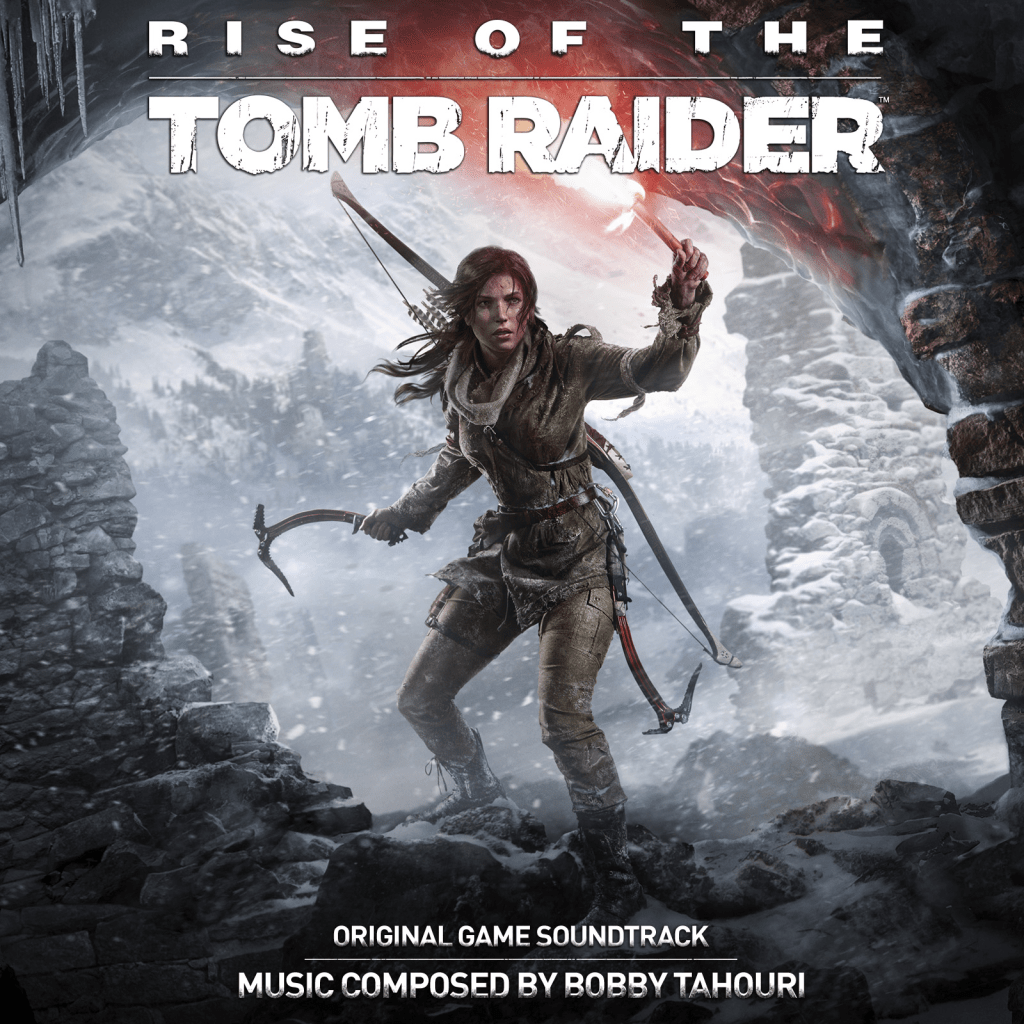
Jason Graves, the composer of Tomb Raider (2013) didn’t return this time around to the score for Rise of the Tomb Raider. The man doing that is no other than Bobby Tahouri. Thankfully, Tahouri is able to pick off exactly where Graves left off, delivering a score that works perfectly as not just an action-adventure game but a Tomb Raider game at heart. The music is once again able to fit the mood and tone of just about every single sequence in the game, from every intense action set piece to every slow breathing dramatic moment.

Once again, the voice acting is top notch all around and once again, the real main standout is Camilla Luddington as Lara Croft herself. She perfectly embodies this early years version of Lara Croft, taking baby steps into becoming the Tomb Raider we all know and love. Her tremendous line delivery and nearly flawlessly motion capture performance just feels appropriately like Lara Croft, helping greatly to match the characterization through performance with the writing.
There was clearly just as much effort put into the audio and sound design as the graphical engine and presentation. There’s not a single track or performance that feels wasted or half assed. It all looks and sounds wonderful.
Downloadable Content:
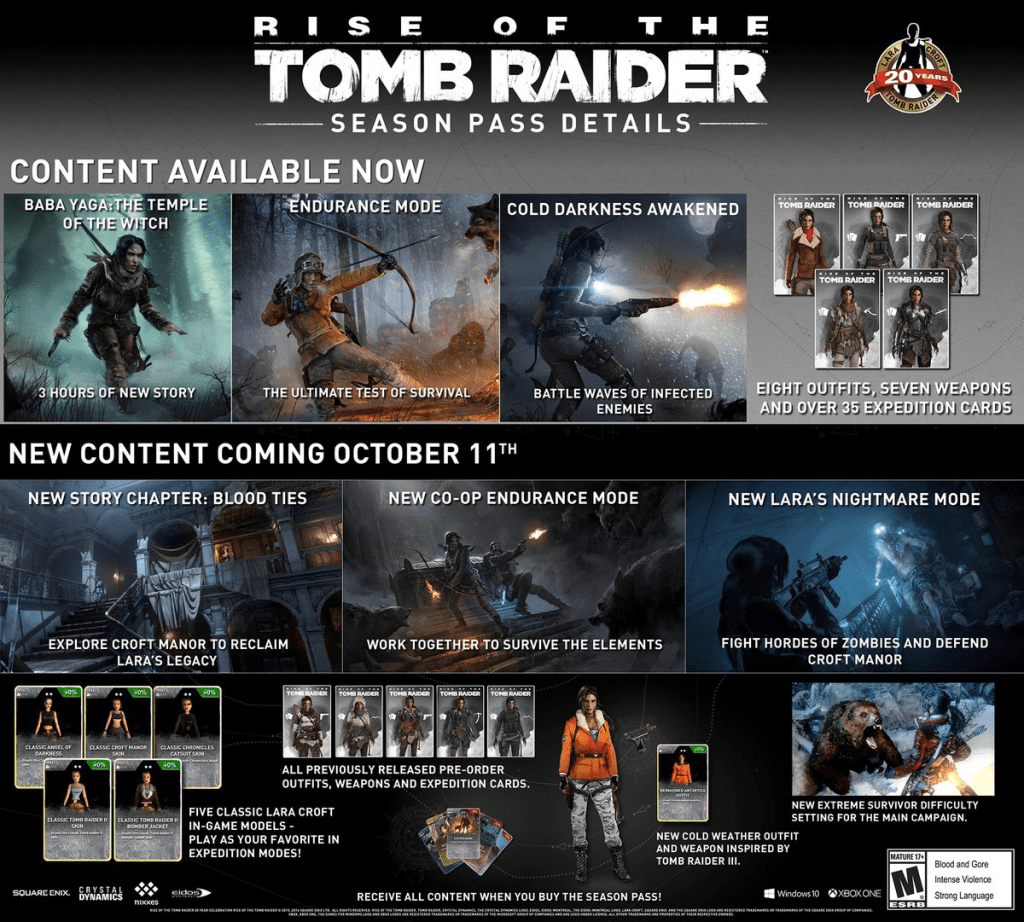
Rise of the Tomb Raider received plenty of DLC support, much more than the first game. It’s first post-launch game update released on December 4th, about a month after the game’s release. It introduced an endurance mode, as Lara hunts and crafts items while facing hidden dangers and environmental hazards. The real main standouts of the DLC came from the additional story add-ons.
Unlike the first game, Rise offered multiple story DLCs. The titles for these story DLCs being Baba Yaga: The Temple of the Witch, Cold Darkness Awakened, Blood Ties, and Lara’s Nightmare. Baby Yaga: The Temple of the Witch sees Lara investigating a disturbance in the Soviet mine, where she meets a young girl named Nadia and fights against a new foe known as Baby Yaga. Cold Darkness Awakened has Lara enter a decommissioned Soviet weapons bunker, which has been breached by a Trinity patrol, which also includes a horde mode in which Lara fights waves of infected enemies. Blood Ties has Lara explore Croft Manor, which introduces a combat-free mode while doing so. Lara’s Nightmare, which is like a mix of Cold Darkness Awakened and Blood Ties has Lara once again coming up against infected enemies that have infiltrated the Manor. This DLC was free of charge to season-pass holders and would be further expanded upon with plenty of new additions in the Rise of the Tomb Raider: 20 Year Celebration edition, which released around the same time as the PlayStation 4 version of the main game.
When looking at these DLC packs, it was clear that Crystal Dynamics wanted to provided extra content that would give the players a full money’s worth of content. Unlike Tomb Raider (2013), where most of the DLC just felt like random add-ons that were removed from the game at the last second just for the sake of squeezing extra dollars, these DLC story packs do feel like they are worth the extra few bucks for players that are curious.
I wouldn’t say you are required to play them if you don’t want to be lost in Shadow of the Tomb Raider, as they mostly feel more episodic to the main game and just random side adventures for Lara Croft. However, they certainly do help to add more expansive content to the main game and does give players more to do after completing the main campaign. These are far from the greatest DLC packs ever but it is nice to see Crystal Dynamics put extra care into the expansive content than before.
Conclusion:
The question most likely had going into if Rise of the Tomb Raider is better than Tomb Raider (2013)? Technically speaking, I would argue Yes! The production values are incredibly top notch, the gameplay is much smoother and more refined, there’s more puzzles and challenge tombs this time around, there’s much more expansive content, the story feels deeper and more personal, and of course, the graphical engine is COMPLETELY off the charts! However, Tomb Raider (2013) set the foundation, novelty and groundwork of this Survivor trilogy, the kind of foundation, novelty, and groundwork that Rise of the Tomb Raider never is able to replicate on it’s own terms. It certainly builds upon it as good and organically as it can but not to the extent that original game did. You can go back-and-forth between the two games but if I had to chose just one to play, I might be more incline to go with Rise of the Tomb Raider. However, if only one of these games had to exist, then I might go with Tomb Raider (2013), if that makes sense.
Even so, despite the unavoidable comparisons to it’s predecessor and falling a tad short of being the Uncharted 2 level masterpiece that it’s aiming for (and taking obvious inspiration from), Rise of the Tomb Raider is still a fantastic game all around and one definitely worth playing.

Would Crystal Dynamics be able to continue their momentum and save their best for last? Find out next time!
Next Up: Shadow of the Tomb Raider (2018)
 Adam's Blog