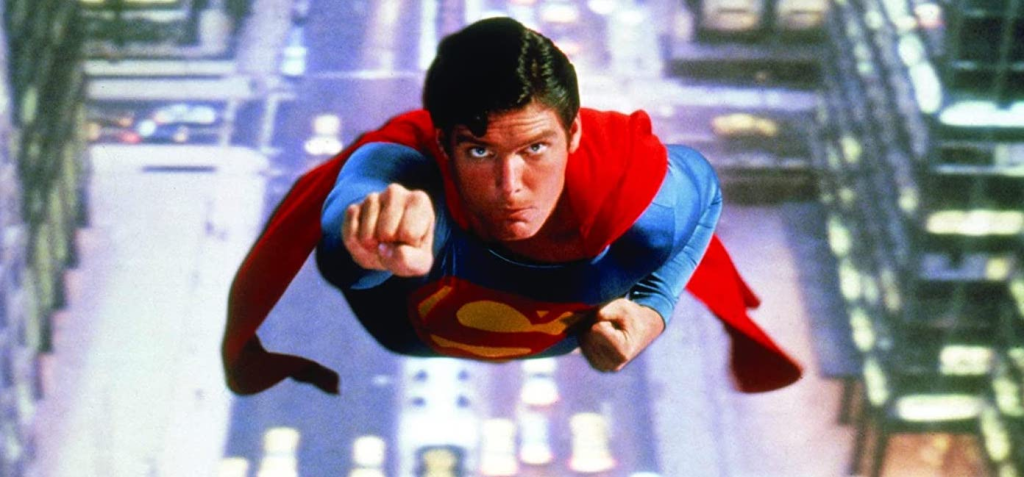
If there is one film medium that has been a dominant force for the 21st century, that would be comic books and superheroes. While we are now living in an era where this subgenre of movies is not as strong as it was in the previous two decades, there is no denying that they have changed the way that blockbusters have been made for the past 25+ years. However, even before the likes of the Marvel Cinematic Universe, Christopher Nolan’s Batman trilogy, and the multiple DC Cinematic universe attempts, even before the likes of Blade (1998), X-Men (2000), and Spider-Man (2002) rolled around, and even before Tim Burton’s or Joel Schumacher’s Batman made their ways onto the scene, there was one superhero movie that stood proudly on his own. Not only working as a near perfect example of what a superhero movie should consist of but it set the template and tropes on how a superhero movie or even a blockbuster in general should operated. That one film I’m talking about is no other than Superman (1978), directed by Richard Donner and played by the OG Superman himself, Christopher Reeves.
This was the superhero movie that changed everything! It proved that a film based off of a comic book superhero can work and translate onto the big screen as well as it possibly can. It proved that big cinematic experiences of this kind can be just as compelling as say a giant space opera or an intense thriller involving a big shark (Bet you can guess which two blockbusters I’m referring to from back then!). And most importantly, it proved that comic books and superheroes can shine a very bright light on pop culture, telling stories with impactful themes and unforgettable role models that anyone can look up to (No pun intended!)!
This was the birth of the superhero genre!
This is Superman (1978)!
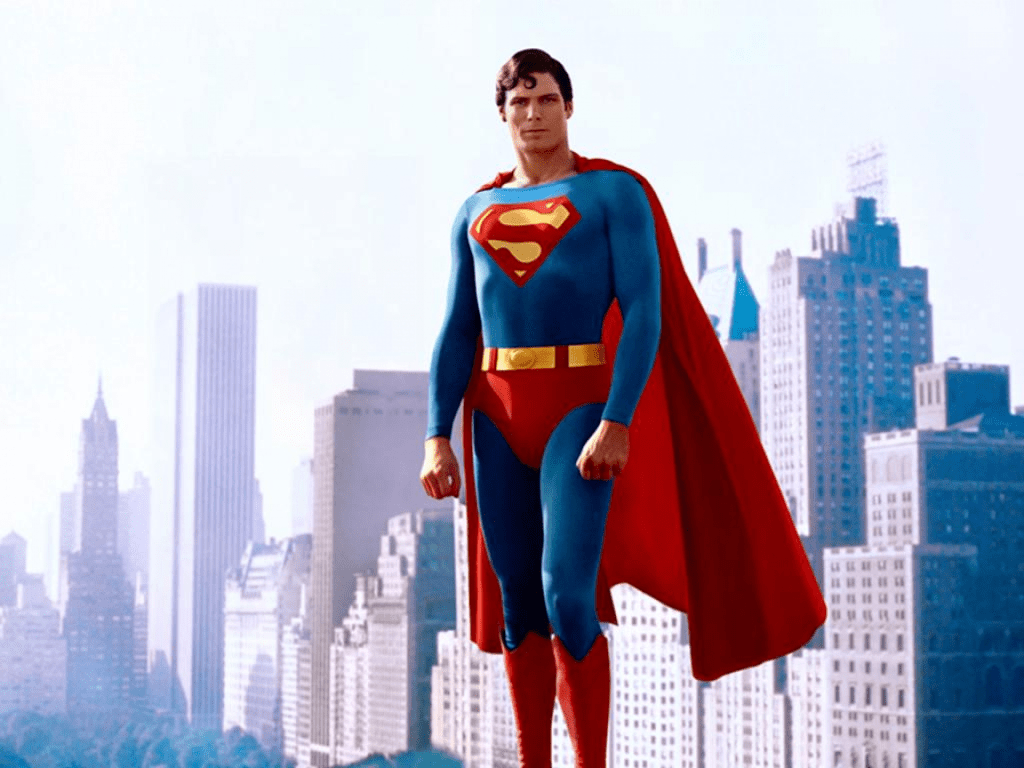
To prove that this was indeed the one film that started this ongoing superhero movie trend, I decided to name six distinct tropes that this film laid out which is still being followed up to this day. Even nearly 50 years after Superman (1978) came out, these are all common beats you still see in superhero films to this day. Heck, I wouldn’t be surprised if we see some of/if not all of these with James Gunn’s Superman come July. Nevertheless, here are the six common tropes and cliches with superhero movies that Superman (1978) started.
1.) Origin Story
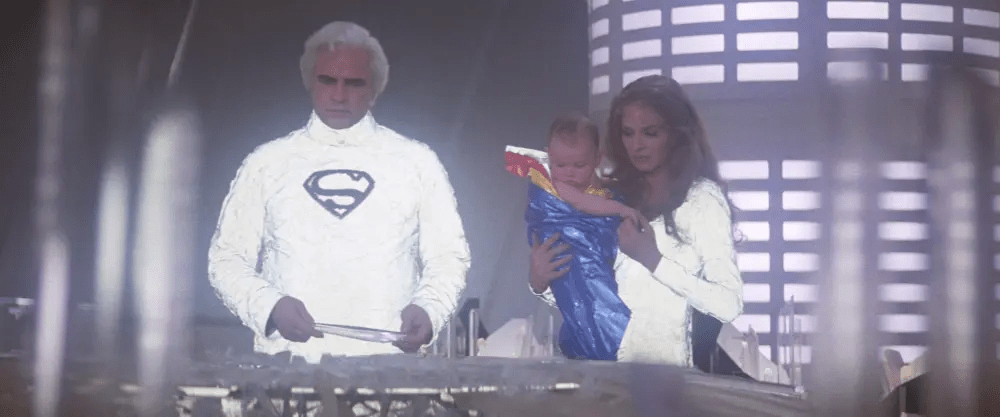
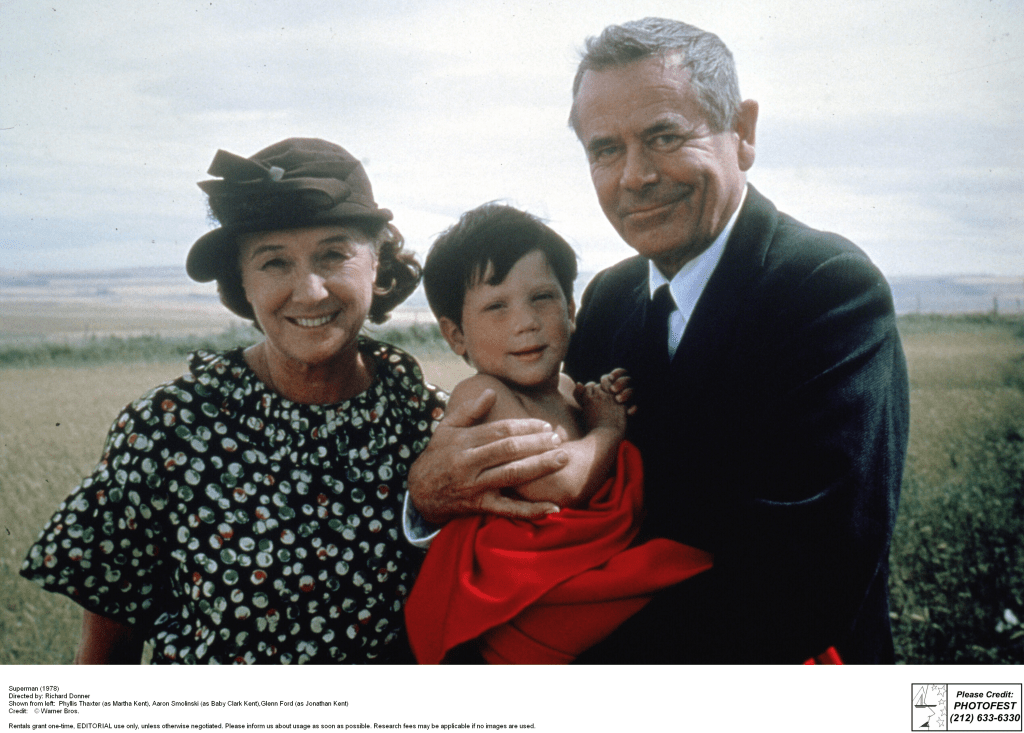
When it comes to the first chapter of a superhero story, it usually starts off with showcasing their origins. This is the part of the story where you find our where exactly the titled superhero came from, who gave birth to them, and how they got their powers and became the actual titled superhero. It’s become such a staple at this point that folks will call blasphemy if a certain version of a comic book superhero does NOT contain the origin in some way, shape, or form. No matter how many different stories we get off Spider-Man or Batman, we ALWAYS need to see Uncle Ben and the Waynes being shot in cold blood.
In the case of Superman, his origin involves his biological parents, Jor-El and Lara Lor-Van, sending him off to Earth while his home planet Krypton is on the verge of collapse. Clark is then discovered in Kansas by Jonathan and Martha Kent, who would adapt him and raised him as their son. It’s doing this sequence where Clark must discover what he was destined to be by his own mother and father, while learning what it means to live among the human beings on Earth by his adoptive mother and father.
This is a nice origin story that is able to be more about being an outcast rather than just a traditional “fish out of water” story. This is about Clark Kent learning to blend in with a brand new home not just as Clark Kent himself but as Superman. And even with all the criticism and rejection among the public, he still wants to do what is right. He wants to be the hero that his birth parents always envisioned of him. He wants to save people’s lives while stopping those that put them in harm’s away. And most importantly, he just wants to do good things for the goodness of mankind. Regardless if he will do it in a legal or illegal way, he is determined to be a hero at all costs, regardless of what the public thinks of him.
While the 1/3rd of this movie does take it’s time on establishing the origins of Clark Kent’s transformation into Superman, it is important to always showcases the answers to the questions that anyone might have about it’s title hero. Whether it’s like a traditional first installment with a superhero that spends the first half establishing the hero’s origin story (Spider-Man (2002), Batman Begins, Iron Man, or Captain America: The First Avenger) or uses an opening sequence or flashbacks scenes to establish their origins (Batman (1989) and The Incredible Hulk), showcasing a superhero’s origin is always urgent in order to get audience’s connected with the hero’s journey. While I can’t say for certain, I guarantee that the origin of a superhero would not be as much of a staple as it is if it weren’t for this film showcasing these exact important events.
2.) Secret Identity
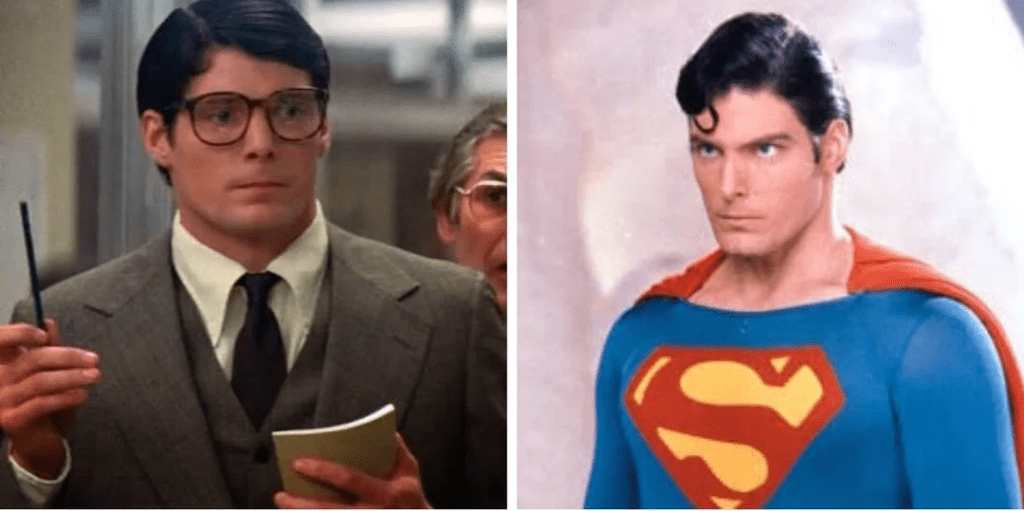
A usual key component for a superhero story is with the main superhero having to keep their identity a secret. There are always exceptions such as when Tony Stark revealed his true self at the end of Iron Man or Diana Prince always representing Wonder Woman but more often than not, these are usually stories about the main superhero having to learn to keep their superhero life a secret and finding room to focus on their normal, everyday life. You have Peter Parker who has to learn how to balance himself between being Spider-Man and Peter Parker, you have Bruce Wayne needing to let his playboy billionaire side shine in the day and his crime fighting vigilante side shine in the night. In this case, we have Clark Kent needing to keep Superman and Clark Kent as two separate identities.
Of course, the main jab at Superman is how it’s unfathomable how anyone can’t tell the difference between Clark Kent and Superman because they both look exactly the same. Like, all you need to do is remove the glasses and you can see it’s literally the exact same person. How can a superhero who is trying to protect his secret identity do so by basically hiding in plain sight? That is a question with Superman that I thought about for years and could never find the answer to. That was until……I saw Christopher Reeve’s performance.
The main aspect that makes Reeve’s performance stand out perfectly as both Clark Kent and Superman is the fact that they feel like two completely different people when you watch them. As Clark Kent, he’s the typical nerdy, awkward man who is a bit of a dweb that is the last person you would ever expect to be a superhero in red and blue pajamas. As Superman, he’s this brave, heroic figure that you would never suggest could be some weak, submissive geek that lets his female co-worker fight his battles for him. I’m pretty sure if you asked Clark Kent in real life that he looks just like Superman, he would be able to PERFECTLY convince you that he is NOT Superman and just said, “Yeah, I guess that’s true! But I assure you, I am NOT him!” All you had to do is see how Clark Kent and Superman act so different in each scene and how perfectly Reeves is able to make them both convincing as two separate characters!
You are lying to yourselves if you ACTUALLY believe these two guys could be the exact same person if you just judge based off their appearance and personality and NOT just looks.
The secret identity tends to play a big role in most superhero movies, especially with origin stories, but I don’t think there has been a superhero movie that’s been able to capture just exactly what it means to be an average everyday joe to being the world’s biggest savior than with Superman (1978). A story which sees a man has to convince that his personal self and superhero self is NOT one of the same despite looking exactly alike. And this is in large part thanks to Christopher Reeve’s pitch perfect portrayals as both Clark Kent and Superman respectively.
3.) Love Interest
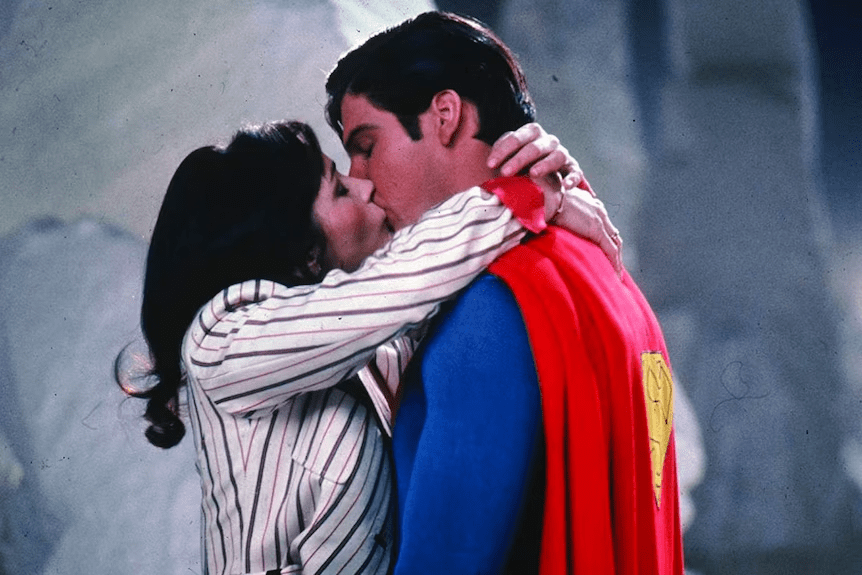
Of course, you can’t have a traditional superhero story without a traditional love interest. This is usually always added to give a story a bit of an emotional anchor and give motivation for the main superhero to do what he does. There are times where it can fall into some pretty infamous tropes. From being a constant damsel n distress to acting as a “trophy” for the main hero to getting the “fridge” treatment, this can be seen as the weakest part of the story if you are not too careful and learn too much into one of these tropes. There’s only so many times where people want to see Gwen Stacy die so Spider-Man can be sad only to get replaced by a love interest that’s hotter but much more blander (*cough* Mary Jane Watson *cough*). Thankfully, Superman (1978) is able to find a love story that works quite fondly with Superman and Lois Lane.
To be sure, it does involve Lois Lane having to be saved at least a few times by Superman. There are two notable moments of that, from falling off of a building and another instance that will be discussed later on. However, that doesn’t change the fact that Lois is a strong character in her own right and can even being seen saving Clark Kent on some occasions. She’s feisty, strong-willed, always determined to get the job done, and is always able to give Clark the emotional support whenever they need it. However, what makes her a perfect equal to Superman is how they will both stop at nothing to accomplish their goals for the greater good.
Lois Lane in general is someone that is as fearless as Superman is and always shows dedication to finding truth and justice for every report she covers as a journalist with the Daily Planet. Sure, she might not be as invincible as Superman is and is certainly not bullet proof but when it comes to her heart and free will, she is about as equal to Superman as someone can possibly get. That’s what makes the two a perfect couple and Lois Lane a perfect love interest.
Just watch this scene and tell me that it is NOT magical!
I wouldn’t be surprised if this is what inspired Disney to making the magical carpet scene in Aladdin.
Most superhero movies tend to always botch the love story. Mostly because it usually only acts to give the superhero a love interest and have it play second-fiddled to everything else going on, usually only acting like a box that needs to be checked off. But with Superman (1978), Lois Lane helps acts as the pure heart of the film and helps Clark fill that missing hole he had within himself in his early days as Superman.
4.) Saving People’s Lives
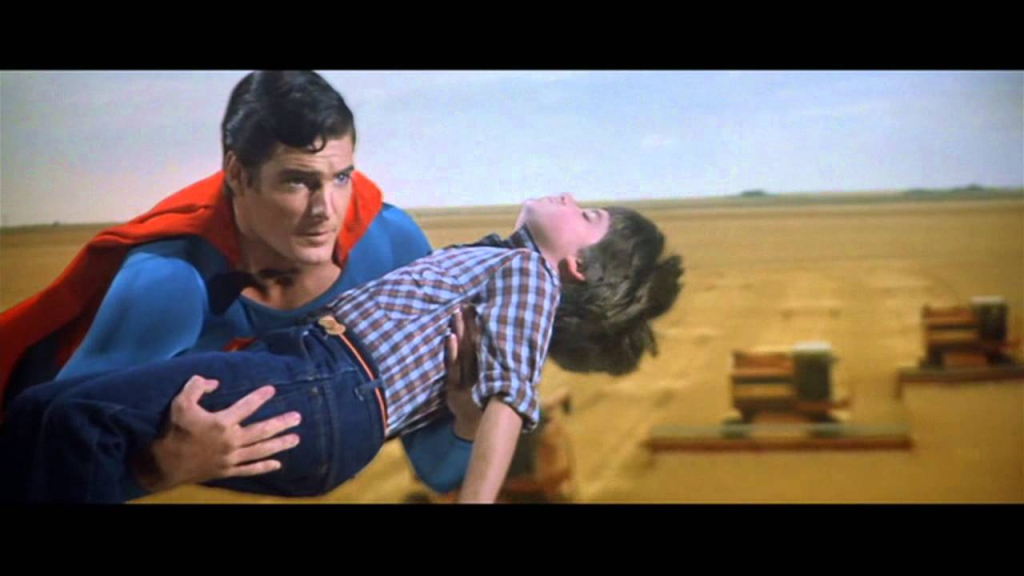
This is simply one component that a superhero movie can NOT live without. You need scenes and moments that shows a superhero actually being well…….a superhero. Throughout superhero movie history, we’ve seen plenty of examples of superheroes filling their good superhero duties by saving the lives of folks they’ve sworn to protect. We’ve seen Spider-Man saving people from a burning building, we’ve seen Iron Man rescuing passengers from a plane. With Superman, we get to see him rescuing innocent people from natural disasters and bridges on the verge of collapsing.
While the main protagonist saving people has never been anything out of the ordinary, there’s always something special when a superhero does it. This is mostly because they are able to save people in ways that an average person won’t be able to. They are gifted the skills, power, wealth, and/or resources to be able to rescue lives and give themselves a name which regular people would not be able to. With Superman, he is just using the powers that was gifted to him by his parents and home world for the benefit for others and not just himself.
And I know you might be wondering why I am not referring to Superman saving a specific important character at the near tail end of the film. Well, that’s because I’m saving that for the very next part.
5.) The Big Third Act Climax

Okay, this movie doesn’t have the traditional big third act battle that most superhero movies those. This isn’t like the third act of every Avengers movie where there is always so much crap that goes on at the same time that it can be hard to keep track off. This isn’t even like the big climaxes to Superman II, Man of Steel, or Batman V Superman: Dawn of Justice where it involves Superman having to fight a powerful being that is even stronger than himself. This involves Superman having to save the day from the wreckage that Lex Luthor causes, a wreckage that could cause a worldwide nuclear war. Much like the climax to Spider-Man (2002) (expect without the ass-kicking 101 scene with the Green Goblin), it involves Clark having to be the hero to the world that he believes himself to be.
I already partially covered the meaning and purpose of the climax in my last part where it involves Superman having to save the very people he has sworn to protect. However, what part I missed out on is the part where he has to save Lois Lane after she partially died. After Superman fails to save Lois from the earthquake that Lex Luthor caused, he commits the biggest deus ex machina imaginable by using his superpowers to rotate the earth back and turning back time.
Can this be considered “cheating”?! Heck yeah!
Does this make any sense whatsoever?! Heck no!
However, that doesn’t change the fact that the third act climax is where Superman faces his toughest challenge yet, the part of the film where the main superhero finds himself pushed beyond measure to be the hero for everybody and the ones he loves. That always tend to be the blueprint for most third acts in superhero stories and I have no doubt this is the one superhero movie where many filmmakers got their first inspiration from.
6.) Being A Symbol

This might be the most important trope of all for every superhero story brought to the big screen. That is having your main character be a symbol. Not just for the characters in the story but for the audience as well! For superheroes to exist for as long as they have, they must have inspirations. They must have folks that would love nothing more to follow in their footsteps and become superheroes of their own in any way, shape, or form. Thankfully, Superman (1978) is able to succeed at that in both ways.
In the context of the movie, the public now has a very positive view on Superman and sees him as being mankind greatest superhero. When it comes to pop culture, the entire world and entertainment industry has followed in this film’s footsteps of making not just more Superman incarnations but also more superheroes of his kind.
Since this film came out, we have gotten more Superman films, shows, games, and comics that most certainly got it’s initial template from this 1978 gamechanger. Also, since this film came out, we have gotten many different superhero films, shows, games, and comics of it’s kind. The kind that I imagine would not exist if it wasn’t for the impact that Richard Donner and Christopher Reeve brought to the world.
Above all, Superman (1978) is able to prove that it’s title hero is in face the symbol he set himself out to be. Not only through the truth, justice, and American way that the character himself claims but through having that impact on the whole world, being the kind of hero that his parents always thought of him has and what I imagine the world saw Christopher Reeve has.
Being that exact symbol!
A symbol of……you guessed it……hope!
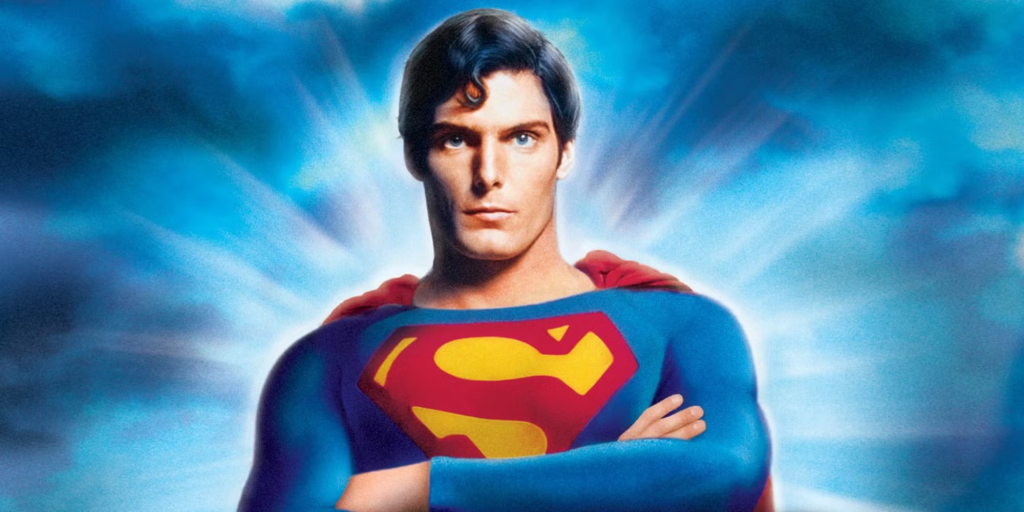
In conclusion, superhero movies wouldn’t be where they have been for a long time now if it wasn’t for Superman (1978). This is not only the superhero film that got the ball rolling but it’s the superhero film that laid the groundwork for all the beats, tropes, and basic structure that nearly every film based off of a comic book and superhero is expected to follow upon. This overexposed subgenre only ever became what it is and has grown to be for nearly the past five decades due to the groundbreaking success of Superman (1978).
This was the birth of the superhero!
This was Superman (1978)!
Next Up: Superman II: When Director’s Cuts Matter

 Adam's Blog