The Dark Knight (2008)-When The Villains Are As Good as The Hero, Part II

I’ve been having a hard time figuring out how to start this piece. Like what else is there to say about The Dark Knight that hasn’t been said about everyone and their mother for the last 14 years?! This movie has been beloved, discussed, analyzed, examined, critiqued, and nitpicked to death every since it came out in 2008! There’s been many articles published, videos uploaded, and pieces written about nearly every single aspect of this movie from frame one to title of the movie shown at the very end. Heck, there’s probably been a post or two made about the film’s end credits and the subtle meaning behind that. It’s suffice to say that The Dark Knight has made quite an impact on both superhero movies and cinema in general. Not only considered one of the best comic book movies ever made, but one of the best movies ever made period! For the most part, I agree with both of those claims. However, one aspect that I don’t think gets talk about enough is how much of a perfect parallel this movie is to Batman Returns, a movie that just like with The Dark Knight put it’s villains just as much in the spotlight as it’s titled hero .

I’ve already covered Batman Returns earlier this month but the main thing I specifically mentioned is how those movies perfectly compliment one another because it knows the one core aspect of Batman that not a lot of people are willing to admit: Batman is less define about who he is but is more define by the villains that he encounters. Fans often tend to complain that many Batman movies don’t focus nearly as much on Batman as they do the villains. And the reason for that is because the villains are what make Batman who he is.

It’s always a tricky balance for a superhero hero when handling it’s hero and villain. For quite a long time with Marvel, the majority of their movies focused solely on their hero and their overall journey while focusing less on the villains. That became a common complaint with fans throughout the first two waves of Marvel movies but once the third wave came around, because there’s already been so much time and investment developing these heroes into who they are, that gave more room to focus on the villains and give them more meaningful arcs. When it comes to Batman, a good portion of his films give as much screen time to the villain as does the hero, sometimes even more so. A big reason for that is not just because it’s the villains that make the Batman who he is, but because the villains themselves are just so damn awesome that it’s near impossible to want to take time away from them. However, when juggling as many good guys and bad guys as you do, it’s always important to make sure it makes sense to your story and that it feels cohesive. Not just in terms of plot and structure, but also theme, or in the case of The Dark Knight, symbolism. That was something that Batman Returns greatly understood and that something that The Dark Knight arguably understands even more.

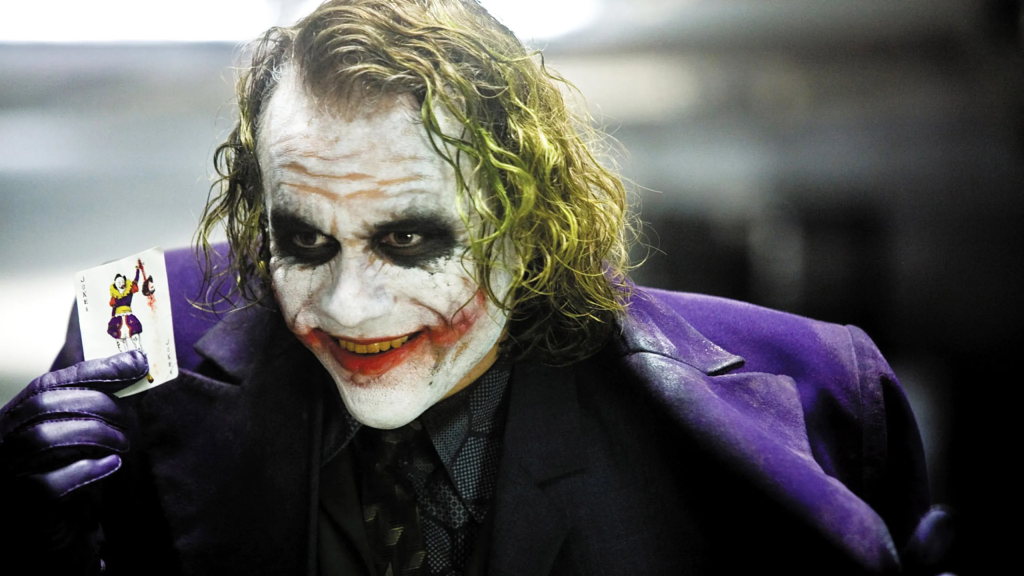
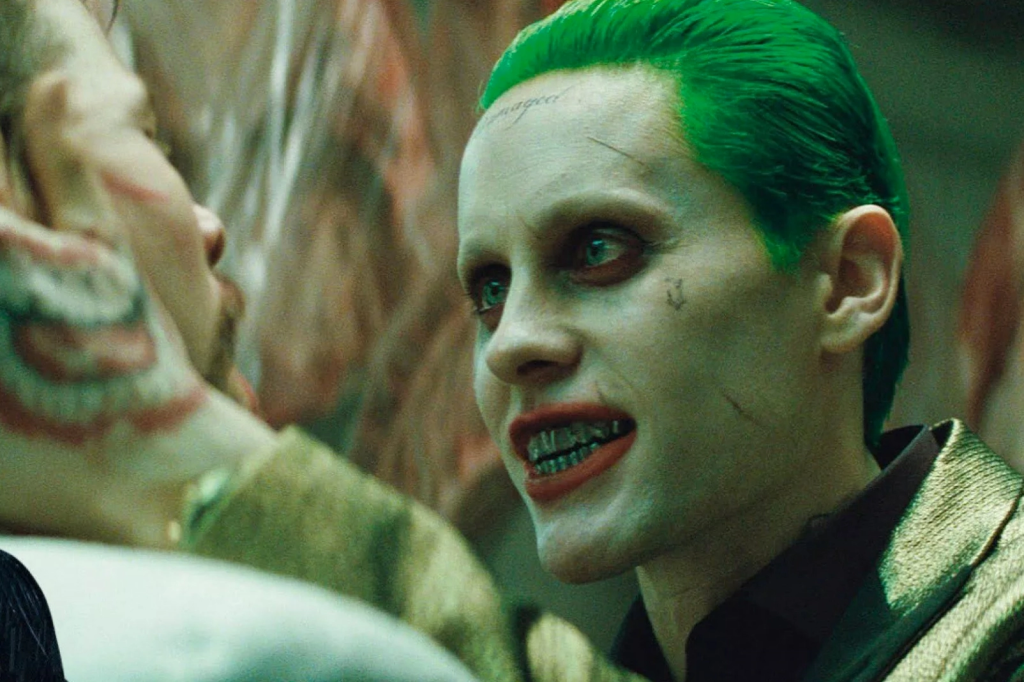
The first thing that always comes to discussing with how amazing this Batman movie is about not strictly Batman, but Joker. And for a good reason, Joker is in this movie is one the best and most complex, multilayered, cynical, and just plain fun to watch antagonists in any movie ever. He’s mysterious, has a crystal clear motivation, presented a great challenge for the hero from both a philosophical and psychological standpoint, and Heath Ledger’s performance was just absolutely one for the ages. However, there has some that argued that he gets too much focus on that particular character. So much so that it doesn’t even feel like Batman’s movie but more like Joker’s. That is where I draw the line and disagree with that entirely. The Joker is used just perfectly in this movie and has the right amount of screen time, along with Harvey Dent, A.K.A Two Face. The reason being is that it all ties into the central conflict of the movie, the one that Bruce Wayne has to fight through in his role as Batman, himself. Not just from a philosophical, psychological and thematic standpoint but also from a SYMBOLIC standpoint.

In my Batman Returns piece, I talked about how the villains throughout the picture that included Penguin, Catwoman, and Max Schreck represented Bruce Wayne fighting three different versions of himself, the three versions of himself that he once was at some point in his life. It was a great thematic way to blend all those characters and stories while giving them emotional or complex arcs in the process that despite how scattershot the main plot was, still made it come together with how it blends together thematically. With The Dark Knight, Bruce Wayne is basically facing off against two different versions of himself with Joker and Two-Face. However, these aren’t the kind of versions of himself that he has been before but what he will become throughout the course of the film. Not only is this handled in a thematic way like in Batman Returns, it’s handled in a symbolic way. Joker and Two-Face representing two sides of a symbolic mirror that foreshadows the future that Bruce has with Batman. Joker represents the symbolism of Batman as an absolute freak, being a symbol to criminal scum all throughout Gotham City and one that Gotham views as an agent of chaos. Two-Face, or more so Harvey Dent, represents not only the symbolism of Batman being considered a symbol of hope to the people of Gotham but also a symbol of fear when Batman has lost his way. Neither one of these are particularly great outcomes but by the end, Bruce Wayne understands that being Batman will always come with a price. Whether that is a price he’s willing to pay for himself or for others is up to him, but the endgame will always be grim for him. What makes the villains work even more throughout this movie is how it start to personally affect Batman and the way he has to push his limits beyond measure for the sake of Gotham and himself.

With the Joker, he represents Batman as not just a monster but someone who is ahead of the curve. And by ahead of the curve, I mean someone who has the guts and even audacity to take things one step further. Joker represents Batman without limits. Not only as a vigilante who fight crimes, or at least what Joker himself sees a crime, but is willing to do things such as threatening, torture, and even kill. He will do whatever it takes to get what he wants or what is best for Gotham City even if it means taking innocents folks down on the way. This is a tool that starts to personally affect Bruce and make him wonder whether or not Batman is truly unrestrained and holding himself back to do what’s right.

We first see this sole transformation of Batman becoming the Joker when Batman interrogates Maroni. After Jim Gordon is thought to be dead, this has clearly affected Bruce emotionally. The one guy that put a coat around him to led him know that the world hadn’t ended after his parents died, was all gone. This was the moment where it started to get personal with Bruce. The next scene with Batman sees him interrogating a criminal named Sal Maroni. Maroni who is being held on the side of a rooftop by Batman, refuses to give any info at first because he calls Batman bluff and that he wouldn’t make him fall to his death. But, then Batman does exactly that. He lets him fall and break Maroni’s leg in the process. He actually does that!

This scene more than everything showcases the cracks in the Batman armor. The kind of cracks that Batman believes has to be broken to be able to beat the terror of madness that is the Joker. Similar to what Harvey Dent does to Thomas, Batman left Maroni’s life to chance. That right there shows a Batman without limits, one that is starting to take tiny baby steps into falling down the same corrupt blackhole that has consumed the heart of Gotham City. When Maroni mentions about Batman’s rules and Joker’s lack thereof, that was a giant wake-up call. Not just because Batman is starting to become just like the criminals he puts behind bars, but that there might not be a way to stop the Joker that doesn’t involve him becoming the bad guy. Batman tries to solve this problem by walking away from it entirely and turn himself in, but he soon realizes that it’s not that simple.

This is where we see Harvey Dent’s affect on Batman come into the picture. The moment that Bruce is about to reveal to the world that he is Batman, it’s Harvey that reveals himself to being the Batman. Not only does this set up a very interesting foreshadow for the ending of the film but it’s also shows the lengths that Dent is willing to go through to protect Gotham City. Just like with Bruce by the end, he is willing to sacrifice his own integrity if it means that there can be a symbolic figure that gives the people of Gotham hope. If he has to give up his own name in order to do it, then he would be more than proud to do so. In Dent’s mind in this occasion, Harvey Dent can walk so that the Batman can run. At this point, we have now seen how the way that the affect that Batman, Joker, and Harvey Dent have on one another is influencing many of the decisions that each character makes throughout the film.

The next scene where we go back to how Joker’s action have influenced Batman’s is in the film’s most famous scene, where Batman interrogates the Joker.

This right here is one of the most perfect scenes to any movie that I’ve ever seen! Everything here is flawless! From the direction to the editing to the dialogue and to the absolute brilliant performances from both Bale and Ledger, this scene just clicks on all cylinders. There’s no big action scene, unnecessarily added music, or a tension-breaking quip, it’s just two opposite opposing sides of criminal justice and vigilantism sitting down at a table and voicing their ideologies and viewpoints.

The best part of it all is how it shows the next step to Batman become the monster Joker has been. From being more aggressive to acting more intense to actively trying to harm him badly (even Heath Ledger himself asked Christian Bale to hit him as hard as he could to make the scene stand out more), the Joker is clearly starting to get inside Batman’s head. So much so, that one moment where the Joker tells Batman that tonight he was going to break his one rule, Batman responds, “I’m considering it!” That right there is all that needs to be said. And that’s not even mention that does help showcases even more brilliant foreshadowing towards the tail end of the film.

What follows shortly after that is when the buildings that both Rachel and Harvey are being held at exploded. Rachel wasn’t able to make it whereas Harvey made it but got half of his face burned in the process. That is the moment there where Harvey Dent truly died and in some aspect, where a big part of Bruce Wayne died as well. Rachel was a woman that both Bruce and Harvey loved and the fact that they both now lost her has made them lose a part of themselves. With Bruce, this only fuels his hatred for the Joker even more and makes him further question his own unwritten rule as Batman. With Harvey, everything he fought for is long lost and wants every single human being responsible for it to suffer and perish. This leads to the final confrontation of the film between Batman, Gordon, and Two-Face, not Harvey Dent but now Two-Face.

After capturing the Joker for good (?) this time, all of these thematic and symbolic story elements come full circle at the exact place which broke Bruce Wayne and Harvey Dent specifically, where Rachel had died. Two-Face has Gordon and his family held hostage where he decides that their fate should be decided the way Rachel’s was. Not because it’s what he wants or think it’s right, because it’s what he thinks is only fair. This right here is the moment that the entire film has been building up to. This is the moment that we have been waiting all movie to see. The moment that the Batman becomes the Joker and Two-Face all at once!

This right here shows how Batman becomes exactly what he fought long and hard for to NOT become. He had suffered the same fates as both Joker and Two-Face. By killing Harvey Dent, Batman has not only become an agent of chaos like the Joker but also someone who died a hero like Harvey Dent and lived long along to see himself become the villain like Two-Face. With this scene, the full circle is now complete. Throughout the entirety of The Dark Knight, we see Bruce Wayne slowly becoming what he said near the beginning of the film, a Batman without limits. It’s the symbolic nature that both Joker and Harvey Dent represented that led Batman to his inevitable fate. Even when he tried to escape from it, there was none of that in sight.

That is why Batman taking the fall for Harvey Dent makes complete sense and is the perfect ending to this movie. Harvey Dent is the symbol that Gotham needs to prevail and fight back against corruption. The kind of symbol that prevented either boat to be blown up by the Joker, from the citizens, and prisoner of Gotham themselves. The kind of symbol that Bruce Wayne long desired to be resembled as for both Batman and himself. The kind of symbol that was shatter the moment that Harvey Dent became Two-Face. If Batman and Gordon had just blamed the Joker for the death of Harvey Dent, that wouldn’t do anything. That would make the statement that chaos and vengeance had consumed Gotham’s heart and soul which is a terrible message to give to the people that live there. Not only that, but Batman has essentially become exactly like the deranged freak the Joker is with his actions throughout the film. There would be no hiding or going back from that. Batman wouldn’t be viewed as a hero because he wouldn’t be what Gotham would define as their hero. However, by Batman sacrificing his own persona for the sake of Harvey Dent (just like with what Harvey did earlier on in the movie), this still gives people someone to rally upon, even after death. Someone that can inspire others, others that can build their own legacies to become the hero and symbol of hope that Dent himself was thought as. Batman taking the fall for the death of Harvey Dent is not only the perfect way to wrap this story, the perfect way to bring this entire conflict together, but was the absolute perfect thing to do in this situation. At this point, Gotham was beyond saving but there still needs to be a symbol of hope. The only one that could still be by the end is Harvey Dent, Gotham’s own Dark Knight. Just like with Harvey Dent when he tried to take the fall for Batman, Harvey Dent walked so that one day Batman can run.

This is also what makes The Dark Knight match perfectly with Batman Returns, these are two unique, distinct stories about Batman being challenge mentally, emotionally, physically, thematically, and symbolically. The only real difference is how one was able to rise above all of it and avoid the tragic fates of the villains he fought while the other was only buried underneath all of it and at least had to wait another film to be able to clear his name. It’s quite hard for me to say which movie told this type of story better but no doubt are there two Batman movies that perfectly mirror one another that tells very identical tales but couldn’t tell it in a more complex and fascinating way.

When it comes to movies, especially superhero movies, it’s no doubt important to make your hero work as much as your villain. After all, as they say, your hero is only as good as your villain. But, it’s even more important to have your hero and villain perfectly mirror one another in the best and more interesting way possible. You have to make it just as much about the hero as the villain. It’s only then that you will succeed in telling a compelling tale of good vs evil. Only then will you land yourself with a Batman Returns or a Dark Knight.

A couple of side notes:

  • Eh……I got nothing. Like what else does there need to be said about this film?! It’s that good!

Next up: The Dark Knight Rises

Uncharted (2022) Movie Review- More Bland than Bad

As we constantly see more and more video games being adapted on to the big screen, it’s becoming clear that’s there only two ways that movies based around video games can possibly work. 1.) It has to be a movie that is not exclusively based off a video game but more a movie that is ABOUT video games. 2.) It has to be a movie based around a certain genre that the games are based off of rather than be a straight up faithful adaption of the games. Wreck-It Ralph and Free Guy are examples that fits the first definition. Rampage, Detective Pikachu, and Sonic The Hedgehog are examples that fit the second one. While we may see a possible exception in the near future (hopefully two months from now with the next Sonic movie that looks like a mix between the games Sonic 2 and 3 & Knuckles), this is the two ways you can make it work. What’s intriguing but also unfortunate about Uncharted is that it tries to fit the criteria of both of those definitions and as a result, it ends up feeling like a rather bland, middle-of-the-road version of any of the previous video game movies I just mentioned.

It also falls into the same trappings that a number of these video games such as Warcraft and Assassin’s Creed suffer from where it spends the majority of the time focusing on either the least interesting aspects of the game or have the entire movie be an origin story of the characters learning to become the characters we know and love in the hopes that a sequel will be made so the filmmakers will able to make the movie they actually wanted to make in the first place. Heck, even some of the better video game movies like Tomb Raider (2018) and Sonic had this problem too. Why feel the need to justify a prequel’s existence just so you can get around to making the movie people wanted the first time around?

To be sure, Uncharted doesn’t strictly follow Nathan Drake as a very, young boy like some have feared when the casting of Tom Holland came about (although we do have a prologue of him as a 10 year old kid just before being separated from his brother, Sam) but it does show him meeting a couple of important characters from the games for the first time which includes as Sully (played by a MASSIVELY miscast Mark Wahlberg) and Chloe (played by a decently cast Sophie Taylor) as well as showing him in his “early” days of adventuring and as a bartender. Taking the way the fact that it’s hard to buy Tom Holland as someone in his mid 20s (even if he actually is), the film seems to think that the idea of Nathan Drake meeting these characters for the first time is compelling enough in it’s own right but it really isn’t. It doesn’t matter how Nathan met Sully for the first time or had a flirty (if not sexless) relationship with Chloe, what matters is that it happens. Backstory is backstory for a reason.

And it also doesn’t help that the quality of the story is as uneven as the casting. Tom Holland is a compelling enough actor and he doesn’t give a bad performance here but his Nathan Drake feels much more restrained than the games and resembles the kind of generic hero that he played in the forgettable Chaos Walking. It’s saying something that I bought Alden Ehrenich more as a younger Han Solo. Sophie Taylor works rather well as Chloe even if it kinda feels like she’s only here so there’s at least one more character that fans remember from the game and also to have a woman role that isn’t strictly a villain. Speaking of villains, Tati Gabrielle is stands out well on her own as the main antagonist while Antonio Bandreas is painfully underutilized as Santiago. However, the one that sticks out like a sore thumb in the very worst way is Mark Wahlberg as Sully. He doesn’t in any way, shape, or form resemble the character of Sully whatsoever. He’s overly serious, way too brooding, lacks mannerism, and even his wisecracks are forced. It also doesn’t help that Wahlberg himself just looks incredibly annoyed to be there. It’s almost as if he would’ve rather just played Nathan Drake himself, which is ironic considering he ALMOST got the role of Nathan Drake at one point. Even recently flawed video game movie adaptions like Tomb Raider and Resident Evil: Welcome to Raccoon City at least got the casting down to a T.

However, when it comes to the Uncharted games series, there comes at least two things that fans come to these games for, the action set pieces and the sense of adventure. And it delivers okay in that front but nothing that even compares remotely to the ones in the games or even more recent blockbusters/video game movies. The action in this movie is passable and not particularly poorly shot but aside from the airplane boat chase at around the climax, there’s nothing much that stands out here than even say the action in last year’s Mortal Kombat. And as for the overall adventure, it’s….fine enough but lacks an interesting or at least absurd enough MacGuffin as say National Treasure and the overall adventure feels lacking of size and scope than say Aquaman. The film is shot pretty well though with decent camerawork with light and colorful lenses throughout. While it may be a bland adventure, it’s at least a beautiful looking one.

Although, one thing that stands out is how completely how bloodless this movie is and how cheap the kills look. I know the games weren’t rated M for Mature but even they felt more felt more gruesome and left a mark more than anything here. Sony, you do know that this movie was rated PG-13 and not strictly PG? Right? Right?!

For those not familiar with the Uncharted series or just go in expecting a simple action adventure flick, you’ll probably get your money’s worth. There’s not enough awful things in it for me to call it bad but there’s just not enough good things in it to make me call it a winner either. It’s yet another example of a first installment of a famous IP that exists as an obligation and hope it’s name brand will be enough to help push forward a sequel that lies more in line with the movie that everyone wanted the first time around. The story it tells isn’t interesting enough in it’s own right and doesn’t tell us anything that we didn’t know before about these characters. And while the action is competent enough in it’s own right and the adventure itself might make for a two hour long distraction, there’s isn’t much to differentiate it from other video game based movies or even recent movies in general.

This has been a solid box office hit over the weekend and there’s certainly going to be talks for a sequel if it hasn’t already. If a second movie gets made, then hopefully it will provide a more intriguing treasure hunt along with having the character be much more resembling of the ones from the games. At its best, it can be to the Uncharted movies series what Sonic 2 will hopefully be to the Sonic movie series. At it’s worst, we’ll probably just end up with another Venom 2, for better or for worse.

Batman Begins (2005)- The real (& honest) version of Gotham City

Batman Begins was an absolute revolutionary when it came out back in 2005. Not only did it revived the Batman franchise that seemed long dead for eight years, but it help set the foundation that properties surrounding superheroes and comic books can in fact be taken more seriously and still be really good. While it’s impact didn’t feel all the way felt until around the arrival of it’s sequel The Dark Knight three years later, it’s importance to the Caped Crusader along with the sub-genre should not go unnoticed. What stands out the most with Christopher Nolan’s incarnation of this dark and broody character was the way he intended to differ his version of Batman compare to the ones that came before it. Leslie H. Martinson gave us the campy Batman that you would see in a over-the-top Saturday morning cartoon. Tim Burton gave us the fantastical and stylish version of Batman which felt as if it could fit into any other universe that his own movies are set in (Come on! You could TOTALLY buy Michael Keaton’s Batman in the same world as Beetlejuice and The Nightmare Before Christmas) . Joel Schumacher brought back the campy Batman except adding in a bit more light and bright colors to the pictures. But now, we have Christopher Nolan’s take on Batman which aim to be the kind of Batman that would take place in the “real world”.

One could debate all day whether or not this was the right angle to go with these movies but no doubt, it helped difference itself from the other versions. As a result, Nolan made a decision to first tackle a Batman story that hadn’t really been address on film and barely even was address from it’s own source material, how Batman actually became Batman. What a noble and game changing idea! This means that this would be a movie that would bring together all these characters, story elements, and plot material that would help shape Bruce Wayne to become the masked but good-hearted vigilante known as Batman. These include things such as the death of his parents, his mansion and his Butler, the League of Shadows, Commissioner Gordon and the police force, and most importantly, Gotham City.

As I mention in my Batman Forever piece, sometimes the actual setting where your movie takes place in can be the most important element to your story. Not just because it’s the location where your main characters are going to spend the majority of the time in but it also gives the chance to make the setting of your movie it’s own character. That is the one element that Batman Begins nails better than it’s two sequels. Not just because it’s the one that makes Gotham City it’s own unique but tragically flawed character but it also feels like the kind of Gotham City that feels real and honest at the city’s own reputation.

What makes Begins stand out as feeling more in line of Gotham City than Dark Knight or Dark Knight Rises is how it makes Gotham look and feel as corrupt and haunted as it’s always mention as. While the two Dark Knight sequels made Gotham look like a large, breathtaking town that would look great on a brochure and be a nice place to visit when on vacation, Begins’s take on this dark town perfectly matches what Ra’s Al Ghul in the movie claims, a city that is beyond saving. Throughout the movie, we constantly see poor and homeless people living on the streets, criminals lurking around left and right, the prisons such as Arkham Asylum not being enough to hold everybody there, and even showing fear from the police department that they may lose control of their own city. It makes the villains of the film such as Scarecrow, Falcone, Ra’s Al Ghul, and the entire League of Shadows group fit perfectly with the city. This definitely feels like the kind of town that would make for a great playground for bad guys.

Best of all, this version of Gotham City matches well with Bruce Wayne’s arc throughout the film with his overall journey to becoming Batman. From the flashback to where he was a child that felt right down that hole to his first few days of becoming Batman to seeing the League of Shadow burn down his parents mansion, all of this ties back to Gotham City. It’s exists not just as it’s own setting and character but as the absolute motivation that drives Bruce Wayne to becoming Batman. Regardless of it involves his personal history or the history with the city itself, Gotham City is what gives the Batman his purpose. Not just any Gotham City but the one that perfectly fits the description that his villains through the course of the three movies, whether it’s Ras, Joker, Bane or Talia, views it as. It’s what makes Bruce Wayne feels whole as Batman. Even when he loses, he can always find a way to comeback and win as long as he lives. Not just because Batman doesn’t have anything else to do but that’s the only thing Batman can do. It’s this scene after witnessing the burning of his family’s home that Alfred brings Bruce back to reality.
I want to make something clear that I’m not saying that Nolan’s take on Gotham City with the following sequels was bad or doesn’t fit the purpose of those movies whatsoever. I understand that Nolan wanted to dive his version of Batman more into what could be described as the “real” version of Gotham with the following films. Both of those movies aimed to show off the size and scope of Gotham as a whole and showcases the massive amount of weight that the Batman legacy has to carry to be able to protect that city. Whereas with this movie, the purpose with Gotham was to show off the criminal underworld of the city, or as it’s called in the film the Narrows. The side of the city that is arguably the most corrupt. Where most people are poor or homeless, bad guy activity is at the most, and even the Arkham Asylum itself isn’t enough to hold all of them in. I understand all of that and not trying to take all of that away. I just think that Gotham’s doesn’t serve it’s purpose nearly as much in those two movies as they do with Begins.

The way Gotham City is presented in this movie looks exactly like the kind of corrupted and criminally run city that would in fact take Batman an absolute lifetime to fix. The kind of big mess that would take potentially decades for someone to clean up until the floors are squeaky clean. The kind of Gotham City that actually favors the antagonists of the story rather than the protagonist. The one that I would absolutely buy as a city that lost its soul and the only way to regain it is by making a deal with the devil.

Do me a favor and take a look at these three screenshots of Gotham from all three films in Nolan’s trilogy! Tell me which one of those looks like the most dangerous place to live at when viewing it from a distance.

I won’t tell you what the answer should be because this is all subjective but I do think it’s fair to say that Begins makes Gotham feels more in line with the Gotham we would expect to take place in a world with Batman whereas with Dark Knight and Rises, it feels more in line with what Gotham would be like in real life. Whether that’s good or fits the story, setting, and scope is entirely up to you, but no doubt that’s the direction that Christopher Nolan was going for. To make Gotham City feel as real and honest with itself along with having the villains show off it’s true colors. In the case of Batman Begins, he pulls that off to near perfection. If only he could’ve done the same with the action scenes.

A couple of other notes:

  • This movie also has probably Christian Bale’s best Batman voice in it. Why didn’t he keep it like that with the other two movies?
  • I always found the Ra’s Al Ghul plot twist to be too obvious. No way in hell anyone would waste Liam Neeson like that! (Poor Ken Watanabe though!)
  • Seriously, Nolan could have done better with the action scenes in this movie and even the entire trilogy!
  • I do wonder if Superman Returns was a big hit and WB decided to go with the superhero team up movie first, how exactly Christian Bale’s Batman would work with Brandon Routh’s Superman? I could see with this movie’s Batman but not so much with the other two.
  • Hot take: Katie Holmes is fine as Rachel! She’s just fine.
  • I agree with Gordon, I really gotta get me one of those Batmobiles!

Next up: The Dark Knight

Batman and Robin (1997)- A Bad Movie, Now Calm Down!

It’s no understatement to claim that Batman and Robin is a bad movie! It’s not just considered a bad movie but a terrible, horrible, not good, very bad movie! In other news, the sky is blue, the grass is green, and Ben Affleck is never coming back as Batman (Sorry, too soon?!).

That has been acknowledged and accepted ever since the movie came out back in 1997. Not just as a bad movie, but one of the worst atrocities to ever find it’s way on the big screen and is considered as the scapegoat that killed the superhero sub-genre in the late 1990s. It’s one that nearly every single person that watched it and even worked on it wished they could forget for all eternity. It’s the one that is considered the absolute low point for Batman, superhero movies, and blockbuster cinema all at once. It frankly can’t get worse than this. Right, right? Well, as we approach this movie’s 25th birthday, I think it’s time to acknowledge that while Batman and Robin is legit bad, it is not the worst movie ever made or even the worst superhero/comic book movie ever made. That’s right! I said it! Don’t @ me!

Here’s the thing folks, it’s incredibly dumb to still be angry about this movie to this very day. Yes, it’s bad but it’s at least laughably bad and I would even go as far to say is at least, watchable bad. Yeah, it’s no doubt a guilty pleasure but still a pleasure nonetheless. It’s a movie that just has an absolute camp value to it that you can’t help but get sucked into it’s pure awfulness. From it’s brightly colored aesthetics to the corny as hell one-liners to the cartoony, outlandish overacting to the absolute moments of sheer brilliant terribleness that is always stuck inside your head every time you watch it, Batman and Robin is not only “so bad it’s good”, it redefines “so bad, its good”. All of this and more is why I have a hard time still wondering why this movie is still a whipping boy to comic book fans and movie goers whenever discussing bad superhero movies. Especially since there has been way worse superhero movies to come out since then!

If anything, unlike certain other terrible superhero movies that have come out, this one at the very knows exactly what it is and is NOT trying to be something it’s clearly not! Sure, it exists to sell toys and target towards a very child friendly demographic without a doubt, but there is still existing material and conflicts the characters themselves have to go through.

Bruce Wayne has to learn that he doesn’t have to carry Batman persona on his shoulders and can get help from those he cares about. Dick Grayson has to figure out his place as a superhero sidekick and realize that he doesn’t deserve all the fame and glory. And Barbara Gordon has to prove herself to be an alliance to the Batman family and her uncle Alfred and have herself as being equal to both Batman and Robin. There’s even the villains that get things to do. Poison Ivy getting her vengeance against misogynist culture by using her seductive charms to put men in her place and Mr. Freeze is fighting to do anything he can to save his wife.

Granted, was ANYTHING that I just said done well in the context of the film? With a couple of VERY, few exceptions, hell no! The thing is though it did actually HAVE THEM! That’s more than I can say for other superhero/comic book movies out there like say Steel, Elektra, Catwoman, The Spirit, Fant4stic, and a few others that I won’t mention by name since I know that will rub certain fans of those particular movies the wrong way.

Not to mention, there’s even a solid emotional core (somewhat) throughout the film. If anything, this is probably the Batman movie that gives the most personal arc and emotional depth for Alfred. Alfred has always usually been portrayed near flawlessly throughout the movies with great actors giving great performances. But, he’s usually always been there to be Bruce’s right hand man or friend to talk to and not a whole lot else. However, in this movie, things get more personal for Alfred and the Batman family. He’s suffering from a rare disease and is uncertain how long he has to live. Alfred is someone that has always gave everything for Bruce, not just because he’s his butler but because he’s his father figure, friend, and mentor who is usually there right by his side. Now, the family is looking to do anything they can to return the favor to Alfred to help him, especially Alfred’s niece Barbara who is motivated throughout the course of the movie as she believes she owes him his life. This leads to some incredibly touching scenes with Alfred that even someone with a heart can admit is quite heart warming. I mean how can anyone watch this scene and not get just a tad bit misty eyed?!
I couldn’t find the original scene on YouTube without the rescore. Even then, that honestly makes this scene even more powerful.

This is where we see Bruce do something he rarely does in any one of the movies, show some genuine emotion instead of pure anger and remorse. Heck, we even get to hear Bruce tells Alfred he loves him! When has Bruce EVER said that to Alfred or to anyone? This shows a vulnerability and emotional side to Bruce and is one of the very few scenes in the movie where George Clooney gives a genuine great performance in.

If you are reading this piece, you might think I’m legit trying to defend Batman and Robin as some misunderstood gem or something. That couldn’t be further from the truth. What I’m trying to say is it’s that the movie’s got enough material in it to at least make it a watchable bad movie. There’s a big difference between a bad movie that’s watchable and one that is unwatchable. The Last Airbender is unwatchable. Jack and Jill is unwatchable. Fant4stic is unwatchable. Transformers: The Last Knight is unwatchable. Batman and Robin is not. It’s directed, written, and edited like an actual feature film with an actual story, characters, and scenes that are included in it. That’s more I can say than those movies mentioned above along with many other movies in the world. If there’s one thing that I feel we should all come to the realization of Batman and Robin is that it’s mere existence was an absolute necessary evil for cinema. Not just superhero or comic book movies but cinema!

It’s very clear that Warner Brothers did complete damage control over the two Joel Schumacher Batman movies after the backlash that Batman Returns got for being too dark and not fit for younger audiences. Because of that, that gave them the impression that audience would only ever accept Batman with the exact kind of tone and feel as say, Adam West’s Batman. That’s what led WB to want to move on from Tim Burton and bring in Joel Schumacher, a director that they would have more control over and make the exact kind of movies with the right budget and tone that they wanted. However, after the mediocre response to Batman Forever and the abysmal one to Batman and Robin along with the positive reception from Mask of the Phantasm, (at least from the ones that actually saw it at the time of it’s release), that proved that was not the case and the audience can reject cheesy Batman movies as well if they didn’t like it. This not only to lead to the rise of superhero movies that took itself a bit more seriously despite still having a couple of goofy elements with the likes of 1998’s Blade, 2000’s X-Men, 2002’s Spider-Man, and for DC Comics, 2005’s Batman Begins but it also showcases that audience had an actual standard for superhero movies and would go see any of them regardless of the tone and feel if it was something they would enjoy watching.

Batman and Robin will always been known as a bad movie and one that killed superhero movies for a short period of time but it should also be known as the kind of bad movie that eventually lead to many other good movies to be made with the same genre it is a part off. It’s because of something as bad as this eventually made way for things as good as say Blade, Spider-Man, Blade II, X2: X-Men United, Spider-Man 2, Batman Begins, Iron Man, The Dark Knight, X-Men: First Class, The Avengers, Captain America: The Winter Soldier, Guardians of the Galaxy, Deadpool, Captain America: Civil War, Logan, Wonder Woman, Black Panther, Spider-Man: Into the Spider-Verse, Infinity War, Endgame, No Way Home, The Batman, Guardians of the Galaxy Vol. 3, Across the Spider-Verse, Deadpool & Wolverine, along with many, many others.

Sometimes you have to hit rock bottom to realize something has gone terribly wrong and change needs to happen. That’s what Warner Bros, Marvel, and many other movie studios realized with the result of this movie. Though there have still been plenty of missteps along the way, there’s enough good buried underneath the surface to forgive this sub-genre of movies and blockbusters in general that it will always find a way to bounce back.

To quote with the next Batflick movie I’m gonna cover, “Why do we fall, Bruce? So we can learn to pick ourselves up!”

A couple of side notes

  • Funny enough, Steel came out the exact same year as B&R did. So, it wasn’t even the worst superhero movie to come out in 1997.
  • I always find it disturbing that this movie came out the same year which I was born.
  • This piece gives me an idea of a future post where I name over 20 superhero/comic book movies that are worse than Batman and Robin. That would certainly make me quite infamous.
  • Uma Thurman is legit awesome as Poison Ivy!
  • “What killed the dinosaurs?! The Ice Age!” kills me EVERY SINGLE TIME!

Batman Forever (1995)- The Sexy Version of Gotham City/The One Thing It does Right

The setting can sometimes be the most important element to your movie. While the story and characters should always be a top priority, the setting can be equally as meaningful in terms of both script and direction. It’s the location where your movie takes place that make the best impression. From a writing perspective, it helps showcases the place where the main characters will spent the majority of the time in along with giving opportunities for unique and proper world building. From a directing perspective, it gives a chance for the person behind the camera to show off their creativity and skillfulness as a filmmaker. Even in a movie that’s so bad or so mediocre can at least be overlook when watching it if you are able to make the place the movie is set in pleasant to the eyes and interesting to the world/universe the movie is set in. While there are many, many flaws to be had with Batman Forever (and there definitely are quite a bit), the one thing it does get right is that it makes Gotham City more appealing than any other Batman movie that has come before or after it.

In terms of the live-action Batman movies, the portrayals of Gotham City have been quite a mixed bag. Tim Burton capture the atmosphere well but never could quite get the scope of it down making the actual city feel smaller than it actual was. Zack Snyder got the scope and scale of it down (then again when does he NOT?) in the brief time that we’ve seen his version of Gotham but didn’t really have much to differentiate it from his own Metropolis. Christopher Nolan came close to capturing the perfect version of it in Batman Begins but then came Dark Knight and Dark Knight Rises that abandoned that in favor of a more generic looking city set in Chicago or New York. If there is one thing that all three directors did right though, it’s that it made Gotham City just as important to the story as Batman himself. Heck at times, you could make the argument that certain Batman movies sure have the word Gotham in in instead of Batman. (Kinda like how Black Panther could be referred to as Wakanda: The Movie) In the majority of Batman movies, Gotham City is practically it’s own character. It’s the tone feel, and direction that is set in that distinct location that matches the tone, feel, and direction that the movie is going for. This makes it all the more interesting in that Joel Schumacher, despite how infamous and incredibly flawed his Batman movies are, was able to nail down the best version of Gotham City we have seen on the big screen thus far.

The one thing that Schumacher got constantly criticized with his movies, and especially his two Batman movies, is that he tends to always oversexualized his characters, whether it’s male or female. He definitely showcases that in this movie. Val Kilmer looks as if he walked straight off the cover of a Playgirl magazine. Chris O’Donnell at times when he’s not in the Robin costume, has a black lather jacket on, nailing the “bad boy” look that certain women love so much, particularly chicks that dig the car. Nicole Kidman delivers nearly every single line as if she’s having an orgasm and about to get it on with dialogue that sounds like it was ripped straight out of a porno. Even Jim Carrey rocks certain outfits that I’m sure at least one certain group regardless of what sex that are most attracted to would be lusted by. That definitely becomes a big distraction throughout the film (and ESPECIALLY in Batman and Robin) that it makes it hard to care about the characters since most of them either feel like sex objects or cartoons. At the very least, Schumacher was able to make Gotham City looks as good as his cast.

In Batman Forever, Gotham City just has it’s own fresh, unique feel to it. Throughout the movie, you get a more bright, proper, and special look of this corrupted town than you do in any other Batman movie that feels completely leaped off the comics and animated shows. Schumacher’s overall vision and direction offers an incredibly glowing and neon look at Gotham City itself. It’s bright colors, lighter visuals, and stunning aesthetics perfectly matches the light-hearted tone it’s going for and becomes incredibly effective the moments you are able to gaze your eyes upon it. While that can’t certainly help the cheesy one-liners and the over-the-top action (even if those can be highly enjoyable AT TIMES), it does help the setting of the movie mix well with it’s feel and goofy characters.

What also helps Gotham City in this movie stand out is how the bad guys are just as bright, colorful, and cheesy as the city they are trying to conquer. Forever has two main villains, Two-Face played by Tommy Lee Jones and the Riddler played by the always insane Jim Carrey. And my oh my are these two guys not as gloriously silly and over-the-top in this movie along with their outfits. Two-Face has half of his body covered in multiple different colors. The burned half of this face is all purple while that of his suit mixes with red, white, black, and yellow. The Riddler mostly consist of pink hair and always wearing what looks like green pajamas. These bright colored baddies mixes well with it’s light tone and distinct feel which this movie takes place.

There also the scenes where we have the heroes of Batman and Robin themselves when they are fighting bad guys. The best examples of these are 1.) when Dick Grayson himself is cruising through the neon-painted streets facing off against a group of criminals and 2.) when Batman has his final showdown with the Riddler and Two-Face. While this doesn’t make for the most bleak and intense fight scenes ever, it does help create the same sense of vigilantism and crime gang lords, which probably makes it all the more appropriate for something like this rather than one that is aiming for a more bleak, grim look at an infamous, manipulate territory. You will never get the sense of realism with Schumacher’s Gotham City like with Burton, Nolan, Snyder, and (from the looks of it) Matt Reeves, but man has Gotham never felt so energized and alive in a live-action Batman feature film.

Lastly, this was also the first ever Batman movie to feature Arkham Asylum itself.

Start at 1:50 to get to the Arkham Asylum part.

Okay so the scene itself is only a minute long but, come on. Just that one shot of the gate that says Arkham Asylum alone along with the actual asylum itself in the background just screams ARKHAM ASYLUM! I’ll certainly buy that as Arkham Asylum than say, the one in Batman Begins that makes it look like the most generic giant prison imaginable. How can you see that one perfect shot and NOT want to fire up your video game system to play the Arkham Asylum video game?

And there was also this scene that was cut from the movie where it shows Two-Face escape from the Asylum at the very beginning.

Batman Forever falls flat in a lot of ways! Corny dialogue, over-the-top characters, arcs that feels unearned and don’t make sense, and performances that are completely hammered up that you wonder if some of the actors are just being as awful as possible just because they can. However, I have never seen a better representation of Gotham City on-screen with any live-action Batman movie than with this movie. For a famous setting that has been often portrayed as mean, gray, and bleak, it’s refreshing to see someone step it up and breath some actual life into it, even if it doesn’t quite match with how the character of Batman is usually interpreted as. Every once in a while in a movie, it’s perfectly okay to make a bad place look good.

A couple of side notes:

  • Apparently, Joel Schumacher was actually wanting to make a Batman movie strictly about Arkham Asylum but the studio wouldn’t allow it. What a shame!
  • That deleted scene with Two-Face should have been in the movie.
  • This does give me an idea of what I want to write for my piece on Batman Begins.
  • About that last line, I’m talking more of FICTIONAL settings and not ones in real life. Please NEVER try to make a real, legit terrible place look good!

Next up: Batman and Robin

Death on the Nile (2022) Review: You’ll see it coming from a nile away

I enjoyed Murder on the Orient Express more than most folks but there’s no denying it did have one big flaw, one that more recent murder mysteries have also suffered from, the murder reveal being too obvious and predictable. Murder mysteries tend to be a tricky subgenre to pull off. It’s not just about trying to make the actual twists and turns be shocking yet also makes sense within the context of the movie but also make it to where the audience actually gives a damn about what happens between the murder itself and the eventual reveal. There’s also have to be enough going on to make the viewers want to watch it over and over again despite knowing who was behind all of what transpires. That’s something that Rian Johnson’s Knives Out did so incredibly well. Even if you were to guess who the killer was before the reveal, there was still enough to chew on during and after the picture. The characters throughout the movie were not only played by wonderful actors and actresses but their characters felt flesh out and three-dimensional with intriguing backstories and depth that make the story turns feel real and organic but also engaging and surprising. There was a lot to digest with that picture and made it very rewatchable even after watching it the first time and knowing where it will all lead too. That’s something that Kenneth Branagh’s first murder mystery was lacking and it’s even more lacking in Death on the Nile.

Like with Murder on the Orient Express, Death on the Nile lies heavily on it’s well-known cast of actors/actresses and stellar production design to be able to pull it through to the finish line and make it worthwhile. But not only does Nile lack the charms of the cast from Express (and I’m not just saying that because at least two or three of the cast members are in some hot water right now) and the polish of it’s productions but it lacks the one thing that Express did very right, creating an actual claustrophobic atmosphere. In Murder on the Orient Express, the actual setting taking place on the train help give the feeling of no one being safe because how 90% of the movie took place in a small train surrounded by a big cast. Death on the Nile on the other hand spends way too much time off the Nile itself that it’s hard to get a sense of intensity and dread for anyone on board. Even when there’s a certain sequence of events that happens when some of the characters go to Egypt, it’s hard to get a grasp to the actual stakes of the characters and also eliminates potential suspects from the picture that you’ll already be crossing out names of who can or can not be a suspect or the killer.

And it doesn’t help with how slow the pacing is for the first half. Despite the movie just being over two hours, it feels longer than that. The movie takes way too long to get things going on the Nile and the actual murder itself doesn’t happen until nearly an hour into the picture. Things do pick up in the second half but there’s just not enough intrigue going on in the middle to make seeing all the clues coming together seem interesting. It’s ironic how I’m more fascinated about seeing the origin story to Kenneth Branagh’s mustache (Yes, that actually happens!) than I am of seeing a murder mystery unfold before my very eyes.

If anything, the majority of the cast are giving more things to work with than the first film, especially the returning Tom Bateman’s Bouc who is a bit more effective here than before. You also have Emma Mackey’s Jackie who is able to stand out and hold her own with the rest of the cast, Russell Brand who is unrecognizable as Linus, and Kenneth Branagh who he and his mustache once again steal the show and is the best part of the movie. The rest of the cast is serviceable although the less said about Armie Hammer and Letitia Wright off-screen issues along with Gal Gadot’s “on the Nile” moment the better.

Despite the actual aesthetics being more inconsistent this time around (some of the green screen is painfully obvious), the old-fashioned style is felt gracefully throughout the movie. The costumes and lightening all blend well with the time period that this movie is set in (even though the prologue is shot in Noir for some reason). Branagh once again shows that he can shine off the camera just as much as he does on it. If only the same thing could be said about Michael Green’s screenplay.

Death on the Nile isn’t the worst time waster in the world but there are definitely plenty others ones that are more worthy of your time. While the cast is giving more to do than before and the old style feel to it might suck in older audience members who are hungry for more of these kind of movies, it lacks with presenting an engaging mystery to be invested in and and not enough time on the Nile to feel any uncertainty. Hopefully, Daniel Craig and his Southern accent is up to the task in his own second murder mystery!

Batman: Mask of the Phantasm (1993)- The best ABOUT the Caped Crusader, but not the best WITH the Caped Crusader

Throughout the past half century of cinematic releases with the Dark Knight himself, there has been many different iterations on the well-known comic book character of Batman. Some have worked better than the others but this mostly has to do with the filmmakers of these movies not so much as looking to adapt the characters straight from the source material but make their own movies around Batman while still finding a place within the established lore. However, there have been a handful of exceptions to this matter. Some instances where the filmmakers don’t so much care about putting their own “spin” on the character but translate that character onto the big screen exactly the way he was from the source material it came from. Nothing with a grand version or bold take on the caped crusader but just makes the character exactly the way he was intended to be from the material that comic book fans have always loved. One of these cases is with Eric Radomski and Bruce Timm’s Batman: Mask of the Phantasm.

Mask of the Phantasm is based around the 90s hit Batman: The Animated Series and was the first ever feature film with Batman to be fully animated. However, unlike with a numerous amount of movies based off of tv shows (think the last two Spongebob movies), this does feels like a legit movie made for theatres and not so much as three to four episodes of the show smashed into one. You don’t need to have seen the show itself to fully understand the context of the story that plays out here (You should definitely check the show though). This movie stands perfectly well on it’s own terms and works all the more better because of it.

Which honestly makes it all the more strange is despite the fact there have been numerous amount of Batman movies over the years, Mask of the Phantasm seems to be the one that actually puts major focus on Bruce Wayne/Batman themselves. There’s more time and focus spent on the actual titled character than any other movie that has come before or after. The film explores the psyche of Bruce of how he’s defined by the guilt over the death of his parents and the needs to commit vigilante act of justice so that no one else will have to suffer the same fate he has.

These themes plays greatly in the relationship between Andrea Beaumont and Bruce Wayne, which is easily the most compelling yet sad romance in any of the Batman movies thus far. Even more so than with Selina Kyle in Batman Returns, their love can be seen as an absolute Greek tragedy. These are two people who despite doing what’s right for others, always need to have the sacrifice the rights they have for themselves, even their own happiness. Because of that, they have always been left cold and empty on the inside. That is until they meet each other once again.

It’s with the love that Bruce has for Andrea that he sees as the one last chance he has with living a normal life. Despite always being Batman because of the constant belief need to act when he can, Bruce deep downs knows that his parents would still want him to settle down and have a life with the one person that he loves most. Andrea is a woman that represents everything Bruce could want with a wife, she’s strong, interesting, attractive, secretive, compassionate, and will do anything that is best for him. More than anything, Andrea is basically Bruce’s one way ticket towards actual happiness. That is until we look at the real villain of the picture.

While the Joker has a presence within the film itself, the real center antagonist is the Phantasm. Just like with Batman, the Phantasm is a multi-skilled fighter with clearly material arts training who wears a masks and pursues vigilante justice. However, the Phantasm takes a step beyond what Batman is known for and straight up murders the criminal bosses that have plagued Gotham City. So much so that people in Gotham actually believe the Phantasm to be Batman. This is where it starts to get personal for Bruce. Not just with how the public sees as Batman but how Bruce himself sees Batman. Batman, at least in this movie anyway, is not someone who vows for death and destruction from bad guys. It’s his limitations and own personal, unwritten rules. It would make him no better than the the criminals that he always chases down and the bad man who shot his parents in cold blood. The Phantasm represents everything that Batman fears he would become. And this gets all the more personal with it’s revealed that the Phantasm is Andrea herself.

That’s right! The woman that Bruce has fallen in love with and was willing to give up on being the Batman for is in fact, the Phantasm. The figure that represents the dark and broken angle of Batman is no other than the one he wanted to be with for the rest of his life. What makes this antagonist work brilliantly is how the tragic past that Andrea has gone through perfectly mirrors the one that Bruce himself have dealt with. Just like with Bruce, she had to deal with the death of her father and the baggage that he carried with him even after he had died. The killer of her father, Carl Beaumont, is revealed to be the Joker. In a way, that makes the Joker in this movie feel more of a villain to the Phantasm rather than Batman. And like how its perfectly align with the Phantasm to want to kill the Joker, it’s align with Batman that he demands he spares his life as death is what will welcome him. It also goes into depths to show just how Joker murdering her father has consumed the goodwill inside Andrea herself. Despite wanting to represent vengeance, she has acted with no limits or restrictions of her own. Unlike with Bruce as Batman, Andrea as Phantasm takes a step too far and makes herself no better than every single criminal that she has murdered. Andrea as the Phantasm is not just what Bruce fears to be as Batman but is practically the exact monster that the Joker is. The evil in Gotham that Joker and others have created is so cruel that it ruined the lives of both Bruce and Andrea. It robbed Bruce of a chance to spend his life moving on from Batman with a woman that he cherishes and it made someone as good-hearted as Andrea bring out the worst version of herself that she can never move beyond.

More or less, Mask of the Phantasm perfectly illustrates how Batman is not just a symbol for Gotham City but also represents a tragedy for Bruce Wayne. With losing his parents, seeing good people become evil, watching as criminals strike fear into the heart and soul of Gotham, that showcases how being Batman is difficult just like that. But it’s his tragic relationship with Andrea that shows that no matter how hard he tries, Bruce Wayne can just never escape being Batman. It’s something that will haunt him for as long as he lives. Whether it’s a personal connection or not, there will always be something that traces back to Bruce as Batman. He can never move past it, because Batman is and always will be Bruce Wayne’s destiny. He can dread it, run from it, but destiny will arrive all the same!

When ranking it with the other Batman movies, Mask of the Phantasm is the best Bruce Wayne/Batman movie thus far. That being said, it’s not my favorite movie WITH Batman but it’s the best movie ABOUT Batman. That’s the key difference right there. To me, it’s like comparing Spider-Man 2 and Into the Spider-Verse. Spider-Man 2 is my favorite movie WITH Spider-Man in it because that represents more than just Peter Parker and Spider-Man themselves, it represents us all and the struggles we go through in our daily lives. However, Into the Spider-Verse is far in a way the best movie ABOUT Spider-Man, since more than any other Spidey movie, it represents perfectly how Spider-Man is as a character, figure, and an inspiration along with how anyone can be their own version of Spider-Man. That’s similarly how I am with Mask of the Phantasm compare to a few others Batman movies I prefer just a tad bit more than this one.

Like I said in the beginning, there are plenty of Batman movies that are more centered around the stories they tell themselves that just so happens to have Batman in it. Many have succeed, some even more so than this movie, while others have failed. But, there really hasn’t been a motion picture that show the inner turmoil of Bruce Wayne as a character and the tragic figure that Batman himself represents than with Mask ofthe Phantasm.

And for what I’ve been seeing and hearing about the upcoming The Batman, this might be the one Batman movie to take a look upon if you haven’t already. If the trailers and inspiration for the movie are anything to go by, this could potential be a perfect compliment to what Matt Reeves’s adaptation of the character will be .

A couple of side notes:

  • It’s incredibly how despite this coming out in 1993, the animation still holds up pretty well albeit a bit stiff at times.
  • Kevin Conroy and Mark Hamill are the definite versions of Batman and Joker as far as I’m concerned.
  • It’s nice to see for once in a movie that Batman, A.K.A. the World’s Greatest Detective, gets to actually be the World’s Great Detective. Just something I thought was nice.
  • The soundtrack is great as well!
  • What in the world was Warner Bros thinking releasing this movie on Christmas day?!

Next Up: Batman Forever

Jackass Forever (2022) Review: Everything is still Jackass (for better AND for worse)!

At this one point, reviewing the new Jackass movie is like reviewing the new Marvel movie or new Fast & Furious movie. You basically know exactly what you’re gonna get out of it and it’s foolish to expect anything else otherwise. Johnny Knoxville and crew know exactly what they want to do to entertain their audience and the exact kind of demographic they are aiming for. A target demographic that ranges from pre-teens, which constantly have their mind blown over seeing shit they might still be too young to realize they shouldn’t try it at home, to the young adults, who have matured and are now clever enough to know not to try any of this shit at home. You’re either on board the Jackass train or not! As for me, when watching Jackass Forever, it didn’t so much want to make me jump aboard the train but want to play the part as the bystander waving at the train once it goes by with the realization that train can possibly crash at any giving moment.

When it comes to the Jackass series, I believe this is a franchise that tends to work best in small doses. While the idea of having a group of bozos having the time of their live pulling pranks and trying out dangerously stupid stunts might make for a solid web series or 11-15 minute long episodes, I don’t think they can translate well to films. There’s only so much time you can engage your audience by basically committing acts of torture porn over and over again until it’s no longer funny, cringe, shocking, or even simply Jackass. That was what I thought until I watched Bad Grandpa.

Bad Grandpa not only was that rare installment in a stunt heavy franchise that manages to be engaging and fresh with all of it’s stunts and pranks all the way through but also told an entertaining story in the process. We basically see a fun but mean-spirited Grandpa take his grandson for the most care-free time of his life, showing how even adults can have the brain and heart of a child. The drama (if you even called it that) was nothing special and probably would fail if the movie was meant to to be taken seriously but it’s not suppose to. It’s for those reasons why that movie was able to succeed on its own merits and make it worthwhile as a feature film. (And good lord, is Johnny Knoxville completely fabulous and unrecognizable as Grandpa Irving Zisman.)

Jackass Forever doesn’t try to be the kind of thing that Bad Grandpa was. There’s no actual storyline or characters that come into play, it’s basically just Johnny Knoxville and his buddies performing the most insane, bat shit crazy stunts that they could possibly imagine, with a good majority of it having to do with a guy having his dick and/or balls tortured repeatedly. There are some clever ones scattered throughout with the standouts being the lights out scene, the spider bit, and the one with the bear that had me chuckling when it happens. But for the most part, it’s just guys playing around and hurting their own John Henrys and nut sacks constantly. It’s gloriously excessive sure but it didn’t so much make me feel bad for the stunt people but rather made me think that they took too much soccer balls to the head to keep doing this stuff. (Btw, that annoying “Concussions are cool as long as you get them before you’re 50!” line from the trailer is no where to be found in the movie. Thanks goodness!)

For a franchise like this, having a big collection of stunts/pranks/games as a movie isn’t necessarily a bad thing and to it’s credit, it’s paced rather well and is only 96 minutes. But as I’ve said before, there’s only so much you can do with a bare minimum concept before it loses it’s appeal entirely. To quote a legendary super villain, “When every scene is Jackass, NO scene is Jackass!”

Don’t take this review personally or as a negative one! I had a good enough time with Jackass Forever but I honestly wonder if I would have just as much the same experience with it had I just typed up and marathoned the best stunts of Jackass on YouTube instead of paying (I actually have Regal Unlimited but still) to go see a movie’s worth of it in theaters. I will say the opening and ending sequences are strong along with a handful of bits in between that I already mentioned but by the end, Johnny and his gang are still the same and haven’t changed one bit. Everything is Jackass and I mean that in more ways than one!

Moonfall (2022) Review: A Disaster of a Disaster Movie

Roland Emmerich has been in hot water for the past week for comments he made on about how Star Wars and Superhero movies are “ruining” cinema. While this isn’t the first controversial take he’s had on blockbuster cinema (he once claimed that Man of Steel ripped off the first Independence Day*), I honestly wish he had kept his mouth shut about that or at least waited until the dust settle on his latest film releases before making those claims. Because of that, the most recent discourse surrounding him is about how right or wrong he was on today’s big movies when it SHOULD be on what an absolute piece of dreck that his newest film is. While I don’t want to be a guy to claim if a director has the authority to criticize big budget movies, but if you do, at the very least, back up your points with a better film than Moonfall.

To be honest, if it wasn’t for the fact that it says directed by Roland Emmerich at the end of the credits, you would be hard press to even believe that Emmerich directed this movie at all. Moonfall is not only a parody of disaster movies but it’s a parody of Ronald Emmerich himself, and not even in a meta/self-aware way. It’s not bad because it’s a mindless disaster movie, it’s bad because it’s BAD at being a mindless disaster movie.

Emmerich’s movie in the past, regardless of their quality, at least was aware of it’s own endgame and knew the identity that it had. The original Independence Day was able to carry itself as a classic thanks to providing action spectacle that hadn’t been done before and actors that were fully committed to their roles that you could (somewhat) buy into the drama and chuckle at the jokes throughout. Moonfall is so aimless that it can’t seem to figure what it’s own endgame and identity is. It’s a movie that intends to not be taken seriously but it doesn’t really have a sense of humor about itself. It wants to have one-note cardboard cutout characters with stereotypical personality and traits but still attempts to add unnecessary family drama into the mix as if it was actually trying to had depth to begin it. It wants to show some turn-your-brain off action but will also take time out to have characters deliver painfully overlong scenes of expositions that even the actors themselves can’t make believable when delivering it. No spoilers, but this movie has one of the longest and most tedious scene of exposition in recent memory. So much so that not even Jonathan Majors could make it seem entertaining.

This aimless level of thinking also goes right into the plot of the movie itself which tries to add multiple messages/subtext and can’t even be bothered to decide which one it’s actually interested in exploring. It wants to be a movie about what happens behind the scenes of N.A.S.A. and when the government tries to cover up something big from the world….until it doesn’t. It wants to be a movie about if the moon is fake or not and how it might lead to the destruction of Earth….until it doesn’t. And then it tacks on a very anti-Artificial Intelligence message by the end and claims that was the sole purpose of the movie despite barely being touched upon throughout the course of the movie. Not even Tomorrowland has this tacked on of a message at the end that just comes out of no where.

All of this could be forgiven if at the very least it would provide some breathtaking action scenes and visuals but it can’t even do that right. The action, while occasionally flirting with some cool ideas, is generic and poorly shot. The visuals while nice in their own right, are nothing special and can’t even bother to make the moon falling look as jaw dropping or as high staked as it should be. Even as a mindless action flick, this movie stumbles.

Moonfall can’t seem to grasp what kind of the movie that it wants to be. If it’s not boring you with it’s constant sci-fi exposition (which a lot of it is total bs btw), it’s making you cringe with dialogue that feels more dated than Armageddon and Emmerich expressing his crush on Elon Musk (Here’s a drinking game, take a sip every time there’s a Elon Musk reference throughout the movie. You’ll be remembering as much as you will remember the experience of watching this crap). Negative reviews like this are usually brushed off a movie like this because it’s designed to be “critic proof”. And yes, I agree this movie is not for critics. The problem is it’s not for audience either. It’s a movie that really only exists to pleasure itself.

The cinematography itself is quite top notch and the cast do what they can with the garbage script and awful dialogue that they’ve been getting but there’s not much of a reason to recommend this movie, even for those that just want a dumb popcorn flick. It’s doesn’t work as a popcorn flick nor an intelligent or engaging piece of sci-fi. It’s not on the same offensive level as say, Independence Day: Resurgence (though even that movie had a solid action sequence about midway through), but it does makes for a far more dull and less interesting experience than even that movie was.

Mr. Emmerich, if you want to talk smack about big movies again, at the very least craft something that’s even as half as well-made as say, Thor: The Dark World**.

*I’m not even joking on that. Here’s proof!

**Yes, that is complete sarcasm!

Batman Returns (1992)-When The Villains Are As Good As The Hero, Part I

For a long while, I used to look at Tim Burton’s Batman Returns as the akin to Christopher Nolan’s The Dark Knight Rises. The Batman installment that was the strangest, weirdest, funkiest (Is that even a real word?), and most difficult to comprehend of the ones that both directors have made with their incarnation of the caped crusader. Both films contain some of the biggest, boldest, and most ambitious work but also straight up the most clunky and messy of both directors filmography. And also, both happened to have Catwoman in it. Looking back now, the comparisons to The Dark Knight Rises is actually downright insulting as it’s actually more in line with The Dark Knight itself. Both movies are just as much about the antagonist in terms of story, character, and themes as the protagonist, perhaps even more so. They tell incredibly groundbreaking tails of the pros and cons of the Batman legacy along with showing a Batman that is truly unrestrained and beyond his limits. In the sense, both Batman Returns and The Dark Knight make for a great parallel with one another and terrific back-to-back featurettes. In case you’re wondering why the title of this post includes Part I, this will talk about the depths and importance of all the main characters scattered throughout Batman Returns and Part II will be about the same thing with The Dark Knight.

I’ve always had a very complicated relationship with Batman Returns. It was a movie that despite watching many, many times, my opinions of it constantly kept changing every single time that I’ve watched it. I’ve gone from liking it to not caring for it to loving it to hating it and then later to being incredibly lukewarm/indifferent towards it. The biggest reason for this is because I’ve never been able to grasp what exactly the movie was trying to accomplish here along with the reasoning behind the number of storytelling choices/direction that the film makes. However, at long last, after many different viewings, I finally understand Batman Returns! And now that I understand it, I can’t help but adore it! This movie is absolutely sheer brilliance!

Granted, I was not the only person in the world to dislike this movie at one point. At the time of the film’s release, it was panned across the board, mostly from parents, that the movie was too scary/horrifying for younger audiences and didn’t feel in like with what the world saw as Batman. So much so, that it lead to Warner Bros deciding to move on from Tim Burton and bring in Joel Schumacher to deliver much more light hearted and kid friendly bat adventures with Batman Forever and the absolutely beloved Batman and Robin. It was a movie that people back then didn’t bother to get as they were too busy complaining about the darker material presented throughout the picture that they couldn’t be bother to think of what the movie was actually about. Unlike with the 1966 Batman movie, being “good” actually was a factor with this movie, more so than any other Batman movie up to this point. An entire generation of fandom and millennials was introduced to Batman in the form of 1989’s Batman and started to develop their own standards of what constitutes as a good Batman flick.

Regardless of how you feel about Batman Returns, there’s no denying that this is a COMPLETELY different film than that of Burton’s original Batman flick. This is mostly because Tim Burton himself was giving much more creative freedom in this one as oppose to the first one. And because of that, people weren’t seemingly on board with a sequel that felt tonally different from the original and is what I believe led to audience members feeling completely unsure of what to think about it. However, just like with another certain sequel released back then that was different and practically “broke the rules” of the first one (*cough* Empire Strikes Back *cough*), many people have started to come around on it, so much so that some would even consider it the best Batman film ever made, even more so than The Dark Knight. As I mention before, the biggest reason this movie is completely worthy of being compared to that game-changing masterpiece that came out in 2008 is how it’s perfectly blends the story with multiple different viewpoints and knows that it’s just as much the Penguin’s and Catwoman’s (and to some extend Max Scherck) story as it is Batman’s. And it’s also realize the one hidden trait about Batman: that he is not only defined by who he is but also the villains that he pursues.

Similar to The Dark Knight, the central conflict is told through multiple different perspectives throughout the course of the film. You have the protagonist, Bruce Wayne/Batman, who despite being Batman for quite awhile now, seems to have lost himself and as a result, has become much more violent and crude with pursuing criminals. You have the antagonist, Oswald Cobblepot A.K.A. The Penguin, a sad, psychotic deranged man who was abandoned by his parents, raised by penguins, and plots for revenge against business man, Max Shreck after being cheated by him with his Red Triangle Circus gand. And then you have what could be considered either as another antagonist or as an anti-hero, Selina Kyle, A.K.A. Catwoman, a lonely secretary and the femme fatale, who gets a second lease on life after being nearly killed by Max Shreck thanks to the amazing power of kitty cats and plots revenge against Shreck by destroying him and his reputation. And lastly, there’s of course Max Shreck, the rich business man who everyone else has a complete vendetta against and wants to accomplish his goal of building a power plant in Gotham City.

What makes these four storylines with the villains mixed together so well is how cleverly it ties into the central conflict with Bruce Wayne as Batman. It smartly splits the traits of Batman into three separate characters. The Penguin represents the side of Batman that has seen/believe to be a freak and outcast from the rest of the world along with someone who was raised as an orphan and became accustomed to the animal-like resources he has based his entire identity on. The Catwoman shows the side of Batman as a vigilante and his psychological conflict within himself, which also make the two a perfect pairing for one another. And Max Shreck is the wealthy business man/industrialist that Bruce Wayne so desperately wants to be. These aspects and traits alone make this arguably the most personal conflict that Bruce has ever had to endure as Batman throughout any cinematic incarnation the character. Especially since unlike with most Batman movies, the film actually tries to make you sympathetic and understand them from an emotional standpoint, more so with Penguin and Catwoman, not so much with Max Shreck. This is what makes the stakes of the story all the more personal as Batman, as he is basically at war within himself by essentially fighting three separate versions of himself.

That is also why Batman technically killing people throughout the movie didn’t bother me, unlike some OTHER Batman movie which I will speak on later on this month. Because there is at least a reason behind from a thematic standpoint. It shows how at the beginning, despite Bruce Wayne still standing as the Batman, he’s in the middle of an identity crisis and basically starts to forget why he became the Batman. This is showcase in the first opening action scene with him where he lits a random criminal on fire with his Batmobile and also when he sets off a bomb that’s about to blow up on someone and just lets them die. This was an issue I had for some time with the movie but what makes me forgive it now is because the way it’s addressed in the form of Bruce’s overall central character arc. If you’re going to make Batman kill, give an ACTUAL reason for it! And that’s something that this movie does well. It may not spell it out for you through dialogue but through subtle references and imagery.

This is what also makes the relationship between Batman and Catwoman the most important part of the film and is quite frankly the absolute heart of the story. It’s through their time spent together with one another that both pairing starts to see a bleak shadow of their former selves and just how corrupt they’ve become on the inside. So much so that in their minds that they have lost a big part of themselves that they may never be able to find again. And there is no scene in the movie that perfectly conveys that more than the dance ball scene.

Throughout the years, many people have claimed that Bruce is being a hypocrite here for trying to stop Selina from killing Max because he’s killed people as well. However, the way I see it, this is Bruce basically realizing the monster he has become, the same monster that the Penguin have become along with the one that Selina is about to turn herself into. He realized the mistakes he has made throughout the film along with role as being a hero. What Bruce is doing here is trying to tell Selina to not become what he has turn into and don’t let the vigilante justice consume the good in you. The Penguin and Max Schreck had already been considered unredeemable in the monsters they’ve become but not with Batman and Catwoman yet. This is what makes the conflict so heartbreaking by the end as Batman is really the only one out of the four main characters that was able to stay sane.

By the end, Cobblepot’s own humanity was consumed and became the blood-thirsty wild animal he never truly wanted to be deep down. Despite his best efforts /intentions to be the best version of himself and showcasing that to the world by running for Mayor, the world (or mostly Batman) had other plans and led the Penguin to his inevitable fate. Selina’s journey ends with her realizing the hurt she has caused onto the world and herself and knows there’s no backing down from that. Which is why despite wanting to spend the rest of her life with Bruce, she knows the Catwoman side to her consumed the Selina Kyle side and there’s quite simply no going back from that. Max Scherck, the villain that despite not changing much throughout the course of the film, stands as the one person responsible for all the outcomes of the main characters. However, unlike films nowadays that will use a character like him to make himself responsible for everything bad happening in a contrived, convoluted plot way (see Blofeld in Spectre), this is showcased in a more thematically organic way that doesn’t bring down the rest of the film.

It’s only Bruce himself that was able to escape this whole endeavor keeping the absolute whole soul of himself. Unlike those that came before him, he was able to carry all the traits he had split up with the three antagonists back to him and remember who he is once again. Bruce had let the Batman side of him be the definite version of himself but now that’s only part of the equation. Bruce Wayne is just as much Batman as Batman is Bruce Wayne. It’s two sides of the same coin, two parts of himself without allowing one side overthrow the other. It’s a tragedy but by the end, he was still able to find that light at the end of the tunnel. Something that the Penguin, Max Scherck, and unfortunately Catwoman could not. He was able to feel whole again.

I will share my absolute final thoughts on Batman Returns once I finished Part II of the “Villains as good as the hero” section with The Dark Knight. But, nevertheless, I understand the depth and importance of this movie and it’s now something that I absolutely treasure. While I’m somewhat interested in seeing Michael Keaton reprise his role as Batman in the future with The Flash and the new Batgirl movie coming out later on down the road, I can’t imagine there being a more beautiful and interesting take on his version of Batman then with this movie.

Next time, however, I will take a look at the movie which despite not being my favorite movie with Batman in it, might just be the best actual Batman movie period with Batman: Mask of the Phantasm.