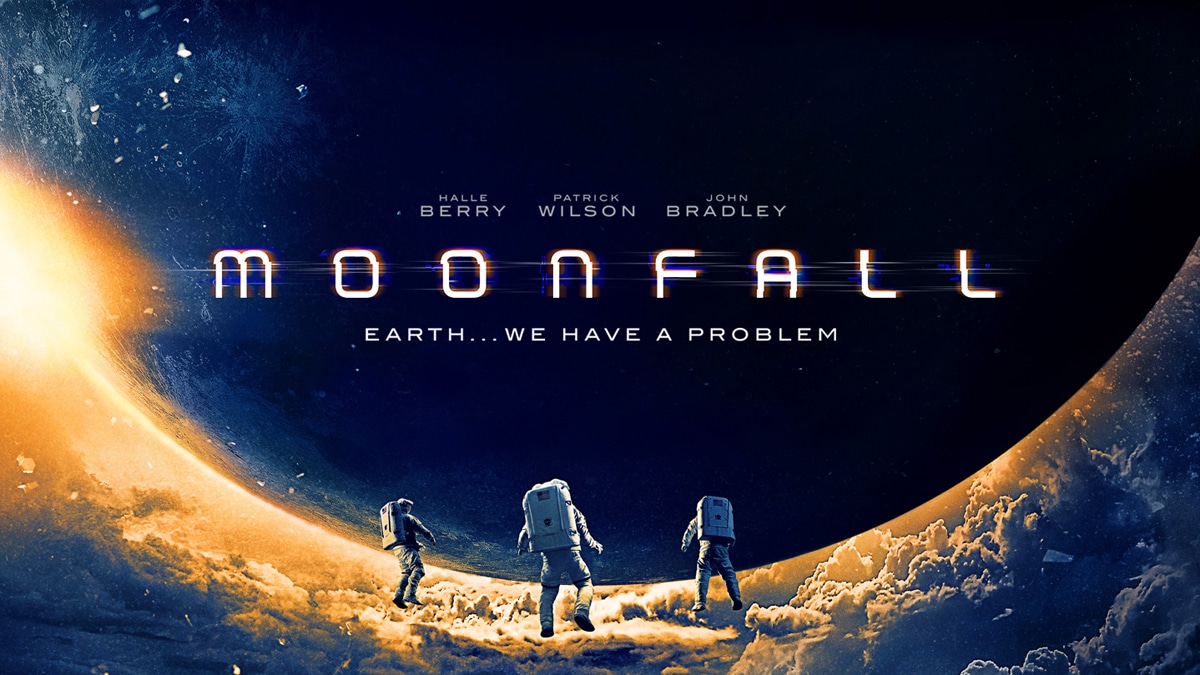
Moonfall (2022) Review: A Disaster of a Disaster Movie

Roland Emmerich has been in hot water for the past week for comments he made on about how Star Wars and Superhero movies are “ruining” cinema. While this isn’t the first controversial take he’s had on blockbuster cinema (he once claimed that Man of Steel ripped off the first Independence Day*), I honestly wish he had kept his mouth shut about that or at least waited until the dust settle on his latest film releases before making those claims. Because of that, the most recent discourse surrounding him is about how right or wrong he was on today’s big movies when it SHOULD be on what an absolute piece of dreck that his newest film is. While I don’t want to be a guy to claim if a director has the authority to criticize big budget movies, but if you do, at the very least, back up your points with a better film than Moonfall.

To be honest, if it wasn’t for the fact that it says directed by Roland Emmerich at the end of the credits, you would be hard press to even believe that Emmerich directed this movie at all. Moonfall is not only a parody of disaster movies but it’s a parody of Ronald Emmerich himself, and not even in a meta/self-aware way. It’s not bad because it’s a mindless disaster movie, it’s bad because it’s BAD at being a mindless disaster movie.

Emmerich’s movie in the past, regardless of their quality, at least was aware of it’s own endgame and knew the identity that it had. The original Independence Day was able to carry itself as a classic thanks to providing action spectacle that hadn’t been done before and actors that were fully committed to their roles that you could (somewhat) buy into the drama and chuckle at the jokes throughout. Moonfall is so aimless that it can’t seem to figure what it’s own endgame and identity is. It’s a movie that intends to not be taken seriously but it doesn’t really have a sense of humor about itself. It wants to have one-note cardboard cutout characters with stereotypical personality and traits but still attempts to add unnecessary family drama into the mix as if it was actually trying to had depth to begin it. It wants to show some turn-your-brain off action but will also take time out to have characters deliver painfully overlong scenes of expositions that even the actors themselves can’t make believable when delivering it. No spoilers, but this movie has one of the longest and most tedious scene of exposition in recent memory. So much so that not even Jonathan Majors could make it seem entertaining.

This aimless level of thinking also goes right into the plot of the movie itself which tries to add multiple messages/subtext and can’t even be bothered to decide which one it’s actually interested in exploring. It wants to be a movie about what happens behind the scenes of N.A.S.A. and when the government tries to cover up something big from the world….until it doesn’t. It wants to be a movie about if the moon is fake or not and how it might lead to the destruction of Earth….until it doesn’t. And then it tacks on a very anti-Artificial Intelligence message by the end and claims that was the sole purpose of the movie despite barely being touched upon throughout the course of the movie. Not even Tomorrowland has this tacked on of a message at the end that just comes out of no where.

All of this could be forgiven if at the very least it would provide some breathtaking action scenes and visuals but it can’t even do that right. The action, while occasionally flirting with some cool ideas, is generic and poorly shot. The visuals while nice in their own right, are nothing special and can’t even bother to make the moon falling look as jaw dropping or as high staked as it should be. Even as a mindless action flick, this movie stumbles.

Moonfall can’t seem to grasp what kind of the movie that it wants to be. If it’s not boring you with it’s constant sci-fi exposition (which a lot of it is total bs btw), it’s making you cringe with dialogue that feels more dated than Armageddon and Emmerich expressing his crush on Elon Musk (Here’s a drinking game, take a sip every time there’s a Elon Musk reference throughout the movie. You’ll be remembering as much as you will remember the experience of watching this crap). Negative reviews like this are usually brushed off a movie like this because it’s designed to be “critic proof”. And yes, I agree this movie is not for critics. The problem is it’s not for audience either. It’s a movie that really only exists to pleasure itself.

The cinematography itself is quite top notch and the cast do what they can with the garbage script and awful dialogue that they’ve been getting but there’s not much of a reason to recommend this movie, even for those that just want a dumb popcorn flick. It’s doesn’t work as a popcorn flick nor an intelligent or engaging piece of sci-fi. It’s not on the same offensive level as say, Independence Day: Resurgence (though even that movie had a solid action sequence about midway through), but it does makes for a far more dull and less interesting experience than even that movie was.

Mr. Emmerich, if you want to talk smack about big movies again, at the very least craft something that’s even as half as well-made as say, Thor: The Dark World**.

*I’m not even joking on that. Here’s proof!

**Yes, that is complete sarcasm!

Batman Returns (1992)-When The Villains Are As Good As The Hero, Part I

For a long while, I used to look at Tim Burton’s Batman Returns as the akin to Christopher Nolan’s The Dark Knight Rises. The Batman installment that was the strangest, weirdest, funkiest (Is that even a real word?), and most difficult to comprehend of the ones that both directors have made with their incarnation of the caped crusader. Both films contain some of the biggest, boldest, and most ambitious work but also straight up the most clunky and messy of both directors filmography. And also, both happened to have Catwoman in it. Looking back now, the comparisons to The Dark Knight Rises is actually downright insulting as it’s actually more in line with The Dark Knight itself. Both movies are just as much about the antagonist in terms of story, character, and themes as the protagonist, perhaps even more so. They tell incredibly groundbreaking tails of the pros and cons of the Batman legacy along with showing a Batman that is truly unrestrained and beyond his limits. In the sense, both Batman Returns and The Dark Knight make for a great parallel with one another and terrific back-to-back featurettes. In case you’re wondering why the title of this post includes Part I, this will talk about the depths and importance of all the main characters scattered throughout Batman Returns and Part II will be about the same thing with The Dark Knight.

I’ve always had a very complicated relationship with Batman Returns. It was a movie that despite watching many, many times, my opinions of it constantly kept changing every single time that I’ve watched it. I’ve gone from liking it to not caring for it to loving it to hating it and then later to being incredibly lukewarm/indifferent towards it. The biggest reason for this is because I’ve never been able to grasp what exactly the movie was trying to accomplish here along with the reasoning behind the number of storytelling choices/direction that the film makes. However, at long last, after many different viewings, I finally understand Batman Returns! And now that I understand it, I can’t help but adore it! This movie is absolutely sheer brilliance!

Granted, I was not the only person in the world to dislike this movie at one point. At the time of the film’s release, it was panned across the board, mostly from parents, that the movie was too scary/horrifying for younger audiences and didn’t feel in like with what the world saw as Batman. So much so, that it lead to Warner Bros deciding to move on from Tim Burton and bring in Joel Schumacher to deliver much more light hearted and kid friendly bat adventures with Batman Forever and the absolutely beloved Batman and Robin. It was a movie that people back then didn’t bother to get as they were too busy complaining about the darker material presented throughout the picture that they couldn’t be bother to think of what the movie was actually about. Unlike with the 1966 Batman movie, being “good” actually was a factor with this movie, more so than any other Batman movie up to this point. An entire generation of fandom and millennials was introduced to Batman in the form of 1989’s Batman and started to develop their own standards of what constitutes as a good Batman flick.

Regardless of how you feel about Batman Returns, there’s no denying that this is a COMPLETELY different film than that of Burton’s original Batman flick. This is mostly because Tim Burton himself was giving much more creative freedom in this one as oppose to the first one. And because of that, people weren’t seemingly on board with a sequel that felt tonally different from the original and is what I believe led to audience members feeling completely unsure of what to think about it. However, just like with another certain sequel released back then that was different and practically “broke the rules” of the first one (*cough* Empire Strikes Back *cough*), many people have started to come around on it, so much so that some would even consider it the best Batman film ever made, even more so than The Dark Knight. As I mention before, the biggest reason this movie is completely worthy of being compared to that game-changing masterpiece that came out in 2008 is how it’s perfectly blends the story with multiple different viewpoints and knows that it’s just as much the Penguin’s and Catwoman’s (and to some extend Max Scherck) story as it is Batman’s. And it’s also realize the one hidden trait about Batman: that he is not only defined by who he is but also the villains that he pursues.

Similar to The Dark Knight, the central conflict is told through multiple different perspectives throughout the course of the film. You have the protagonist, Bruce Wayne/Batman, who despite being Batman for quite awhile now, seems to have lost himself and as a result, has become much more violent and crude with pursuing criminals. You have the antagonist, Oswald Cobblepot A.K.A. The Penguin, a sad, psychotic deranged man who was abandoned by his parents, raised by penguins, and plots for revenge against business man, Max Shreck after being cheated by him with his Red Triangle Circus gand. And then you have what could be considered either as another antagonist or as an anti-hero, Selina Kyle, A.K.A. Catwoman, a lonely secretary and the femme fatale, who gets a second lease on life after being nearly killed by Max Shreck thanks to the amazing power of kitty cats and plots revenge against Shreck by destroying him and his reputation. And lastly, there’s of course Max Shreck, the rich business man who everyone else has a complete vendetta against and wants to accomplish his goal of building a power plant in Gotham City.

What makes these four storylines with the villains mixed together so well is how cleverly it ties into the central conflict with Bruce Wayne as Batman. It smartly splits the traits of Batman into three separate characters. The Penguin represents the side of Batman that has seen/believe to be a freak and outcast from the rest of the world along with someone who was raised as an orphan and became accustomed to the animal-like resources he has based his entire identity on. The Catwoman shows the side of Batman as a vigilante and his psychological conflict within himself, which also make the two a perfect pairing for one another. And Max Shreck is the wealthy business man/industrialist that Bruce Wayne so desperately wants to be. These aspects and traits alone make this arguably the most personal conflict that Bruce has ever had to endure as Batman throughout any cinematic incarnation the character. Especially since unlike with most Batman movies, the film actually tries to make you sympathetic and understand them from an emotional standpoint, more so with Penguin and Catwoman, not so much with Max Shreck. This is what makes the stakes of the story all the more personal as Batman, as he is basically at war within himself by essentially fighting three separate versions of himself.

That is also why Batman technically killing people throughout the movie didn’t bother me, unlike some OTHER Batman movie which I will speak on later on this month. Because there is at least a reason behind from a thematic standpoint. It shows how at the beginning, despite Bruce Wayne still standing as the Batman, he’s in the middle of an identity crisis and basically starts to forget why he became the Batman. This is showcase in the first opening action scene with him where he lits a random criminal on fire with his Batmobile and also when he sets off a bomb that’s about to blow up on someone and just lets them die. This was an issue I had for some time with the movie but what makes me forgive it now is because the way it’s addressed in the form of Bruce’s overall central character arc. If you’re going to make Batman kill, give an ACTUAL reason for it! And that’s something that this movie does well. It may not spell it out for you through dialogue but through subtle references and imagery.

This is what also makes the relationship between Batman and Catwoman the most important part of the film and is quite frankly the absolute heart of the story. It’s through their time spent together with one another that both pairing starts to see a bleak shadow of their former selves and just how corrupt they’ve become on the inside. So much so that in their minds that they have lost a big part of themselves that they may never be able to find again. And there is no scene in the movie that perfectly conveys that more than the dance ball scene.

Throughout the years, many people have claimed that Bruce is being a hypocrite here for trying to stop Selina from killing Max because he’s killed people as well. However, the way I see it, this is Bruce basically realizing the monster he has become, the same monster that the Penguin have become along with the one that Selina is about to turn herself into. He realized the mistakes he has made throughout the film along with role as being a hero. What Bruce is doing here is trying to tell Selina to not become what he has turn into and don’t let the vigilante justice consume the good in you. The Penguin and Max Schreck had already been considered unredeemable in the monsters they’ve become but not with Batman and Catwoman yet. This is what makes the conflict so heartbreaking by the end as Batman is really the only one out of the four main characters that was able to stay sane.

By the end, Cobblepot’s own humanity was consumed and became the blood-thirsty wild animal he never truly wanted to be deep down. Despite his best efforts /intentions to be the best version of himself and showcasing that to the world by running for Mayor, the world (or mostly Batman) had other plans and led the Penguin to his inevitable fate. Selina’s journey ends with her realizing the hurt she has caused onto the world and herself and knows there’s no backing down from that. Which is why despite wanting to spend the rest of her life with Bruce, she knows the Catwoman side to her consumed the Selina Kyle side and there’s quite simply no going back from that. Max Scherck, the villain that despite not changing much throughout the course of the film, stands as the one person responsible for all the outcomes of the main characters. However, unlike films nowadays that will use a character like him to make himself responsible for everything bad happening in a contrived, convoluted plot way (see Blofeld in Spectre), this is showcased in a more thematically organic way that doesn’t bring down the rest of the film.

It’s only Bruce himself that was able to escape this whole endeavor keeping the absolute whole soul of himself. Unlike those that came before him, he was able to carry all the traits he had split up with the three antagonists back to him and remember who he is once again. Bruce had let the Batman side of him be the definite version of himself but now that’s only part of the equation. Bruce Wayne is just as much Batman as Batman is Bruce Wayne. It’s two sides of the same coin, two parts of himself without allowing one side overthrow the other. It’s a tragedy but by the end, he was still able to find that light at the end of the tunnel. Something that the Penguin, Max Scherck, and unfortunately Catwoman could not. He was able to feel whole again.

I will share my absolute final thoughts on Batman Returns once I finished Part II of the “Villains as good as the hero” section with The Dark Knight. But, nevertheless, I understand the depth and importance of this movie and it’s now something that I absolutely treasure. While I’m somewhat interested in seeing Michael Keaton reprise his role as Batman in the future with The Flash and the new Batgirl movie coming out later on down the road, I can’t imagine there being a more beautiful and interesting take on his version of Batman then with this movie.

Next time, however, I will take a look at the movie which despite not being my favorite movie with Batman in it, might just be the best actual Batman movie period with Batman: Mask of the Phantasm.

Batman (1989): Why the Joker Works/Being “Faithful” isn’t Always Important

When it comes to superhero movies, people always seem to look at it through two different lenses: as a superhero movie and as it’s own movie. Comic book fans seems to always look at it as a superhero movie first and an individual movie second. Casual fans/regular moviegoers mostly tend to look it as an individual movie first and a superhero movie second. Similar to what I said in about Batman (1966), people tend to have two definitions of what constitutes a good movie. However, specifically when it comes to movies based off of superheroes and comic books, the two definitions of a good superhero movie mainly refers to whether you look at it as both a faithful adaption to the source material and as a standalone feature film.

There are many Batman films made throughout the years that helps redefine the terms of a good superhero movie and a plain good movie. And with a few exceptions (and by exceptions, I mostly mean just Mask of the Phantasm), the way filmmakers have gone with adapting the character of Batman on to the big screen is by making a film first and a superhero movie second. The focus isn’t so much on making a faithful Batman movie but a movie that just happens to have Batman in it. Sure, there are definitely inspirations and call-backs to the original comic books, shows, movies, etc.. but for the most part, what makes each different Batman adaption different from the rest is how it stands as it’s own version of the caped crusader rather than trying to recreate what came before.

Along with Christopher Nolan and his Dark Knight trilogy, Tim Burton seems to have taken that exact same approach with both of his movies and in the case of Batman (1989), the direction he decided to go with Batman and the Joker. The Batman and Joker is arguably the best hero/villain rivalry in the history of superhero. They are two polarizing figures with so much depth, complexity, and psychological views on crime, terrorism, and class warfare! So different yet so similar with their goals. They always want the same thing but for completely different reason. They are always responsible for one another’s actions and one doesn’t feel completely whole without the other. They are basically two sides of the same coins! They are the Boston Red Sox and the New York Yankees of the superhero genre!

Where their history gets complicated however is in their origin stories! Despite multiple source material created for multiple decades, there hasn’t been much engaging (or much at all) material surrounding how they became the Batman and the Joker themselves! And whenever writers try to create origin stories for both of them, it lead to iffy results at best. When it comes to film adaption, Batman’s origin story wasn’t properly addressed and explored until Batman Begins and the Joker was given his own feature film in the form of 2019’s massive hit, Joker. However, the latter wasn’t the first time that Joker was given his own proper origin on the big screen, it was with the film that this post is covering, Tim Burton’s Batman (1989).

Admittedly, Joker is a character that really doesn’t need an origin story. He always been more than just a superhero villain, he’s a mysterious force of nature who always contradicts himself when talking about his past (something that Nolan captured brilliantly in The Dark Knight). He’s always been someone that becomes the more interesting the less you know about him. The biggest attempt at adapting an origin story of the clown prince of crime came in Alan Moore’s now infamous The Killing Joke, a story that while still has it’s moments, hasn’t aged well in the slightest and it’s influence on the industry has made it look more a like a mistake with every passing day on Earth.

Nevertheless, in Batman (1989) (this’ll be the last time I’ll refer to the year it came out), Tim Burton’s decided to take his own stab at creating an origin story of the beloved villain icon Joker. In this version, Joker’s real name is Jack Napier, a right-hand man for Gotham City’s crime lord Carl Grissom. However, after a mysterious bat creature accidentally drops him into a pool of chemicals along with discovering Grissom’s intent to kill him, it’s then that Napier decided to take matters into his own hands and become the Joker. Near the tail end of the 2nd act, there comes a bit more information about him with his connection to Bruce Wayne/Batman. After a confrontation with Bruce Wayne on his date with Vicky Vale, Joker says his catchphrase, “Have you ever danced with the devil in the pale moonlight?” Something which a stranger once told Bruce when he witnessed his parents getting shot in cold blood. As it turns out, that exact estranged lone gunman who murdered Thomas and Martha Wayne was no other than the Joker himself.

Ever since the film’s release, this has been a very divisive topic among hardcore fans. There are many people who absolutely hate it and feel that the Joker and Batman should not have any personal connections whatsoever. The Joker is someone that should not have a straight forward-origin story and be the sole reason that Bruce Wayne becomes Batman. It takes the mysterious and intrigue away and just makes him look like another ordinary villain. In hindsight, these people may be right but yet, I still think that this works not just in spite of itself, but because of it.

Here’s the thing, I’m not gonna sit here and argue that this version of the Joker is in any way, shape, or form faithful to the comic book character. However, I will argue though that it is faithful to the mere idea and point of the Joker and Batman. (Something which I will definitely bring up once I write my piece on why The Mandarin twist in Iron Man 3 is actual genius!)

First off, the fact that the Batman and Joker unwillingly created one another does help redefine the idea of the two being two sides of the same coin. Both are tragic and mysterious figures who went through life changing events and feel it’s best to move on from those events by taking matters into their own hands. And the results of this has led to chaos, violence, and resurgence throughout the criminal underworld that is Gotham City.

But, what it makes it worth for me and actually worthy of this character being called the Joker is by going back to that infamous line he mentions to Bruce the night he killed his parents and the day he meets him again at Vicky’s place, “Have you ever danced with the devil in the pale moonlight?”

The reason that line works is because it feels totally in line with the Joker. He doesn’t have any real reason or meaning behind it. It’s just something he likes to taunt his enemies with because it makes him feel like….well a Joker.

There also comes the line that follows soon after, “I’m only laughing on the outside. My smile is just skin deep. If you could see inside, I’m really crying. You might join me for a weep.” Once again, that feels completely in touch with Joker and how he essentially uses his joke-like nature to hide the pure sorrow and awfulness that he has done and has gone through.

Joker in this movie may not be mysterious in terms of who he is but more on what he says throughout the film. Every line of dialogue that is spoken through his lips can be interpreted in many different ways, just like how the Joker is suppose to be. While you can always understand and know what exactly he’s trying to say, the real reason and meaning behind it remains a mystery.

That feels just as line with the character of the Joker stands for and in a way is what also Batman stands for. The movie more than anything else is how villains can bring out the most out of heroes and how the heroes can bring the most out of their villains. The more they collide, the more they will feel motivated. The more they hold onto to their own beliefs and limits, the sooner the time will come where you will want to cut ties. Just because anyone can be a hero doesn’t mean that anyone can not be a villain as well.

It’s those personal connections, lines of dialogue, and actions made by the characters that helps this Batman/Joker relationship feel more complex than it has any right to be. There is an argument or two that can be made with the way it tries to collide with being a quality superhero movie along with being a quality movie, like how the Joker interpretations can be seen as lazy writing or asking the audience to fill in too many blanks. Regardless, it does fit with the core idea of what the two figures always stood for even if that is not quite what they stood for as individual characters.

This also helps make the final conflict much more personal as the two fight for not just for Gotham’s soul but for their own personal vendettas. Batman is willing to do it through physical force where Joker is willing to do it laughing his ass off. And that’s not even going into how utterly great Michael Keaton and Jack Nicholson are in this scene, and honestly throughout the movie.

Not to mention, that line that Batman utters during the fight, “I made you, you made me first!” is the real master stroke here and makes this whole conflict come full circle by the end of it.

Batman is not a perfect film by any means. Side characters such as Commissioner Gordon and Harvey Dent aren’t given much development time, it’s quite inconsistent as to whether or not Batman should kills his enemies or not (something I will definitely bring up with Batman Returns and Dawn of Justice), and there are times where so much focus is put on the Joker that you can argue that it takes away from the actual titled character of the film. But I do think when it comes down to the core conflict and the way both the hero and villain are portrayed here, it makes for a rather unique, interesting, and personal conflict between the two pairs. Tim Burton might not have captured the Batman and Joker from their original roots but he did help create original roots of his own that made the film for the better.

And those are roots that Burton himself will continue to explore in his follow-up, Batman Returns.

Batman (1966): When not being “good” doesn’t matter

There was a time long ago that a movie getting made was enough to consider it a success. Heck, in some instances, that still is the case. But unlike with today’s big franchise blockbusters, there wasn’t million dollars you could throw at big projects to have them to see the light of day and the actual budget came down to practically months worth of saving up from a few dozen people’s allowances. There were times were big franchise movies based on iconic characters were the equivalent of student independent films. The point isn’t whether or not it was any good but that the mere fact it got made at all should be considered an accomplishment by itself. Just like getting a gold star on your chart in Kindergarten, that fact that you tried is more than enough. Batman (1966) is one of those movies that has those exact vibes when watching through this 104 minute long adaptation of both the now iconic DC superhero and the hit tv series of the same name.

Is Batman (1966) (or also referred to as Batman: The Movie) actually good? It really depends on your definition of “good”.

In my experience, I basically have two definitions of what qualify as a good movie.

The first one is a movie that is able to exceed at exactly what it wants and sets out to be regardless of what flaw in either the story, characters, or production you may find. Even if it doesn’t meet the standards of what traditional filmmaking transpires as at the time of the films’ initial release, the fact it’s able to meet it’s goals on it’s own terms is enough to consider it good.

The second is a movie that is able to exceed on nearly every single metric that constitutes good filmmaking. The script is sharp and coherent, the characters are full of depth and engagement, the direction is top notch, the pacing is spot-on, the score is caliber, the sound/production design is off the charts, and there never contains a massive bug that gets in the way of the experience. The ones that are able to achieve most or all of that is what can be called good.

Spider-Man: No Way Home fits the first definition of that to a t.

Spider-Man 2 fits the second definition of that to a t.

I’m not entirely sure that Batman meets either one of those definitions. It’s definitely closer to the former than the latter but doesn’t quite get there either. And I’m not just talking about for today’s standards of a good movie, which most will consider the second definition of “good”, but the standards of a good franchise movie in the mid 1960s, which I’m sure most would consider the first definition of “good”.

Batman can be what constitutes as a comedy of errors. Throughout the whole movie, we see our heroes make mistake after mistake in incredibly hilarious fashion just so there can be actually conflicts and situations for them to get out of. The plot is absolutely ridiculous filled with logical lapses and relies heavily on convivences and dumb decisions made by the main characters to keep the story moving. There’s not an ounce of character development to speak of and not a single adaption of any of these characters that can be seen as faithful to the Batman roots. And that’s not even going into the scene where Batman fights a shark while dangling from a helicopter or the film’s odd tacked-on political subtext near the tail end of the picture.

And who can ever forget this iconic as hell moment?! Christopher Nolan CERTAINLY did not!

But yet, Batman still kinda works as the best version of itself, even if that best version isn’t any good. In 1966, Batman was not a character that was largely popular or had it’s own ego. At the time, there were a couple of other movies that came out that hardly anybody remembers, a hit tv show, and comics for any kids that could afford it due to taking a good amount of summer/weekend jobs. It didn’t have to be good, it just needed to exist. And it completely succeeds at that goal.

It’s a movie that not just plays by it’s own rules but is also not afraid to break those rules if it’s enough to satisfy itself and the people making it. And you can definitely tell the people making this are having the time of their lives.

Adam West, Burt Ward, Lee Meriwether, Cesar Romero, Burgess Meredith, Frank Gorshin, Alan Napier, Neil Hamilton, and many others bring there absolute A game to create performances that perfectly match with this bizarre, silly world that the movie is set in. Leslie H. Martinson and Lorenzo Semple Jr. are able to fully embrace the goofball tone and feel of the picture that they are going for and (I assume) that fits with the tv show it’s based on. And for what is considered to be DC’s first ever fully length DC theatrical adaptation, the fact this is even remotely watchable is the biggest miracle of them all.

Above all, Batman contains something that I really miss nowadays with big franchise movies, it being the exact movie that itself wants to be and not the audience. You couldn’t make a Batman movie like this in 2022. Not just because it doesn’t meet the standards of filmmaking today (whatever that consists of) but it wouldn’t meet the standards of what the fans and audience expect out of Batman. You release this movie today, it would get torn to shred by everybody and many of the cast and crew would be chase off of social media. However, this movie came out in 1966, not 2022. There was no social media to speak off or high standards to reach with this character or series. It was an actual thing and because of that, it could be anything it desired to be.

Regardless of what your definition of a good movie is, Batman doesn’t have any interest in matching any one of them. Instead, it tries to create it’s own definition of a good movie, at least for what can be considered good for 1966. But as I’ve said repeatedly throughout this post, whether or not this movie is good is not important, it’s mere existence is. The fact there was an actually movie called Batman at the time of it’s release makes it as big of an accomplishment as what Tim Burton and Christopher Nolan did for their own respected versions in at the times those films was released.

A Batman movie being a thing that happened might have been enough for 1966 but that would only be the case if any films with the character that comes after were actually good in their own rights. And as we can see nearly 56 years later after countless different Batflicks and a new one coming out this year, I said at least some of those meet one or two definitions of somebody’s version of a good movie. And we shall continue to explore that all month long as I will go over every single other theatrical release Batman movie to come out since then.

Next up, Batman (1989)!

Steroids saved baseball and it’s time MLB stops denying it

In case anyone has been living under a rock for the past week, it was announced that David Ortiz, A.K.A. Big Papi, was elected into the first ballot Major League Baseball Hall of Fame while Barry Bonds and Roger Clemens had been rejected yet again. This piece isn’t going to be on whether or not the MLB is wrong for continuing to give the latter two the Pete Rose treatment but more about how this goes a long away to show the dirty, hypocritical side of baseball that has occurred for the last 28 years.

Baseball is certainly a sport that has been known for trying to hide some truly dark secrets. Whether it’s a scandal for cheating, hacking, or abuse, there has been no other sport more famous for rearing it’s ugly head quite like the game of baseball. What makes it even more baffling is the way even when someone gets caught with their pants down with it, the league will still cover it up as if it’s not plain obvious that they have been exposed, practically butt ass naked.

However, there has not been one era of baseball that the sports always seemed to be in denial of not just what good it actually did for the sport but of it’s own mere existence. The era, of course was the steroid era of baseball.

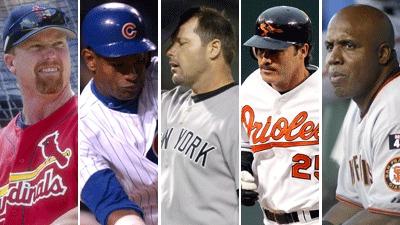
After the player strike in 1994, the state of baseball was in a state arguably worse than the one it is right now. No one seem to give a crap about the sport anymore as there was little reason to get excited or amused by it. That was until two little gentlemen by the name of Sammy Sosa and Mark McGwire decided to have a nice little friendly competition of who can hit the long ball more than the other. For the longest of time, the single season home run record was held by Roger Maris when he hit a total of 61 home runs in 1961 as a part of the New York Yankees. The two superstars felt that this home run record push would help generate public interest in the sports and why wouldn’t it. Home runs are fun, exciting, and arguably the biggest “goosebumps” moments one can hope to achieve in every ball game that they play. It was throughout the course of the 1998 season that two best buddies made it their quest to top the home record that Maris had held for many years and they did exactly that. McGwire won the race by hitting a total of 70 home runs while Sosa finished a respectful 2nd with 66. It made some of the most fun watching baseball that folks have had for a very long time. Granted, both of their records would eventually later be surpassed by the profoundly polarizing Barry Bonds, when he hit a total of 73 in the 2001 season but this is all honestly besides the point.

Although one could make the argument by specifically thriving on the long ball could risk losing the core appeal of it (a big flaw that has occurred with modern baseball) but it was the right thing to do at the time. The sport was on life support and need some life breathe into it. And how exactly can you bring more life to it than with insane amounts of spectacles, trouts around bases, and breaking high scores . TV ratings went up, tickets sales skyrocketed, it all felt just too good to be true that baseball was alive and well.

And as we sit here during the sport’s first lockout since the infamous mid 1990s era that it indeed was too good to be true. Once the dust settle, it came out that all three of those sluggers along with many others have been juiced and buffed up thanks to the amazing power of steroids. Steroids are the kind of things that athletes can take that can help increase their strength, adrenaline, and be much more “locked in” with what they are doing. Despite steroids being banned from MLB since 1991, there wasn’t any actual leaguewide PED testing until 2003. It’s then that MANY of the so-called superstars in baseball have been exposed of taking steroids allowing them to hit, field, and/or pitch much better than they ever before. Mark McGuire, Sammy Sosa, Barry Bonds, Rogers Clemens, Alex Rodriguez, Manny Ramirez, Gary Sheffield, Jason Giambi, Andy Pettitte, Rafael Palmeiro, and the list goes on.

While it’s a massive shame that many ballplayers had to use the amount of performance enhancing drugs to play better to get everybody’s attention, it felt like a necessary evil. The kind of evil that makes it feel more good than bad. After all, it was the amount of long ball and milestone sprints that got baseball back in the media once again. Even if it came at a price, it should be at least worth acknowledging the importance of the steroids era as the kick in the pants that the sport needed to get back in the spotlight.

Unfortunately, just like how in Star Wars where the warriors in Rogue One never was able to receive the credit they truly deserved for the heroic sacrifices they made to gain the Death Star plans, MLB feels it’s best to sweep that time period under the rug and thrown anyone under the bus that was a big part of it as a scapegoat.

Here’s the thing: Major League Baseball could have stopped the steroid era if they wanted to. Even without testing of PEDs, there was still testing with the eyes and scoresheets. It was quite easy to see the significant amount of difference between all the star players and how ridiculously good they were with playing baseball. As much as the league likes to claim they had as little control with that as they do with this current lockout, they could have put a stop into it if they wanted to. So, why didn’t they? Because it was working!

Instead of putting a stop to steroids, Bud Selig and MLB decided to just coast on the cocktails on it instead until they were all gone and everyone was back on the bandwagons. It was only then that they actually turned around and approached this era in a preachy “STEROIDS BAD” way! For a sport that that claims to be so committed to integrity, it’s definition of that specific word always seems to constantly change.

I remember one time that my brother claimed he heard someone say that baseball is better and more interesting when people are cheating. While that claim comes across as extremely arrogant, I think that speaks more volume about the sport rather than the person themselves. Perhaps baseball is just a sport that has been blinded by it’s own stances, beliefs, commitments and “integrity” that it’s holding itself back because of all that. Perhaps it’s lack of progression and evolution over the years has to go back to questioning the rules and traditions that have define the sports for many generations. Perhaps baseball has to be more than just simply baseball to be what is is in the year 2022.

And that all ties back to the steroid era, what once felt like a necessary evil can now been seen as just pure evil. An era which, despite the title of this post, didn’t really “save” baseball but it just delayed its inevitable fate. The fate that we are currently waiting on as we approach of what is suppose to be spring training in the coming weeks.

That it all very reminisce to what sports youtuber, UrinatingTree, claim when talking about the 2017 Houston Astros and their sign stealing (a link to that video will be added at the end of the post). Just like with the Astros when making that title run five years ago, the game of baseball made a deal with the she-devil herself, Succubus. She help conjured steroids as a means to bring relevancy into an old sport and are willing to sacrifice the very well meaning of the sport if it means it can still thrive. But now, the time has come for the league to pay up and who knows how long until that payment is finished or even when it actually starts.

Oh, how little you truly you knew about the deal you made!

By rejecting Barry Bonds, Roger Clemens, along with many others in the baseball hall of fame, this is the league once again rewriting it’s own history and meaning of integrity by acting as if that steroid era had no significance whatsoever. Trying to write off the importance of the steroid era of baseball is one thing but trying to actively deny that era’s very existence is even worse. And that could be a strong case as to why baseball is the way it is now. By denying the fact that steroids “saved” baseball, it has made the last near three decades of baseball feel like a lie. A great, beautiful little white lie. As long as baseball continues to try to cover up it’s own sins of the past, the more muddled it’s present and future will continue to be.

To paraphrase a quote from Magnolia, “Baseball might be through with the past, but the past ain’t through with baseball.”

NFL Overtime rules stink but there’s no crying in football

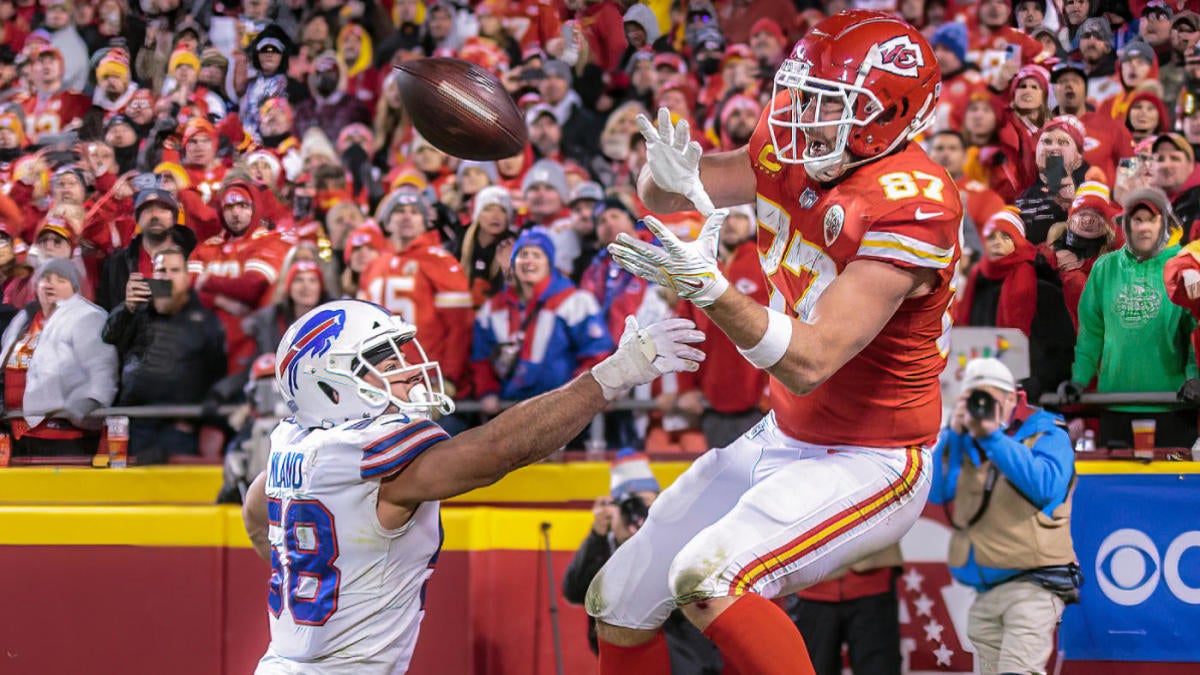
Last Sunday’s NFL playoff match-up between the Buffalo Bills and the Kansas City Chiefs was one for the ages! It was the equivalent of a really great boxing match up, just two champs going at it and giving out all the blood, sweat, and tears that they have to achieve victory. It was a quarterback duel like we’ve never seen before, Patrick Mahomes and Josh Allen were absolutely phenomenal in leading their offense lines to touchdown after touchdown to keep the game going in intense and excitement! Two teams giving all they got to get to the NFC Conference championship! It’s games like this that make the game of football as loved and worshipped as it is! Which makes it all the more unfortunate that the fate of the game had to been decided in overtime, or in more simpler terms, a mere coin toss!

It was well into the 4th quarter which just 13 seconds left remaining in the game where Allen threw to his wide receiver, Gabriel Davis for the touchdown to give the Bills a 36-33 lead. It looks as though the game was over but not to Mahomes and the Chiefs. Within just 10 seconds on the game clock that the Chiefs offensive lines where able to gain just enough yards to be within field goal range! It was then that Harrison Butker was tasked to kick one the biggest field goals of his entire life. He was able to get that 49 yard field goal with ease to tie the game for the Chiefs, 36-36, and send this game to overtime!

With the way NFL does overtimes, they do a coin toss before the quarter starts and whoever wins the coin toss gets the ball. When it comes to what score decides the game, the offense kicking a field goal but not a touchdown can allow the other side to either tie the game with a field goal or score a touchdown. However, it’s the team that scores the very first touchdown that decides the outcome of the game. Whoever scores a touchdown first wins the game. The other team doesn’t get another chance to score a touchdown, it’s all over the moment that one side is able to gain those six points with one coverage.

Because of that, the Chiefs were able to win the game in overtime rather easily. As they won the coin toss before overtime started and just needed to score one touchdown to win the game and not have to worry about using their defensive lines one last time to prevent the Bills from scoring. It was 42-36 the final, the Chiefs emerged victorious and the Bills ended up with nothing but heartbreak!

Let me start off by saying that yeah, this is a rule that quite frankly stinks. It doesn’t seem quite fair that the outcome of a game going into overtime can be decided by a coin toss. It be like if in hockey when there’s a shootout and the very first team that scores a goal wins and the other team can’t respond. Or imagine in baseball where the game goes into extra innings and the away team is able to score first and win the game before the home team even has a chance to hit. It just doesn’t seem right. There’s no denying that the rule is BS and should be a rule that the NFL should consider changing in the future.

However, let’s not getting ahead of ourselves, you can’t only point your fingers at the rules for so long and have that be your convenient scapegoat. Even before the overtime, the Bills and Chiefs both had plenty of chances to win the game!

The Chiefs had a good enough lead where all they needed was to run the clock for a few minutes, kick a field goal or two, and have this game secured for themselves! There was also one extra point that they miss that nearly cost them the game. If they didn’t miss that extra point, that would have made things much easier on themselves and the game would at best be tied approaching the end of the 4th quarter without the need for to make one last desperate move to keep the game going. Lucky for them, they were able to bail themselves out to get to OT for a chance to win the game but still, it could have been done without getting themselves and their fandom hearts attacks in the process.

As for the Bills, they literally had the game up for grabs right there. As they fought and clawed their way back into the game and took that 4th quarter lead with that touchdown with just 13 seconds left to go in the game, that was their game for the taking right there. That should have been seen as the final blow. They just needed to stop one more offensive play or two from their opponent and the game is theirs. Instead, they left it slip through their fingers and allowed the Chiefs to kick a field goal to tie the game at the end of regulation. With just 13 seconds left on the clock, the Chiefs were able to get two passes of 45 yards past the Bills so they could get those three points and keep their season alive.

This game was winnable for both sides even before OT started! Regardless of who won because they were able to win a coin toss and get offense, it was both teams that allow their fates to come to this, down to a mere coin toss. If Chiefs didn’t want to be in this position, then they shouldn’t have miss that extra point and allowed Bills to get back in the game. If the Bills didn’t want to be in this position, then they shouldn’t have giving up those two big passes with less than 15 seconds left to go to get the Chiefs within field goal range.

You might think that I’m a Chiefs fan that is telling Bills fans and everyone else to stop whining and accept defeat but quite frankly, I am not, at least to that extend. I actually thought the Bills had been a much better team than many gave them credit for all year and this game only confirms I was right in that case. Regardless of the results of this game, Josh Allen and the Buffalo Bills do have a very promising future lying ahead with very good things on the rise. Even if the game turned out the other way around, I would still stand by my point with this post.

As much as we emotionally react to way things turn out in sports game due to rules, we shouldn’t force change out of those emotions or they would be more chaos than before. Rules that are established are there for a reason and not out of spite. No matter how dumb a rule might seem, it exists for a reason.

Sports can be unfair at times and give out breaks for opponents but it’s up to those teams to overcome that cheapness and breaks the league may give to their opponents to be able to achieve victory. The best teams find ways to win, not excuses to lose. In this case, the Chiefs found their way to win and the Bills were left with their excuse to lose. It’s now in the hands of the Bills with how they chose to act for next season and beyond. Only they can act wisely to make this devastating lose a haunting memory in the past to pursue for a more uplifting and satisfying future.

Regardless, there’s no crying in football or in any sport and we should all realize that by now.

Can Microsoft really compete with Sony now?

Microsoft shocked the world earlier this week when it was announced that they would be buying Activision Blizzard for nearly $70 billion! This gets them exclusive access to game franchises such as Overwatch, World at Warcraft, Diablo, StarCraft, Candy Crush, Spyro, Crash Bandicoot, and a little known series called Call of Duty.

While I can go into the monopoly nature how one company buying so much franchises at once could seen as frightening as say Disney buying Fox or the toxic, misogynist nature of Activision Blizzard (I’ll share a link at the end of the blog) , I want to go into how Microsoft will be able to compete with Sony with this buyout and why this move might make them looking even more worse in hindsight if they don’t take absolute advance with all of it.

It’s not secret that Sony has been ahead of the curve from Microsoft when it comes to gaming for quite some time now. From at the tail end of the seventh generation where the PlayStation 3 outsold the Xbox 360 to the entirety of the eighth generation where Sony practically won by default the moment that Don Mattrick told anybody who didn’t have internet to just get a Xbox 360 (I’ll share a link for that as well), Sony are the ones that have been keeping their opponent in check for at least the past eight years. And if the first few reports of consoles sales are accurate (again link at the end), the ninth generations seems to be in Sony’s hands as the PlayStation 5 seems to be outselling the Xbox Series X by a wide margin.

However, with this purchase of Activision Blizzard, this is Microsoft making a statement that they are putting all of their chips in and going for it. They are looking to provide the amount of exclusive content that will attract more gamers and consumers to their products than ever before.

The main issue with the Xbox One and Xbox Series X was the lacking in exclusive games compare to Sony. With a couple of notable exceptions such as Halo and Minecraft, there wasn’t much from Microsoft’s best-known and well-sold franchises that gained people’s interest compare to Sony’s exclusive franchises such as Uncharted, Last of Us, God of War, Spider-Man, Horizon, Infamous, and Ratchet & Clank. But with the company now owning Blizzard, this would give the indication that they will be able to provide it’s fans and consumers a good amount of games that was once accessible for other consoles but not anymore. Except, there could be a big chance that they won’t do that!

Don’t get wrong, the franchises that are always make big money such as Call of Duty, Diablo, and Overwatch should be just fine despite a potential decrease in sales due to being exclusive to the Xbox One and Xbox Series X. I’m more referring to the smaller franchises such as Crash and Spyro. If Microsoft’s recent history with purchasing other companies like say Rare is anything to go by, franchises like that are about as good as dead.

Remember when Microsoft purchased Rare in the hopes that it would provide exclusive gaming franchises that, despite not really blending with their brand, would at least attract a good portion of casual gamers for series such as Banjo Kazooie, Killer Instinct, and Battletoads that would help make their gaming library look more diverse? Well, as anyone checked up on those franchises as of late?

Since the purchase of Raft, Microsoft has only released one original Banjo Kazooie game, Nuts & Bolts, which to many fans was the oddball of the series and one that they would rather forget. That came out in 2008 by the way and that series has not seen another exclusive game since then. The only other time Microsoft has ever bother to touch Banjo Kazooie again was including them in their retro gaming remasters collection titled Rare Replay in 2015. That is literally all that has been done with that franchise since Microsoft purchased it.

With Killer Instinct and Battletoads, it’s been pretty much the same thing. Those series got thrown in the closet to collect dust, eventually was taken out, was given one game that didn’t set the world on fire, and was then immediately thrown back in the closet to collect more dust. Plus, has anyone heard from Viva Piñata since the show ended aside from coming back along with the others for Rare Replay?

Despite having an advantage over it’s competition with having it’s own gaming franchises that other companies can’t use, Microsoft has done very little with what they’ve purchased with Rare (unless you have really fond memories of Kinect Sports, Sea of Thieves, or think that Everwild is gonna blow everyone away)! Because of that, what makes you think they won’t do the same with the series they now have from Blizzard?

Call of Duty should be safe (especially since reports now claim that it will actually be available on other platforms as well, kind of defeating the whole purpose of having exclusive franchises) but who’s to say that their other series will be as protected, even the ones that have proven to be big successes? If Overwatch 2 doesn’t capture the magic of the original, will that ever be touched again? If Diablo, Starcraft, and World of Warcraft can’t chase it’s own successful tail from it’s past, could those series be put on hold? And is there really any guarantee that Crash and Spyro will ever see the light of day again except for another retro remastered at some point down the road?

If we’re going by the way Microsoft has treated the companies it has purchased, it doesn’t seem like they will bother to do much with the majority of the properties they now own unless they are able to make Halo or Minecraft money! And if that’s not enough to say afloat in the console wars, then this buyout will look even worse in hindsight. Not just because Microsoft didn’t bother to do much with the franchises they now have but it wasn’t even enough to be neck-and-neck with it’s competitors in the gaming market.

Perhaps I could be wrong and I’m just overreacting but with this purchase of Activision Blizzard, this might put Microsoft and the franchises they now own in an even worse position than ever before. And that’s not even bringing up the numerous amount of allegations that Blizzard is receiving on a daily basis.

Sexual Harassment Allegations from Activision Blizzard

https://www.theverge.com/2021/7/22/22588215/activision-blizzard-lawsuit-sexual-harassment-discrimination-pay

Console Sales:

https://www.vgchartz.com/tools/hw_date.php

Don Mattrick Says To Just Stick with The Xbox 360

Why It’s For The Best That Spider-Man 4 and Amazing Spider-Man 3 Do Not Get Made!

*Warning*: This post contains minor spoilers for Spider-Man: No Way Home! If you haven’t seen the movie yet and don’t want anything spoiled, then I would advise to watch the movie first before reading through what I’m about to say. Nothing major but you have been warned!

It’s been about a month since Spider-Man: No Way Home has been released in theaters and has turned out to be one, giant success! Not just commercially (raking around $1.631 billion at the time of this post) but also critically! It’s a movie that had manages to please both the movie going audience along with the Spider-Man fanbase! There is hope for humanity after all!

It offers Tom Holland as his absolute best as Peter Parker/Spider-Man, giving the character more depth and intrigue than he did in his previous two solo movies, finally utilizing the potential of this version of Spider-Man that had previously shown glimpses of it in his extended cameo in Captain America: Civil War and his side roles in the last two Avengers movies. Unlike Homecoming and Far From Home before it, it finally gave you an indication as to what this Spider-Man actually IS rather than what he is NOT! I have legit interest to see where they go with this version of the character next and am anxious to see what Marvel has cooking up for the web slinger in his near future!

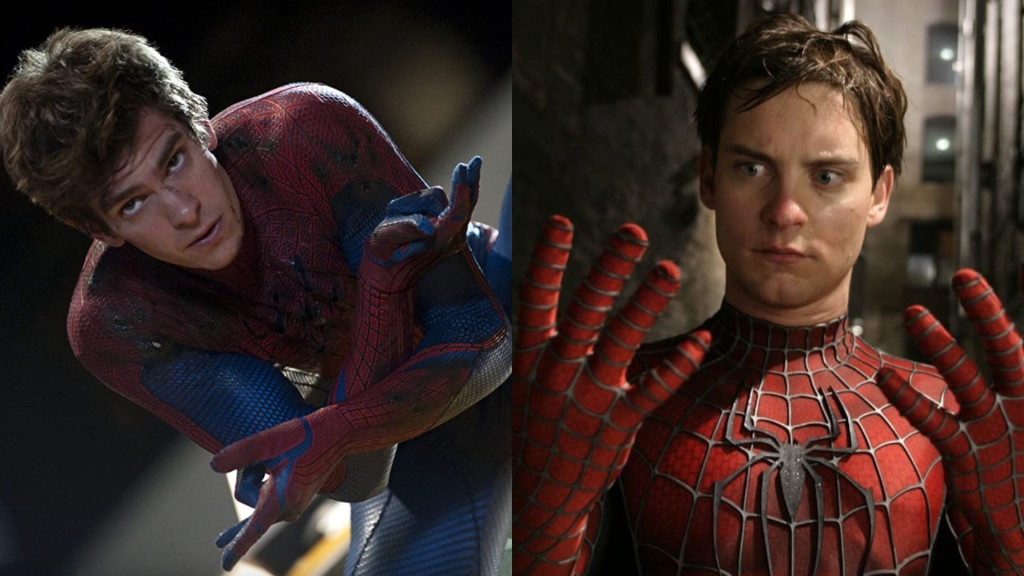
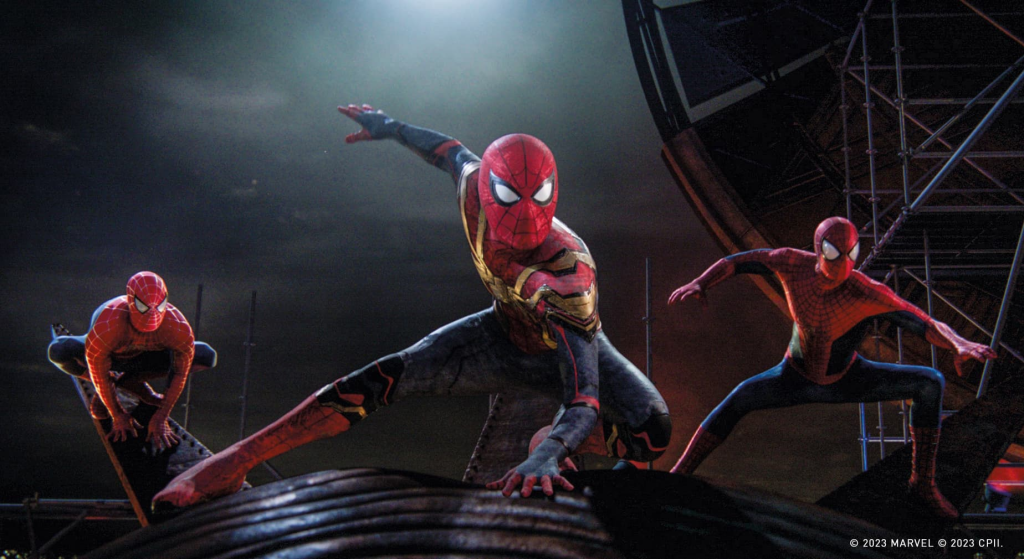
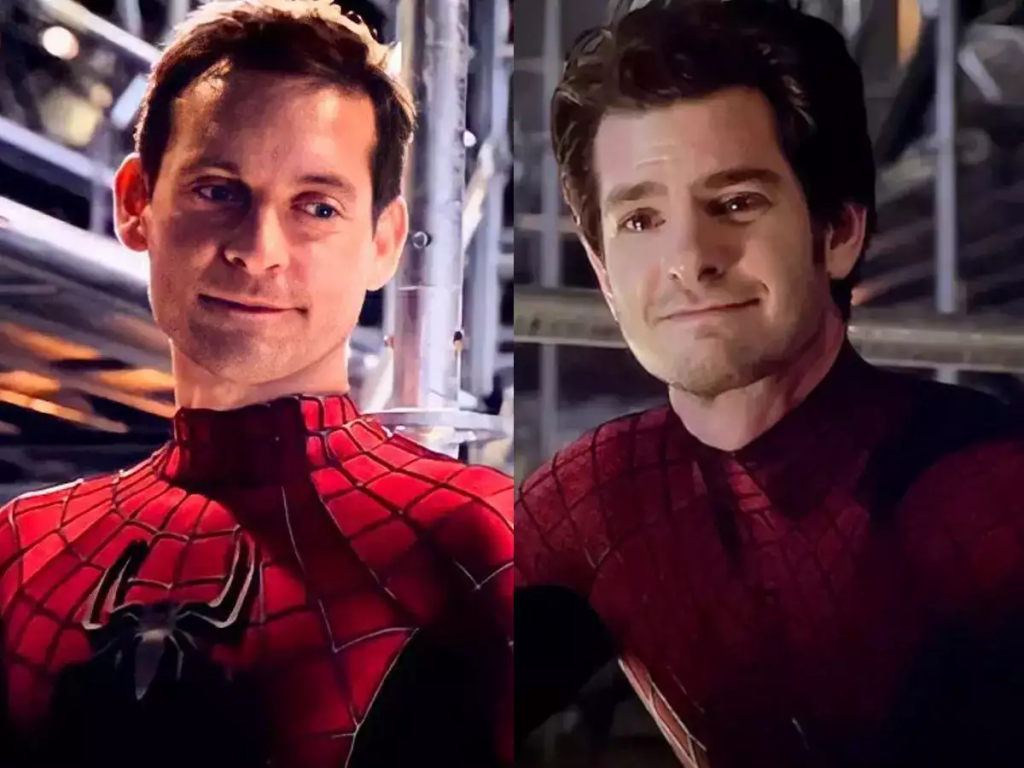
However, the two big highlights of the entire film that everyone has been talking about were the returns of *minor spoiler warning* Tobey Maguire and Andrew Garfield as their own respective versions of Spider-Man! (Again, did you HONESTLY think they were bringing back the villains from their own movies but not also bring back themselves here?! Come on!)

No Way Home gave both versions exactly what everybody hope they would get when it was first rumored that they were likely to be reprising their roles! It brought back their own versions of Spider-Man that still stand out as their own, ties nicely into the MCU’s version of Spider-Man respectively and his overall arc in the film, offered plenty of funny banter and dialogue exchanges, exciting action scenes with their all of the villains, and wrapped up their stories arcs in a much more meaningful way than perhaps their own individual franchises did. There was a lot to appreciate with the way both versions were handled in this movie.

So much appreciation as a matter of fact that it has fans demanding for a continuation/conclusion of both of their individual story arcs in the forms of Spider-Man 4 and The Amazing Spider-Man 3. While I do understand wanting to see more of them as Spider-Man and wanting a second chance to end their own franchises on a higher note than their previous finales did, I do believe that it is for the best that none of this happens.

And this isn’t just talking about my overall personal opinions on both version of Spider-Man (I’m a lover of the original Sam Raimi trilogy but could care less for both of Marc Webb’s films!) but more of what is honestly best for Spider-Man and his future!

Firstly, there’s a main reason why Spider-Man 4 and The Amazing Spider-Man 3 did not get made in the first place! It wasn’t because neither film made money (Spider-Man 3 made nearly 895 million globally and Amazing Spider-Man 2 made 709 million) but because what happened on the creative side, the original ideas for these intended sequels were just awful and would have caused even more damage to their own respected franchises!

With Spider-Man 4, the big reason that it was cancelled just right before it was suppose to start production in January 2010 was because Sam Raimi was not satisfy with any script written for it and felt he would not be able to match the deadline of May 2011 that he agreed to with Sony. Raimi has gone on record multiple times that he was not happy with the way Spider-Man 3 turned out and wanted to redeem himself with the 4th installment, making it the best Spider-Man film he’s made yet! But, he could never reach those personal goals in the development process. Raimi has stated that Spider-Man 4 went through at least four different script iterations and despite bringing in different screenwriters who did multiple revisions, he didn’t like a single finished script for it! It was because of that, Sony decided to part ways with Raimi and move on to reboot the brand with The Amazing Spider-Man, something Sony had already planned for even before this project was cancelled.

When looking at some of the original ideas for Spider-Man 4 (I’ll provide some leaks for it at the end of the post along with the ones for Amazing Spider-Man 3), it’s not hard to see why Raimi had such a hard time coming up with a script he was happy with or was at least cohesive. Most of these ideas seem rather bizarre and would have ended the franchise on a rather dour, depressing note, even more so than 3. From the Vulture taking over the Daily Bugle and revealing himself to be MJ’s father (Yes, really!) to Peter cheating on MJ behind her back with Felicia Hardy and destroying their relationship (some superhero), to Peter outright quitting being Spider-Man at the end (making Spider-Man 2 feel worthless), this movie just seemed like it would be a recipe for disaster and would definitely not be the return to form that the franchise needed in order to continue after the polarizing response to Spider-Man 3.

As for Amazing Spider-Man 3, there’s hasn’t been a whole lot released about what the movie would have been like. However, there is one story element revealed that is so awful that it in of itself shows that this movie would have failed big time (and that’s not even bringing up the quality of the previous two Amazing Spider-Man movies). According to a 2015 interview from Denis Leary (the actor of Captain Stacy) along with other sources, ASM3 would have had Peter using his own blood to be able to clone other people in order to bring new life into those that have passed away. Because Peter was still feeling his fair share of grief over the death of his former girlfriend, Gwen, he would have attempt to clone her and her father in the hopes of healing his own personal wounds. That is stupid beyond measures!

That idea in of itself showcases how ill-fated and poorly thought out the whole Amazing Spider-Man franchise was! Along with the numerous sequels and spin-offs that were already announced at the time before a single script from them had been written, Sony had hit an absolute brick wall with this series and didn’t know what to but to go to Marvel for help!

But the reasons both of these intended sequels should never be able to see the light of day is not just because of the original premises and ideas sounding rather poor, it’s because we kind of already got both of those movies in the form of No Way Home.

In No Way Home, it’s able to tie up the loose story threads that fans had been hoping for along with giving both version a fitting end to their own arcs.

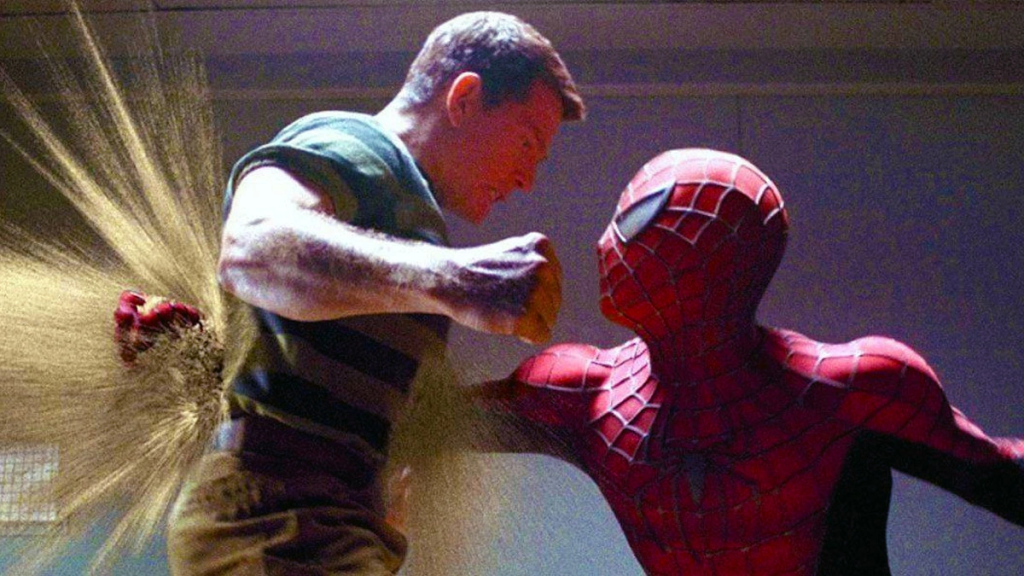
By the end, Tobey Maguire’s Spider-Man had fully formed into his own identity of Spider-Man the way he wants, had worked out his relationship with MJ, and was able to see the humanity in his villains (which was suppose to be a key theme in 3) along with help giving them the redemptions that he had failed to give them in his own universe. That nice, little scene with Doc Ock just showcases how far his version of Spider-Man has come along with the people that grew up with it.

As with Andrew Garfield’s Spider-Man, he was able to share the pain and grieve he had to go through with not being able to save Gwen with the other respected Spider-Men and showcases how even though being Spider-Man is hard, it’s something that he has to keep doing because it’s his responsibility. It dealt with the fallout of that tragic death in a much, more meaningful way than just having him clone her (seriously what were they thinking?) along with help showing the MCU’s Spider-Man the consequences of being a hero and how being Spider-Man will mean that those you love can pay the price. And also him saving Zendaya’s MJ from certain death was a nice touch as well.

Those were all more than satisfying ways to wrap up their story arcs! Why ruining that?

Aren’t we at the point where we should just settle in and focus on the current MCU Spider-Man we have now as the ending of the film would suggest? Shouldn’t we move on to tell exciting, new stories with the rose gallery of Spider-Man characters and villains we still have yet to see on the big screen? Can’t we allow Tom Holland to truly shine as his own, unique Spider-Man without the baggage from the Avengers or the previous Spider-Man incarnations to bring him down? Isn’t it time to move on from Tobey Maguire and Andrew Garfield?

I don’t want to give the indication that I dislike Tobey Maguire and Andrew Garfield as Spider-Man. Tobey Maguire’s Spider-Man has always remained a special place in my heart since childhood and while I don’t care for either Amazing Spider-Man movie, I do know that Andrew Garfield is a gifted actor and he has shown when given the right material and that one big moment comes, he can really nail the Spider-Man persona. Both versions has their own pros and cons along with their own respected fanbases but they’ve have their time and it’s time to let let Tom Holland and other future Spider-Man incarnations have theirs!

That’s not to say I’m totally against the idea of Tobey Maguire and Andrew Garfield returning at all as Spider-Man! If it’s for a voice role for a future Spider-Man game or Spider-Verse movie, then I would be totally down with that! But let’s not make the mistake of trying to breath life into two long, forgotten projects that would most certainly had failed if the original ideas for both of them are anything to go by.

So, what do you all think about the possibility of there being a Spider-Man 4 or Amazing Spider-Man 3? Do you agree with me that they shouldn’t be made or disagree and feel they should happen? Let me know in the comments below!

Also, as I mentioned earlier, here are some of the links to certain articles, fan sites, and leaked scripts/treatments that show what the intended ideas for these two Spider-Man movies were!

Spider-Man 4:

Amazing Spider-Man 3:

Scream (2022) Movie Review

It’s quite ironic how just mere hours before my screening of Scream, my Twitter timeline was filled with retweets and users I follow typing up qts from Star Wars nerds complaining about how the new Star Wars show, The Book of Boba Fett, “ruins” the title character because he’s not a blood thirsty killer in it and that the show didn’t “feel” like Star Wars because it’s got characters that have their own motorcycles or something. And just mere minutes before I headed off to see it, I found a tweet of someone claiming that George Lucas never had anything to do with the success of the original Star Wars trilogy and that he just got “lucky” (Yes, believe it or not, there is still George Lucas hate out there in 2022). Perhaps that person didn’t mean to come across as bitter as they did, but with the way the tweet came out, they came across of it in a very “I know Star Wars better than it’s own creator” kind of way. (And this isn’t even bringing up the actually film’s mention of a certain installment from this same franchise and calling out the certain fanbases’ response to it).

The reason I’m pointing this out is because it’s absolutely incredible the way that the Scream franchise has stood the test of time and remained socially relevant to this day. Regardless of the actual quality itself (one instant classic followed by (for the most part) pretty solid sequels), it’s purely fascinating how any one of those movies can come out today and (aside from a few pop culture references) would still remain accurate as to the very “ins and outs” of filmmaking and the general public’s reaction to each franchise’s installment.

Every single installment has had some meaningful commentary on what goes on and off the camera. The first one is about horror classics and the tropes it follows, the second one is about sequels and the expectations of living up to the original, the third one is about trilogy capers and the misogynist nature in Hollywood (which remains awkward considering the man who produced it) , the fourth one is about reboots and remakes (which is odd because it’s technically not a reboot or remake, it’s still a sequel), and this fifth installment is about what else other than legacy-quels (or as the film call its, “requels”), the way fandom interprets it, and what happens when that toxic side of the fandom tries to take things into their own hands.

What’s odd though is that despite calling out and spoofing the tropes and clichés it does, nearly every installment (except for the original) tends to follow through some of it. The second is one isn’t nearly as good as the original, the third one fall flats compared to the first two (even if I actually don’t hate it), and the fourth one you can just pick and choose where it falls on your rankings but you still won’t have it surpass the first one.

This has always been the textbook definition of “have you cake and eating it too”! But despite all of that (and if we’re being honest because of it), this franchise still work well as it’s own thing and is able to get away with it’s meta/self-aware commentary in a way that many other franchises fall flat. It’s perhaps (by default) the most consistent horror movie franchise out there!

And the big reason why Scream 5 (or as I like to call it 5cream) works as well as it does is because it follows the meta-narrative to a t and doesn’t try to convince you that it’s trying to do anything else otherwise.

Film Synopsis: Twenty-five years after a streak of brutal murders shocked the quiet town of Woodsboro, Calif., a new killer dons the Ghostface mask and begins targeting a group of teenagers to resurrect secrets from the town’s deadly past.

Similar to the more recent “requels” that have come out, 5scream follows a new set of original characters that carry the film on their shoulders and have the legacy cast become secondary. These new characters finds a whole crew of teenagers, some of which have a connection to past of these legacy characters, and are eventually lead by legend Dewey Riley (who has had a fallout with Gale Weaters) to find evidence of the killers of the past to uncover the mystery of this brand new killer in the present. These connections and events eventually leads to Sidney Prescott to return to the spotlight and leads to more slashing and killing than ever before.

Make no mistake, 5cream contains some of the brutal, gory kills in the entire franchise. It goes all out of it and never holds back. Even during some moments where perhaps fans might feel like it takes a step too far with the killing and who it chooses to kill off, the film instead takes at least three or four steps too far with extremely affective kills and characters’ deaths that turns into an absolute blood bath by the end of it.

There’s also plenty of meta humor throughout but unlike say Scream 3, it never goes too overboard with it and makes it matter to the events that transpire throughout. You’ll be having the time of your life following these group of teenagers and seeing what sort of weird, convenient way that it leads back to the original trio of characters.

And these group of teenagers we are presented with in this installment are quite entertaining and likable in their own rights. Melissa Barrera’s Sam Carpenter and Jenna Ortega’s Tara Carpenter are probably the most engaging ones of them all with their whole sister dynamic and potential connections to the original set of characters. Jack Quaid’s Richie Kirsch fits well as the caring boyfriend even if you can see the direction his character goes by at least the 2nd or 3rd scene with him. And the rest of the new cast with the likes of Mason Gooding’s Chad Meeks-Martin, Mikey Madison’s Amber Freeman, Dylan Minnette’s Wes Hicks, and Jasmin Savoy Brown’s Mindy Meeks-Martin fit comfortably in the world of 5Scream which was is mostly their own versions of the teenagers from the original with a couple bit of new twists thrown in with their charcters.

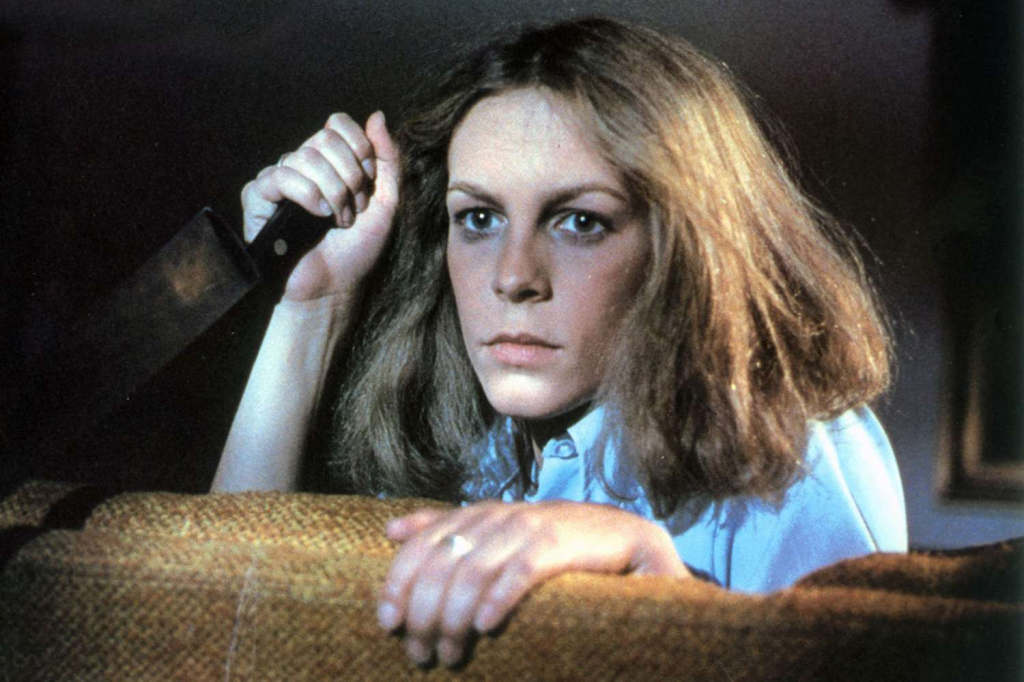
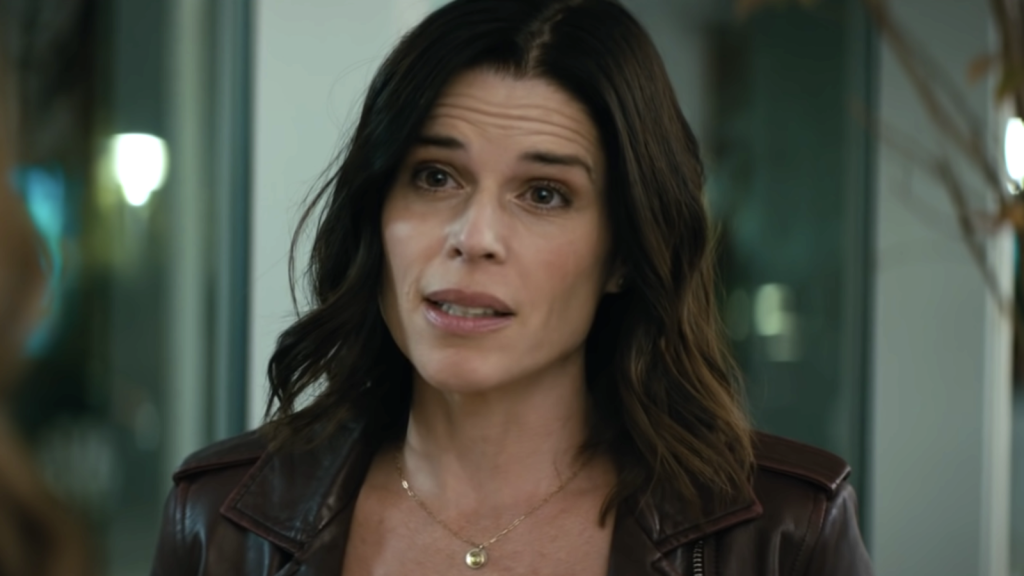
However, the film’s weakness comes in the form of the original cast. David Arquette’s Dewey Riley is given the most screen time and is the character that gone through the most change since the last movie. He’s basically given a similar role to Han Solo in The Force Awakens of helping guiding this group of new blood through it’s bleak past to make for what is hopefully a brighter future. Courtney Cox’s Gale Weathers doesn’t have as much interaction with Riley and is treated as more of an afterthought than previous movies. Marley Shelton’s Judy Hicks has about the same amount of screen presence as she did in the previous one, which is basically in the sense that she’s “just there”! And then there’s Neve Campbell’s Sidney Prescott! While it’s always great to see Neve Campbell on the big screen, this does feel like the installment that adds the least amount of depth to Sidney as a character. She has less screen time here than in any of the previous movies and is given the less material to work with because the mystery that unravel here don’t amount to much to the character of Sidney herself but more of her connection to the others. The film hints early on at a connection which could make it the most personal conflict for Sidney in the franchise but then contradicts that into something a lot less interesting. It just feels like another mess that Sidney feels like she needs to clean up. Again, Neve Campbell herself is great in her iconic role as the original Scream queen but lacks a role as interesting as say, Jamie Lee Curtis in the last two Halloween movies.

This is also the very first time in any one of these movies where I could see the identity of the killer coming from the minute that the character shows up. Despite the twists and turns that the movie tries to make you keep guessing and have you think maybe it’s not that person, it always came back to that one person you’ve seen from the moment they show up. At least the Ghostface reveal in Scream 3 was still shocking in it’s own right even if it was in a very “WTF!” way!

And just like with the sequels that have come before it, it’s hard to basically tell what sort of twist, meta, and handling of story elements can be considered as lazy or clunky screen writing and the ones that are actually suppose to be that way because that was the actual point of it all.

But still, it’s hard to complaint too much when the most of the kills and blood effects still land and it’s meta commentary will have you at least thinking on how much it’s gonna piss off the worst kind of people in the very best way possible. 5cream is yet another really solid sequel that can’t quite match the original classic but it’s enjoyable enough in it’s own right that even the fumbling of the returning cast can be overlooked because of how enjoyable the new cast of characters in this entry are.

I’m not entirely sure where you go next with this franchise but perhaps, it’s best to find a stopping point sometime soon before a few years down the line we get a sixth installment that’s all about multiverses and have all of the Ghostfaces from the past come together to get revenge of Sidney or something silly like that.

(That’s actually gonna happen, isn’t it?! What have I done?!)

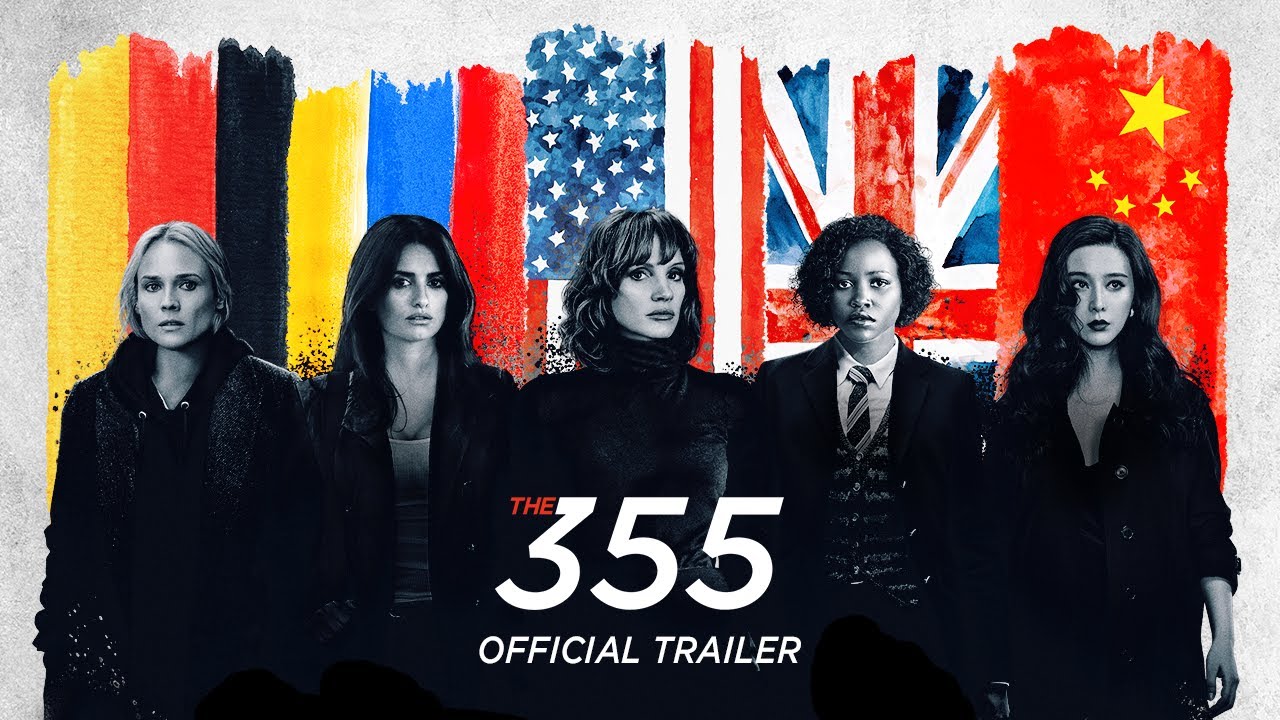
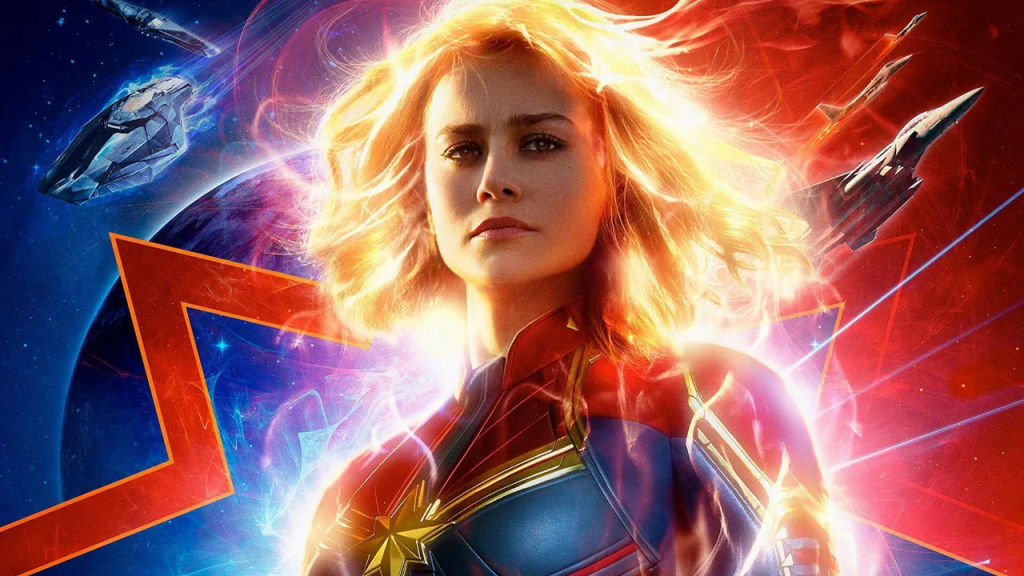
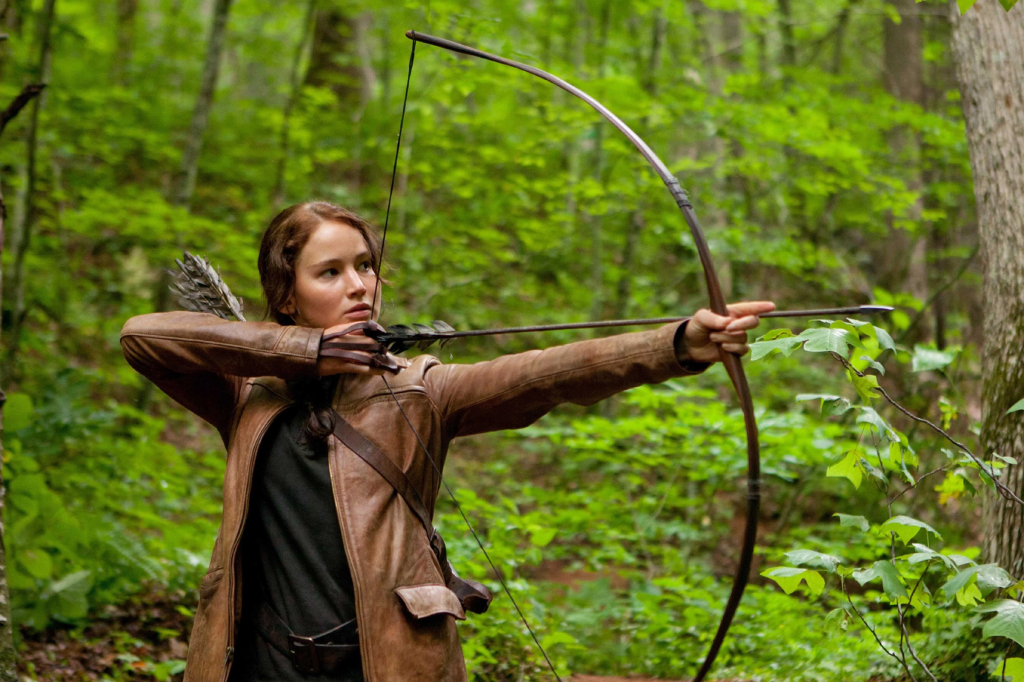
Why We Should Not Take The Wrong Lessons Away From The 355

I was originally planning to write a review for The 355 but quite frankly, I couldn’t think of enough material about it that could make for a full review. So before I go into details about why we shouldn’t look at the underperformance of this movie in the way most people likely will, I will just give you my brief thoughts on this early January flick.

Short version, it’s not very good. Yet another example of a movie relying strictly on star power and charisma hoping it can make up for completely illogical plotting and bland characterization! It tries to do it’s own spin on the Bond and Bourne franchise without even having the slimmest idea as to why either one of those franchises were able to work in their own right! This would certainly be a Netflix rental exclusive at best if it wasn’t for it’s incredibly talented cast attached to it. Simon Kinberg seems like a likable man but should seriously just stick to producing and leave writing/directing out of it. It has some fine performances and serviceable action scenes but this is the exact definition of a “January movie” and one that you can skip. I’d probably give it 1.5 out of 4 stars if I were to give it a star rating.

However, the overall quality of The 355 is not the topic for this piece but on the general consensus that seems to imply that the film’s bad reviews and low box office results is yet another example on how female-lead action movies or just female-lead movies in general don’t sell and Hollywood should just stop making them. I always found this to be a rather preposterous take that makes me groan like a cow every single time this is brought up.

Here’s the thing, folks! If it was truly the case that women can’t carry cinema, then Hollywood would have stopped doing it a long time ago! Regardless of the politics behind the cameras, at some point, there will come a breaking point and they would just stop doing it all together. There’s only so many times where they will try to do something while losing so much money as a result. Although, if we’re going by certain research from a few years ago, movies starring women DOES in fact make more money than movies starring men. Don’t believe me, just check out this article from 2018!

https://www.cnbc.com/2018/12/12/movies-starring-women-make-more-money-than-movies-starring-men.html

And yet we still have this same tired talking point every single time that these certain type of movies staring a certain type of gender never makes big bank and how it must be because of that certain gender. Even when you do bring up a movie or franchise that has actually been successful with that certain gender, it’s always seen as an exception or comes with a “Yeah, but…” claim.

You bring up the success of Wonder Woman and Captain Marvel and the counterpoint is always, “Yeah, but they’re superhero movies that’s part of a male-dominated sub-genre!” (Which of course didn’t help in the slightest when Elizabeth Banks brought that exact point up). You bring up the success of Twilight and The Hunger Games and the counterpoint is always, “Yeah, but they are based on books!” You bring up the Resident Evil or Tomb Raider movies (at least the Angelina Jolie ones) and the counterpoint is always, “Yeah, but that’s based on a popular video game franchise!” You bring up the rose gallery of movies centered around Disney princesses and heroines that have stood the test of time such as Beauty and the Beast, The Little Mermaid, Cinderella, Mulan, Tangled, Frozen, Moana, etc.. and the counterpoint is always, “Yeah, but they’re movies aimed for kids and families!” For whatever reason, there are certain folks out there (and I’m not just talking angry Youtubers who would certainly make constant videos about why Ellen Ripley or Sarah Connor is a Mary Sue if the original Alien and Terminator came out today) that are still in that same, stubborn mindset that a women-led property just can’t succeed on it’s own merits and if it does, then it’s just because it’s attached to a brand that is so dominated by males that it would make it impossible to fail.

What’s even more baffling is how nearly every single counterpoint brought up could easily be backed up with another movie just like those that didn’t do so hot at the box office regardless of gender. There has been just as many female-lead movies that have succeeded as there are many female-lead movies that have failed.

If Wonder Woman and Captain Marvel were successful just because they’re superhero movies, then why didn’t audience go see Dark Phoenix and Birds of Prey (No, Covid is not an excuse for the latter! That movie was underperforming even before the pandemic happened!)? If Twilight and The Hunger Games were successful just because they’re movies based on popular books, then why did audience eventually stop showing up for Divergent and Maze Runner (Y’know, the latter which is a MALE lead series!)? If Resident Evil and Tomb Raider were successful just because it’s based off a well-known video game series, then why didn’t audience support Doom, Max Payne, Street Fighters, Mortal Kombat: Annihilation, and Assassin’s Creed (Again, all male lead series!) If all those Disney princesses/heroine movies were successful because they’re movies for kids and families, then how do you explain all the other numerous “kid/family” movies out there that parents didn’t take their children to see like say The Black Cauldron or Treasure Planet?

Even when a female-led movie comes along that doesn’t make it’s money back, there’s usually always another one that comes right around the corner after that’s able to be a big hit no problem! It happens so often in fact that I’m stunned people still chose to stick to a certain narrative just because.

When Ghostbusters: Answer the Call couldn’t make enough money, next year came the likes of Wonder Woman and Atomic Blonde that were notable successes to prove those misogynistic claims wrong. When Ocean’s Eight didn’t make nearly as much as the other Oceans movies, there came Incredibles 2 that had Elastic Girl front and center which became a billion-dollar smash hit! When Terminator: Dark Fate and Charlie’s Angels failed to break even, there came Frozen 2 which eventually became the most successful animated film of all time that didn’t involve a soulless remake of a beloved Disney property. When Birds of Prey couldn’t gain an audience pre-Covid, The Invisible Man was able to become that one last big box office smash hit just before theaters closed! Heck, I guarantee once The 355 fails to break even, we’ll have Scream to come to the rescue this weekend and show how the world is still in love with Neve Campbell despite being released in January!

These examples I bring up are not exceptions! They are the REAL deal! They are undeniable proven facts that people will go see movies with women if the movies look appealing to them.

And that’s not even bringing up the horror genre! Y’know, a genre in which there are multiple film franchises driven swiftly by women! A genre that has seen enormous successes such as Halloween, A Nightmare on Elm Street, Scream, Carrie, Black Christmas, and Hellraiser along with more recent hits such as You’re Next, The Babadook, It Follows, Split, Happy Death Day, A Quiet Place, Hereditary, Us, Ready or Not, and The Invisible Man! Sure, you can argue that it’s the male villains in those that make those movies/series iconic such as Michael Myers and Freddy Krueger but it’s mostly the female characters that are driven force in them and the films themselves always tells the stories through their perspectives. Audience wouldn’t go see the new Halloween if they didn’t think they could get behind Laurie Strode or was at least worth following to get to Michael Myers!

What’s most ludicrous is how there’s a perfectly valid non-sexist reasoning for just about every single female-led movie that isn’t successful that could simple apply to male-led movies that suffer the same fate? When Dredd, Blade Runner 2049, and Rambo: The Last Blood were the box office bombs that they were, was there ever any article around the time those movies came out about how male-led films don’t sell and Hollywood should stop trying to sell masculinity to the general public? No, because there was always numerous examples that show that is simple not the case. And that also applies with female-driven films as well.

Ghostbusters: Answer the Call didn’t underperformed because of women, it underperformed because people were turned off by the trailers and it didn’t look like the Ghostbusters movie they’ve been waiting for all these years (also it’s 144 million dollar budget didn’t help either). Ocean’s Eight wasn’t the least successful Ocean’s movie because of women, it’s because it was a series that was running of gas and couldn’t live up to the original (each Ocean’s movie made less money than the last, mind you). Terminator: Dark Fate and Charlie’s Angels didn’t tanked because of women, they tanked because they were both part of franchises that had been run into the ground and/or audiences were just no longer invested in. Birds of Prey didn’t find an audience because of women, it didn’t find an audience because of it’s lack of marketing and including a rating that wasn’t suitable for it’s target audience.

All in all, we have got to stop having this same discussion over and over and over again about how women-led flicks are the Achilles heel to cinema and need to be stopped at all costs! It’s all just so very exhausting, tiresome, and contain plenty of evidence that prove otherwise!

The 355 is a dud and (most likely) will be a flop at the box office but I promise you it’s not because of the reasons that internet assholes will have you claim. It’s because it’s an early January movie! It’s because people most likely went to see Spider-Man: No Way Home a third or fourth time instead! It’s because of the rise of the Omicron variant that could potentially lead to theaters shutting down again! Or quite frankly, it’s because it’s something that most audience either don’t know about or feel that it’s not worth investing their time in!

And I sure hope we don’t have to have this exact same discussion next week after the box office results come from the new Scream! Help us, Neve Campbell! You’re our only hope!