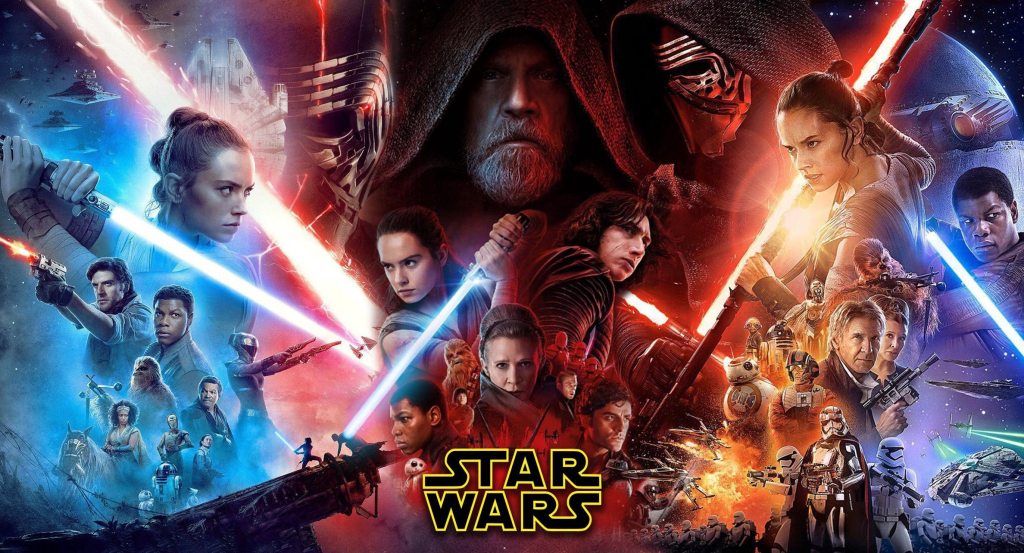
Star Wars: The Sequel Trilogy- Redefining Literary Remix and Media Literacy

We live in quite a dire time for mainstream blockbusters films. The main reason for that is how rather simplistic and limited most of the choices are for these kinds of big movies that get released nowadays. If it’s not your standard Marvel or DC superhero action flick, then it’s usually another installment in a fairly long-running franchise that usually acts as a reboot, remake, and remix all at the exact same time. There are certain words that people use to describe that exact kind of media. Some call it a “soft reboot”, others now call it a “re-quel” (No thanks to the new Scream movie!), but I think a more proper and not as well-known term for this is literary remix.

When it comes to a remix in the form of literature, it’s stated that it’s best described as an alternative version of a text. A version that for a brief moment that the people are writing it pretend that this version of the text is the real deal. It’s also when William Burroughs used a technique known as cut-up, which was developed by Brion Gysin to remix language in the 1950s. Various textual sources (including his own) would be cut literally into pieces with a pair of scissors, reorganized on a page, and pasted to form new sentences, ideas, stories, and ways of thinking about words. In other words, it’s takes a familiar story but puts a new spin on it’s characters, plots, and themes to make it feel as it’s the first time anyone had ever seen this story told before.

While Star Wars wasn’t or won’t be the first franchise to have used literary remix as well as media literacy for it’s latest trilogy, it’s undoubtedly the one that most other franchises out there will look to for inspiration. We saw it in 2015 before The Force Awakens even came out with Mad Max: Fury Road, Jurassic World, Terminator Genisys (however that’s suppose to be spelt), and Creed and we have continued to see it in the wake of the aftermath of Episode 7 with the likes of Halloween (2018), Terminator: Dark Fate, The Matrix: Resurrections and Scream (2022). Even if Star Wars is no longer the prime standard for big blockbuster filmmaking nowadays in the wake of the Marvel Cinematic Universe and possibly with the Avatar sequels on the rise, it’s reliance of remix in literature and literacy in the form of media has still made it one to copy it’s tentpole from.

As a result, we have the Star Wars sequel trilogy. Three installments that act more as a big tug and pull, more so than the other previous two trilogies. I’m not gonna pretend I have the slightest clue of what went on from behind the scenes and if there was any real “plan” for these series of films but I will judge all three of them on their own terms and how they connect with the other in ways that I think enforce the argument of it’s reliance on literary remix and media literacy.

The Force Awakens- I Have A Very Familiar Feeling About This
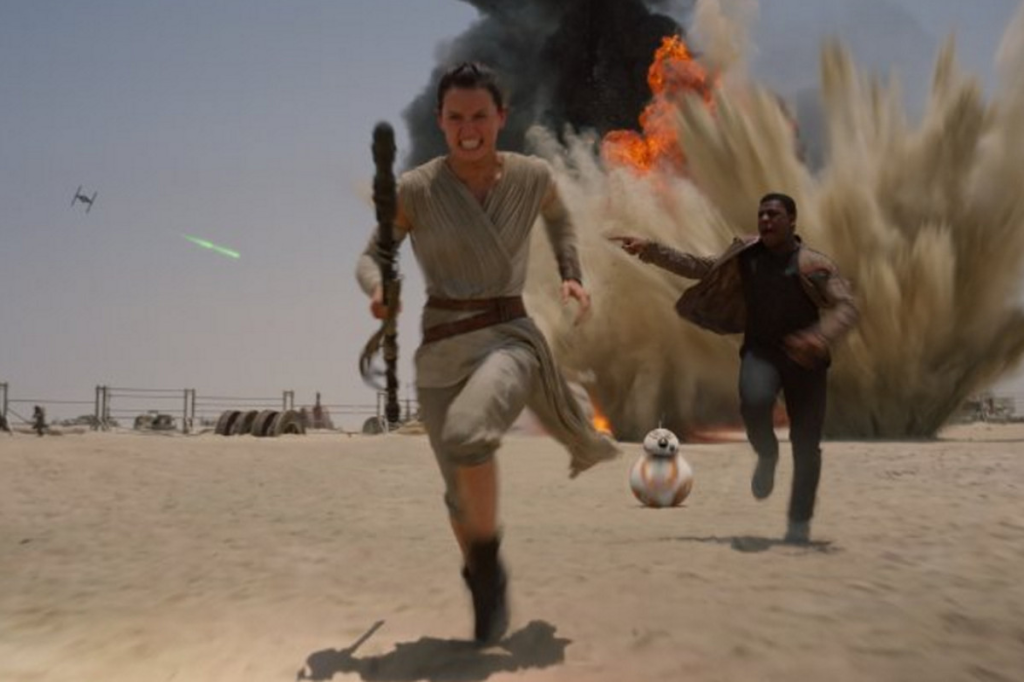
When making A New Hope, George Lucas was clearly inspired by his nostalgia for prime Joseph Campbell. When making The Force Awakens, J.J. Abrams was clearly inspired by his nostalgia for prime George Lucas. It’s like poetry, it rhymes, am I right?!

In all seriousness, I don’t think there is a film in this trilogy that helps redefine the idea of literary remix than with Episode 7. When you looking at from a surface level, The Force Awakens mostly comes across as a more modern and updated retelling of A New Hope in terms of plot, characters, themes, and the overall beats it hits. When looking deep inside the surface, this is where the literary remix comes to play. While it does indeed borrows many of those kinds of plot, characters, and themes that the original Star Wars provided, The Force Awakens uses those major beats and put them in reverse.
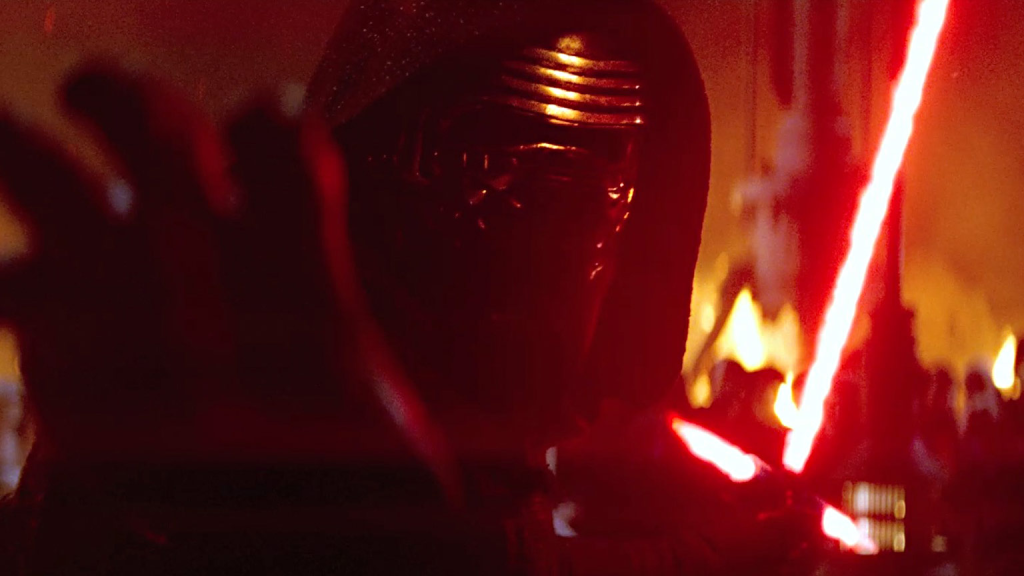
The biggest examples of this is some of the arcs and journeys that the main characters go through majorly reflects the one from A New Hope but has a different spin on it. It’s not a princess this time that is trying to keep the main McGuffin away from the bad guys, it’s a hot-shot pilot. The main protagonist doesn’t want to move on from the desert planet they are currently stranded on, instead the main protagonist wants to stay there in the hopes that her unknown family might return one day. It’s not the older, wisest character of the bunch that is the mentor figure in this story, it’s older, wisest character that acts as a tour figure and guide to have these newer characters feel welcome in the Star Wars universe. It’s not the big battle to destroy the plant-killing system that is the actual point of the climax, it’s the big lightsaber fight between the three main leads that matters the most. It’s examples like these that reflect the overall character themes that the Episode 7 undeniably borrows from Episode 4 but feels pursued to flip the script on them by telling a very similar story in a way that the original Star Wars did not. Rey is not Luke Skywalker, Finn and Poe Dameron are not Han Solo, Kylo Ren is not Darth Vader, and Snoke is DEFINITELY not The Emperor. The arcs of those characters might be similar to the original trio of characters on paper but the internal conflicts that they go through cannot be more different.

Rey is a nobody who discovers she has access to a big power and wants to use in the hopes of finding a family that she never had. Finn is someone that deep down wants to make a difference but is searching for the reason and purpose to do so. Poe Dameron is basically a cocky dudebro who likes to show to everyone why he’s the best star pilot in the galaxy. Kylo Ren wants to be able to unlock that unlimited power that would make his long lost grandfather, Darth Vader proud. This is all vastly different than to the internal conflicts that Luke, Han, Leia, and Chewie go through in the original, especially within the context of this movie. Leia is struggling to keep the Rebel Alliance a float post Return of the Jedi, Luke had fallen into the same trappings that his Jedi mentors before him suffered from, and Han basically acts as the driving force between the old and new elements of the picture while acknowledging how his journey during the original trilogy and after has affected him mentally and emotionally. It’s the character dynamics and the way each character old or new is portrayed that makes The Force Awakens a standard definition of literary remix.
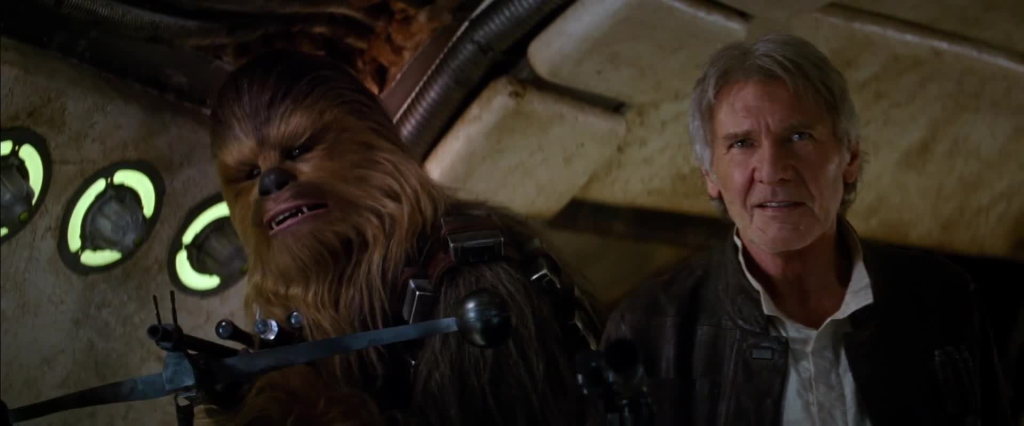
There is no denying that The Force Awakens borrows many of it’s elements from A New Hope but it also can’t be deny the way that this help send an example of the remix culture that we are in now. The key trick is that is uses the idea of modern myths and inspirations that help make the original Star Wars happen by using the franchise’s own myths and inspirations that J.J. Abrams was clearly inspired by to make this form of literary remix even remotely possible. This movie may follow the rules of Star Wars to a T but it certainly does have it’s own ways to do so.

The Last Jedi- Breaking The Unwritten Rules
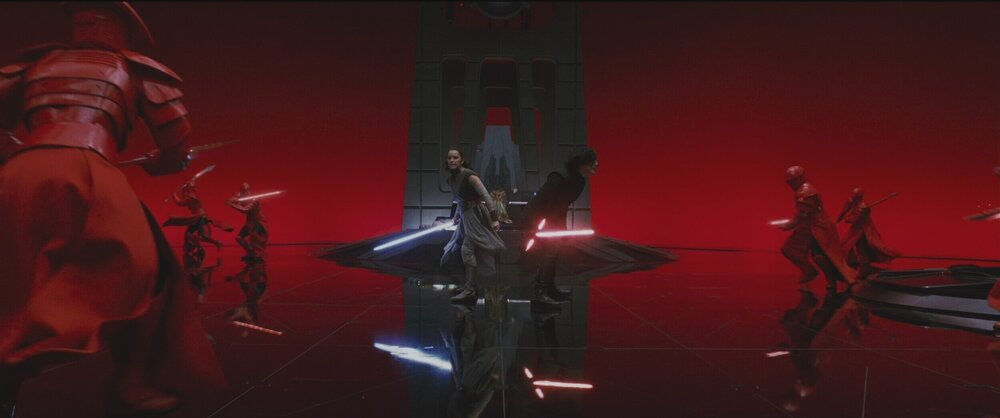
While this next one dives into literary remix as well, it’s more reliant on media literacy than any others. Similar to how George Lucas, Lawrence Kasdan, and Irvin Kershnner use the structure for The Empire Strikes Back as a means of breaking the rules of how movies are suppose to be made, Rian Johnson uses the structure for The Last Jedi as a means of breaking the unwritten rules of a way a Star Wars movie is suppose to be made. Despite how undeniably similar The Last Jedi is to Empire Strikes Back and (to some extent) Return Of The Jedi in terms of plot beats and structure, it still does attempt something that no other filmmaker has tried before with Star Wars, questioning it’s own existence. To plenty of folks out there, that is not suppose to be the case as what the film’s story turns would demonstrate.

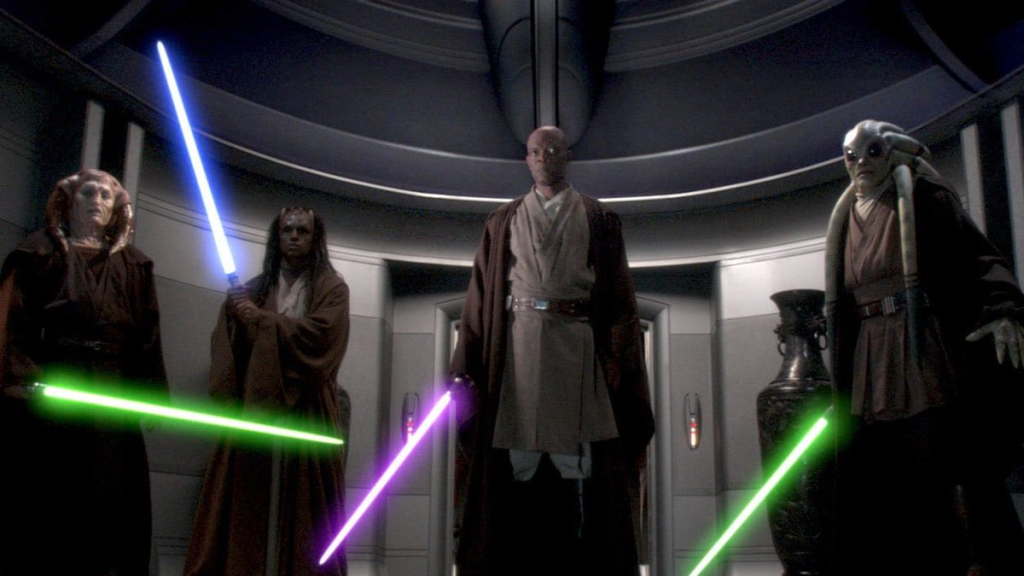
Luke Skywalker isn’t suppose to be bitter, broken, and going as far as to say the Jedi must end, he’s suppose to be optimistic, whole, and inspire the next generation of Jedi regardless of what has happened in between trilogies, just like how he was at the end of Return of the Jedi. Snoke isn’t suppose to die before revealing any of his so-call backstory, he’s suppose to be the evil mastermind that explains his whole backstory and plan to everybody and be the main villain throughout the whole trilogy, just like the Emperor. Admiral Ackbar isn’t suppose to die unexpectedly and be replaced in command by a purple haired woman who makes the logic breaking but badass sacrifice herself, he’s suppose to say his iconic catchphrase and go out like a true hero, just like in Return of the Jedi (at least the first part anyway). Finn and Rose aren’t suppose to fail their side mission, they’re supposed to succeed it or that sequence might come across as a big waste of time despite it being necessary for the final shot of the film. Leia isn’t suppose to use the force to save herself in space, she’s suppose to use the force in a way that her brother only can, like in Empire Strikes Back. Yoda isn’t suppose to back up Luke in claiming that the Jedi must be extinct, he’s suppose to be an ally to the Jedi as long as he is one with the force, just like how he was in both the prequel and original trilogy. Rey isn’t suppose to be revealed as a nobody, she’s suppose to be related to a Skywalker or Kenobi because of how powerful with the force that she is, just like with Luke Skywalker in the originals. Lastly, Luke isn’t suppose to die at all, he’s suppose to live on for all eternity just because…..he can?! All of things aren’t suppose to happen yet they did.
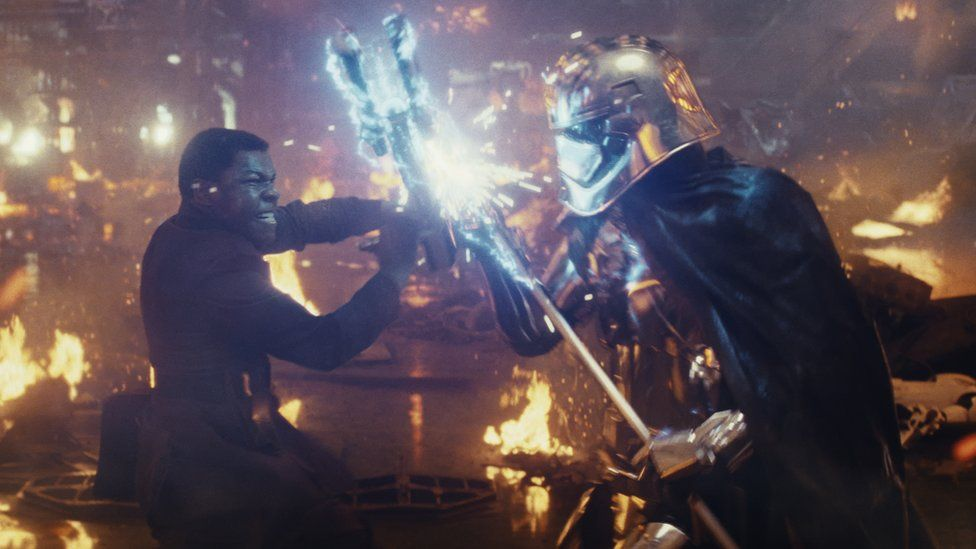
That makes the media literacy stand out the most in The Last Jedi as oppose to the other two movies in this trilogy. It’s unafraid to access, analyze, and evaluate itself in the hopes that this could lead to a great, many things. If it has to harshly condemn it’s characters for constantly making mistakes from the past in the hopes that they may evolve passed it in the future, then so be it. It doesn’t become any more obvious then the way they follow through on the character and plot lines in the way that you are not suppose to in a Star Wars movie. Whether you’re suppose to or not, it is the way it is.

Luke Skywalker is broken shadow of his former self that was consumed by his own sins and failures of the past who forgot why he came a Jedi in the first place. Snoke is nothing more than a stepping stool to Kylo Ren’s progression towards the dark side and make him the most powerful version of his grandfather than ever. Ackbar is just some random character who is iconic for his design and line that has been memed to death and nothing more. Holdo is just a more important character and helps Poe’s arc about not being a hot head all the time and learn to obey your superiors knowing that moment will always come to you at the right moment. Leia can use the force to save herself from space because she just now can. Finn and Rose go on that Canto Bight quest as a means of seeing Rose’s point of view with being on the Resistance along with setting up the final sequence of the film with the kid looking off to the bright moon. Yoda agrees with Luke that the Jedi must end and something else within the force must begin. Rey is a nobody who must now forge her own path to find her place within the Star Wars canon. Lastly, Luke is now at long last with the force and is in complete inner peace while discovering the true purpose to being a Jedi, that the Jedi use the force for knowledge and defense, NEVER for attack! All of those things are true and the film can’t help but think it’s much better because of it.
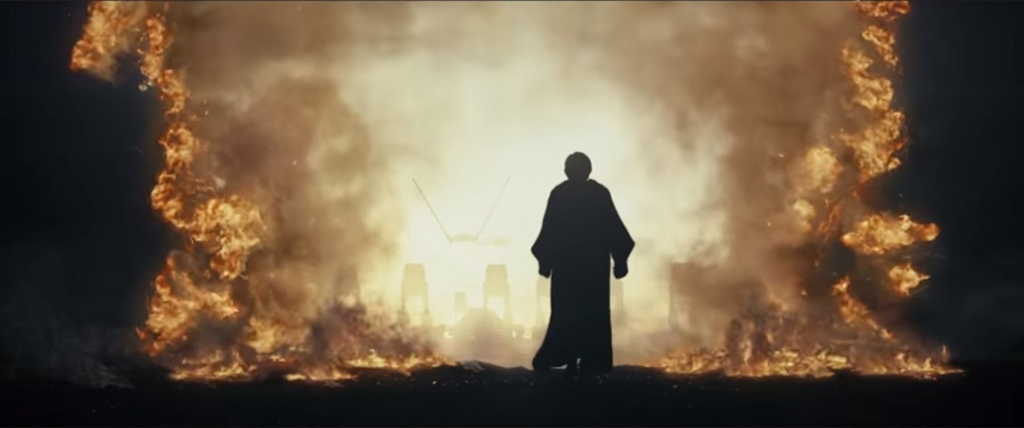
Whether you like it or not, The Last Jedi is the first Star Wars to openly question the franchise’s existent and asks questions on it’s mind that it believes need to be asked if Star Wars is to have any sort of future beyond the Skywalker Saga. Heck, it even lies well with what I mention about how the Jedi were portrayed in the prequel trilogy and Clone Wars era, they just can’t help but suck.

And Luke has the point here. Regardless of how much success the Jedi might have had in their history, there will always be something that holds them back and make them destined for failure. From the downfall of Yoda’s student in Count Dooku to Obi-Wan Kenobi’s student in Anakin Skywalker and Luke Skywalker’s student in Ben Solo, it’s an endless cycle that will always make the Jedi set up for failure. The only way to escape this countless cycle is to break it and rebuild it to a cycle that works. It might not be the Jedi way but it is definitely the way.
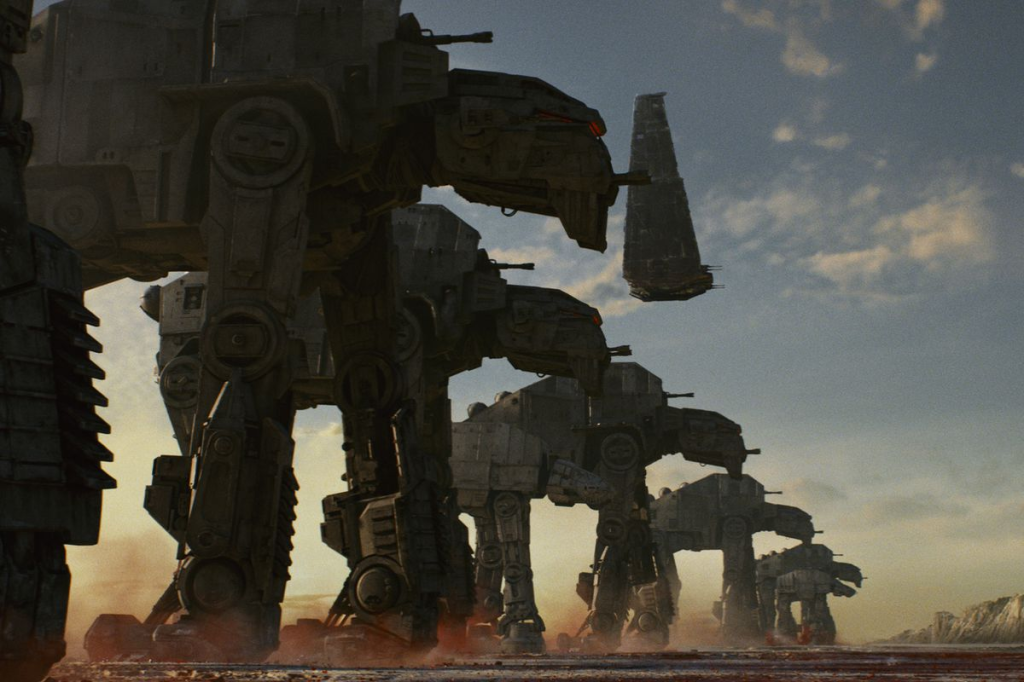
The Last Jedi in a lot of ways can be seen as the anti-Star Wars movie but it does feel like one that stands out as being the one movie in this trilogy that George Lucas in his prime would have made. One that feels the need to break traditions to make room for newer and better ones. One that isn’t afraid to test it’s audiences with what they want and expect out of Star Wars. And one that isn’t afraid to break rules if it makes the overall film worthwhile. However, how worthwhile the middle chapter in this supposed trilogy will be will depend on how the third and final installment follows it up.

Duel Of The Fates/The Rise Of Skywalker- Jekyll and Hyde
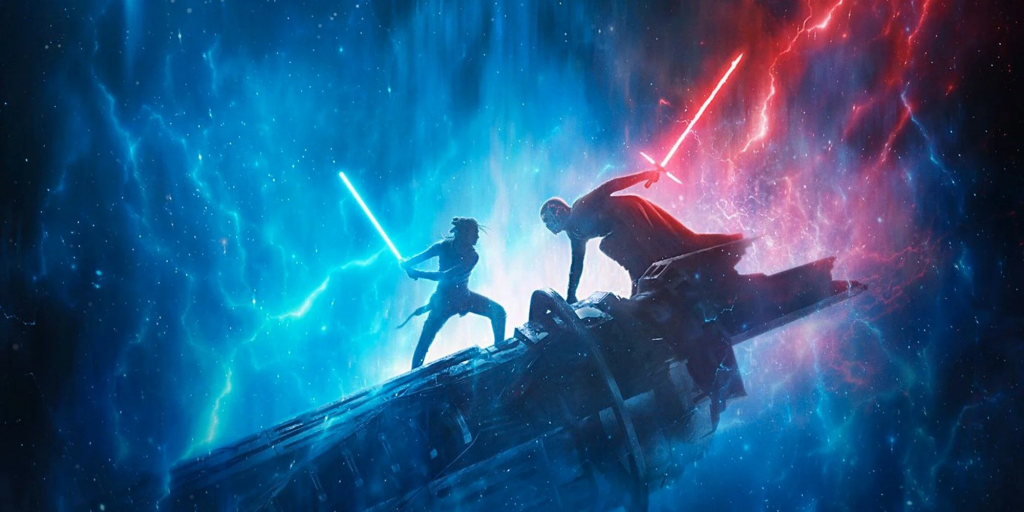
Okay, so this one might be weird since I’m not just covering The Rise of Skywalker but also Duel of the Fates, a suppose first draft leaked that was previously written by initial Episode 9 director Colin Treverrow and his co-writer Derek Connolly. The reason for it is because both of these movies provided completely different follow-ups to The Last Jedi. One acts as a counter point, the other acts as a counter argument. That’s why I feel it’s best to examine both of these to this Jekyll and Hyde-style final entry in the sequel trilogy.

Duel of The Fates- Counter Point
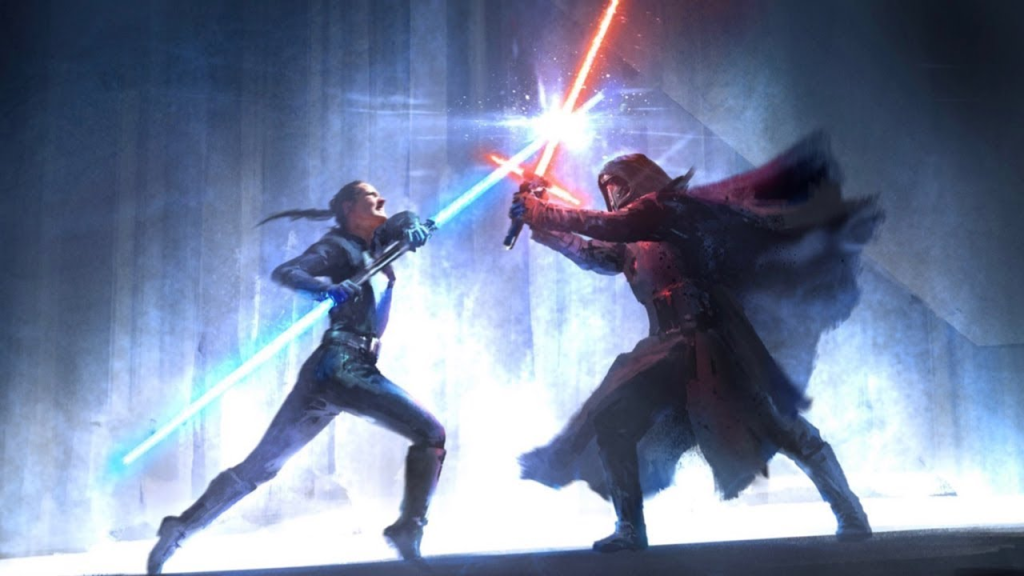
In case you didn’t know, Duel of the Fates was the original title for Episode 9 that the previously hired director Colin Treverrow had in mind before he was let go of the project due to creative differences with Kathleen Kennedy and Lucasfilm. However, shortly after The Rise of Skywalker came out, there was a link that confirmed the original first script for Episode 9 that was submitted in 2016, about a week before Carrie Fisher unexpectedly passed away. I won’t pretend to know why exactly Treverrow was fired and what exactly in his script that turned the folks at Lucasfilm the wrong way but for what this leaked script shows, it does acts as a logical expansion to the lessons and themes of The Last Jedi regarding the need for the force to have a new light and using that spark of hope that Luke gave the rebellion at the battle of Crait and passed that on to the whole galaxy.

In this Duel of the Fates script, we see the character’s taking the most logical step forward possible with their arcs along with giving them a definite conclusion to their stories that feel fresh and unique in it’s own right. By the end, Rey is able to proper find the right balance between the light side and the dark along with discovering her true purpose in her life, Finn is able to become that inspiring leader to other turned stormtroopers and folks who desperately need a reason to hope again, Poe is able to honor the legacy of his previous General Leia and Admiral Holdo by become the responsible leader they would have wanted him to, and Kylo Ren ends up dying along with Ben Solo being the last Skywalker to suffer a tragic, inevitable fate. It’s able to hit the beats that I imagine someone who agreed with what The Last Jedi was saying would follow it up by.

This is a script that is able to expand the forces in ways that no other film in the series had before, explore that “gray” area of the force that makes the entire Skywalker saga feel like it’s come full circle, show how inspiration and having each other’s back can help anyone conquer evil, show off action sequences that would make for a rather mindblowing experiences in the theaters, and is able to bring a ending that feels definite, proper, and is able to justify the existence of it’s own established trilogy. Oh, and it also ends in the way that George Lucas initially had in mind for the ending of the original trilogy, having C-3P0 and R2-D2 recapping the events of all Star Wars films to a bunch of total strangers.
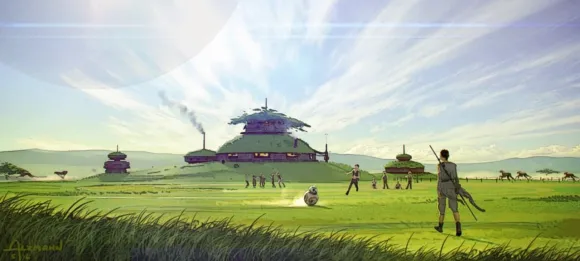
There might be some questionable plot elements in there (like a Rey and Poe romance, the Emperor’s master still around, and Kylo being the killer of Rey’s parents) but no doubt, it is able to follow through on the plot points established from the previous two films and make a ending that feels like it’s own thing in spite of similarities. Which makes it seems odd that this ended up being the Episode 9 we never actually got.

The Rise of Skywalker- Counter Argument
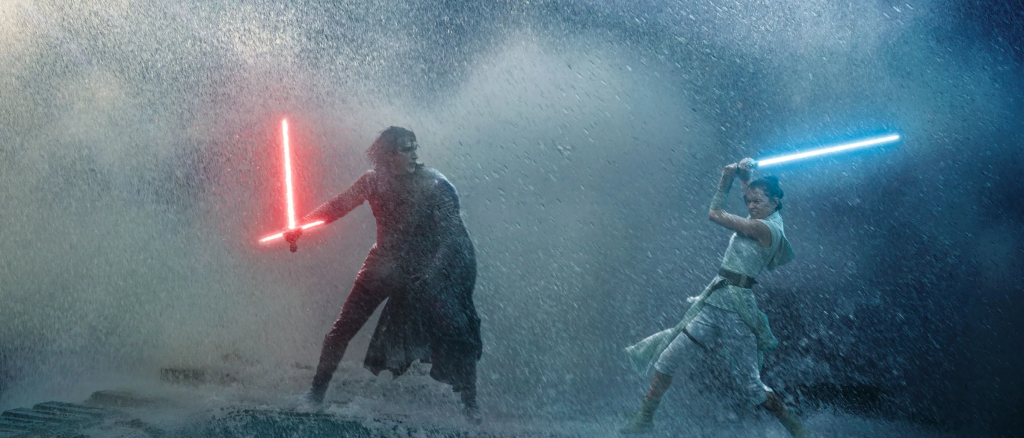
While no doubt many can describe The Rise of Skywalker as being a retcon to The Last Jedi, I view as more of a counter argument of it. There are definitely many plot points from the previous film that certainly doesn’t come across as a progression of that story but more of The Force Awakens. While The Last Jedi seems to argue that Star Wars needs to move beyond it’s own standards and traditions, The Rise of Skywalker seems to argue that Star Wars should not move past it and remain what it is since that has what made the franchise last for as long as it has. Where The Last Jedi used media literacy and (to some extent) literary remix about the Star Wars franchise up to this point, The Rise of Skywalker can’t help but use both of these elements about the movie that came before this one. This is shown through how the movie follows up the plot threads of the previous movie and how it can’t help but feel familiar to previous Star Wars movies because the movie thinks it just isn’t Star Wars if it didn’t do exactly that.

Rey shouldn’t be a nobody who must forge her own path with the force but be related to one of the force-using characters from the previous films because Star Wars always has ties to lore and family heritage. Finn shouldn’t be a standard stormtrooper who should set an inspiration to others but be a suppose force-user because the force has to be expanded upon in some way shape or form. Poe shouldn’t be his own cocky character with a mysterious backstory but should be that along with a backstory that represents the kind of smuggler that Han Solo was. Kylo Ren shouldn’t be the main villain in the final installment but be a stepping stool to The Emperor’s return to take his revenge on the galaxy and that the final movie needs a big bad guy to increase the stakes. The Rise of Skywalker seems very hellbent on sticking to the own traditions and tropes that Star Wars is most well known for because it thinks it wouldn’t be Star Wars without it.

Does that make Star Wars perfect? Nope, but it definitely makes Star Wars the way that Star Wars always has been. It’s familiar and imperfect because it’s Star Wars. That’s not to say that Rise of Skywalker changes everything from Last Jedi, it does play a bit with that force bonding trick that movie introduced to create a pretty creative lightsaber fight between Rey and Kylo and even paying off Luke sacrifice’s in the battle of Crait by Lando bringing everyone and their mother from the galaxy into the final battle. However, when viewing it in hindsight, you can’t help but feel that The Rise of Skywalker is definitely at movie that is at war with itself. This can mostly be because that J.J. was involved with the first film in the trilogy and someone entirely different was involved in the second one, but the movie still can’t help but feel like a two-and-a-half long response to the Last Jedi and less of a continuation of it that Duel of the Fates was looking to be.
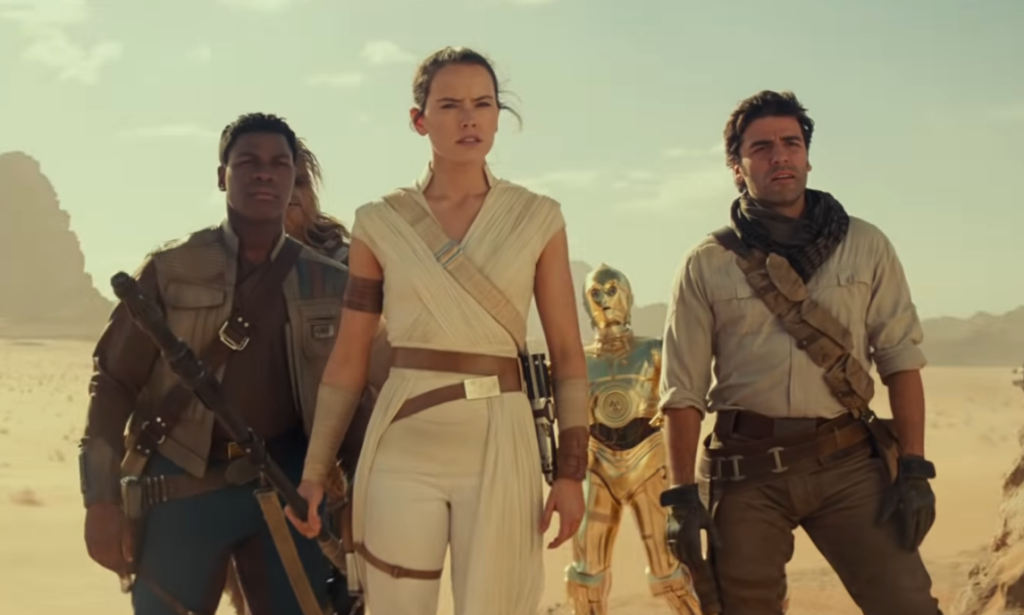
It’s hard to say exactly how Episode 9 would have fared if Treverrow was never fired and Carrie Fisher was still around but it is quite fascinating that we have at least two different versions of what can be described as the final film of the sequel trilogy along with the Skywalker sage and how each one seems to react differently to the previous two films. Whether it’s for the better or not, no doubt if it makes this comes across a Jekyll and Hide-style psychological war in itself that it can’t help but feel like two different endings of a trilogy does in fact exist.

In Conclusion:
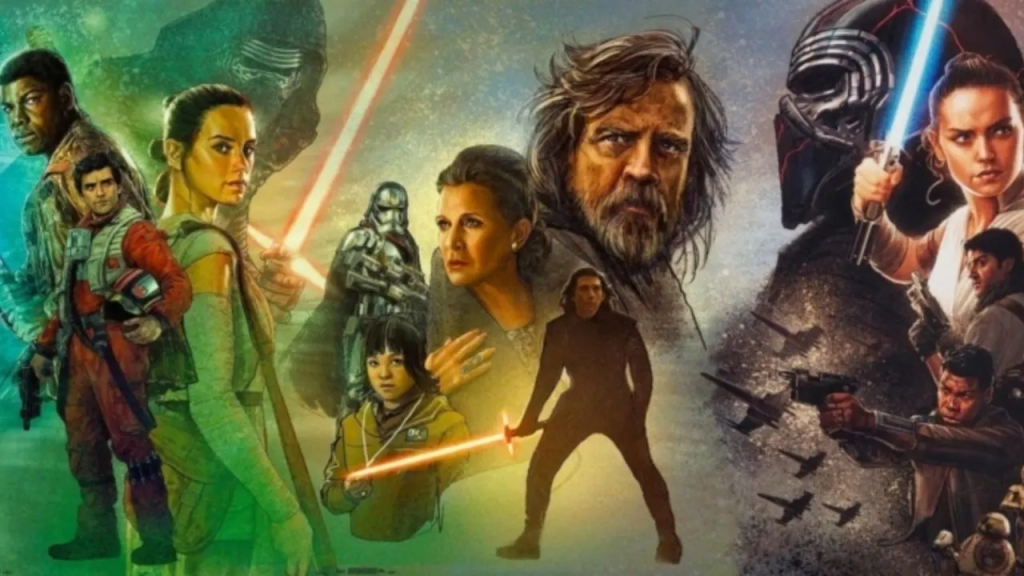
Regardless of what your opinions are on the prequel trilogy and how well it was executed, you can’t deny that George Lucas was trying to provide a COMPLETELY different experience than with the original trilogy. The sequel trilogy, with it’s reliance on literacy remix and media literacy, doesn’t try to be all that different but rather be as familiar with the original trilogy as possible.

Some might view that as a big con but it can actually be described as a big pro. Sometimes re-introducing a generation to a new era of Star Wars by following the similar beats that introduce previous generations to Star Wars can be seen as a necessary evil. Sometimes a series doesn’t need a visionary or something with a so-called “plan” to make it worthwhile, sometimes it’s exciting to just start from scratch and find out for yourself along with the audience the path you will find yourself taking to reach your endgame. Sometimes it’s interesting to see familiar beats be done in new and twisty ways. Sometimes it’s okay to admit that something that many would describe as perfect is actually imperfect. Sometimes it’s okay to admit that Star Wars, warts and all, is just simply Star Wars.

It’s hard to say how others will view the sequel trilogy in hindsight and if future film classes will look into the film’s subtext and meta commentary in the way that I just did. However, there are definitely lessons, both good and bad, to be learned with these three movies and these are lessons that hopefully future Star Wars installments or even other franchise installments will take to heart. The future of the aftermath of this trilogy is unknown but as a wise old Jedi master once said in a different era of this franchise, “Always in motion is the future and many possible futures there are!”

Next up: Star Wars Spin-Offs/TV Series

I don’t have the proper trailer to include with this so, yeah.
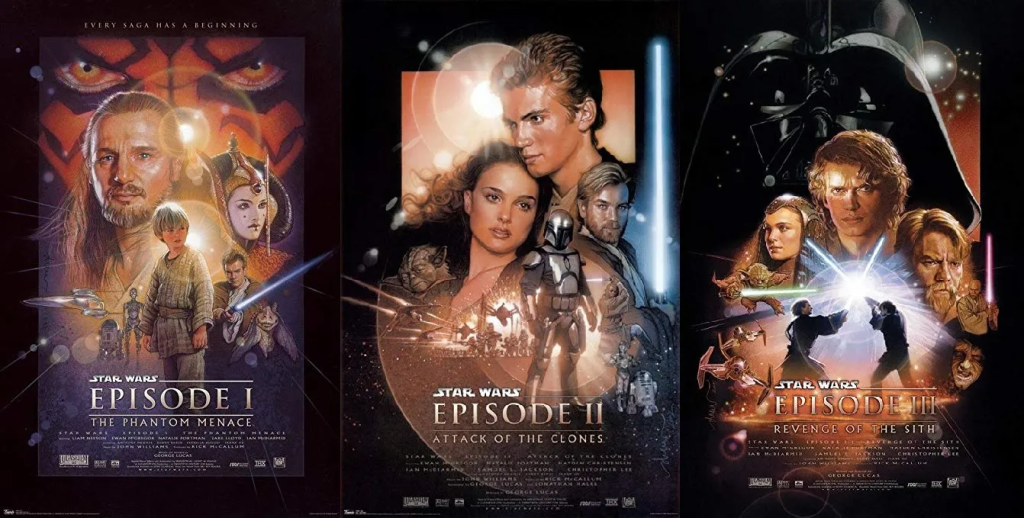
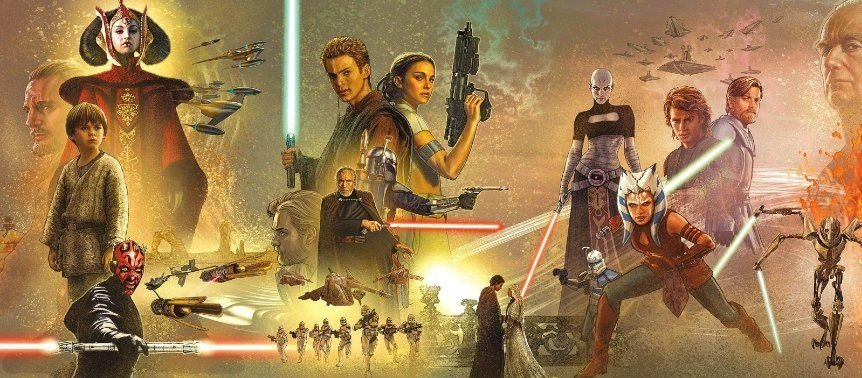
Star Wars: The Prequel Era- Redefining Heroes Vs Protagonists

If there is one piece of dialogue that stands out more than the rest as what the entire prequel trilogy/era is about, it’s “Heroes on Both Sides!” This is a term that is used in the opening crawl for Revenge of the Sith and even as a title of an episode from Season 3 of The Clone Wars series (the 3D version). This is a line that has stuck out to many fans and has led to many discussions of what the true meaning behind that line is.

What exactly does it mean that there are heroes on both sides? Is it really possible that the good guys can help the bad guys and vice versa? Is there even a difference between what can be viewed as good and evil? Can there actually be a middle ground or gray area between this conflict that is basically two sides of the same coin? None of that is officially stated in any form of prequel media but it’s definitely questions that one would most likely think when either watching a film or series, reading a novel, or playing a game from this era of Star Wars.

The Star Wars prequels have been called many things over the past two plus decades but one word I think stands out more than anything else is simply, fascinating. Whether it’s fascinatingly good or fascinatingly bad, it’s no doubt fascinating. As I have gotten older and look into the deeper meaning as to what this timeline of Star Wars is suppose to stand for is how the Jedi’s portrayal throughout this era does strike a fine line between being the heroes of these stories as well as the protagonists. With the original and sequel trilogy, it’s made perfectly clear who’s suppose to be seen as the heroes and villains. With the prequels on the other hand, not so much.
I’ve stated in the past that there is a clear difference between a hero and a protagonist. A hero is someone that can be described as the character that you are following is clearly the good guy or girl of the picture. A protagonist, on the other hand, is simply the main character of the story that you are following regardless if they are good or bad. There’s been multiple different examples as to the clear difference between these two forms of literature but there hasn’t been quite one with the amount of intrigue than the way the Jedi are portrayed throughout the entire prequel era. As of result, I’m going to look at three main Jedi characters that are the main driving forces of this era, Anakin Skywalker, Obi-Wan Kenobi, and Ahsoka Tano.
Anakin Skywalker

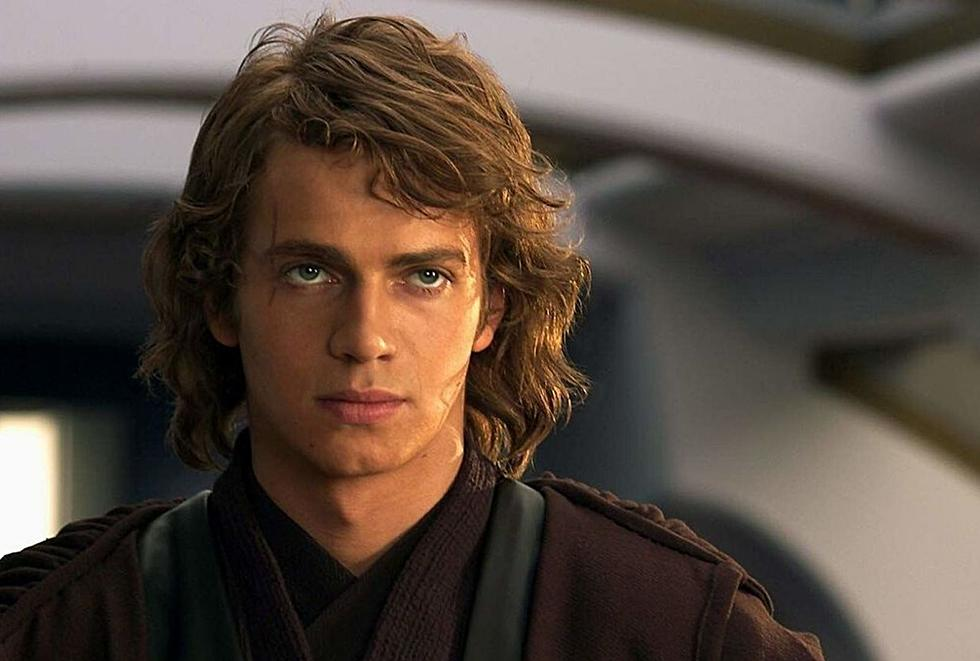
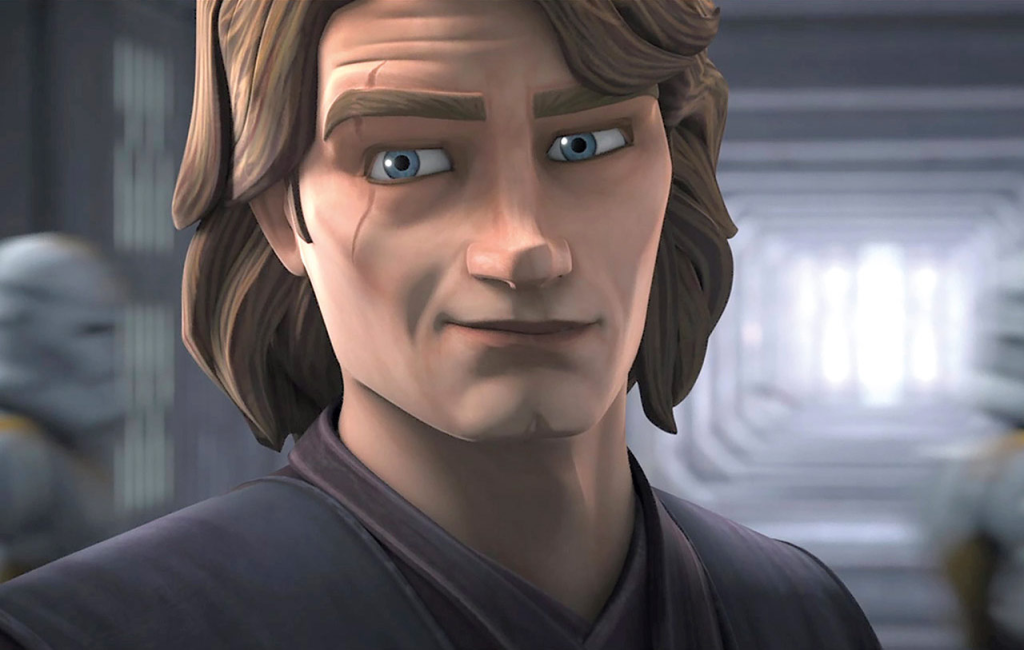
It’s clear as day that Anakin Skywalker is suppose to be the main character of this entire era. He’s the one that we spend the most time with in both the films and Clone Wars series, he’s the one that grows and changes the most as a character, and is undeniably the one that Lucas and company wants the audience to believe is the most important character of this era. Just as the original trilogy was about Luke Skywalker learning to bring the light into full balance to corrupt the dark, this trilogy/era is about Anakin Skywalker having the dark trump the light in a way that it brings both of these respective eras into a full circle. It’s the bloodlines of both Skywalkers that had decided the fate of the galaxy at least two times (and later three). Whereas Luke’s journey towards the rise of the Jedi was rather simple and straightforward, Anakin’s journey towards bringing the end to the Jedi is more complicated.

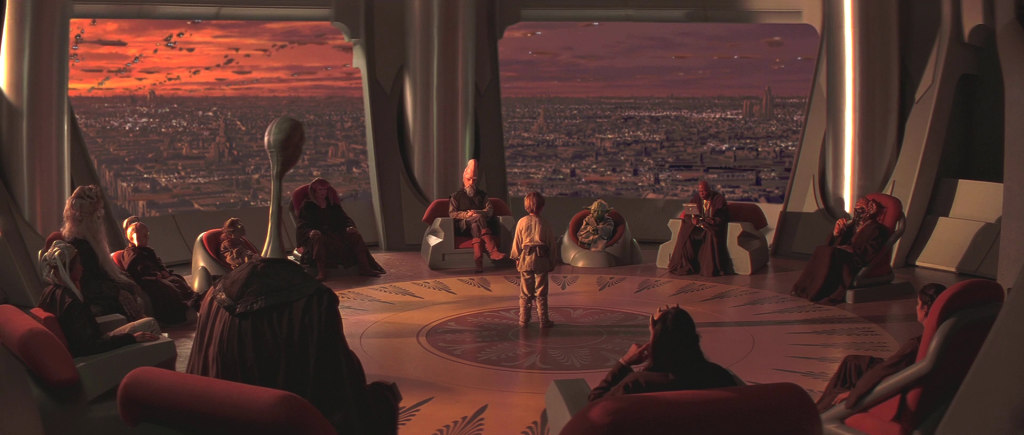
Once we see him as a young boy in The Phantom Menace, we see what we would expect from any kid his age, a little fella that is burst with energy, excitement, and optimism for what lies ahead in his life once he is able to break free of being a slave. It’s once he meets Qui-Gon Jinn that gives Anakin a chance to live the life of a Jedi Knight, something he claims that he has always dreamed of. Anakin is in the mindset that this will not only bring great power to himself but being able to bring that power along with others which he believes can free his mother from slavery and even save people from dying. However, as he grows older he sees that the life of a Jedi isn’t what he envisioned. As a matter of fact, being a Jedi can totally suck.

There are many things that is considered to be forbidden for a Jedi. Things such as love, attachment, and even just plain emotion is considered a cardinal sin for a Jedi. It’s considered a sin because it is believed that feeling anything resembling love, attachment, or emotion can make start down the dark path towards the dark side. However, with what we see with Anakin throughout the amount of time we spend with him throughout the movies and tv shows, it does raises a few question marks as to whether or not that is actually legit?

Throughout Attack of the Clones, Revenge of the Sith (at least the first half anyway) and both Clone Wars series, we constantly see Anakin breaking the rules as to what you can be as a Jedi. He’s secretly married to Padme, he has grown attachment to his master and his apprentice, he constantly feels fear, anger, guilt, and aggression, and we even see him flat out murder tusken raiders (all the men, women, and children of their kin that he describes), but he still remains himself. For at least a good portion of the Clone Wars timeline, he still remains loyal to being a Jedi and nothing with being a Sith. Why is that?

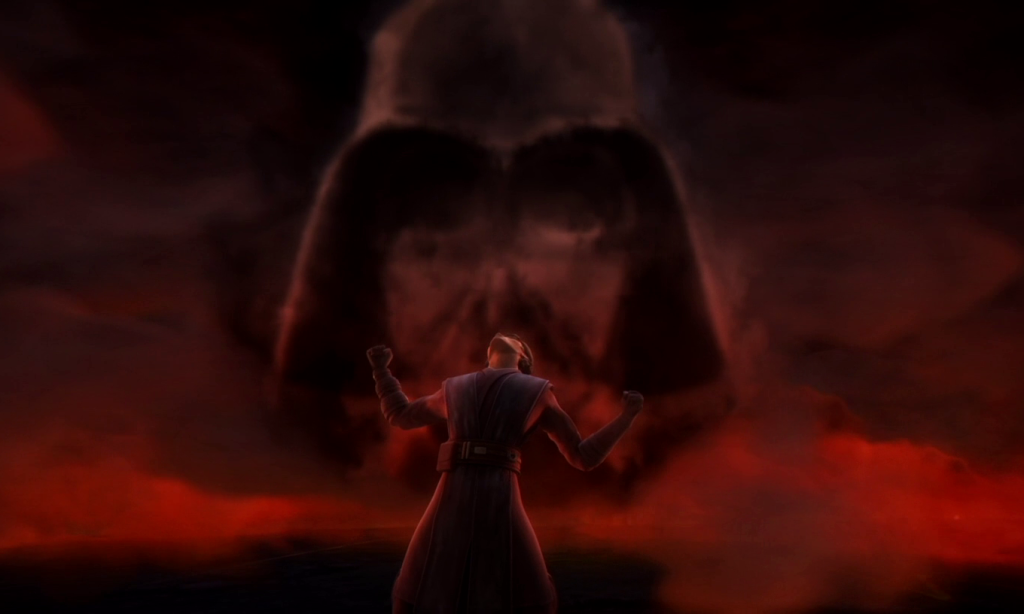
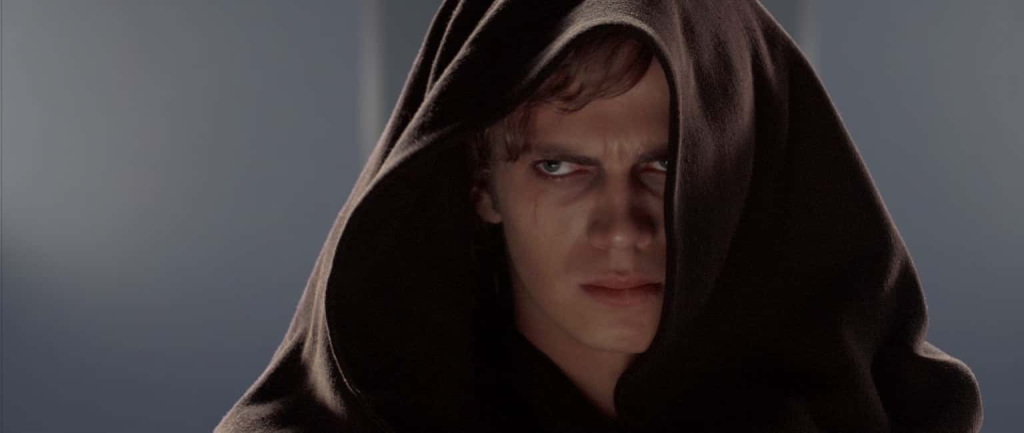
Despite breaking the codes and traditions, he is still able to manufacture well as being a Jedi. It’s not until near the very end of the war that he slowly starts to descend down the dark path. After his apprentice leaves the order, his master siding more with the Jedi council than his own student when he doesn’t get ranked as a master, and having bad dreams that his wife will suffer the same fate as his mother that gets Anakin to snap and turn his back against the Jedi. It’s the more time the spends with the Jedi and the people around him that he becomes closer and closer towards the dark side of the force. It wasn’t because of him breaking the rules that made him become a Sith by the end of it, it was him realizing that those rules were holding him back to unlock his true power that he could provide for himself and the ones he cares about.

It’s 100% intentional that the point of the prequels was to show someone like Anakin Skywalker can turn evil but it’s hard to describe whether it’s through the perspective of Anakin as a hero or as a protagonist. If the Jedi codes is anything to go back, perhaps that was the one thing that was keeping Anakin from being who he really is. There will be a bit more details on this matter later on (particularly about Anakin’s role as the “chosen one”) but for now, it’s worth noting that Anakin can be described as the kind of Jedi that just shows how flawed their traditions are.

Obi-Wan Kenobi

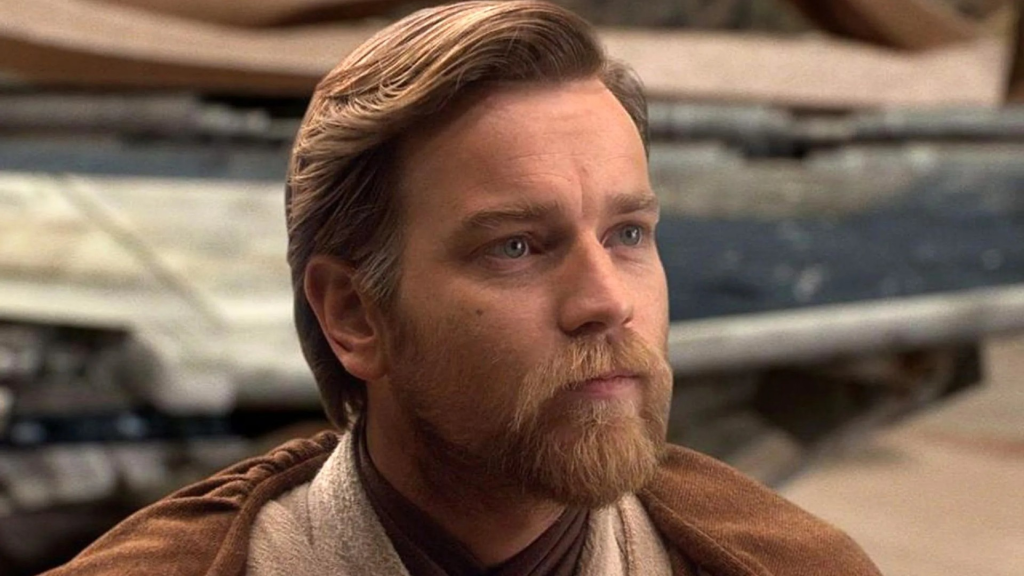
Of the three main Jedi characters that the prequel era focuses on, Obi-Wan Kenobi is undoubtedly the one that is the best example of a Jedi that has been able to adapted to their own rules, traditions, and beliefs. He was the apprentice of a wise Jedi Master known as Qui-Gon Jinn. He is described as being as wise as Yoda and as powerful as Mace Windu. Most importantly, he uses his powers of the force the way the Jedi have intended, the way that Yoda even officially states to Luke in Empire Strikes Back, for knowledge and defense, NEVER attack.

Obi-Wan is considered the one Jedi that is constantly referred to as the negotiator. He’s always tries to use the force to find ways to get through conflict with not physical attack but with words. He uses the force to defend the ones he needs to protect, not to attack those who oppose him. Obi-Wan Kenobi is the main Jedi that we know is 100% fully committed to be a Jedi. He follows everything to a t, explores the good that can come with being a part of the organization as well as the bad, shows wisdom and compassion for others, and knows the true meaning of being a Jedi Master. However, he’s definitely not one-noted and has even had cracks in the armor.

Firstly, there was a relationship he once had with Satine Kryze, the queen of Mandalore, when he was younger. Despite her being Obi-Wan’s one-way ticket out of the life of being a Jedi, he remained committed to being a Jedi but admitted that had Satine said the word, he would have left the Jedi Order. That helps ties back into Anakin’s suppose relationship with Padme. A relationship that is never 100% stated that Obi-Wan knows (at least until after Anakin turns) but deep down, he does know about it. Obi-Wan knows the feeling of love and attachment despite it being forbidden for a Jedi. He knows the feeling of wanting to leave the organization so he could be allowed to feel that without much remorse or regret to it. He understands wanting to walk away from the order, just like Anakin once stated to someone else he carried about. Just like how that certain someone knew, Obi-Wan surely knows as well.

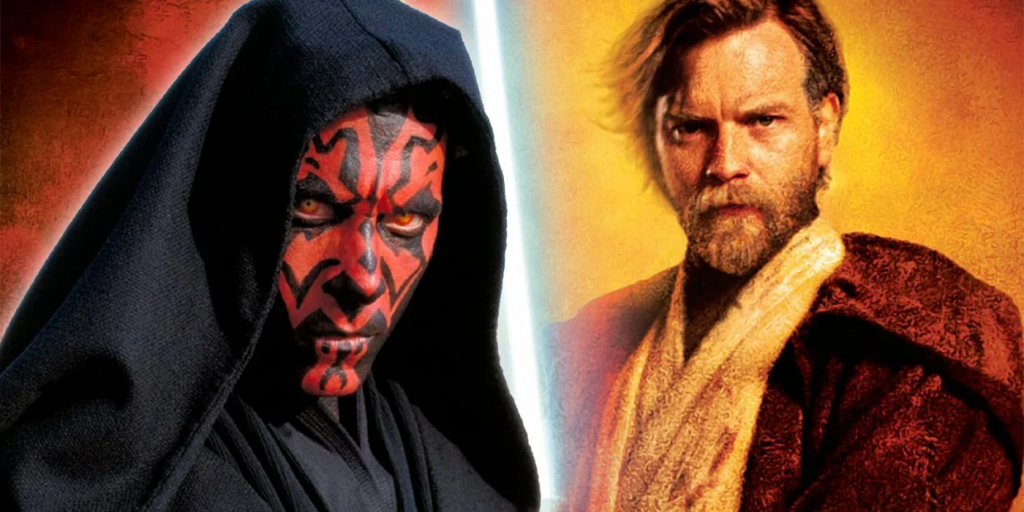
There also comes Obi-Wan’s worst nightmare coming back to life in the form of Darth Maul. The one man that represents Obi-Wan’s potential pull towards the dark side. That pure evil that was somehow able to survive being cut in half in The Phantom Menace but is now back and possibly even more dangerous than ever. I won’t get into all the actions that Darth Maul commences to make Obi-Wan snap but the one moment that sticks out is the two’s first confrontation since their one in Naboo. Obi-Wan is clearly overwhelmed by Maul and his apprentice and it’s the one moment that Maul brings up the death of Qui-Gon along with Obi-Wan’s clearly emotional reaction to it. Obi-Wan breaks and tries to end the fight with Maul but gets kicked to the side as he is clearly unfocused. It’s then that Maul speaks of these important lines, “Your rage has unbalanced you! That is not the Jedi way, is it?!”

Start at 2:00 to watch the part I’m talking about.

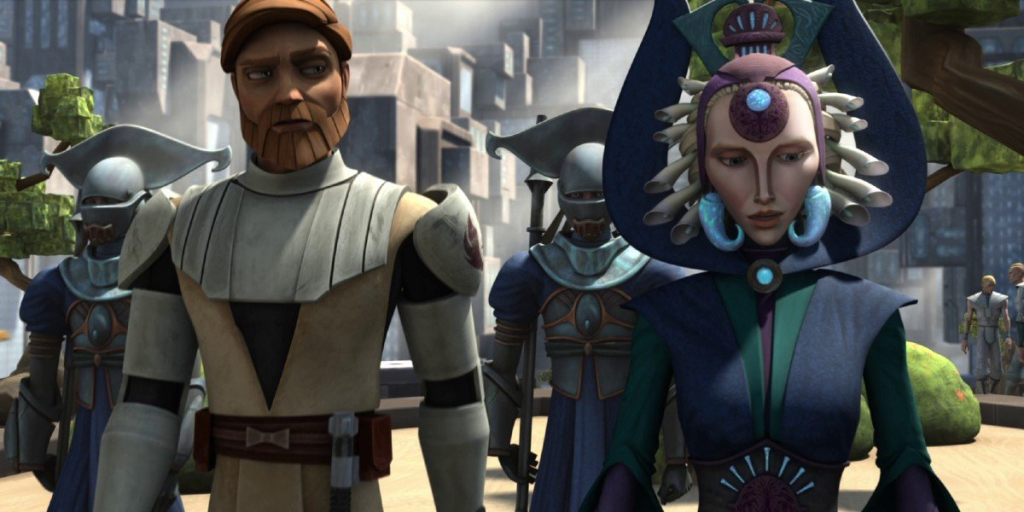
It’s that moment along with the events that transpires between him and Maul throughout the rest of Clone Wars into Rebels than even a Jedi has clearly noble as Obi-Wan Kenobi can be tested with what it means to be a Jedi. Obi-Wan is definitely the most noble Jedi of the three that I’m discussing for this piece. However, just because he’s noble doesn’t mean he has to blindly agree with everything he stands for. He’s just good at hiding it.

Ahsoka Tano

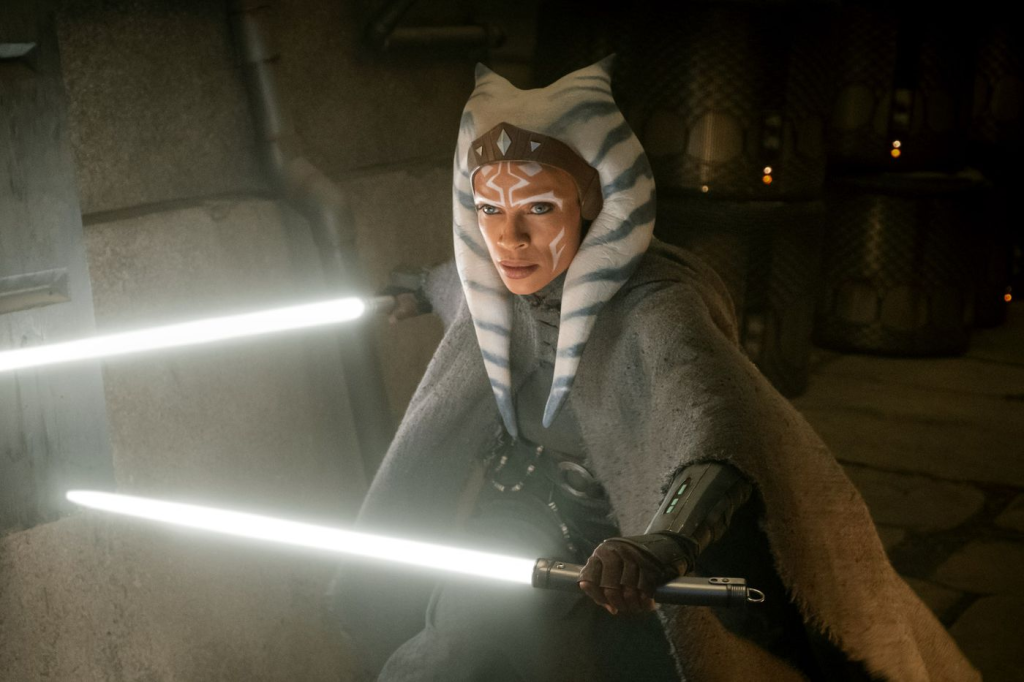
Now, here we go with the character that despite making no appearance in the three movies and not even referenced, is arguably the most important character in the prequel era. While George Lucas clearly intended for the prequels to be strictly about Anakin Skywalker and his turns towards the dark side, Ahsoka’s story is also one that greatly resembles that one. However, the only difference is that Ahsoka’s growth is not strictly to turn to the dark side after first joining the light but to reject both sides.

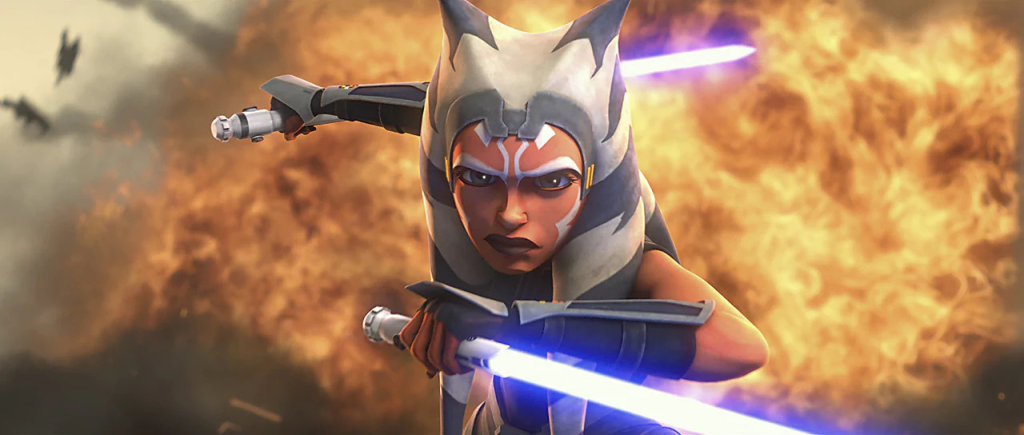
When we first see Ahsoka at the beginning of the Clone Wars feature film, she basically resembles Anakin as a young kid. She’s energetic, hopeful, and optimistic with what she can be as a Jedi and is hoping to seek thrills and exciting adventures for what is to come. As the series go on, Ahsoka learns to be more mature and responsible as a Jedi Knight. While she still has that snippy attitude and will crack a one-liner or two, she soon starts to realize that war is not all fun in games and lead to dire consequences if she is not careful. She slowly starts to take her first steps as not just a more mature adult but also seeing through the faults of the Jedi order.

A big question that many folks has always asked was how is it that Anakin’s personality and character seem to radically change in the Clone War series but not in Episode II or III? An obvious answer can be that Lucas and his crew clearly didn’t plan ahead to make the continuity more consistent in between the films and the series but a more honest answer would be Ahsoka herself. Regardless of whether or not it was planned from the beginning, it’s Ahsoka that represents the light in Anakin during his time in the Clone Wars. The kind of light that Anakin was missing during his earlier time with his master Obi-Wan at the beginning of the Clone Wars and the king of light that Anakin was most desperate for after his apprentice left.

That is a big reason as to why, despite not making an appearance in any of the films, there may not be a more important character in the story of Skywalker than Ahsoka Tano herself. Not just because her story can mirror the likes of both Luke and Anakin Skywalker respectively but she also represents the gray area of the force and the independent nature of it. When she walks away from the Jedi order at the end of Season 5, that wasn’t because she has now pledge alliance to the dark side, it’s because of how she has pledge her alliance to no one, not even herself. She no longer represents the Jedi and never represents the Sith, so who side can she be on? That is the question that Ahsoka most likely had ask herself after her departure from the Jedi, even when she kinda gave them an extra hand in the final few episodes of the series. Even though the films themselves have never fully committed to exploring the “middle-ness” of the force except for a handful of hints here and there, Ahsoka is a prime example of how sometimes there is not an easy answer as to what side of the force once wants to be fully committed. Both the light and dark sides have their strengths and weaknesses but also have their own rules and traditions that one must obey if they wish to become one or the other. At the end, Ahsoka simply refused to play either game. She may understand why others will but she can never do it herself.

True Intentions of the Jedi

When looking through the prequel era of Star Wars and how the Jedi are portrayed, one can’t mistake them for being very dumb and arrogant. They were all one-note, emotionless, unaware of the real world which they live in, and even couldn’t figure out the fact that the Palpatine, the main bad guy they had been looking for all along was hiding in plain sight the whole time. Because of that, it lead to their destruction and own extinction. They were able to let all of it slip through their fingers because of their refusal to evolve. At the same time, one can’t also mistake the fact that perhaps this was the intention all along.

Perhaps the Jedi being portrayed the way they were was what the Lucas was trying to do the whole time. He never saw the Jedi as being the perfect organization or one that audiences show grow up wanting to be, he saw it as an organization that is best to avoid or taking any inspirations from. He never saw the Jedi as being as much more out of the dark that the Sith were. Perhaps he was never trying to make the Jedi come across as the heroes of their own story. Perhaps he was actually trying to get across the fact that the Jedi….kinda suck.

When looking at it through those lenses, the prequel era can be best described as being about flaw traditions and religions and what happens when you stand by those beliefs without bother to question it or move on from them. Sometimes that can lead to evolution, other times it can lead to destruction. And there was now three characters throughout this era of Star Wars that seem to have an understanding of that than with the trio of Anakin Skywalker, Obi-Wan Kenobi, and Ahsoka Tano.

The Real Meaning of The Chosen One

One last thing to talk about when describing the inner conflict between the heroes vs protagonists narrative with the Jedi is what the true meaning of The Chosen One is suppose to be. The films themselves claim that this terms comes from a prophecy (which really doesn’t get explained or focused on) that refers to the one that will bring balance to the force by putting an end to the dark side and restore peace and justice to the galaxy. The Jedi order believes is to be Anakin Skywalker, strictly because of how high his mini-chlorians counts are and not much else.

Personally, I found the whole chosen one thing to be more of a metaphorical term than one that has any story meanings. Heck, even Anakin during The Clone Wars at one point claimed it was just a myth. However, when looking at it from a story perspective, this also ties back into the flaws of the Jedi. They were in that same stubborn mindset that some random boy was the supposed chosen one just because of a high blood count. They believe that Anakin was the one that have been looking for all along. They were willing to bet the farm on this young man because they believed he would be the chosen one just because. They were trying to hype him up into something he was just not or even was. Yet, what they believed turned out to be true….from a certain point of view.

Sure, in the end, Anakin Skywalker might have fulfilled his destiny by saving his son and destroying the Emperor (at least for the next 30+ years) but he didn’t quite do it from a heroic standpoint but from his own standpoint. He didn’t destroy the Emperor as a means of redemption or sacrifice, he did it because he liked his son a bit more than him. He wasn’t trying to be a hero, he was just trying to peserve his family name. This was both an act that could be described as both selfless AND selfish.

That might have exactly been the part of the prophecy that could have been misread as Yoda stated. Anakin might have been The Chosen One in the end but just because he was The Chosen One does not mean he had to be a hero.

In conclusion:

When viewing the prequels yet again, it’s hard to know get caught up in the complex nature of it. Whether you like it or not, it’s so vastly different and multilayered in every sense of the word, more so than any other forms of Star Wars media. However, one that does stand out the most for me is to whether or not the Jedi themselves can be described as heroes or even simply good guys. They’re not necessarily bad guys by any means but good guys might be a far stretch.

Throughout the prequel era, we slowly see the Jedi make mistake after mistake, compromise after comprise, that ultimately leads to their own downfall. It was being so strict and accustomed to their own standards and beliefs that blinded them as much that they thought it would make themselves immortal, when in actually just made them inhuman. It’s not exactly love or fear that leads to the dark side, it’s how the Jedi always seems to act and speak that it does. When the likes of Anakin, Obi-Wan or Ahsoka felt that, it wasn’t because they were turning evil, they were just being human. In the end, that is what the Jedi seemed to lack most in the end, humanity. Regardless if they stood out as the heroes or main characters of their own stories, the lack of humanity is what led to the end of the order until it didn’t. Guess that was the exact price that Rey, Ben, and company would have to pay over half a century later. The Jedi just can’t help but suck!

Next up: The Sequel Trilogy Perspective

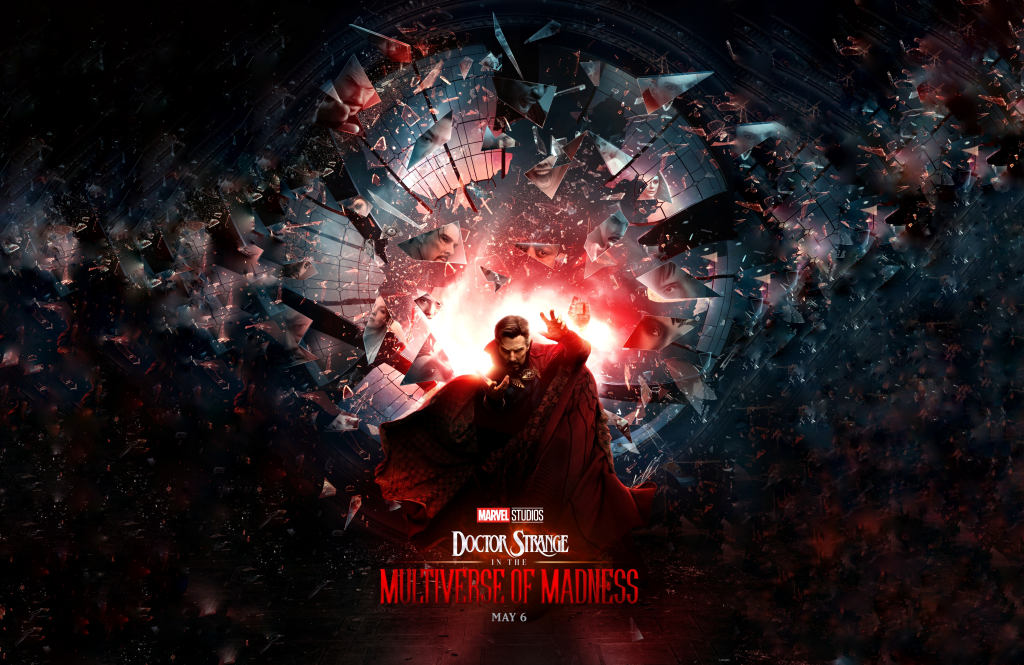
Doctor Strange In The Multiverse Of Madness (2022) Movie Review- Sam Raimi Works His Magic

Ain’t it kind of nuts how we are now FINALLY getting around to making a proper sequel to Doctor Strange, a MCU installment that came out literally five and a half years ago?! After all the time we have spent with this character in other, bigger, more busier Marvel movies such as Infinity War, Endgame, and No Way Home along with his welcome cameo in Thor: Ragnarok and that other welcome cameo with his good buddy Wong in Shang-Chi, we are at long last back to making a feature length entry based on this magical wizard character. Regardless how one felt about the original Doctor Strange (which I found just merely okay), it had set up the potential to be the set of MCU movies to give itself permission to be the most crazy, bizarre, and just plain “out there” kind of Marvel movies. Not just with the concept of the multiverse inevitably becoming much more expanded upon but also one that can make for some truly creative craftsmanship based off a character with whimsical, magical powers that could even out-Harry Potter Harry Potter (Take that J.K. Rowling!) In hindsight, the idea of a Doctor Strange sequel being exactly about that multiverse concept seemed like the most proper and best way to follow up the first one which not just puts the title character to the test than ever before but also the filmmakers as well.

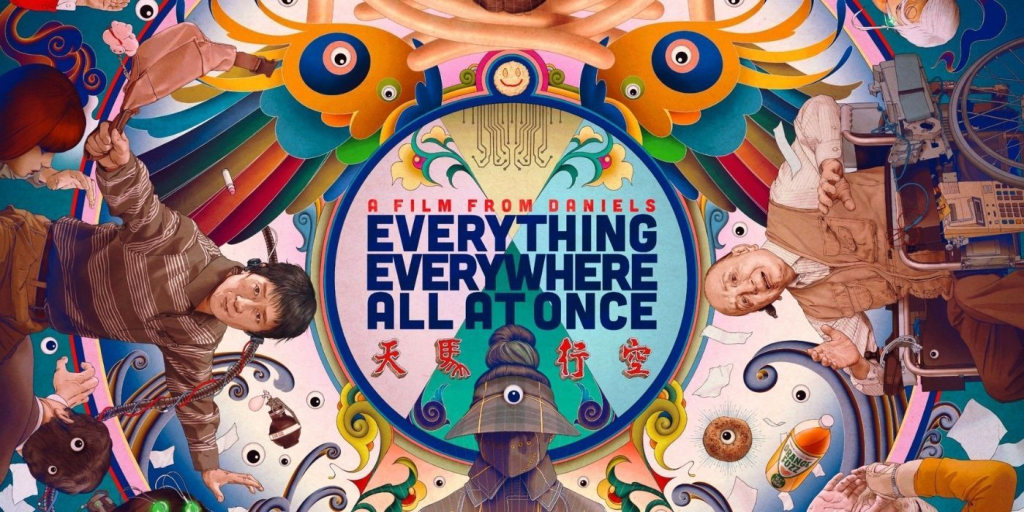
How are the end results! It’s mostly fine. I don’t know if I can say it was as good as I wanted it to be or that it’s true top-tier MCU but it does do the job as creating some truly unique action set pieces, mind blowing visuals and effective imagery, even if it doesn’t quite match the heights of more recent multiverse movies, like say Everything Everywhere All at Once or even Into the Spider-Verse.

Sam Raimi’s style and filmmaking that he most well known for is definitely on display here, it’s definitely the scariest and most gruesome of the MCU movies thus far, and it’s runtime of just little over two hours feels awfully refreshing for this kind of tentpole movies. What holds Multiverse of Madness back quite a bit is how one-note and paper thin the story can be despite a handful of interesting twists and ideas on paper along with the majority of characters being there for expositions and to sell action figures. It’s definitely a movie I would recommend seeing on the biggest and most beautiful screen possible for it’s set pieces and visuals but I can’t say it’s quite as emotionally engaging as some of the other, better Marvel movies are.

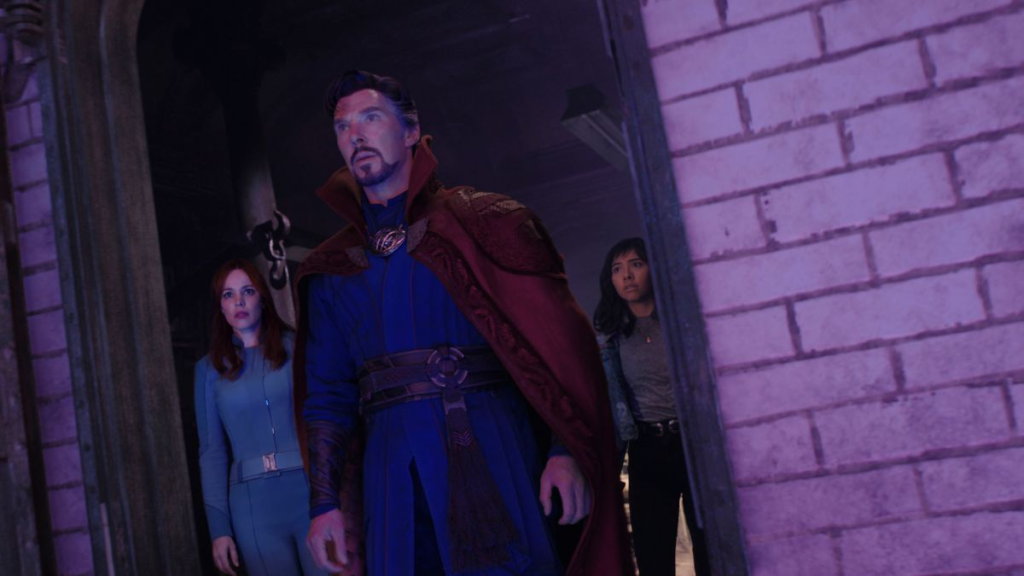
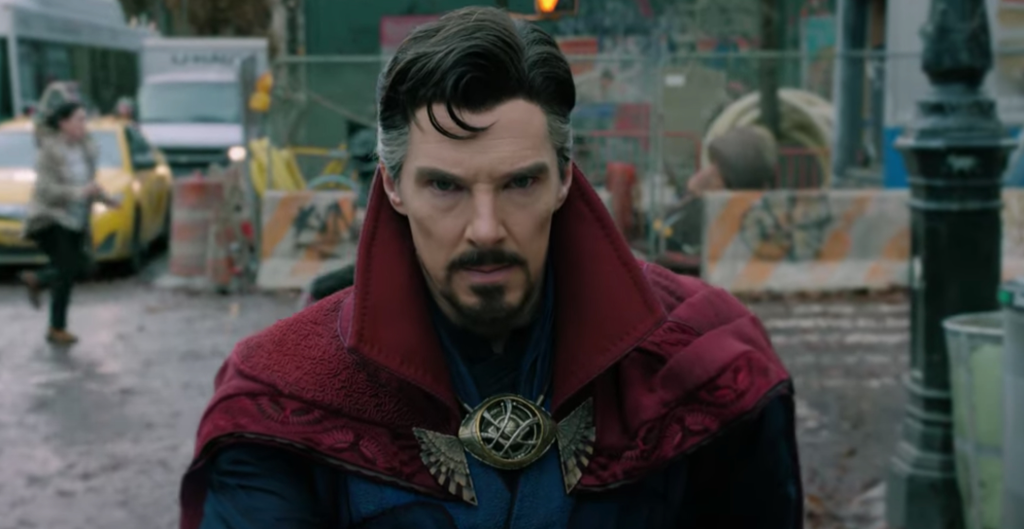
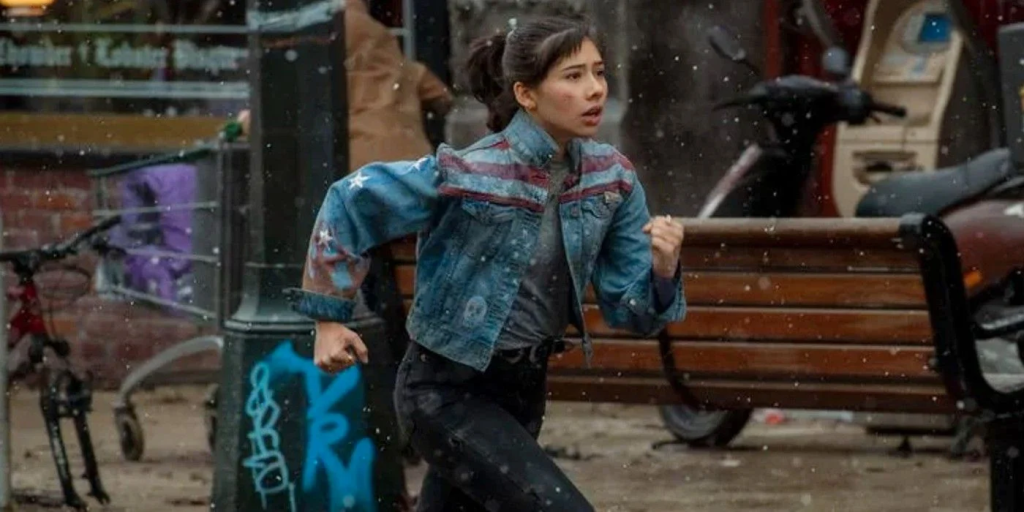
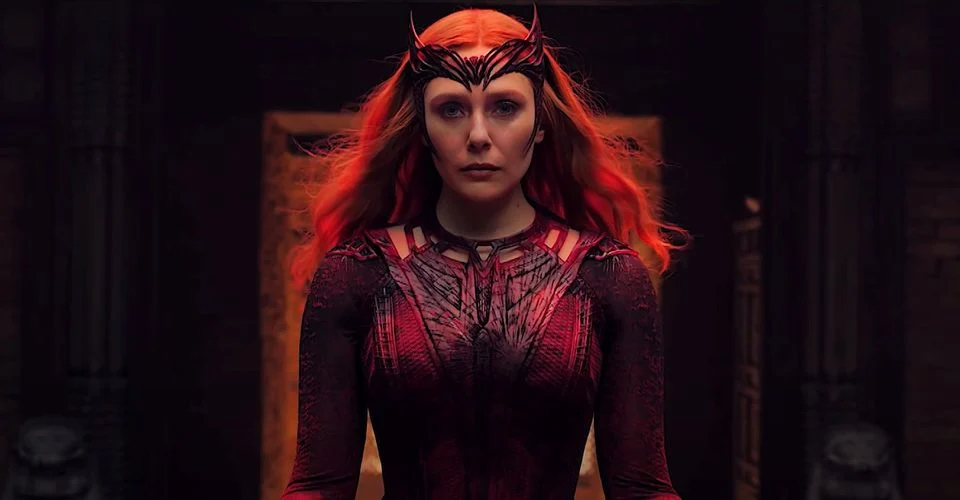
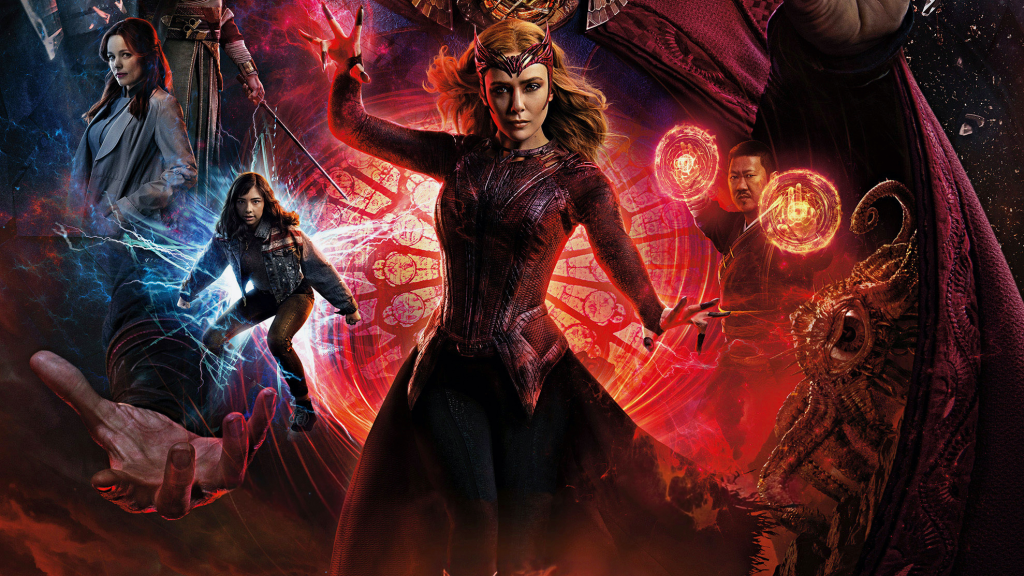
Premise: Taking place after the events of Wandavision and No Way Home, we see Stephen Strange (Benedict Cumberbatch) suffering from bad dreams involving an alternate version of himself and a young girl named America Chavez (Xochiti Gomez) as he perhaps for a wedding involving his former colleague, Christine Palmer (Rachel McAdams), a woman who Stephen loves but his duty as Doctor Strange kept him in the way of being with her. During the wedding, Stephen encounters a big octopus-like creature that is trying to kill America and is able to stop it with the help of his sidekick, Wong (Benedict Wong). Stephen meets America and realizes that those dreams he had were not actually dreams but was him in another universe where he inevitably died. America explains to strange that demons like that octopus-like creature are hunting after her because of her ability to be able to travel through the multiverse. Needing more help and guidance to the multiverse, Stephen goes to Wanda Maximoff, A.K.A. the Scarlet Witch (Elizabeth Olsen) to consult her about this alternate universe matters but realizes that she may know a thing or two about those demons and may be even responsible for sending those demons after America. The chase is then on with Stephen and Wong needing to protect America before the monsters can get to her and Wanda hopes to unlock the power of the multiverse to insert herself into a suppose timeline where she is living happily with her possibly imaginary kids.

Most of this synopsis doesn’t go past the first third of the movie which is impressive despite the film’s shorter length than one might expect with a big movie like this. The big question that everyone is wondering is if you need to have watch Wandavision to understand what’s going on here? The answer is both yes and no! Yes, you are likely to be more engaged and traumatized with Wanda’s journey throughout the picture along with being able to keep track of the amount of progression to her tragic character. However, as long as you know that she once lived in her own fantasy where she is living the life of a simple mother and made some dire actions to make that fantasy her own reality, you should be good to go as long as you have seen Infinity War and Endgame. Just read a quick plot summary or a recap video just to be safe.

The weird thing is though is despite all of the talk and speculations about the story turns, bold choices, and the amount of easter eggs/cameos/fan services/etc., going into Multiverse of Madness, there really isn’t much to the overall plot of the movie. There’s a girl with a special power that others wants and Doctor Strange and crew need to protect her from the enemies. It really doesn’t amount to much more than that. Which is a shame because there’s a chance to expand the multiverse in many ways in not just through a filmmaking sense but also as a character study. Unfortunately, with the exception of Wanda, the movie doesn’t seem really interested in exploring that. Sure, there have been plenty of MCU movies that have had simplistic plots but they are at least usually carried by the amount of character work and progression in their development. That something that Multiverse of Madness tends to lack more so than most of the MCU installments.

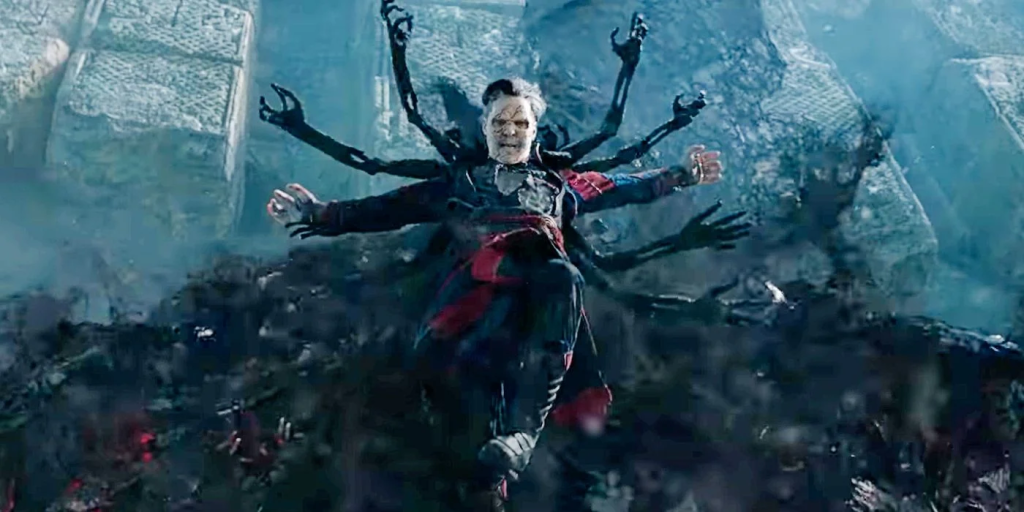
Stephen Strange does face plenty of challenges throughout the picture and even sees deadlier version of himself which is supposed to resembled his darker side but there’s hardly much time focused on how exactly that affects him from a psychological point of view and himself as a hero. Instead, most of it is spend on trying to protect America from the bad people and being grumpy over his former lover/partner Christine moving on to someone else. Which is quite a problem considering we have never actually seen the two as a proper couple in either one of these movies but are just simply told they were once in love with one another. With the exception of one flashback scene in the middle of the movie, I would never have guessed that Stephen had such strong feelings from Christine and that he actually viewed her more than just a colleague from work. He still gets plenty of awesome scenes to himself and his powers but not much more than just some awesome spectacle.

Another issue with characterization lies with America Chavez herself. She has a likable presence but there isn’t much depth to her character and comes across more as a plot device than an actual character. We’re not giving much reason as to why we should care for her aside from the fact that she has a special power that the villains want and want to kill her because of it. Whenever she is giving a chance to show off her special abilities, it’s cool to see but lacks much emotional payoff to it because we aren’t giving a compelling reason to root for her. At times, she does represent the closest that Stephen has had to his own student and even daughter but there’s not much focus on those particular aspects to make that the case.

The best character in the movie and the one that gets the most development is Wanda Maximoff herself, played wonderfully by Elizabeth Olsen, as she fully commits to be the version of herself that is the Scarlet Witch. In some respects, this movie kinda feels like the full culmination and payoff to her character that begun in 2015 with Age of Ultron. We have seen Wanda define herself as a hero, villain, along with being a pure anti-hero. Whether it’s her time with her brother and Hydra, the Avengers, Vision, and in Westview, we gett to see Wanda’s full story come full circler her. With Wandavision and now this movie, we now see her in her final form as Scarlet Witch. While the idea of a woman trying to delude herself into thinking she’s an actual mother and turning herself into a Terminator can comes across as unintentional funny and even misogynist, it’s executed in a way that makes it blend well with the horror-like tone the movie is going for and a study on a character who has lost everything but is still trying to do everything in her power to get it all back. Wanda is arguably the best, interesting, and most compelling female character in the entire MCU and her arc is one of the most fascinating and heartbreaking that any characters has had to face. Despite a pretty rushed resolution to the way her story concludes at the end of the movie along with feeling more as a sequel to Infinity War and Endgame as oppose to Wandavision, her character was definitely the best one to follow in the whole movie and is the one that is actually given a proper arc. I don’t know what exactly the future holds for this character but she will undeniably go down as an absolute fan favorite when all is said and done.

However, for those that are not looking strictly for an emotional experience or a new take on the concept of the multiverse should be satisfied with the amount of exhilarating sequences and eye candy the film constantly throws at you. This is Sam Raimi’s first time in the director’s chair in nearly a decade and man is it good to have him back. While it sets itself up as being a typical Marvel movie made by community in the first half hour, once things start to get going, we truly see Raimi’s filmmaking right on the big screen. A nice mix between the horror elements from the likes of The Evil Dead, Army of Darkeness, and even Drag Me to Hell along with the camp value of his original Spider-Man movies make Raimi feel completely at home.

Despite the amount of CGI being quite obvious, most of it is at least used to creative some of the most insane imagery in the history of the MCU and makes this feel perfectly like a multiverse kind of movie. The action, while not the best I’ve seen with Marvel or for a multiverse movie, still gets the job done with the standout scenes being the ones take takes place in Kamar-Taj, with the Illumanti, and one which Doctor Strange is fighting an alternate version of himself.

As for the rest of the production design, it’s definitely put to good use. The cinematography by John Mathieson is a standout, the editing by Bob Murawski and Tia Nolan does fit properly with Raimi’s skillset, and Danny Elfman’s score is one that feels both odd yet fitting at the same time. It’s also quite nuts to see a Marvel movie with amount of blood, carnage, and massacre for what is suppose to be a movie done by the Walt Disney company. It’s hardly R-rated stuff don’t get me wrong but the people behind the makeup and costume design deserve major props.

As for the cast, Benedict Cumberbatch, Benedict Wong, Chiwetel Ejiofor, and Rachael McAdams all contribute to her roles as admirably as before despite some of the lacking the material that they are given to work with. Xochiti Gomez is fun and filled with energy as America Chavez which definitely makes for someone that film buffs will likely want to follow throughout the coming years. Unsurprisingly, it’s Elizabeth Olsen is one that is the big stand out. She is clearly 100% committed to the role and absolutely chews all the scenery each chance that she gets. When watching her performance in the movie, I kinda got the sense that this is a version of the character that Olsen has been waiting to play for years and she is able to deliver her finest importance yet as this character.

Also, for all the talks about the cameos in this movie, there are definitely some notable ones but they are not as reliant on them as one might expect. Some of the rumors surrounding the cameos and the casting are true, others are not. I don’t exactly know what your expectations might be for those suppose cameos but just know that it’s not necessarily the point of the actual movie. If anything, my favorite cameo in the movie was the one with Bruce Campbell (And no! That’s not a spoiler! It’s not a Sam Raimi movie without a cameo of Bruce Campbell in some way, shape, or form. That would be like saying that Stan Lee made a cameo in one of the movies of the Infinity Saga.)

In the end, I’m not sure how exactly the fans and audiences are going to react to this one compare to other Marvel movies. It’s lacks in the characterization department and as more of an expansion of the multiverse compare to other movies out there. Plus, I don’t think certain people are gonna react so kindly to certain decisions made by certain characters. However, the set pieces, visuals, and Elizabeth Olsen’s show stealing performance is just enough to make this one worthwhile. It may have not been the Doctor Strange sequel I wanted but it’s perhaps the one that I needed. Or at least, the one that I needed to see Sam Raimi back to working his magic.

In that case, it’s good to see you again, old friend!

Other comments:

  • There are two post credit scenes, one in the middle and one at the very end. Personally, I like the one at the end more than the one in the middle but it’s great to see for the middle one, that Marvel was finally able to get that actor/actress into the MCU. Part of me, still does kind of wish they could have took the role of another certain big character.

  • This is probably the first MCU movie where I’m not sure I can say it’s suited for kids. There wasn’t any really young children in my screening but this is a bit more scary, bloody, and gruesome than most of the other Marvel movies. It’s still strictly PG-13 but just a little warning to the parents that are wanting to take their kids this weekend to see this movie.

  • I can’t be the only one that caught that 2003 Detroit Tigers reference, right? Ironic since there hasn’t been discussions recently about that team among baseball fans after the Cincinnati Reds horrendous 3-22 start to the season. I’m pretty sure I was the only one in the theater that understood that reference.

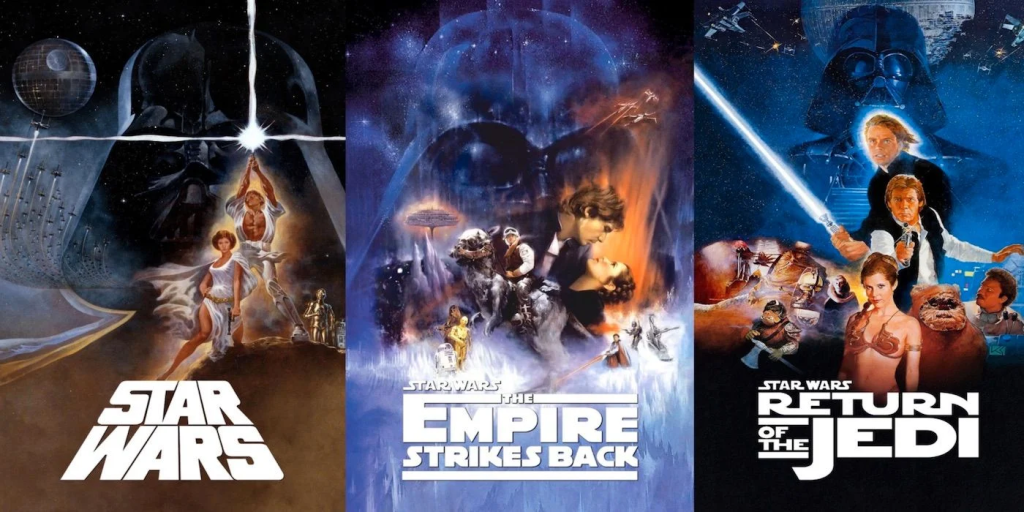
Star Wars: The Original Trilogy- Redefining Film Structure

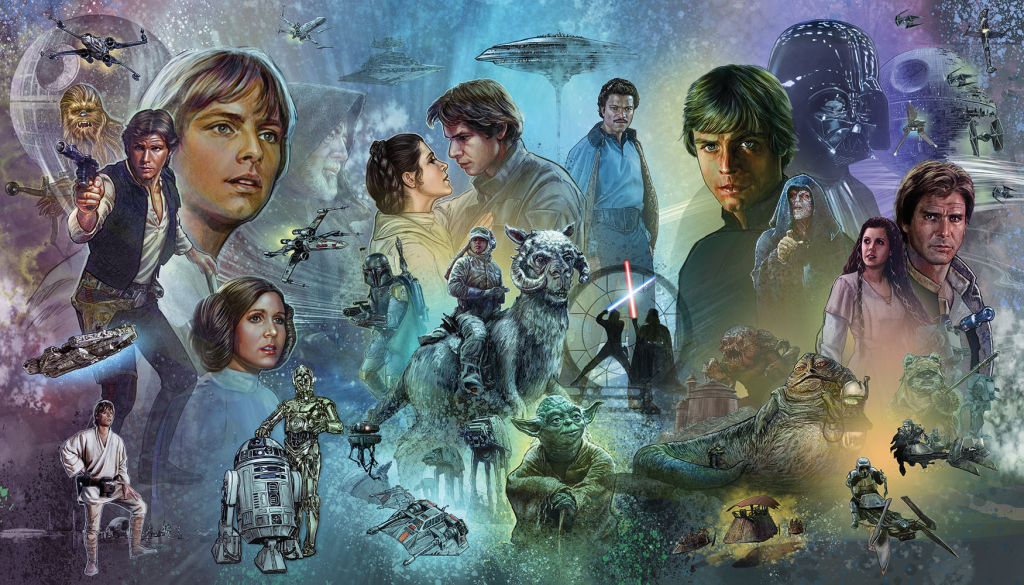
When one talks about the original Star Wars trilogy and what is it that makes those movies as magical and impactful on cinema as they are, you mostly tend to get the same kind of answers from everyone. The intriguing story, the memorable characters, the exciting action, the unique world building, and just the pure idea of Star Wars that is absolutely fascinating in it’s own right. It’s a universe that has always had endless amount of potential for creators and filmmakers to do whatever the hell they want with it with plenty of creativity and excitement added that you won’t get from any other big franchise out there. Because of how popular Star Wars has been since the original aired back in 1977, plenty of studios have tried to implement the kind of style and formula that the first three films (at least in terms of the Skywalker Saga) introduced to everyone on the big screen. Some have succeeded where others have failed but no doubt, Star Wars has become the gold standard for these kind of big tentpole blockbusters for nearly half a century now.

In the case of the Star Wars trilogy that started the whole 40+ year long ride for the franchise, what many folks have tend to studied religiously with these three unforgettable films is how to not just properly structure a film but how to properly structure a trilogy in of itself. The answer to that can be quite tricky as it’s not always clear which decisions with each film was decided years in advantage and which decisions were made as the process went along. As much as George Lucas and many folks out there like to deny it, the original trilogy was NOT something that was planned all the way from the very beginning. Sure, there was always an endgame in mind as to where this would all lead to but there’s no way anyone can make the case that Lucas had planned every major important story beat in advantage years before he rolled the camera for A New Hope. No, Lucas didn’t originally plan to have Luke and Leia being siblings and had the two making out a couple of times before they both found out that dark secret. Heck, Lucas didn’t even have the idea of Darth Vader being Luke’s father in mind until midway through production of The Empire Strikes Back (Seriously, go look that up!). The trick is not to have a plan years in advantage before picking up the cameras but have an idea of where your story will go and the importance that each individual installment will have to it leading up to the conclusion. The trick is to act as if you had everything planned from the get go when you really did not.

There has always been rumors that George Lucas originally planned to have the original Star Wars trilogy as being just one big movie. A New Hope would serve as the first act, Empire Strikes Back would be the second act, and Return of the Jedi would be the third act. That never came to pass because of how massive that movie would be and it would all be just too much for one feature film. I can’t say for certain if that supposed rumor is true but I could definitely see how that could be a possibility when re-watching all three of these films yet again. I could actually see this has being one gigantic blockbuster as these moves aren’t paced and structure like your typical big movie. They all have their own rules in mind as to how each one of these will be paced, edited, and structure down to it’s very core. These are the kind of movies that have helped redefine film structure.

As a result of the accomplishments of this trilogy, let’s take a look at all three of these movies and see how exactly each one succeeds in that.

A New Hope- The First Act Of A New Beginning

Now, A New Hope is probably the one movie within the trilogy that is the most self-contained and stands the best on it’s own merits. Unlike with the two sequels that came after this one which are heavily reliant on each other’s own existence for it to be a satisfying whole, this one works at it’s own thing and doesn’t really need any other movie to make it feel 100% complete. Sure, there are some loose ends when it’s over along with some unanswered questions but it isn’t as reliant for answers of those questions as most first entries usually are and doesn’t leave those non-answers hanging on the ceiling for it’s existence to be justified. However, it can still be easy to mistake A New Hope (Yes, I’m gonna keep calling it that! Deal with it!) as being a giant first act of a larger story.

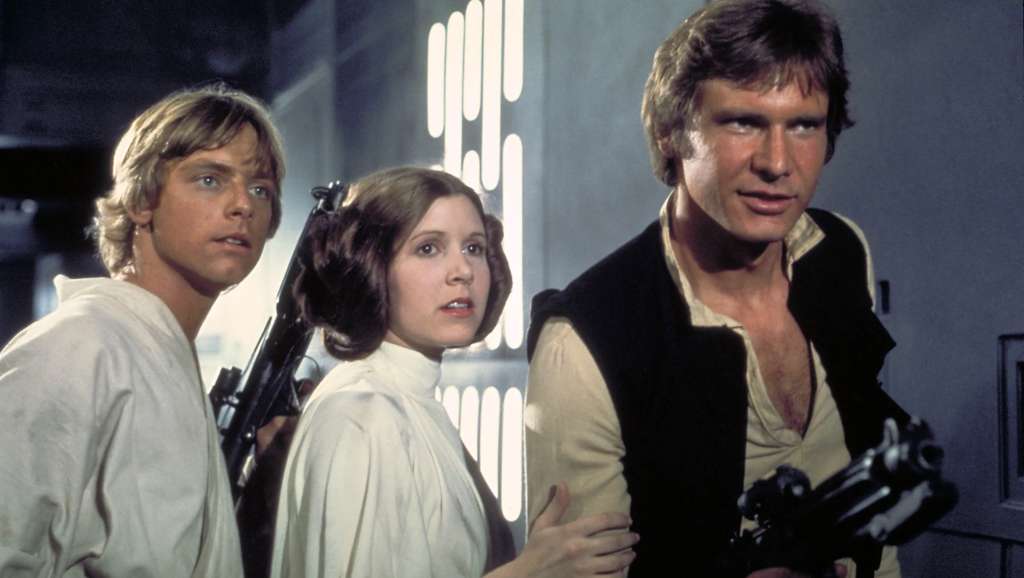
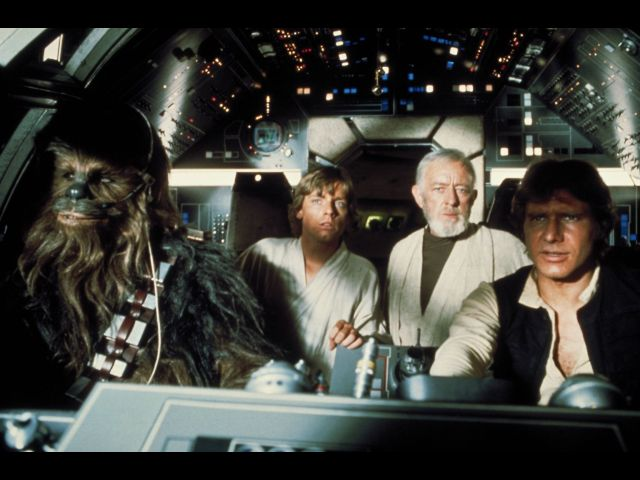
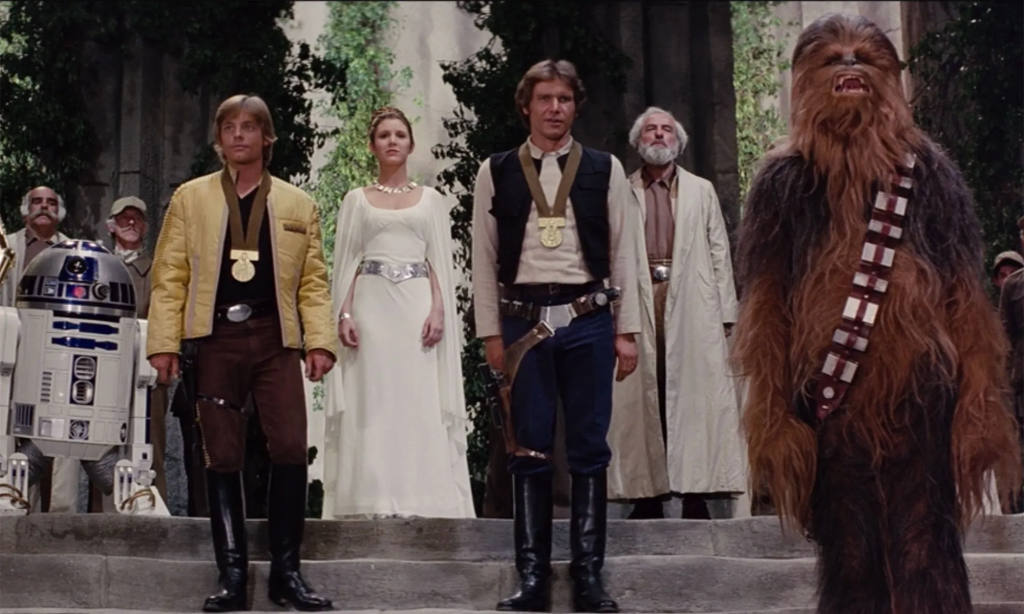
Make no mistake, A New Hope does in fact have a clear beginning, middle, and end. We have a local farm boy named Luke Skywalker, who is tired of laying around his own home with his aunt and uncle and wants to join in on the action with his best friends who had already gone. It’s then he runs into an old mentor-like figure named Ben Kenobi, two robots named C-3P0 and R2-D2, and a hotheaded smuggler named Han Solo along with his partner Chewbacca who finds themselves getting involved in the galactic war with the Rebel Alliance against the Empire. They find themselves in the middle of a mess where they have to rescue a Princess named Leia, escape a giant space system called the Death Star which has the ability to destroy an entire planet led by the evil Darth Vader, and find a way to destroy that Death Star before the Rebellion is eliminated from the galaxy once and for all. It’s a complete story that even if no other movies came after this, it would still work strongly as it’s own thing. Even so, it’s still able to pull off being the first chapter of a tale better than most first entries out there.

Despite ending on a high note, there are still some questions that don’t quite get answered by the end of the movie. Who exactly is Darth Vader and how did he come become the way he is now? What exactly does it mean to be a Jedi? What’s the difference between the good side of the force and the bad side of it? How big is the Empire exactly and how does the destruction of the Death Star affect them? Who is the Emperor that the film refers to? What are the politics behind this whole thing? Does Han Solo and Chewbacca join the Alliance at the very end? Does Luke actually turn into a Jedi at the very end despite not engaging in any lightsaber combat? Does the victory for the Rebels turn any tide or is this just one battle win in a war that is far from over? These are questions that I have no doubt that many folks who watched this movie for the first time probably had in their head.

With most movie discourse nowadays taking place in the form of Cinema Sins style critique, you can sometimes get the sense that filmmakers try to do everything in their power to have these kind of questions answered in some sort to prevent any criticism of the movie having “loose ends” or “plotholes” and such. It’s that kind of mindset that I think is what leads to many big movies nowadays being nearly two and a half hours long as opposite to just right around two hours like this movie is. A New Hope is able to avoid that because the movie itself doesn’t lend hard on any of these sort of questions. Instead, it let these sort of questions move to the side in the rear view mirror and focuses on it’s own story that it’s trying to tell. It helps open the doors for all the glorious possibilities that this franchise can be from the first movie on but it doesn’t demand itself to have all of them close by the end of the picture.

A New Hope works at being the first third of a story because it functions as it’s own picture while leaving clues and hints of a large universe within the one that this movie is set in. It’s the kind of questions that it leaves hanging are ones that don’t necessarily leave audiences baffled but intrigued. Not just because audience’s mindset was quite different back then than it is now but these are the kind of questions that will make audience want to see another movie like this. It’s the kind of questions that gives both the filmmakers and audiences ideas of what a franchise like Star Wars can be for it’s future. There’s any old saying called “less is more”. You won’t find yourself seeing many movies out there that understands that exact definition more so than A New Hope.

The Empire Strikes Back- The Dark Middle Chapter

Whenever one tries to explain the plot of The Empire Strikes Back, it doesn’t usually end with satisfying results. It’s always quite difficult to explain the plot of this particular movie in a way that makes the movie look good. That’s because Empire doesn’t follow that same traditional structure the way most movies did back then and even now. I know I said I wouldn’t bring up the fan/audience reception to movies when I announced this marathon but I think it’s important in this case to bring it up.

A big reason why most people were caught off guard about this film back in 1980 was because of a complete different beast this was to most sequels or movies out there. Not just because that it didn’t follow the same beats as the original Star Wars but because it didn’t follow the same plot structure of it either. There was no other film quite like it at the time which is why it led to more mixed reviews than it’s predecessor. And that would also explain why the film that came after this one was more positively received and even considered a return to form. The whole movie basically feels like one giant middle, with not much of a beginning or end to it. But, that’s why it works!

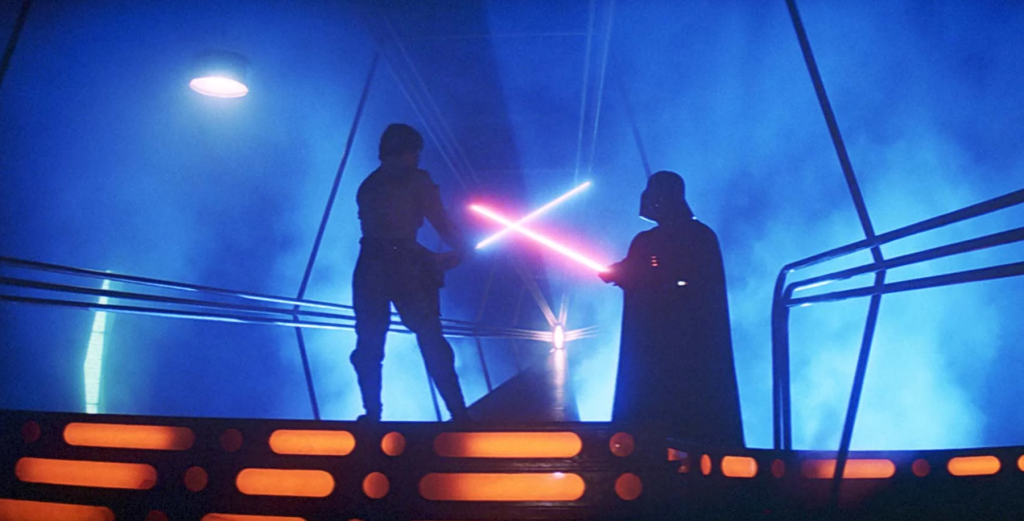
To be sure, The Empire Strikes Back is a movie that basically breaks the traditional rules of screenwriting and story structure. There’s no simple three act structure, no true starting point or ending point, no real arcs that the characters go through, none of the main heroes basically accomplish anything, and no one really dies by the end of it. Those are all facts that can’t be denied! However, just because there are certain rules with the way stories are made doesn’t mean you always have to follow them. Rules are like contracts, they are made broken, just as long as you know WHY you are breaking them and WHAT rules that you are breaking. Sometimes breaking rules can be justified if it makes your overall work better in hindsight.

Another element that people always point out with this movie is how “dark” it is. However, I think that dark always tends to be a misused term. A movie being dark always tends to be mistaken for a movie trying to be “serious” and “edgy”. A movie describes as being dark nowadays tries to refer to movies as being for “adults” and definitely “not for kids” but that’s not how it’s suppose to be. The key trick is not trying to be “dark”, the key trick is trying to be “mature”.

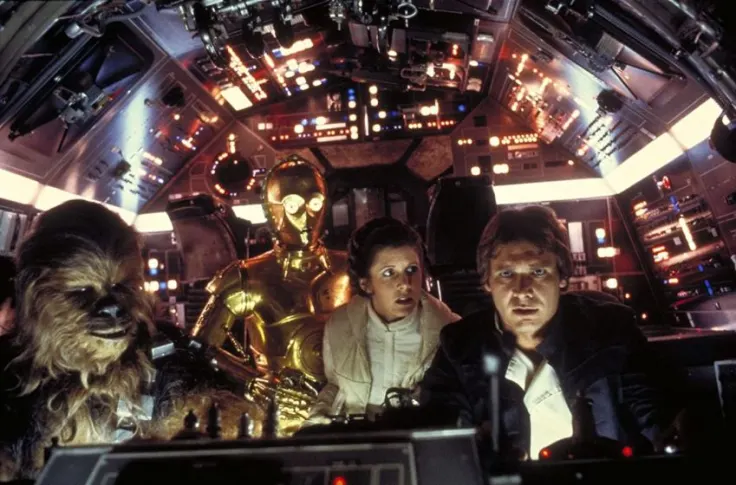
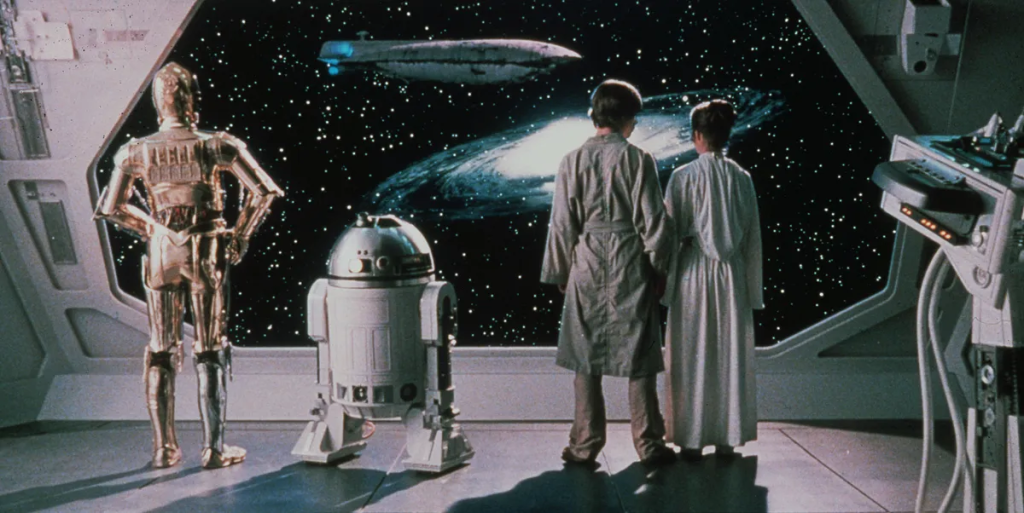
Empire is a movie that is undoubtedly the most mature of the trilogy because it’s smart to know why it makes the decisions that it does. It’s know why it’s breaking the rules that it does and even contradicts certain things from the original (like Obi-Wan blatantly lying to Luke about Darth Vader being his father) to make this movie stand out more. It’s understands it’s own intentions to split the main cast throughout the majority of the movie if that can helps the audience learn more about them and who they are. It’s unafraid to put Luke, Han, Leia, and Chewbacca in constant peril and even actively punish him if that can help raise the personal stakes and help further the development of them. It has the balls to purposely not kill anyone (despite Han’s faith being in the air) because by the end of it, the fact they survived doesn’t matter, what matters is how permanently scarred they have become for what has transpired.

Middle chapters of trilogies are always tricky to pull off. The main reason being is that it’s hard to establish the correct stakes and create an interesting enough journey for the characters that we mostly, deep down know can’t truly die in this installment. After all, how can there be a third movie in a trilogy if most of the cast in the movie don’t live on to fight enough day. However, The Empire Strikes Back is able to pull it off arguably better than any other Part Two out there. It gets the conflicts it puts the character go through, the stakes it establishes, and even doesn’t bother to properly wrap up the story in a satisfying little bow. The Empire Strikes Back works because it’s know it’s not the beginning or ending of a story, but only the middle of it. And it’s also an acknowledgement that sometimes the middle chapter of someone’s story can not only be the most important part of it but also the most interesting or even tragic.

Return of the Jedi- The Bittersweet Third Act

If Empire Strikes Back was the one that most justified itself as being firmly the middle of the story, then Return of the Jedi is no doubt the one that justifies itself as being the end of the story.

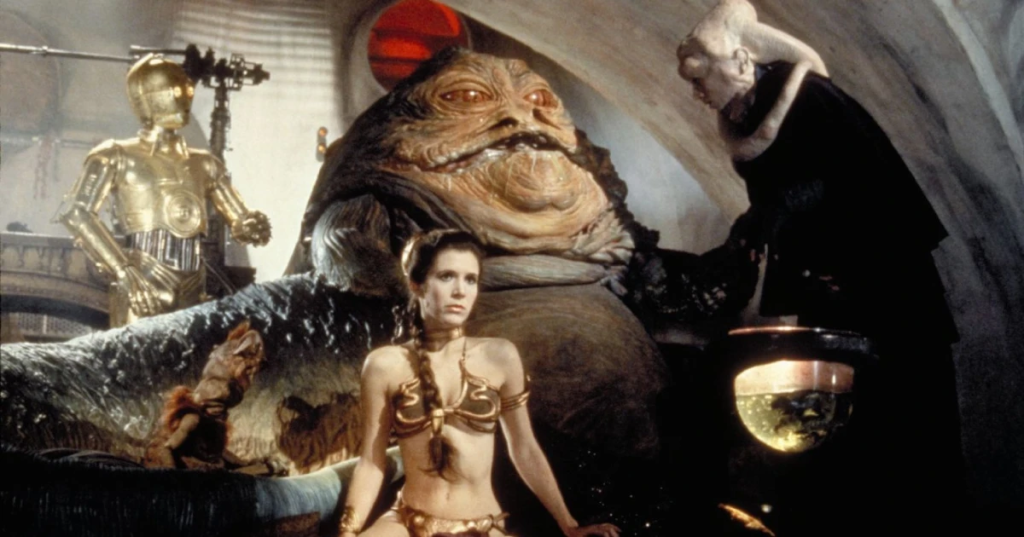
When you get right down to it, Jedi feels nothing more like an extensive third act. It’s only real true purpose of existence is to tie up the loose ends that the previous film left off and provide a conclusion to the characters that have carried all three of these films. There’s not much of an actual plot to it. The crew has to rescue Han Solo and joined the Rebels to destroy the second Death Star and finish off the Empire once and for all. That’s pretty much it. Sure, there are some teddy bears thrown into the mix and of course the superb confrontation between Luke, his father, and the Emperor but there really isn’t much more to the plot besides that. However, in this case, that’s all it needs to be.

The first third of Jedi is the one act that feels more like the end of a second act of a movie. Or in the case of Empire, an actual payoff to that supposed cliffhanger that movie left unresolved. It answered that one question that most folks had on their mind for three years after they saw Empire for the first time, can they save Han Solo and will he ever be the same again? The answer is of course, a very satisfying yes. The sequence does go on a bit longer than most prologues out there, mostly because it needs to be at least long enough to count as being the first act to the movie. Nevertheless, that first third only purpose is to wrap up a certain loose end so we can get the rest of the movie underway.

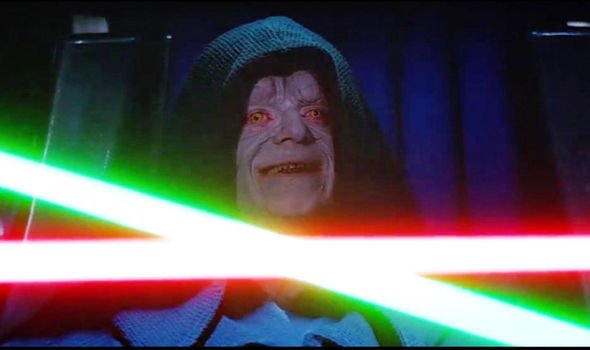
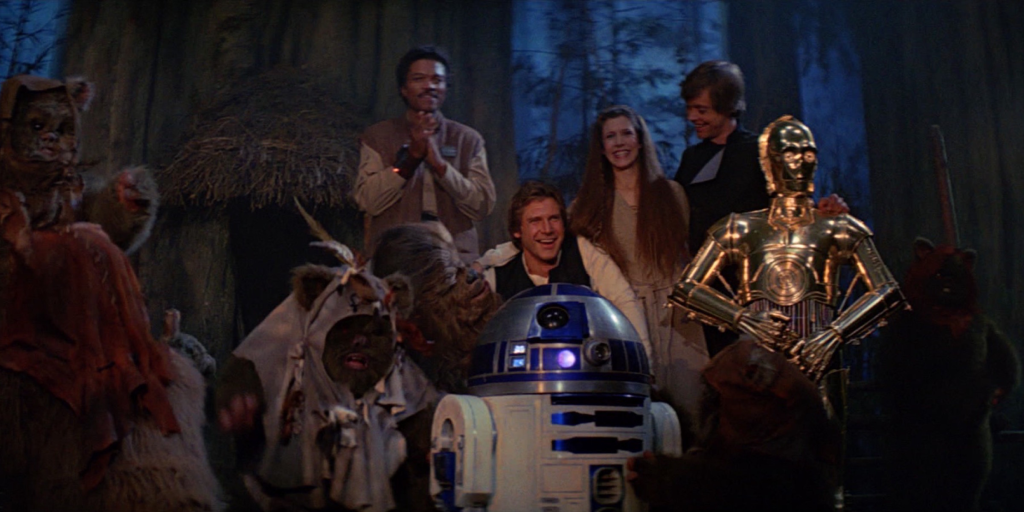
It’s then we get to the other two thirds of Jedi that basically plays as one giant climax with a few characters and plot elements thrown in to make it feel a bit longer. There’s a subplot where the crew has to shut down a shield generator in order to be able to properly destroy the Death Star this time, the Ewoks are introduced to make for a certain social commentary on nature vs technology, and there are multiple scenes of Luke confronting his father and his master as they duel for the future of the galaxy and most importantly, the force. Oh and also, Leia happens to be Luke’s sister. While there can definitely be a sense of certain elements being thrown in to pad the runtime, revisiting old ideas, and add some emotional weight, it mostly done in a pretty satisfying way that it ultimately doesn’t matter much.

The one thing that does matter in Return of the Jedi is that everything is resolved by the end of it. Sure, there might be a few questions when it’s over but it’s done in a completely open-minded way that it doesn’t matter if there ever was a continuation to this story. While Empire‘s clear cut goal was to provide a darker and intriguing middle chapter to the story, then Jedi‘s clear cut goal is to provide a more uplifting and satisfying end to the story. It may not deliver more than that but it does deliver exactly that. And sometimes that’s just enough.

In Conclusion:

There’s not many trilogies out there that can capture the lightning in a bottle that the original Star Wars movies provided. Whether that’s because how good they are, their intentions with each individual film, or even just the fact that they came out first before many others, it just is the way it is. With movies nowadays trying to be as big, massive, and throw in as much elements it can as possible, we often tend to forget that sometimes making a successful trilogy is just a simple as making it a solid beginning, middle, and end. Sure, you always want to design your film trilogy in a way that will stand the test of time, but you don’t have to try so hard to meet your certain goals. All you have to do is believe in yourself, what you are making, and how each film serves it’s own purpose and ties into the others. That’s what the original Star Wars trilogy was able to do by establishing it’s own set rules of screenwriting and film structure. It’s able to do that successful not in spite of going against traditions but works because of it. And that my friends, is the key to making a successful trilogy of films.

Oh, and of course, happy May the 4th!

Next up: The Prequel Trilogy

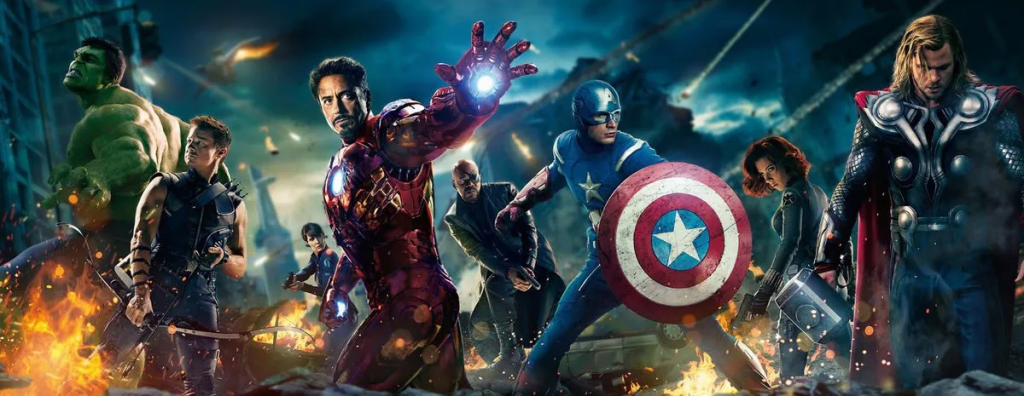
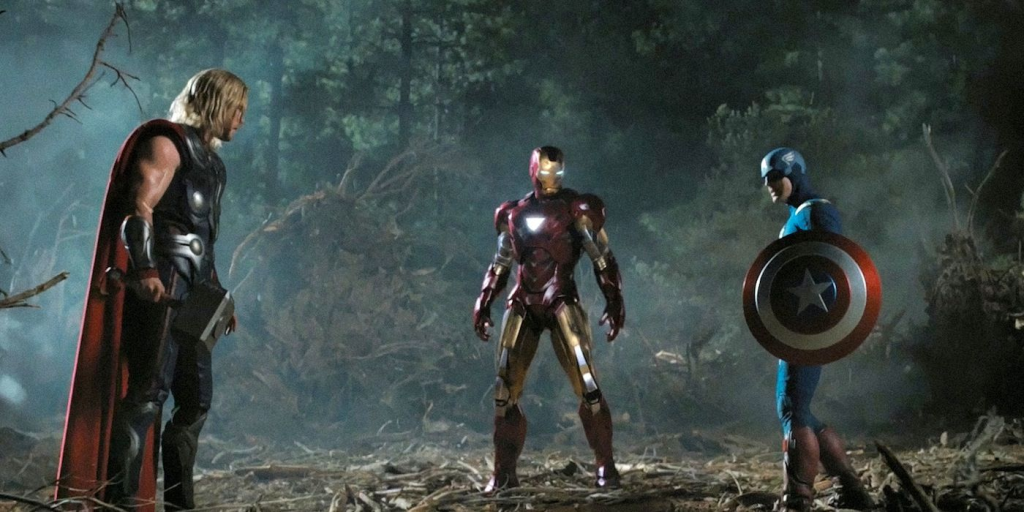
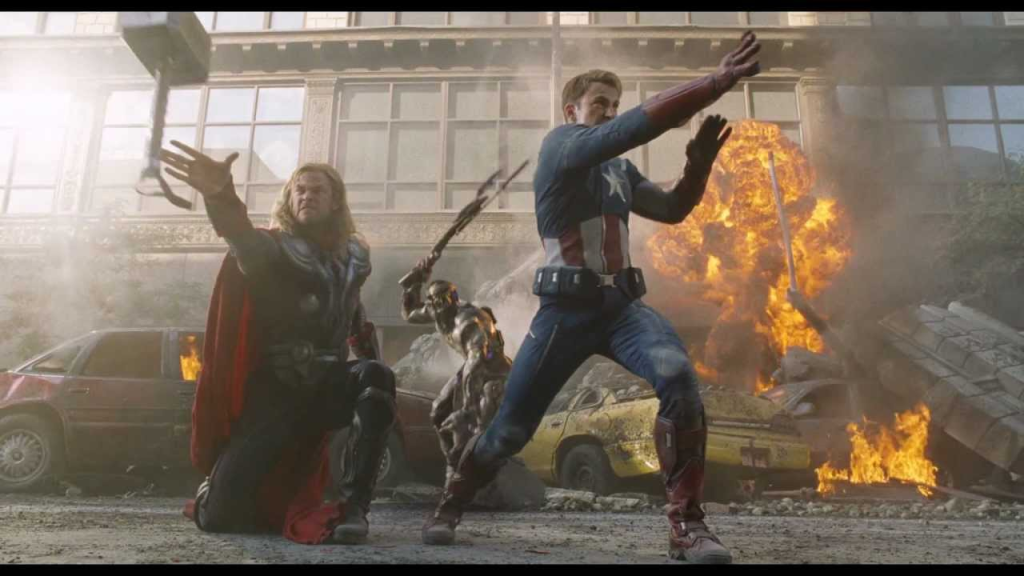
The Avengers (2012) Retrospective- 10 Years Later

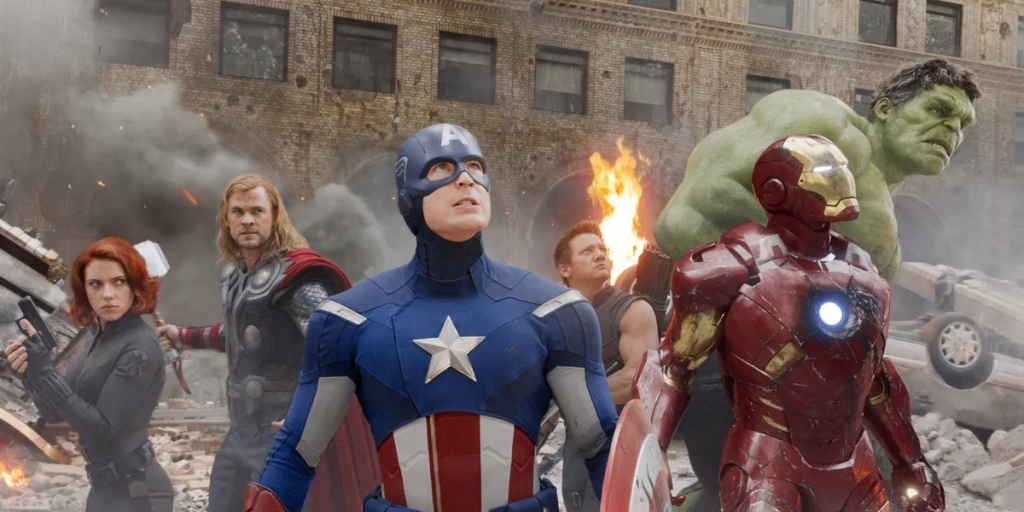
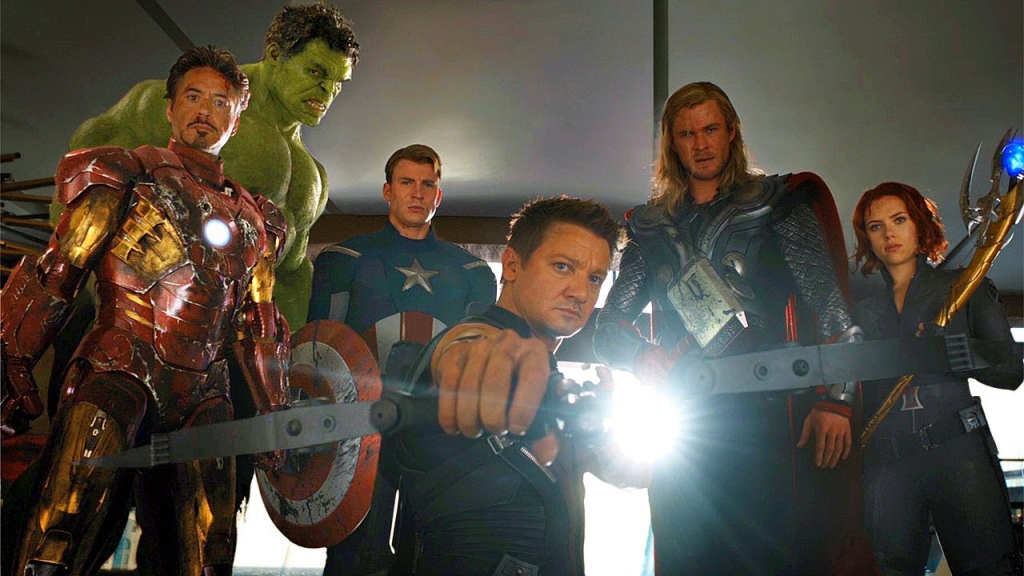
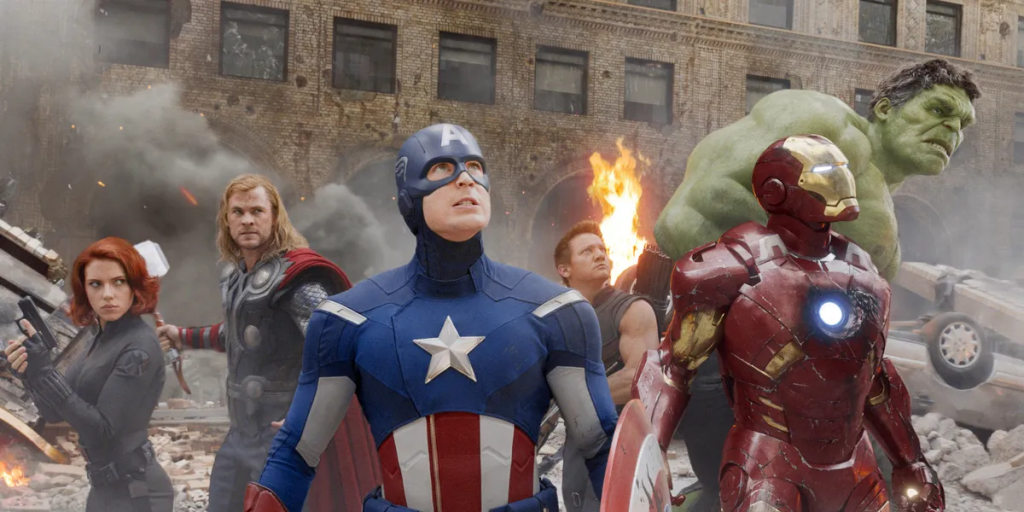
If there is one thing you learn most as you get older, it’s that time flies by quicker than you could say “Avengers….Assemble!” In the case of 2012’s The Avengers, how in God’s name has this thing turn 10 years old already?! Granted, today technically marks the release of the movie in the UK, whereas it didn’t come out in the US until May 4th (which is odd considering one of the Avengers is Captain America himself), but this was the day that most folks overseas got to experience the cinematic event of the decade, perhaps century like not other on the very biggest screen possible. The one movie that basically change blockbusters and movie making for better and for the worse (mostly worse) has now been around for one full decade!

It’s hard to describe The Avengers (or also know as Avengers: Assemble in the UK) as being underrated or overlooked considering at one point it was one of the biggest box office hits of all time and considered one of the greatest superhero movies ever made. That being said, I still can’t help but get the feeling that this movie isn’t as appreciated as it is today and people seem to forget the overall impact it has had on cinema throughout the 2010s and 2020s. Perhaps it has to do with many of the the other big, epic comic book movies that have come out as of late. Perhaps it has to do with the success and impact of Infinity War and Endgame that felt bigger and grander in scale and scoop. Perhaps it has to do with what has come out with Joss Whedon himself and revealing that he’s quite an a-hole. Regardless, just because there have been other superhero flicks that have come out after this and the director has been exposed for being a complete jerk, that still doesn’t change just how brilliant the first Avengers movie is!

When reaching the movie once again last night, I still honestly believe that this is my favorite of all the Avengers movies. Sure, it may not be the glorious sloppy imperfection that is Age of Ultron, the massive, action-packed spectacle that is Infinity War, or the impactful, triumphant wrap-up that is Endgame. However, I don’t think any one of them was as air-tight or accomplished it’s own goals as much as the original Avengers did.

With the Avengers sequels, there was always something that I felt hold the films back just a bit for it to live up to it’s fullest 100% potential. Age of Ultron was just….a beautiful mess, Infinity War suffered from a scattershot first act and a ending/sequel that made the whole thing feel like a giant prologue, and Endgame had the baggage of 11+ years of MCU history that at times became quite noticeable. Even Winter Soldier and Civil War felt like much bigger and wider scoop films than they probably should have been. That’s not a knock on any of these movies as I mostly like them all to some extent but what the original Avengers gets right that some of these sequels was held back by, was not biting off more than it can chew but biting JUST as much as it could chew! It was able to be it’s own complete stand-alone film that hinted at what the future can be without having to be muddled by it in it’s own established picture.

When comparing all four Avengers movies and the two Captain America sequels, it would be easy to mistake this as being the least ambitious of those movies. After all, this is the one movie that seems to have the most straightforward plot, the most simplistic and recognizable character arcs, not having to juggle quite as much as the other movies, and doesn’t feel the need to spend time setting up the sequels that may or may not have gotten made. However, it is very important to remember the context of this movie prior to it’s release in 2012.

What many seem to unwillingly forget is that back in 2012, The Avengers were an untested property. There was never a superhero movie quite like it that has ever been displayed on the big screens before. Many folks have said for years that this kind of movie could not or should not have been made. It would be too much of a good thing or just too much at all. Most importantly, this is what Marvel had been building to since 2008. This is the one movie that they had to get right with a bullet point or else all of this build up will have added up to nothing. Even with the other sequels that were in development (Iron Man 3, Thor 2, Captain America 2, etc.) and probably would have still came out, none of the would have mattered if The Avengers didn’t work. Fortunately, it did and it would work out very well!

Even then, I do think there is something underneath the surface of the original Avengers that don’t get talked about as much now. A big criticism of Endgame was how it felt like a celebration of it’s own existence and just felt like Marvel patting itself on the back. I do wonder if those people that have made that critique have considered that observation for the other three Avengers movie as well. Every one of them had subtext that both felt meta yet earnest at the same time with Marvel being honest with itself with what it is trying to do. Age of Ultron was Marvel coming to the realization that they won’t be able ride the wave they are on forever and they should be willing to enjoy the success at the time that they can. Infinity War was Marvel trying to squish all of their action figures they have collected to that point onto one playset to show off their very impressive rose gallery they have made up to that point. Endgame was Marvel showing off to the world the legacy they had fully built for themselves and let the audiences witness their amazing accomplishments before their very eyes. The original Avengers, however, was Marvel themselves asking the same question as we did when we heard there was gonna be an Avengers movie, is this thing actually going to work?

That’s the key component that the original and even the sequels have that keep them from being more than just big, dumb loud popcorn flicks. In the case of the original Avengers, it’s Marvel basically questioning the own existence of it’s premise and using that has the main through line. Can the Avengers actually function? Will the Avengers learn to fight as a team? Is there enough time and character development giving to each individual Avenger? What is there to care about for the personal stakes and conflicts of the story to make the audiences care despite knowing deep down that most of them will likely live to fight another day? Most importantly, why make the Avengers at all?!

Not only does the movie provide great answers to every single one of these questions but it uses those first two/thirds of the movie to let the audiences know that this movie is in safe hands. They now what they are doing, their reasoning for making it, and are using the first hour and 45 minutes of the film to justify the answers to every single logical question that they might have. Yes, the Avengers can get along despite having personal differences with one another. Yes, each Avengers gets plenty of time and an arc to themselves, along with a great action scene and line or two to themselves, despite this most likely not being the end for them. Yes, this movie is a notification of the achievement that Marvel has accomplished and it will hopefully open the doors for other franchises and themselves for future franchise maintenance.

Then, we get the last third of the movie which is not only one of the grandest final 45 minutes in any movie ever but it basically acts as a firework celebration for itself. While there is plenty of exciting action, mind-blowing special effects, and plenty of juicy, delightful banter presented throughout the course of the final battle, it’s one shot in particular that makes the whole thing come together. This one shot showcases exactly what the entire movie and even the whole Marvel Cinematic Universe was building to up to this point. This is the moment that the movie knows that it accomplished history! It’s this moment that Marvel is thanking the audience and themselves for being along with the ride up to this point and hoping you stick around for many more rides to come! This is when the Avengers truly assembled!

There are definitely things you can nitpick at with The Avengers. Things such as an iffy prologue, Hawkeye being underutilized/underdressed, and Captain America’s downright silly outfit are noticeable cracks in the armor but nothing can take away the amazing experience that this movie was able to provide. The kind of experience that no one will be able to replicate ever again. The kind of experience that was just made for the big screen! The kind of experience that makes the Avengers assembled like no other movie has ever had before! The kind of experience, despite it’s aftermath, was more than worth experiencing!

Happy 10 years birthday, Avengers!

Other comments:

  • I was gonna wait until May 4th to make this post since that was when my country was able to actually see it. However, I have something special planned for the month of May that I will go into detail with very soon. Stay tuned!

  • Also, happy three year birthday to Avengers: Endgame as well! The Avengers movie that actually was able to the whole world on April 26th!

The Northman (2022) Movie Review- Revenge Has Never Looked Better

As we continue throughout this post-Covid timeline and the age of streaming services, there has been multiple questions about the future of cinema surrounding movie theaters. Are people actually willing to go out to theaters anymore to see a new film or would they just rather wait another three to four months when that said film will be available through Netflix, HBO Max, Hulu, or Disney Plus, etc..? While the big blockbusters that come out will definitely get folks climbing out of their rocks every once in a while, what about for some of the lesser knowns films? The ones that might not be as well marketed, profitable, or high budgeted but arguably have more craft put to it that was just made to be seen on the big screen and not so much on a streaming app on your phone.

The big reason theaters going away entirely will ruin one important aspect when watching a film, the experience. Not just with watching it with other people in a dark room on a comfy seat, with food and beverages, and where you are forced to be glue to where you are sitting and watch the film from beginning to end without live tweeting it, but to get that sense of experience of watching a glorious and beautiful new feature on the biggest and widest screen possible. Infinity War and Endgame wouldn’t have had the impact they did if it wasn’t for the audiences responding gleefully and cheerfully to the crowd pleasing and fist bumping moments throughout. Had it just been only available to watch through Disney Plus or Netflix, while both movies would still be fun, they wouldn’t have been nearly as fulfilling. Just remember the first time you watch Captain America holding the Mjolnir WITHOUT hearing anyone scream!

Then comes a more smaller and independent film like The Northman, a film that feels like it was made for the experience on the big screen as oppose to a streaming service. The kind of film that the vision of Robert Eggers is on full display with this action-packed and visually appealing feature about Vikings, vengeance, and what happen when those two elements clash with one another. It made not be the most revolutionary story ever told in a film but the way it’s told with it’s great filmmaking makes it revolutionary enough in it’s own right.

Premise: We see a young boy named Amleth (played in the first half hour by the young Oscar Novak) who has come to idolized his father, King Aurvandill War Raven (Ethan Hawke). The two being to get closer with one another when they take part in a spiritual ceremony helmed by Heimir (Willem Dafoe), where they both consume a hallucinogenic substance which allows for them to envision themselves as animal-like creatures. By taking part in this ceremony, Amleth has now tapped into powerful visions of his lineage and learn more about his family tree than ever before. However, the very next day, a group of warriors led by Aurvandill’s brother Fjolnir (Claes Bang) ambushes the King. It’s then that Fjolnir murders his own brother in cold blood, seizes his queen, Gudrun (Nicole Kidman), and takes over the kingdom. Young Amleth, who is forced to watch his own uncle and capture his mother, narrowly escapes the clutches from Fjolnir’s men and is able to vanish without any of them knowing his true identity. We then see Amleth many years later (played for the rest of the film by Alexander Skarsgard) who finds himself forced to track back to his father’s killer. It’s then that him along with a woman he later meets with (Anya Taylor-Joy) must use his survival and animal-like traits he inherited from his father to get revenge on his Uncle in a way that would be the most satisfying and fulfilling.

Okay, admittedly, on paper, this is not necessarily the most original premise ever. The typical revenge story is something that we have seen a thousand times before in all sorts of medium. Sometimes it works out well (John Wick), other times not so much (The Girl With The Dragon Tattoo). Here, it basically plays like a mix between The Lion King and The Revenant with the way it uses it’s revenge trope by having personal tie-ins and spending the majority of the time with the main character as they fight and claws their way to survival with some hallucinations thrown in there.

However, unlike the latter movie, there is at least more going on here than say Leonardo DiCaprio nearly killing himself for that Oscar. We do see Alexander Skarsgard, Amleth’s conflicting with himself has to how he goes on about his means of revenge and when is the right time to strike. There is also a couple of family dynamics thrown in to the mix that does make it more personal and complicate for the protagonist as it’s meant to question his heritage and if he was looking up to the right man all along. Plus, it also helps that unlike poor Leo, Amleth actually gets to interact with other human beings throughout the course of the film and can even actually speak.

At the same time, I don’t think that is what Eggers was going for when making this movie. This isn’t necessarily a film where you are guarantee to walk away from it with some sort of new knowledge about Vikings, prehistoric times, or give you a new meaning of revenge. This is a film where Eggers is willing to take these ideas and concepts and do it in a cool, interesting way. For the most part, that’s what he accomplishes pretty well.

Throughout the whole film, we see plenty of men engaging in sword fighting, deaths and executions done in a pretty gruesome wade, hairy shirtless men doing their slave duties, beautiful blond women lecturing about sorcery and engaging in feminine whiles, visions that take place in the supposed afterlife (kinda like the ones from Black Panther), and even scenes where we see Skarsgard communicating and engaging with animals out there in the wild. At times, it may come across as pretentious, but no doubt, that it serves a purpose within the film. Not just with what we see as a Viking that has learn to adapt to the survival of the fittest but learn to become one of them as well to get what he wants.

What also makes it work is that they don’t necessarily paint Amleth himself as strictly a good guy. As he learns more about his family and the connections to them, he sees that they might not be as heroic as he might lay one. His mother might be still alive but at what cost and was she even really faithful or care much about his father. His uncle might’ve killed his own brother and Amleth’s father but what if the actions that the former King was headed for would have made factors worse for everyone involved in the kingdom. In the end, the actions he will make to get his years long waiting revenge on Fljonir will make it feel worthwhile or if he just threw away his life to become the thing he swore to destroy.

The performances are top-notch throughout. Alexander Skarsgard is engaging and compelling as this poor, tortured soul of a protagonist that is interesting enough in his own rights that you spend time with to see whether his head is set on being a hero or anti-hero. Anya Taylor Joy does a great job in a role that feels entirely made for her, as being the one woman that represents the slimmest bit of light that lies within Amelth’s heart. Claes Bang is intimating as the antagonist of the picture and makes for a great mire image of Amelth’s arc throughout. Ethan Hawke makes for a impressive brief appearance as the father and king, which makes it easy to buy him actually being Skarsgard son in real life. Nicole Kidman, Willem Dafoe, and Bjork admittedly don’t get nearly as much screen time as I would have like but they definitely do get a chance to chew up the seniority every time they come on the big screen.

However, the most important thing that this movie had to get right is it’s spectacle and craftmanship and oh man, does everyone on the creative team nail it. The production values are top notch, with some of the perfect costume design and make-up possible for the type of movie that this movie is set in. The cinematography by Jarin Blaschike is jaw dropping with perhaps some of the best shots and location shooting I’ve seen in a movie all year. The afterlife scenes in particular, are the type of visual metaphors that will be on your mouth for quite some time. The editing by Louise Ford will undeniably be noticed upon by the Academy at least nine to ten months from now. The score by Robin Carolan and Sebastian Gainsborough is brilliantly done and mixed perfectly well with the environment and atmosphere that this movie is set in. This was a feature that needed everyone to bring their absolute A game to make it worthwhile and everyone did exactly that.

If there is one thing that is missing from the picture, it’s perhaps a more emotional connection to the characters in the film. While superbly well-acted and well-made, there isn’t much in here that might require you to get a handkerchief or something. Not to say every movie in the world needs to make me cry, but with a movie that sees poor broken people suffering and eating each other up, you get the sense that there are moments that should comes across as more meaningful than just epic. Then again, as the protagonist tends to learn in the film, tears won’t make your problems go away, a sword and fist will!

The Northman is proof that The Witch and The Lighthouse were no flukes and Robert Eggers should be notified as one of the next big directors to keep an eye on for future projects. While I’m not sure it’s has well-crafted as the former or as bizarrely entertaining as the latter, this is undeniably Egger’s biggest and most ambitious film to date and one that is the most worth the theatre going experience. While a familiar premise and lack of tears might hold it back a bit, it’s spectacle and craftmanship more than makes up for any possible shortcomings. It looks amazing, the cast is terrific, it’s glorious excessive and action packed, and has probably one of the most satisfying third acts I’ve seen in quite some time.

The Northman is proof that it’s not just the big blockbusters that are worth savoring the theaters for, it’s also the big independent films as well!

Bring on, Nosferatu!

Other comments:

  • I guess I actually have to watch the original Nosferatu now!

  • I haven’t seen the newest episode of Moon Knight but if Ethan Hawke died in this week’s installment, then he’s must be looking to become the next Sean Bean.

  • For those that complain but lack of original movies, you better get your ass down to theaters this week and help do something about it. Between The Northman, Unbearable Weight of Massive Talents, and The Bad Guys, this is a weekend of original releases. See at least one of them this weekend or else you can’t complain!

  • Also, see Everything Everywhere All At Once! Just see it!

Everything Everywhere All At Once (2022) Movie Review- This Is Michelle Yeoh’s World And We Are All Living In It

Whenever there’s a sub genre that’s successful, Hollywood always tend to ride that success train as long as they can. Whether it’s sci-fi like Star Wars or superhero cinematic universe movies like Marvel, they will milk it until the cow is 100% dry. Even then, about five or so years later down the road, they will just find another cow to milk until that one is also completely dry.

Right now in Hollywood, what’s looking to be the next successful sub genre is with the concept of multiverses. While multiverse have always been around in some form for some time now in comic books, tv shows, and video games, it hasn’t really been presented as such on the big screen until now. With the box office success of Spider-Man No Way Home and Into the Spider-Verse along with the inevitable box office success of Doctor Strange in the Multiverse of Madness, we’re about to see multiverses from every major movie franchise out there like no other. It has already been introduced in video games as of late with Ratchet and Clank, Crash 4: It’s About Time, and later on in the future with Spongebob: The Cosmic Shake. There’s even rumors that the new Sonic the Hedgehog Netflix Series will have it’s own multiverse with it. Let’s also not forget that Flashpoint movie that’s suppose to come out when DC finally decides to release it or finally recast the role and dump that psycho Ezra Miller. While it has not made the impact yet on Hollywood, there’s no doubt that the impact is on the rise and will change the future of blockbuster cinema.

Meanwhile, we now have A24, the studio that is most beloved by film experts and most hated by movie goers everythere. The studio that is always guaranteed to get rave reviews by critics and a F on CinemaScore deciding to play in the sandbox of a successful subgenre just before it’s about to take the world by storm. However, unlike with 99% of media who has used the multiverse concept thus far, this one isn’t based off a well-known IP, this is it’s own thing.

This is a top to bottom original story with original characters using the multiverse idea to craft a mind blowing creative and imaginative tale on the meaning of life and nihilism. A film that uses the multiverse not to simply go back in time and hit the same beats of movies we already love, but go back to create interesting and unique beats of it’s own. A film that uses the multiverse to create some of the best and most inventive action setpieces you will see all year. A film that gives editor Paul Rogers the biggest challenge of his life of taking multiple different shots from multiple different time periods in the film and somehow have it all feel cohesive. A film that is basically about an older woman trying to be everything she can be all at once yet somehow is also able to be nothing at the same time. A film that basically tells us that this is Michelle Yeoh’s (and also Ke Huy Quan’s) world and we are all just living it! The film we have is Everything Everywhere All At Once, the best movie of the year so far and will definitely be one to top for the remaining eight months of 2022!

Synopsis: Evelyn Wang (Michelle Yeoh) is an aging Chinese-American woman who is struggling quite a bit with her life. She’s running a struggling laundromat that is on the verge of bankruptcy, her business is being audited by IRS after she incorrectly filed her taxes, has a lesbian daughter (Stephanie Hsu) who is trying to get her new girlfriend Becky, accepted by her family, her dying father (James Hong) is making his way towards town, and lastly, her husband, Waymond (Ke Huy Quan) wants to fill for divorce. This makes her business and personal matters even more troublesome when during a meeting with an inspector of the IRS (Jamie Lee Curtis), she gets interrupted by a Waymond from another parallel universe. It’s then that this Alpha Waymond explains to Evelyn that there are multiple parallel universes that exist and every single choice she makes can create a brand new universe of her own. However, the multiverse is in danger by the hands of Jobu Tupaki, originally referred to as Alpha Joy, who can control these universes however she likes and may just have a big connection to Evelyn herself. Evelyn must now master the powers of controlling these parallel universes and stop this Jobu from destroying the space time continuum.

How’s that for a premise!

Most of that synopsis don’t go past the first act but it’s quite astonishing how multilayered and far-stretch the film is willing to go with this premise. It’s not just filled with references and call-backs to movies that we all like (although there is a VERY welcome shout out to Ratatouille), it’s able to use this bizarre concept to construct an interesting and compelling story in it’s own right. The multiple different versions we see of these characters and also Evelyn is not just to show off fancy new visuals and set pieces (Although, they are nothing sort of amazing!), but it makes for a really fascinating character study on Evelyn herself.

We constantly see multiple different versions of Evelyn throughout the film and nearly every single one magically has it’s own arc that ties into the main character herself and gets a resolution of some sort by the end of it. There’s a universe where she’s a chef, a universe where she’s a movie star, a universe where she’s a martial artist, and even a universe where she’s has hot dogs for hands and fingers. There are plenty more examples than that but regardless of how many different alphas of Evelyn we may see, they are all in service of the overall arc that our main character goes throughout the course of the movie. Each one of them is referenced and is given a pay off of some sorts along with help gaining new abilities for Evelyn to use as the film goes on.

Evelyn is a woman that, regardless of what universe she may appear in, is suffering from an identity crisis. Regardless of what version she is, there is always something that feels empty inside of herself. There always come some sort of shortcoming that leaves a bad taste in her mouth. Whether it’s from her husband, her daughter, her father, or her main job, she can just never be the best version of herself. No matter what choices she makes or the direction she decides to go in her life, it always ends up hitting a brick wall.

This makes a terrific showcase on how far someone will go to find their purpose in life. They will try multiple different things and even do some of it all at the exact same time. Yet, they still feel unsatisfied. They try to be so many different things at once yet ends up not being much of anything. Or in the case of this movie, Evelyn tries to be everything at everywhere all at once yet that could be the exact thing that leads to her downfall. There are plenty of things we would like to be throughout our lives but it’s overwhelming to try to be all of those things at the same time because then you will likely end up with nothing when all is said in done. Despite there being many movies that have tackled the themes of identity and purpose, there hasn’t been one that has done those themes as fascinating as Everything Everywhere All At Once.

The main selling point of this movie is Michelle Yeoh herself and man, she has never been better on the big screen than she has been here. For a movie where she is basically asked to play over a dozen different characters at the same time, she is able to nail every single one of them without losing side to the version that she is playing at that exact moment. It’s easy to get absorb into her performance as we follow her as she takes a weird, cosmic journey to the unknown of the unknown as she discovers which version of herself best illustrates who she is deep down while also trying to save the multiverse from her own mistakes. Plus, even for a woman in her later ages, Yeoh is quite convincing in the action sequences, especially during the moments where she gains new abilities. This is the kind of movie that lives and dies based on how our lead does in front of the camera and man, does our lead absolutely kill it. If Yeoh is not at least nominated for Best Actress by next Oscar season, prepare for the Academy to lose even more credibility than ever before.

The rest of the cast should absolutely not go unnoticed here. Stephanie Hsu is a tremendous standout here playing as Evelyn’s daughter. It’s hard to go too deep into her performance because that would result in spoilers but she is absolutely captivating every time she is on screen. She’s a born movie star than I have ever seen one. Tallie Medel is lovely as Joy’s girlfriend. James Hong and Jamie Lee Curtis don’t get as much screen time as the main trio of leads but do get their own moments to themselves with their characters. However, it’s the unexcepted but welcome turn of Ke Huy Quan that helps make this movie the most worthwhile.

You might remember Quan as a young kid where he played Short Round in Indiana Jones and the Temple of Doom and Data Wang in The Goonies, but it’s so great to see him back on the big screen as a proper adult. Quan has stated that the reason he took a break from acting was because of a lack of Asian representation in movies but I really hope this one is able to inspire for more representation because he’s so good here. He does make a great counterpart to Evelyn’s conflicts she must face throughout the film as not just a husband who wants a break up but also acts as a starting guide to herself and the audience to the multiverse this movie introduces. He also gets plenty of exciting action beats to himself, the big one being one where he introduces the power and abilities he gains from traveling across the multiverse. I sure hope to see more of Ke Huy Quan down the road because the man more than deserves it. And also, did anyone notice that Randy Newman makes an uncredited cameo as *Spoiler*’s *Spoiler*.

The movie itself looks absolutely breathtaking. The Daniels were able to show off their kind of direction style in Swiss Army Man and their imagination shines even brighter here. While some might find the style to be a bit “in your face”, there is always a sense of reasoning behind every single shot framed and edit to make their unique vision fit well on the big screen. Editor Paul Rogers deserves MAJOR props with the way he had to put this whole movie together filled with multiple different versions of each characters in the movie and have it all be some sort of coherent. There are plenty of quickly-cut montage that could be overwhelming whenever you see them unfold but no doubt, Rogers is able to figure out the right mix with spinning so many different plates in the air at once. The costume designs by Shirley Kurata are inspired, the makeup effects by Michelle Chung and Anissa Salazar look great with all different versions of the characters, the action sequences are well choreographed and unlike anything you have ever seen in recent memory, and Son Lux’s score is mesmerizing and will likely be stuck in your head moments once the credits start rolling. Every single individual that was a part of this creative team deserve every single prop imaginable to make this film become a reality.

Everything Everywhere All At Once is a movie that feels like it’s existence at all seems like a miracle. It’s proof that there are still movie directors out there that aren’t afraid to put their own stamp on filmmaking. It’s proof that creativity and surprise is still possible for movies out there. It’s proof that you can take a concept that is sure to get tiresome soon or later and can still something worthwhile out of it. I have a handful of gripes such as a somewhat overlong resolution and a couple lines of dialogues that feels like it should have been SHOWN instead of TOLD by the characters, but nothing can take away the worthwhile time I had with Everything Everywhere All At Once.

It’s has if the Daniels are taking a great look at the future of films and decided to make a movie with a familiar concept, not to simply mock it, but show the best version they can of it possible without the need to neglect or devalue the ones that come before it or will after. I didn’t love Swiss Army Man as much as I wanted to but the Daniels absolutely sold me as unique filmmakers with this marvelous achievement. We’re only in April and I’m sure there are plenty of great films on the rise, but I’m positive I will see nothing like Everything Everywhere All At Once for the rest of the year.

Your move, Benedict Cumberbatch!

A couple of other notes:

  • Sorry for the delay on this review but I’ve had other things going on along with wanting to let this movie sit with me a bit before completing this review.

  • This is the first movie that isn’t a main blockbuster in recent memory that I could recall most of the crowd in my screening stayed until the very end of the credits. I think that’s a good sign with how the majority of audience will view this movie.

  • I never thought I would need a Ratatouille sequel 15 years later but, here we go!

Ambulance (2022) And Everything Wrong With Film Discourse

So, Michael Bay is the good guy now? After years and years of critics and movie goers going on and on about Michael Bay is the devil and he’s all that has gone wrong with movies today, we are now all suppose to just turn around and claim that he was actual an angel risen from heaven all this time?! Sorry but I don’t buy it!

I’m not gonna claim I’m a full blown Michael Bay hater. There are definitely films of his I do admit to enjoying, whether it’s as a guilty pleasure (Bad Boys, Transformers, Dark of the Moon) or as a genuine work of art (The Rock, Bad Boys II, 13 Hours), but he is definitely not a director worthy of sympathy or deserving as having some sort of reappraisal. Especially since when you get right down to it, he’s one of the most financially successful directors working today, so he already had his legion of loyal fans from the gecko. While his notable good work should be notified, so should all of his bad work.

Armageddon, Pearl Harbor, The Island, Revenge of the Fallen, Pain & Gain, Age of Extinction, The Last Knight, and 6 Underground.

Those were all poor to downright terrible movies. When you do the math, there is more bad in his filmography than there is good. I’m not someone that likes to drag someone through the mud because they made a bad movie or two but when there’s been countless bad ones on one’s resume, then plenty of people have reasons to not overrated or praised a certain director.

So, forgive me for not thinking that Mr. “I only make movies for teenage boys” was the savior of cinema all alone just because he has his own sort of “style” and has never directed a Marvel or superhero movie in his life. Or someone that nearly got part of his crew killed when filming the movie I’m about to talk about and even nearly sexualized an underaged Megan Fox in Bad Boys II (which almost makes me want to take it off the list of his actual good movies). But, hey don’t tell Film Twitter that or else they’ll have to go on about how Zack Snyder is the actual final hope for humanity from now until the end of time because we didn’t slober over his garbage DC movies.

Anyways, I’m gonna keep my thoughts on Ambulance brief as I don’t have a ton to say about it that could cover for a big review. Plus, I’m more interested in exposing the hypocrisy of those involving with discussion of films along with the same, tired cycle of pretending to be a fan of someone or something you were never a fan of to begin it. It’s an obnoxious trend that I’m getting sick and tired of seeing and I feel the need to address it.

First things first, how’s Ambulance? It’s fine, I guess. Definitely not something I would put in the absolute failures of Bay’s filmography but certainly not something to lump in side with his actual good movies. It falls into the same tropes that Michael Bay movies usually consist of. Mindless explosions, over-the-top action, shaky cam, exciting practical stunts, dirty humor, high saturation, references to his own films, and even having a military character of some kind. That being said, it’s still able to get away with most of these tropes with the film’s overall sense of intensity throughout it’s runtime, some admittedly solid direction, and it’s compelling cast ( Yahya Abdul-Mateen II and Elza Gonzalez being the standout) that get you invested in them just long enough before you stop finding a reason to care. However, like with most of Bays movies, it is one that will fade through your head moments after you see it and will most likely make you feel exhausted by the end of it.

I’ve seen many people compare this movie to being in a five-star chase in Grand Theft Auto. The problem with that is those chase parts in a GTA game wears out it’s welcome after less than 30 minutes when playing it. Sure, it’s cool to be able to kill fake people and blow up fake cars and see how long you can get away with it without facing any actual consequences, but once you done that like once or twice in one sitting, it just become stale and you feel like doing something else. Plus, I don’t recall in a GTA game where you are able to kidnap a hostage for long stretches unless you stole a bus or going through a certain story mission. Just like when playing a bad guy in a typical free realm, open world game, Ambulance has a premise that really only works in small doses and becomes clear why throughout it’s near two and a half hour long running time.

A couple of other problems is that there are certain character’s actions that don’t make a ton of sense, certain motives that constantly keeps changing every 20 or so minutes, and at times, it can be hard to figure out who side is suppose to be on who because of some decisions that are made by the characters. Even if that’s what Bay was going for, I don’t think that was handle as well as it could have been. I do at least admire though that the third act didn’t go massively overblown with explosives and mindless action that most of Michael’s movie have suffered from, (something that nearly ruined the third act of 13 Hours). So, I guess that’s refreshing.

Overall, if you’re looking for an entertaining enough action thrill ride that will keep your interest on a free day, Ambulance is serviceable for a price-off Tuesday afternoon at your local theater. However, for those that have grown tiresome of the kind of movies that Transformers had become over the years along with plenty other dumb, brainless blockbusters, then you best skipped this one. I would probably put it somewhere in the middle of Michael Bay’s filmography as a movie that doesn’t deserve much scorn but not one that deserve much praise either.

As far as ratings, I’d say it’s a 2.5 stars at best and 2 stars at worst. Make of that as you will!

That being said, the overall quality of Ambulance is not the actual reason for me wanting to write this post but to talk about this absurd reappraisal of Michael Bay as a filmmaker. It’s about the most absurd reappraisal for movies since blind Star Wars fans trying to convince themselves that the Prequels were actual masterpieces and beloved all along by everybody (Try telling that to poor Jake Lloyd!). And it will most likely be the most absurd reappraisal until the edgelord contrarians come out from their tunnels when the MCU’s Fantastic 4 comes around that the Josh Trank’s trainwreck that somehow was able to find it’s way into theaters in 2015 was actually some sort of misunderstood gem (Something that not even the people who worked on that movie would agree on).

If there’s anything I despise more in the world when it comes to talking about movies, it’s being the contrarian. I don’t mean in the sense of having a different opinion than others on a movie, that happens all the time. What I mean is making your entire platform filled with contrarian takes on movies as a means of trying to take a shot at another successful movie series or trying to come across as more clever than you actually are. Whether that’s because these people believe that’s the only way they can grow their viewership or that’s what they really think deep down is beyond me, but it’s incredibly obnoxious nonetheless.

In the case of film discourse surrounding Michael Bay’s new movie, Ambulance, is how there are certain folks how there that have come out claiming that Michael Bay, who has for the longest time been considered the scapegoat of everything wrong with blockbuster filmmaking and a whipping boy in the film industry, was actually good all along and is now somehow one of the very few filmmakers left that have a bold “vision” of their own. Something which is 100% false by the way!

While I know there are definitely folks out there that have had this opinion on Michael Bay and his films for the longest of the time, even when it became the “cool” thing to hate on Michael Bay, there is no doubt that this opinion was absolutely not share by the majority of film critics and everyday movie goers. All you have to do is read the hundreds of negative articles and posts on Michael Bay as a filmmaker and how a certain new movie of his is the worst thing ever! All it takes is a quick google search to find titles of said websites that doesn’t sound very nice to Michael Bay or the films that article will likely be about.

Obviously though, the real reason why these bizarre takes are happening now in the wake of a new Michael Bay movie is so critics or big movie reviewers can take a shot at the kind of big budget movie franchises that are going on right now. The one franchise in particular is the Marvel Cinematic Universe. It has become the cool thing to hate on the Marvel movies in recent memory because of how overly popular they are and there have so many films in that universe for the past 10+ years. Because of that, there has become to trend to hype up the next big movie or director that doesn’t have anything to do with that universe to give a sense that there is still some other form of creativity in filmmaking. These sort of movies that have come out, regardless if they are good or not, are often being treated as the equivalent of student movies, just be happy that they got made at all because at least it’s not Marvel. I can’t tell you how much this annoys me.

Don’t get wrong, it’s perfectly fine not to like Marvel or their movies/series. There has admittedly been a lot of them as of late but that doesn’t make it any better to try to praise another movie that’s not from that series of film as a means to try to take down the other film. It’s not a very healthy mindset, especially when you are trying to make those that like Marvel to feel bad about themselves because they like those movies and don’t like the ones you are hyping up. What makes it even worse is when these movies they are trying to hype up are not even remotely good.

Two weeks ago, there were folks that were trying to defend Mobius simply because it’s not apart of the MCU or it wasn’t “woke” (Whatever that word is supposed to be even mean nowadays). Yet, none of those defense or hot takes went into why the movie was even good. What was the story? Where was the character development? Was the action any good? Did the humor or emotional beats land? How was the music and the acting? None of that mattered because it didn’t matter that it wasn’t good, it mattered because it wasn’t the MCU. That’s the exact kind of mindset I’m getting with these takes on Ambulance.

To be sure, Ambulance is a far superior movie to Mobius. There is actually things to like about it and works find as an enjoyable crazy action thrill ride, but you shouldn’t have to try to use that movie to take down another to give it a recommendation. There’s nothing wrong with comparing one movie or the other or even preferring that movie to the other, but that should not be the only selling point to the movie or make anyone feel ashamed of themselves if they are not interested in seeing or supporting it.

What’s even more crazy though is that there are plenty others movies out right now and coming later this year being made by directors that I would argue deserves to be hyped up. Not just for the big movies but actual smaller, more original films from good/great directors. Those are the ones you should focus on spreading the word from in a genuine matter. There are several that have come out now and will come out this year. They are out there, you just have to look deeper. Here’s a handful examples of some movies I’m talking about:

  • Kimi by Steven Soderbergh
  • After Yang by Kogonada
  • Fresh by Mimi Cave
  • The Adam Project by Shawn Levy
  • X by Ti West
  • The Lost City by Aaron and Adam Nee
  • Everything Everywhere All At Once by Dan Kwan and Daniel Scheinert
  • The Northman by Robert Eggers
  • Dual by Riley Stearns
  • The Unbearable Weight of Massive Talent by Tom Gormican
  • Men by Alec Garland
  • Bullet Train by David Leitch
  • Nope by Jordan Peele
  • Don’t Worry Darling by Olivia Wilde
  • The Woman King by Gina Prince-Bythewood
  • Babylon by Damien Chazelle

Those are 17 examples I just mention of directors who are not nearly as well-known than the likes of Michael Bay with original features coming out that I would argue is or will be more worthy of your time than Ambulance.

Yet I’m not seeing that same energy being put into anticipation for those films with promising directors who have the potential to be a name as big in Hollywood as Michael Bay or even well-liked /well-known directors like Steven Spielberg, Christopher Nolan, David Fincher, Martin Scorsese, Ridley Scott, Quentin Tarantino, etc.. It has to be strictly Michael Bay because, well, he’s a well-known director and he has made big movies that aren’t superhero movies. Because of that, we have to give more attention to him and Zack Snyder or whatever director it has become cool to hate but have to like now, just because.

That in general, is what irks me the most about this form of movie discourse. The amount of energy that has spent trying to convince everyone that “a director or movie that you previously hated but is actually great and you were just too dumb to realize it” nonsense could be spent in trying to build anticipation and excitement of seeing lesser known directors with the potential to be more recognized with more successful movies. You know they are out there, I know they are out there.

How about showing some support to directors and their movies who need it as oppose to someone who might have haters but also has all the supporters in the world to where he can keep going to making movies and grow his fanbase even further?

Or is just trying to being the contrarian more important to you?

Think on that!

How Sonic 2 Made Knuckles Cool Again

*Warning*: This post contains minor spoilers for Sonic The Hedgehog 2! If you haven’t seen the movie yet and don’t want anything spoiled, then I would advise to watch the movie first before reading through what I’m about to say. Nothing major but you have been warned!

There’s a moment in Sonic 2 where Sonic is snowboarding down a mountain and he happens to find Knuckles right on his tail. Sonic’s response to him is, “Oh, great! The Winter Soldier!” While that is clearly meant to be a funny gag and a pop culture reference, I look at it in a different way.

Here’s an actual clip of it on Youtube!

In case anyone is unaware, the Winter Soldier is a character from the Captain America side of Marvel movies. The character came into full force into Cap’s second solo entry in the MCU titled Captain America: The Winter Soldier. There are many that consider that movie to be one of the best, if not the very best, of all the Marvel movies. It’s one that made the character of Captain America more popular than ever before. What was seen by some as being too much of a goody two-shoe kind of hero or too much of a patriotic nerd, The Winter Soldier made him into a legit interesting protagonist showcasing that there was much more to the character in modern society than what the past might have claimed for him. It also made Captain America into a total badass and best of all, actually made him cool. That is the exact kind of energy that I felt was brought to all the Sonic characters throughout Sonic 2, most notably Knuckles.

Granted, Tails himself shined quite well in this movie too. While most recent Sonic media (mostly just Sonic Forces) kinda framed him as being a scared little child who can’t seem to do anything without Sonic around, this was able to show how he is capable of standing his own ground if he needs too. Sure, he’s still a young kid who looks up to Sonic and can’t be afraid time, but they were able to explore his vulnerability without taking away any of his credibility. While the movie didn’t quite dive into being the Jimmy Neutron Boy Genius that he is, it was a pretty faithful adaption of the character that I don’t think could have been adapted more faithfully. His model is perfect, Colleen O’Shaughnessey is probably the best Tails voice to date, and my god, is he not so darn cute!

However, there was not one character in this movie that shined as well as Knuckles did in this movie, portrayed perfectly by Idris Elba.

If you were to ask any Sonic fan the last time Knuckles has had any sort of role for the Sonic series that wasn’t as a background character or comic relief, they would probably take a long, deep thought and realized that it has been quite a while since that happened. The closest one could argue that the character played a legit major role was either in Sonic Adventure 2 or maybe Sonic Heroes. Just about every other big game in the series either sidelined him (Shadow the Hedgehog, Sonic 2006, and the storybook games) or just made him a complete joke (Generations, Lost World, Rise of Lyric, Forces). Sure, he might have had a bit more to do in the spin-off games (Battle, Riders(?)) and shows (X, Boom) but even then those still couldn’t help but make Knuckles lose his own sense of credibility. Yes, Knuckles has always tented to be gullible and manipulative but he usually always have a good reason to do so and make sense why he would believe the things he does. And yes, Knuckles has always been quite y’know a knucklehead but that’s mostly has been part of the charm of the character and at least knew that he had an actual functional brain in his head. Despite being a fan-favorite character since it’s debut in 3 & Knuckles, he has really lost it’s sense of purpose and relevancy in the series. That was until Sonic 2 the movie came around.

I might need a little more time to think on it but I’m fairly confident in making the statement that I believe Sonic 2 has the best iteration of Knuckles in any Sonic-related media. Everything about him in this movie feels so right. From his actions to his backstory to his goals/motivations to his smexy voice and to his actual menacing screen presence, the red echidna has simply never been better. Here’s five main things that Sonic 2 nailed perfectly about Knuckles!

1.) His Goal

If there is one trait that the Sonic series have ignored about Knuckles for so long, it’s his overall goal. His main goal has always been to protect the Master Emerald at all cost. It’s something that he has sworn his life to look after. Not just because the master emerald contains the power of being able to transform thoughts into reality, but because it’s something that he promised his ancestors that he would watch over it. The Master Emerald represents the last remains of Knuckles and his tribe. It’s what defines him as an important character and as just a warrior in general. I don’t know why the series for so long has forgotten about that one important trait of the character, the one trait that basically made the character the way he is. I’m so glad that Sonic 2 was able to bring that back and arguably explores it even more than it has before.

And speaking of ancestors and tribes!

2.) His Backstory

This is actually one aspect that this series has barely touched upon, where Knuckles came from. There has always been hints of Knuckles coming from an ancient tribe and that he is actually the last of his kind. Sonic 2 is the first time I can recall that actually put that major aspect of the character in the spotlight. While the backstory scenes themselves mostly consists of about 30 second long clips of younger Knuckles, it gave just enough insight as to where he came from and why it has made the character the way he is today. It does make for quite a tragic backstory where nearly his entire kin was wiped out by the owl tribe. What makes it even more tragic is that it’s believed to be the same kind of owls that Longclaw, the one that raised and mentored Sonic, were the ones that caused it. Then again, most heroes and villains don’t tend to have the kindest pasts. I’d be very curious to see if that new spin-off series will explore more of that to further develop this character even more.

3.) His Actions

Just about nearly every single choice the character makes is completely believable for him. Sure, you could argue that he was gullible for trusting Eggman but he had perfectly valid reasons for doing so. He was looking for the Master Emerald and believed that helping Eggman track down Sonic would be the only way he would be able to get it. This also came from the same Sonic that was raised by those same owls that Knuckles believes to have killed all of those that raised him. Why wouldn’t you want to do everything in your power to take that blue demon down, one that is possibly link to both the Master Emerald and the death of his own kind? Not just that, but the action that Knuckles make throughout the course of the movie is not just in character but also makes him feel like an actual character instead of just a punchline. While he definitely has some laughs in the movie, there’s nothing he does that takes away from Knuckles himself as being as awesome as he is. It’s throughout the course of the movie that he learns to have put more trust in others and that people outside of his culture are not as black and white as he was lead to believe. People tend to act differently than others and just because they can change doesn’t mean you can’t either. That sure rises above whatever actions the character has made throughout the last decade and a half plus. Just saying!

4.) His Voice

There has never been a better voice for Knuckles than Idris Elba. His voice delivery was near flawless for the character. He’s able to nail the character through nearly every beat possible. He nailed the brooding side of him where he was angry at Sonic and trying to pick a fight with him. He nailed the dramatic scene where he shares a sad story about his part to one of the characters in the movie. He even nailed the comedic scenes that were actually funny and didn’t devalued Knuckles in any way possible. I’ve been looking for that one Knuckles actor that would be able to nail every single trait of the character without neglecting one or the other but now I finally got it. Thank you, Idris Elba!

5.) His Screen Presence

Even if you throw away everything I just said, he is just so darn cool and fun to watch in this movie. Right from the first scene where he attacks Sonic, you really got the sense that Sonic had met his match. He was able to answer Sonic’s power with a power of his own. Not only does Knuckles’s design look great and is able to blend well in the real world despite it clearly being a CGI creation, he is able to steal every scene that he is in. There’s plenty of scenes that give you a great indication as to how powerful Knuckles truly is. For how powerful his punching is to being able to stop the fastest thing alive in the palm of his hands, this is definitely a Knuckles you don’t want to mess with. This is how Knuckles should always have been seen like. The Knuckles that feels like a threatening presence to all of his enemies. The Knuckles that feels like he can take on anybody that opposes him or at least put a good fight. I can’t pinpoint the exact moment that SEGA or Sonic Team thought it would be best to take away that great aspect, but I’m happy those at Paramount was able to make Knuckles as great of a screen presence as he is in this movie.

I could nitpick an aspect or two about Knuckles in the movie (like how he never once glides at all, which is also a key power of his), but the positive aspects absolutely out ways any sort of negative aspect that I can think of. As someone who’s favorite Sonic character outside of Sonic himself is Knuckles, this is the kind of Knuckles I’ve missed so much and even the kind of Knuckles I’ve waited my whole life to see. This is probably the first time I’ve ever seen a Sonic media that is able to handle every single known trait about the character without feeling the need to disregard one or the other and show that he can be all of these things all at once. He can be funny, he can be interesting, he can be engaging, he can be a threat to his enemy, he can be a badass, he can be a warrior, and most importantly, he can be just so damn cool. I never would that thought that the main approach to have this character done justice is to simply go back to his roots and explore the loose ends of it without neglecting any sort of aspect of it.

Just like how the world was relieved after The Winter Soldier to say that Captain America is actually cool now, I’m relieved to say that after Sonic 2, Knuckles is cool now.

Now, time to see if the third Sonic movie can make Shadow interesting again without having to rehash the plot of Adventure 2 again (*cough* Sonic X).

Sonic The Hedgehog 2 (2022) Movie Review- Into The Sonic-Verse

It’s quite hard to put into words as to what exactly made the first Sonic the Hedgehog movie as surprising and enjoyable as it was. Even when you took out the MUCH BETTER re-design of SEGA’s beloved/infamous mascot for the film, it still did follow the same tropes that these kind of “family movies but for kids” tend to do. Movies such as Scooby-Doo, Garfield, Alvin and The Chipmunks, Hop, The Smurfs, and Peter Rabbit. The ones that take these iconic cartoon characters but puts them in the “real world” where it’s stars a B-list actor, has them in a car for a scene or two, includes crude and “I understood that reference” humor, contains a random fight scene in a bar or something, and delivers a message about friendship and/or family incredibly simplistic and obvious so that children would understand completely. Yet the Sonic movie tended to rise above the others in that regard even while sticking to that standard formula. It didn’t work in spite of following that formula but it worked BECAUSE of it. It was able to take the familiar ideas for these kind of movies but add more wit, charm, and personality to it while doing at least entertaining things with them. However, I do think another unspoken reason why many tend to give the first Sonic movie a pass compare to those others movies I have just mention is that the movie would be good enough so that a sequel can be made that would feel more familiar to the games and be allowed to deliver more of the Sonic goods that fanboys like myself have always wanted to see on the big screen. A trapping that many video game movies in the past (most recently, Uncharted from a few months ago) have fallen victim off. In that case, we now have Sonic 2.

While I’m not quite sure I can say Sonic The Hedgehog 2 is an objectively better movie than it’s predecessor as it’s more unfocused, overlong, and the jokes don’t land as much as it should, but it does do it’s job of mixing in the elements that Sonic fans like myself will be looking for in a Sonic the Hedgehog movie that they might have felt lack in the first one. We get to see more Sonic-related characters in this one with Tails and Knuckles, see Jim Carrey’s Robotnik in a more Eggman-like form, include more lore from the games, most notably the Master Emerald, teases and easter eggs for possible future movies (including the most “you can see it coming from a mile away” post credit scene imaginable), and get to see the relationships with the main trio develop on the big screen with a nice expansion of the friendship and sense of belonging message from the first one. If the first movie felt a standard kids movie that just happens to star Sonic, then this is a standard Sonic movie that just happens to star human characters.

Premise: Taking place after the events of the first movie, we see Sonic (Ben Schwartz) still living and paling around with his human friend/cop, Tom Wachowski (James Marsden) and his wife, Maddie (Tika Sumpter) as he is trying to find his purpose as a hero on Earth and what good he can do with his speedy powers. As Tom and Maddie go away for the weekend to Hawaii to attend Maddie’s sister Rachel (Natasha Rothwell) wedding, Sonic must look after the house and the dog to prove to Tom that he is more responsible. However, Dr. Robotnik A.K.A. Eggman (Jim Carrey) has returned back to Earth after being stranded on the Mushroom planet with the help of Knuckles the Echidna (Idris Elba), who is looking for the Master Emerald, something that he and his tribe has sworn to protect in order to bring balance to the universe, and believes Sonic knows the location of it. We also see a cutesy fox named Miles “Tails” Prower (Colleen O’Shaughnessey) who idolizes Sonic and transported himself from his world to warn Sonic about Knuckles. Sonic later finds out that finding the Master Emerald might actually be a key to his so-called “destiny” as Longcaw, his former mentor/caretaker belives and is his one shot to prove to the world that he can be a hero. It’s then a race against time as Sonic and Tails must find the Master Emerald before Eggman and Knuckles do.

If you are familiar with the Sonic the Hedgehog games, this is about as basic of a plot as the games go. Eggman (Yes, I’m gonna keep calling him that!) is back in town, wants the Master Emerald or Chaos Emerald to unlock unlimited powers, finds an ally or two that might help him achieve that goal, and Sonic and friends have to stop him before it’s late. It’s basically a mix between the games Sonic 2 and 3 & Knuckles along with an episode or two from one of the cartoons thrown in. I really can’t think of much of anything story wise that Sonic fans (or even moviegoers) that they won’t be able to predict or see coming. Save for one twist that is so bizarre and far-fetched that I bursted out laughing. But, then again, story has never really been Sonic’s biggest strength. What has been a big strength of the franchise is it’s lovable memorable characters.

It can be easy to describe the movie version as Sonic as being the most “meta” Sonic and certainly the most “pop culture reference” Sonic but it is no doubt Sonic. He’s still runs at supersonic speed, always carry around some golden rings, cracks some cheesy one-liners, annoy the hell out of his enemies, and has the sense of having the time of his life with what he is capable of doing. However, one aspect these movies nail that the games, at times, tends to ignore, is Sonic overall sense of loneliness and belonging. He might be the fastest thing alive with powers that no other living creature has but there will always be some emptiness inside himself if he is unable to use those powers without a purpose and someone to share them with. He found that later on in the first movie with Tom and finds it in this movie with Tails and Knuckles.

Not only does Tails in this movie feel in line as his character from the games and cartoons as being a young kid that has always looked up to Sonic and views him as a big brother-like figure, but he also ties well with Sonic’s arc in the movie of wanting to be seen as a hero to someone and finding his own purpose while helping someone else find theirs. Although, Tails isn’t quite the brain genius he usually is in other games with only a handful of scenes showing off his brain powers, he does make for a welcome presence and seeing the friendship develop between him and Sonic is heartwarming stuff.

There’s also Knuckles, and my god, it’s great to see him actually be cool again. Throughout the past decade plus, Knuckles as a character has been written has nothing more as either a buffoon or a complete and utter moron. For quite a while now, the franchise has tend to completely ignore Knuckles’s own role as a character and resorted him to be strictly comic relief (a criticism which the Sonic Boom series took and just put it on steroids). Yes, Knuckles has always been naïve and sometimes gullible, but he’s not an idiot and has clear goals in mind that he wants to achieve. I don’t think there has been a single piece of Sonic content that understands Knuckles more than this movies does. Not only does it nails his personality, development, and what his character stands for but he is just a plain badass and steals the movie every time he comes on screen.

As for Jim Carrey’s Eggman, he does more feel more in Eggman form this time around with the jump suit and longer mustache that has always made this iconic villain iconic. You do also see him get more advance with his tech and robot designs, including one in the final climax that is particularly ripped straight out of one of the classic games. He still isn’t shaped like an egg and doesn’t have the capturing animals gimmick that made Sonic his sworn enemy with his duty to protect his animal friends from the evil scientist but I did get a good enough sense of him as a threat as oppose to the first movie.

There’s also the rest of the human characters who, unsurprisingly, fall flat compared to the Sonic characters. They’re not bad and are even better than many of human characters throughout Sonic’s history but the overall storyline and subplots with them don’t really gel well with the rest of the movie. Tom and Maddie are still likable but really lack a purpose in this movie and gives the sense of the writers struggling of what to do with the human side of the story as opposed to the characters that fans are showing up to the theaters to see. There’s particularly one subplot involving the sister’s waiting that contains a turn that is admittedly shocking but also quite ridiculous. It drags on longer than it should and feels as if it could have been taken out of the movie without affecting anything else. There’s even one set piece that feels design to give the female characters a moment for themselves and while that’s a fun sequence in it’s own right, I couldn’t help but wonder how much better that one scene would have been if they had just bother to use one of the female characters from the Sonic universe instead. It actually could have been the perfect introduction to one particular female character from Sonic. The one that may or may not, have her own hammer.

That being said, most of the flaws from the first 2/3rds of the movie can be forgiving with how satisfying and filled with fan service the last third of this movie gives. It’s the kind of goods that I and imagine a lot of Sonic fans, have always wanted to see on the big screen. The action is exhilarating, each Sonic character gets a moment to shine, the references and influence from the games are well handled, and while I can see certain beats and moments easily coming, I still got goosebumps and excitement whenever they happened on screen.

As for the performances, they mostly get the job done. Ben Schwartz is even better this time as Sonic and feels more comfortable in the role while making his version stand out more on his own. Colleen O’Shaughnessey is still a great Tails and shines even more on the big screen than she did in Boom and the games. Jim Carrey is of course having the most Jim Carrey time as Eggman but he’s still fun to watch and really hope this isn’t the last we see of him. The human cast despite not everyone being particularly useful, is all fine here, even though I did find myself missing a bit of Lee Majdoub as Eggman’s assistant. The real standout here is Idris Elba as Knuckles. Not only does Sonic 2 deliver the best iteration of Knuckles ever but Elba delivers possibly the best Knuckles voice ever. He has the perfect mix of badass and humorous vibe to his voice and was undeniably the perfect casting for this character. It’s so nice to see my favorite character in the series except Sonic himself, be done justice once again.

The cinematography by Brandon Trost, looks much better than you would expect from a movie like this. There’s plenty of wide-scoop location shooting that looks great in it’s own right. The action is very well shot/edited and does a great job at showing off the powers from certain characters. The Sonic characters themselves look great and blend well in the real world that the movie is set in along with the things that are brought over from the games. And while it’s disappointing that none of the soundtracks from the games are included here (except for a Green Hill ringtone), the music by Tom Holkenborg is decent enough despite containing a bit too many pop songs this time around.

It’s far from a perfect movie. As I said, the human subplots doesn’t really blend well with the others things that goes on and kinda feels like it belongs in it’s own movie which could have been trimmed down to help the pacing in the first half. There’s a sequence with Sonic and Tails with other human character in the middle that is basically beat-by-beat the exact same sequence from the first movie. Also, just like with the first movie and these family comedy movies, there’s a bunch of crude and reference humor that is constantly thrown at you. While some of them are cute and will probably make kids laugh, there are plenty of others that might make you and the parents taking their kids to see this roll their eyes. Lastly, if you have seen just about any Sonic thing ever, then just about everything that transpires in the last 45 minutes (and the mid credits scene) you are bound to see coming from a mile away. It’s not necessarily a criticism from me as that was the direction I was hoping they would go and I’m sure Sonic purists will feel real pride to be able to get the references that the average movie goers won’t get, but if you at least know the plots of at least one of the main games, you will likely know exactly what you are getting by the end of it.

Then again, it’s hard to complain too much when there’s clearly much love and passion from behind the camera. Director Jeff Fowler along with writers Pat Casey, Josh Miller, and John Whittington are clearly big fans of the material and understand exactly why these characters have appeal to fans over the years. It’s fairly enjoyable, the Sonic characters are as fun to watch as they are in the games, and even it’s obvious and simple messages are ones that kinda work with what this movie is trying to convey. Liked it fine, can’t wait for Part 3 and the Knuckles show! Into the Sonic-verse we go!

Was wrestling between 2.5 or 3 stars but I decided on 3 because of the big smile I had on my face throughout that third act.

Other comments:

  • Yes, there’s one mid credit scene. Yes, it’s exactly the character you imagine it would be. While I’m personally a bit tired of that character as I believe he served his purpose a long time ago, I still am interested to see how they handle that character in the next one. I also know someone that would be PERFECT in that role!
  • It feels quite fitting that this movie comes out the same weekend as opening weekend of baseball. You’ll know what I’m talking about the moment you see that scene.
  • I can’t be the only one who felt that the climax was practically the exact same of a certain episode from Sonic X.
  • Idris Elba lied! This is easily the sexiest Knuckles ever!